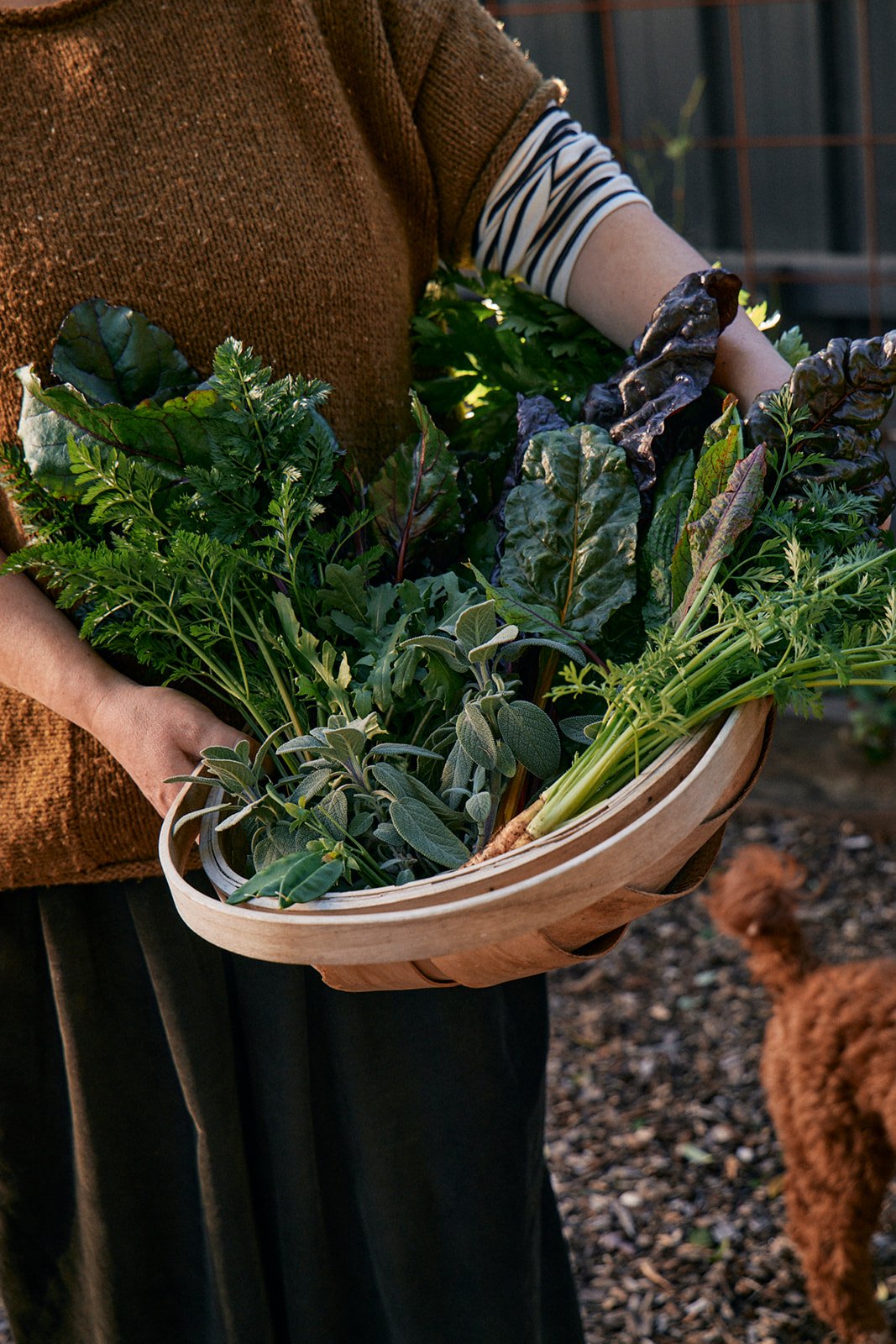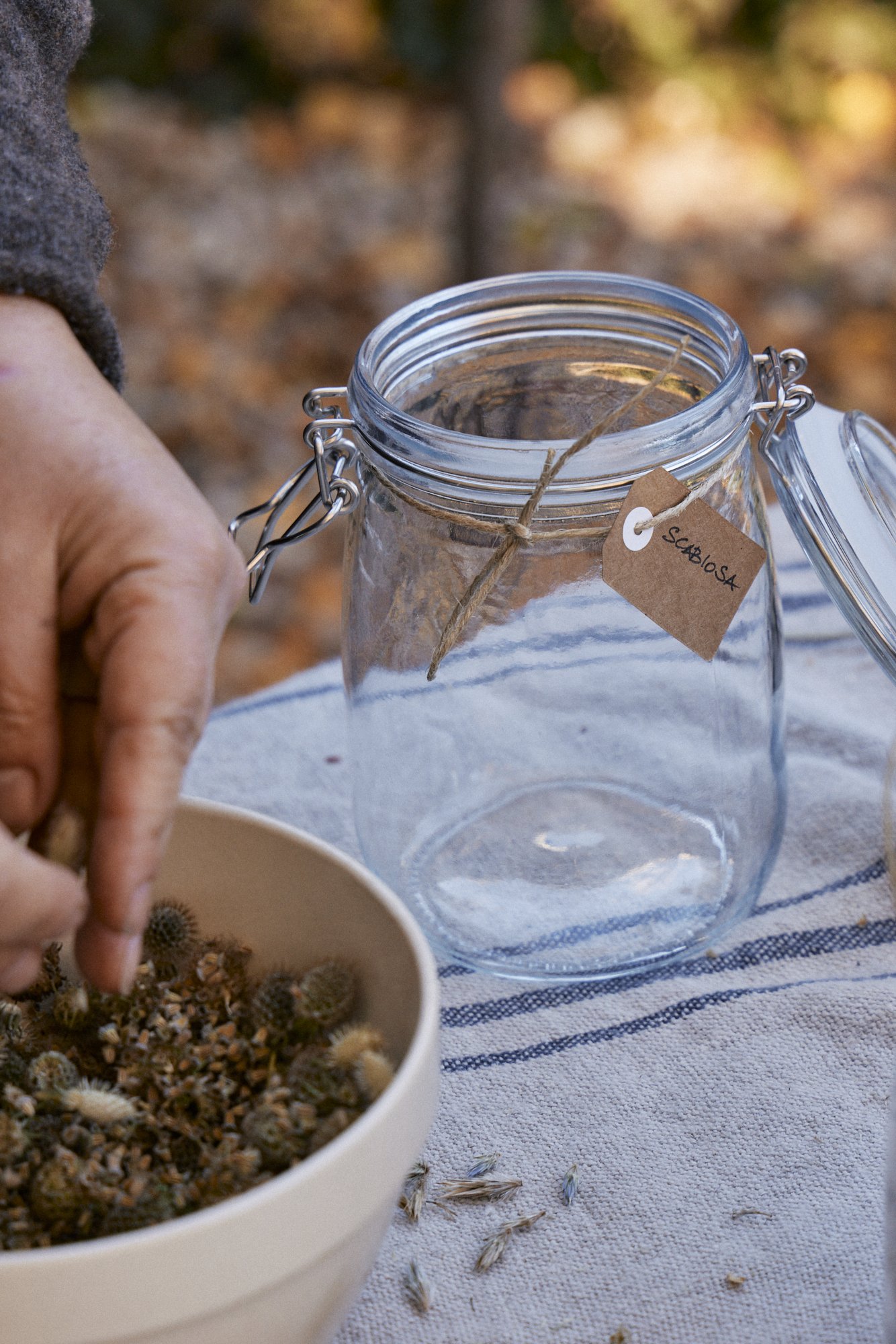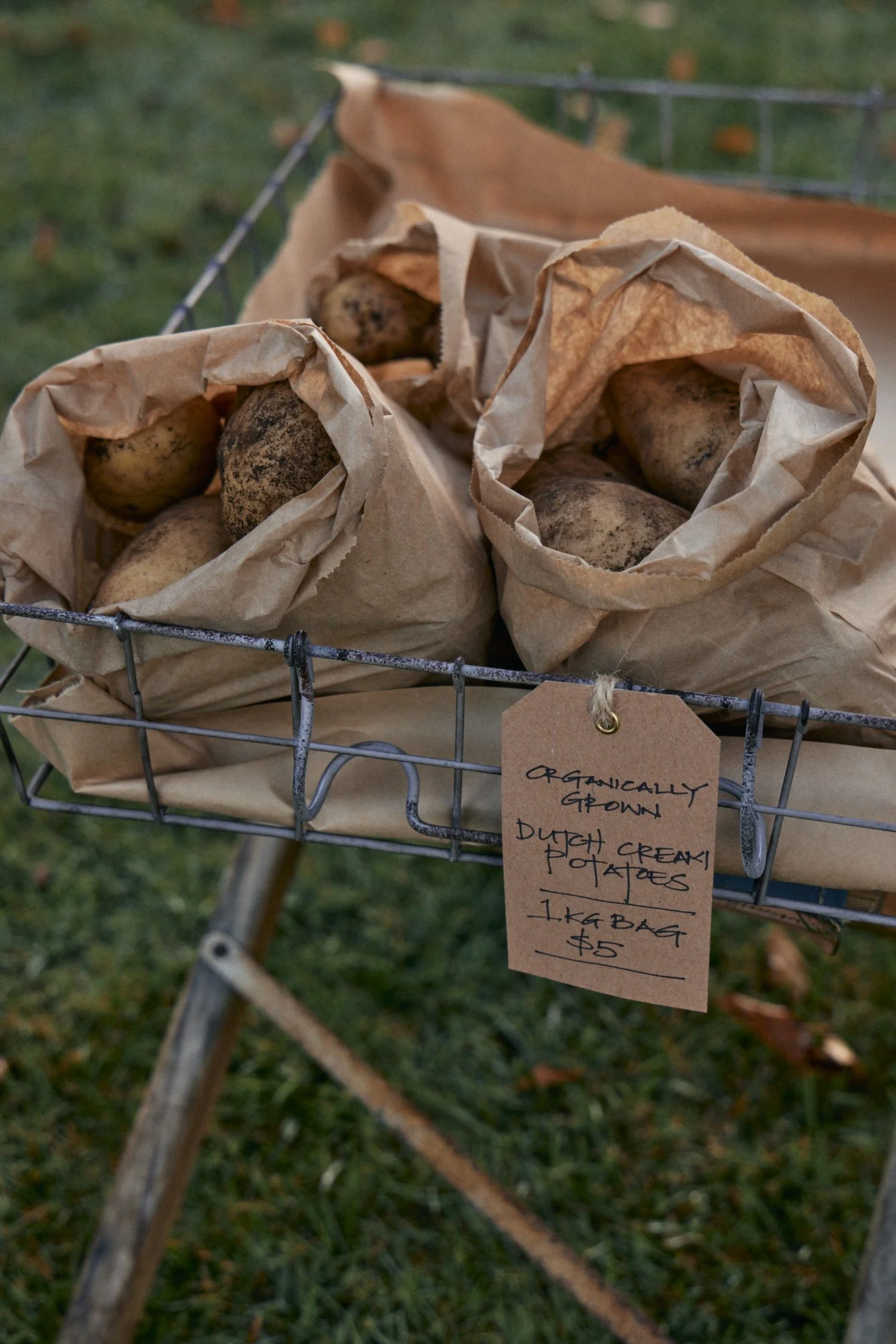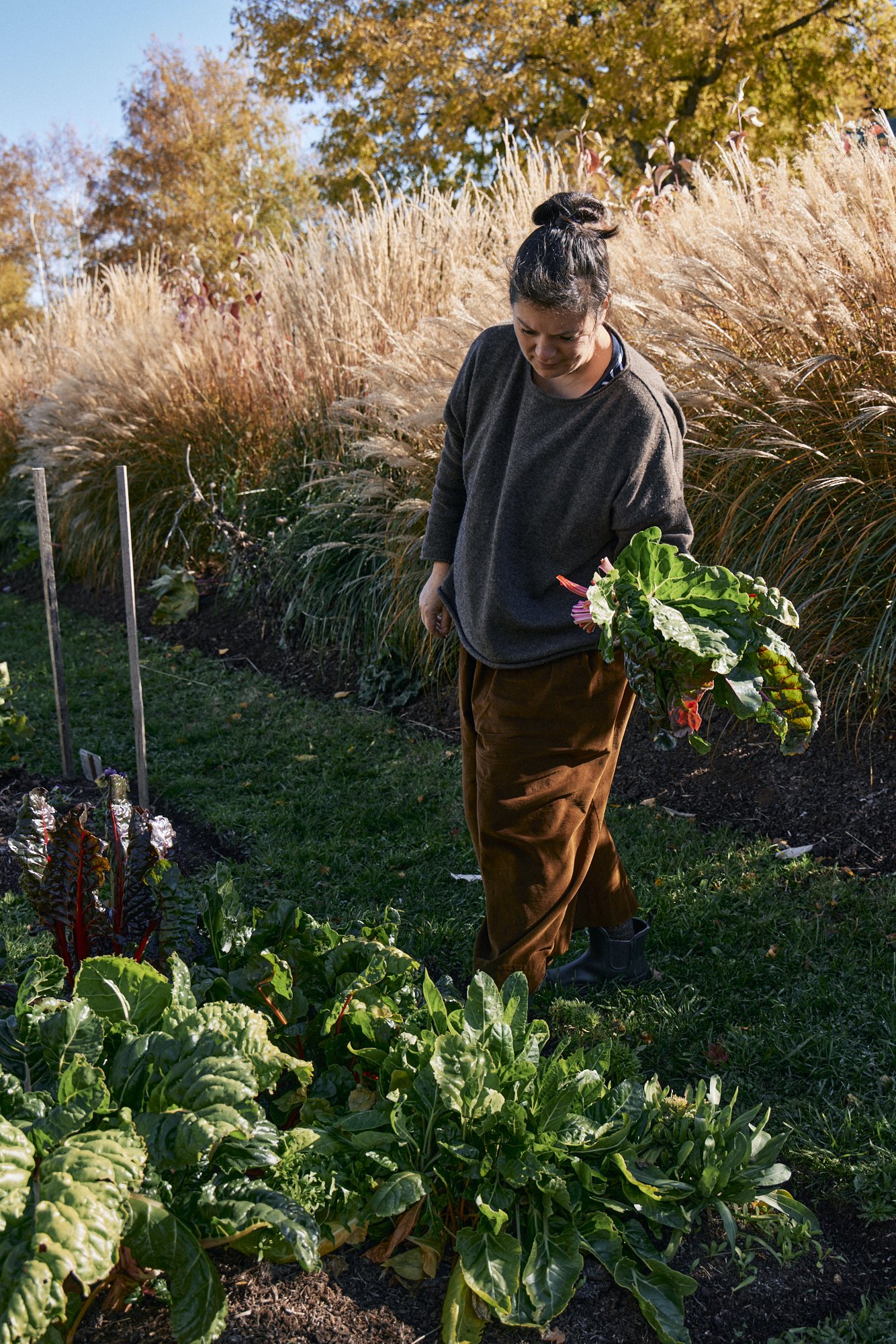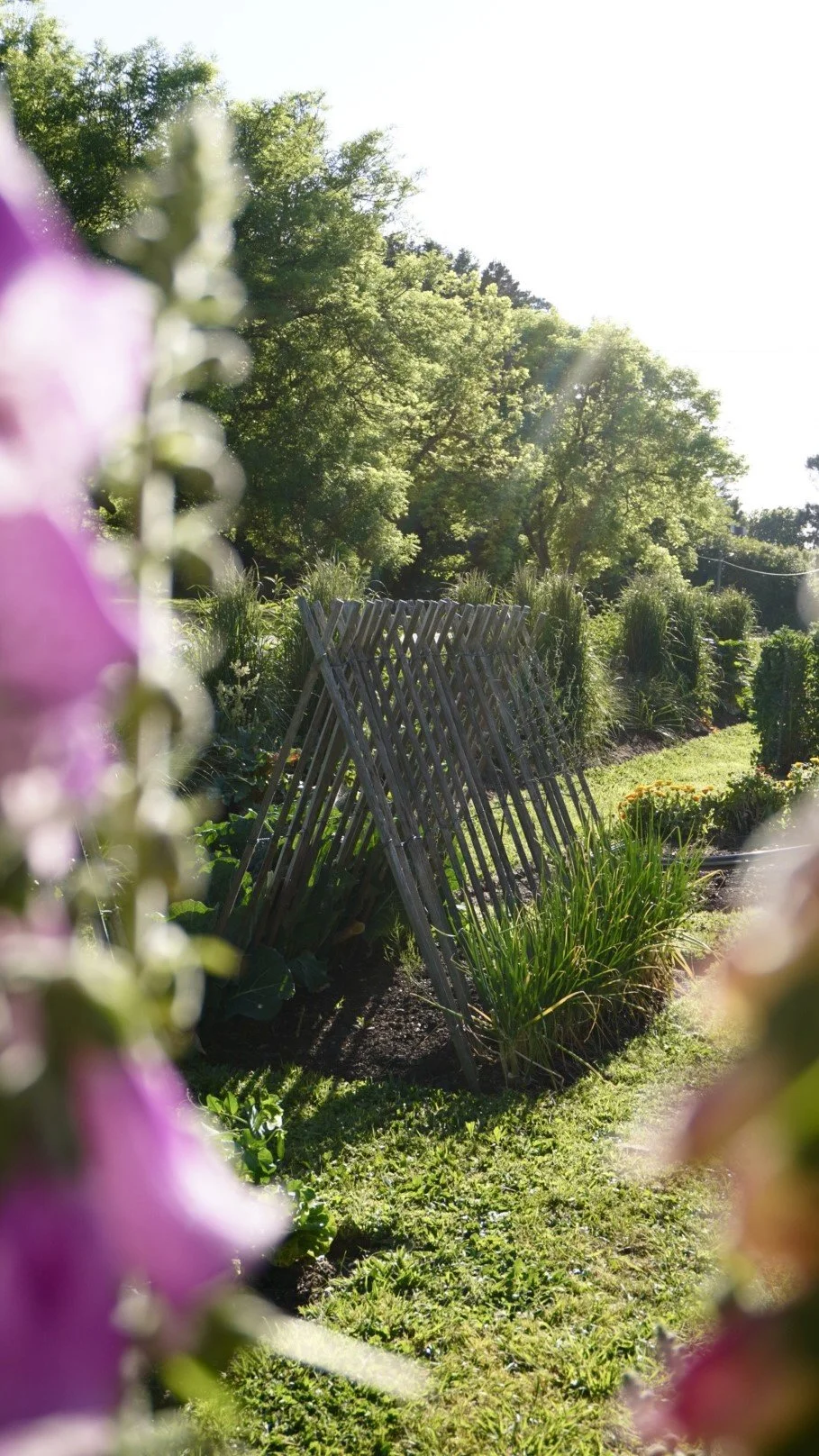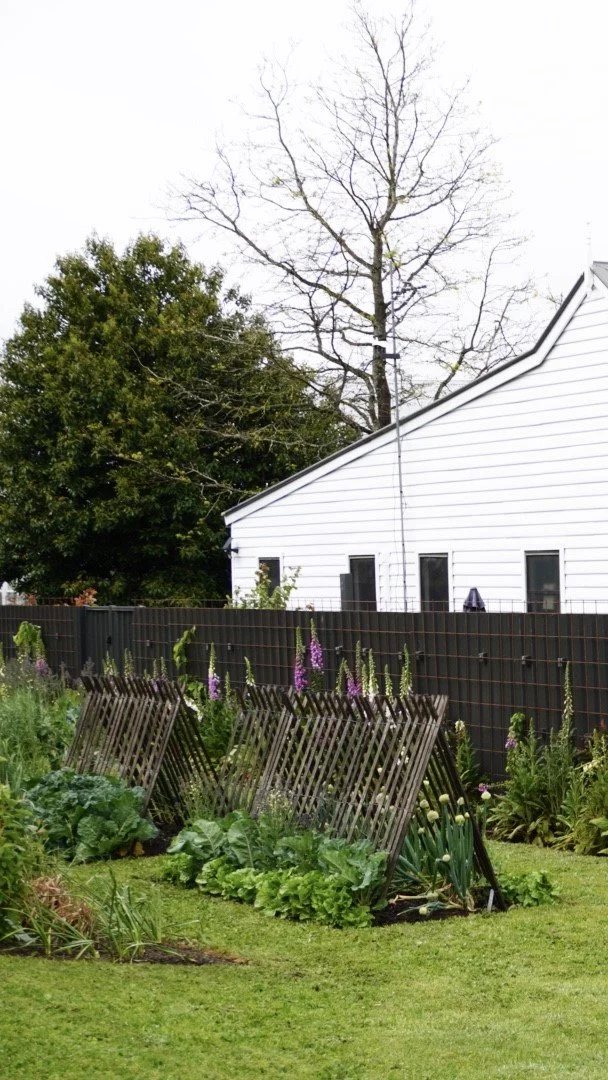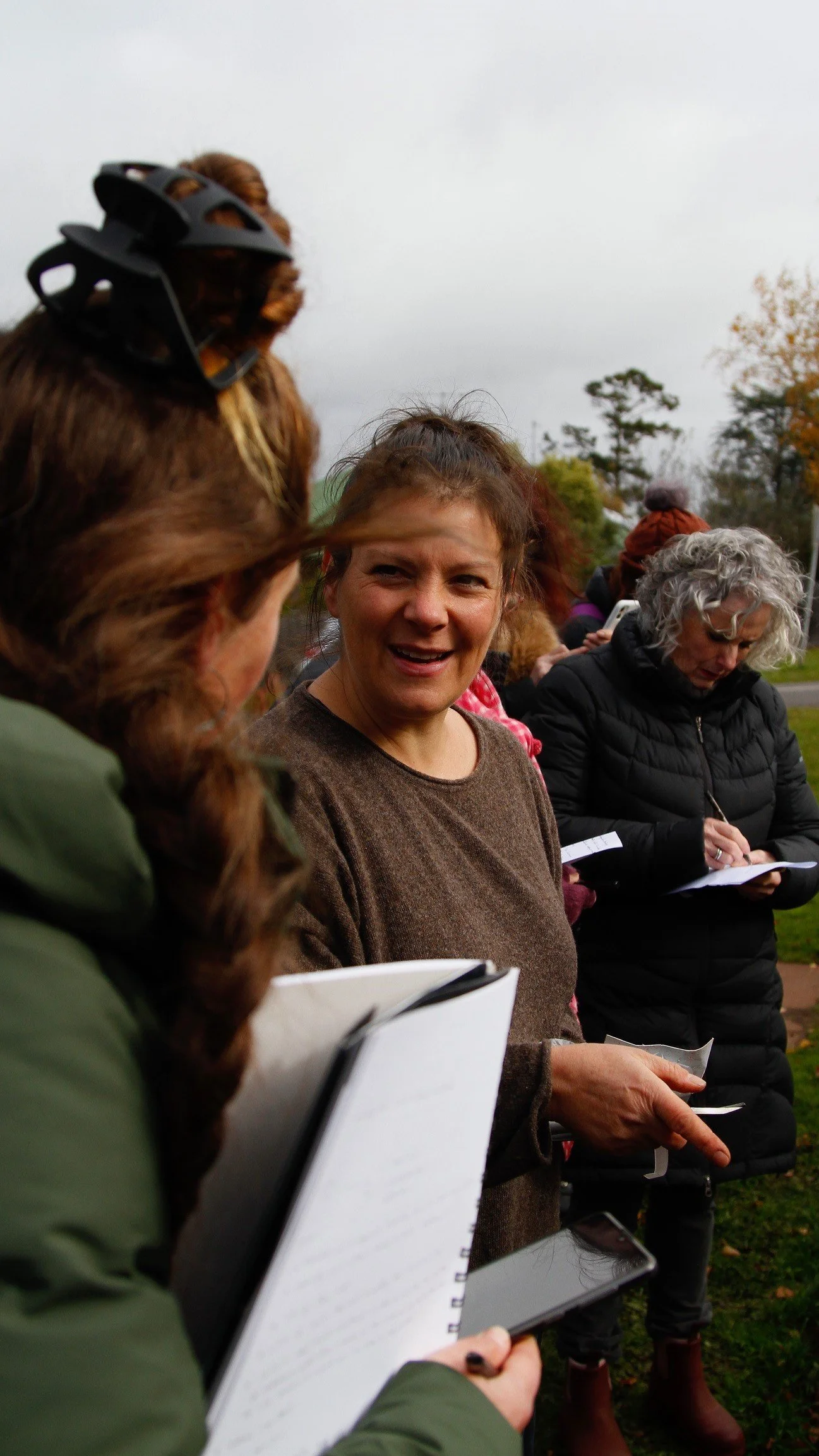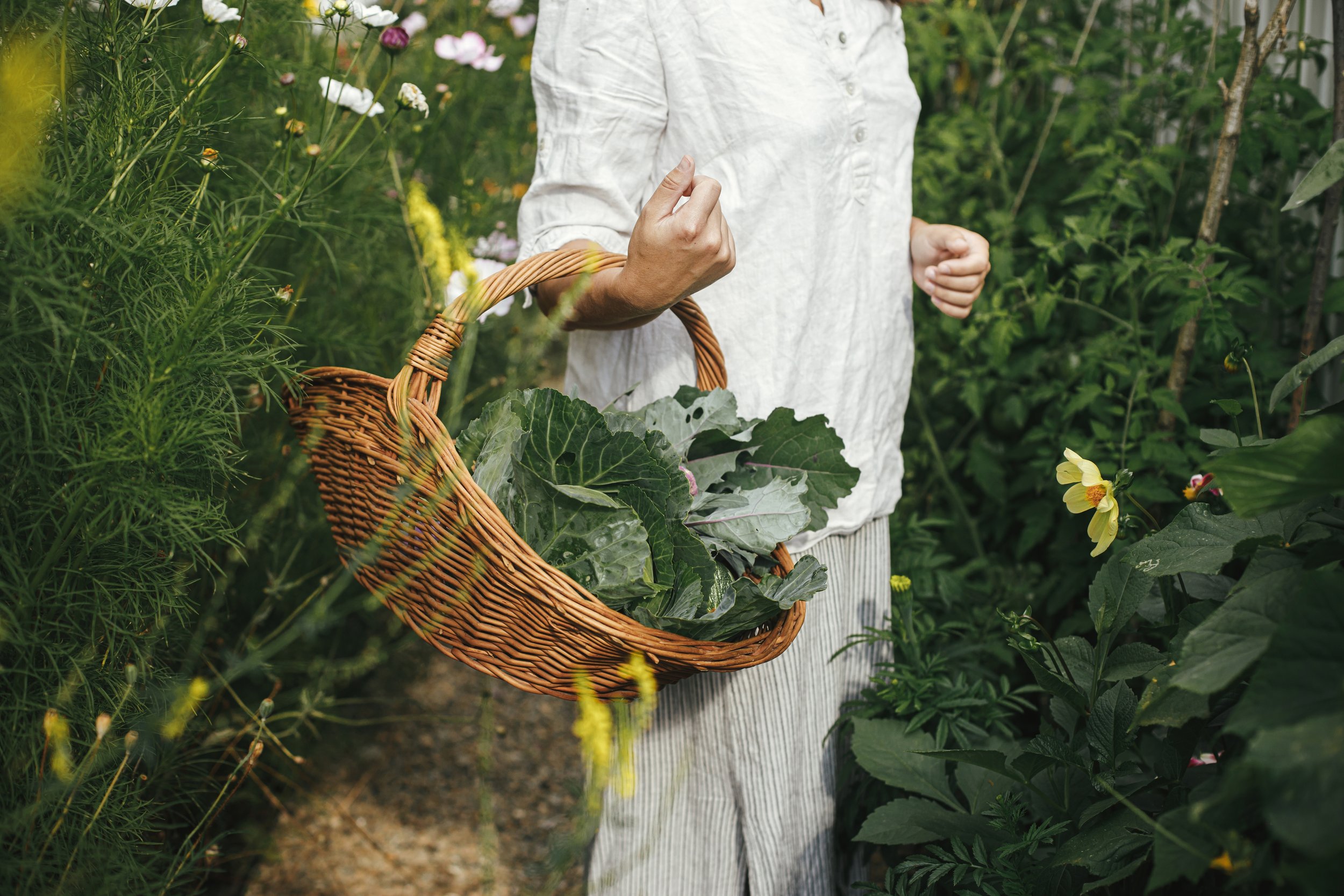

I spent an hour this week talking with Joel from InStyle Gardens for his podcast, and somewhere in the middle of it I heard myself once again sharing something that is at the core of what I do and believe: that I design through experience, and that the size of a garden has almost nothing to do with whether it's any good.
Read Moregarden systems
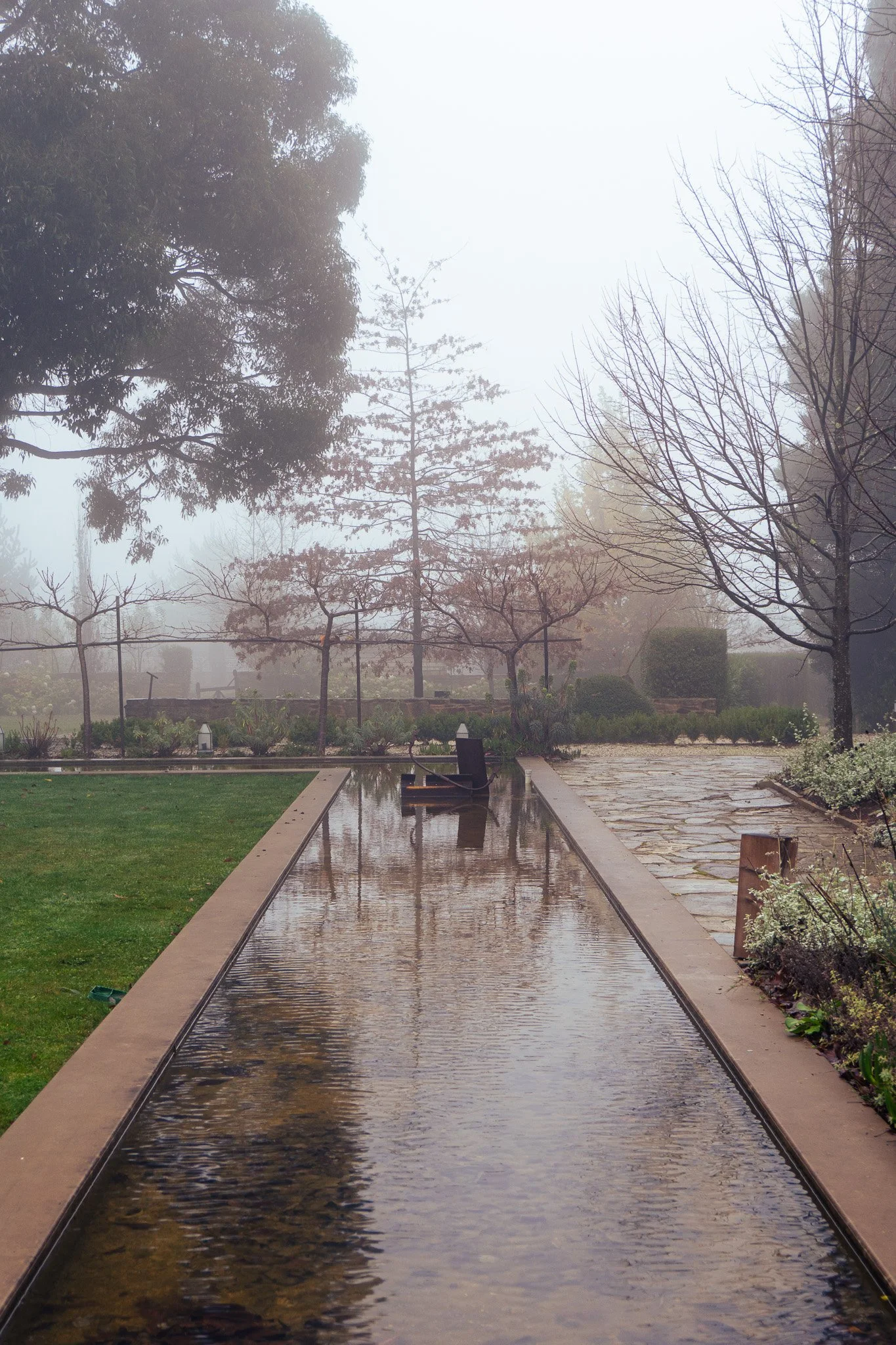
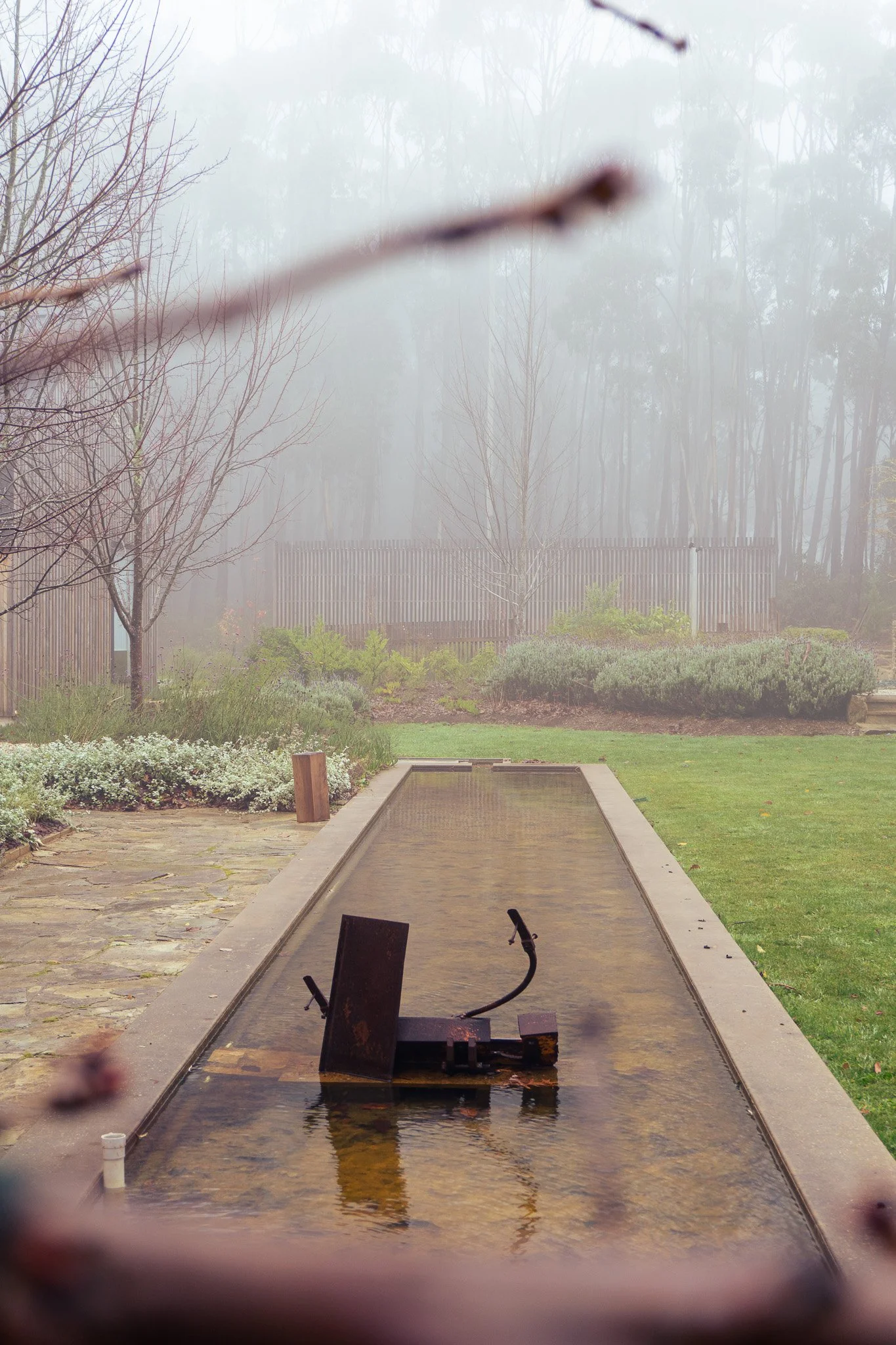
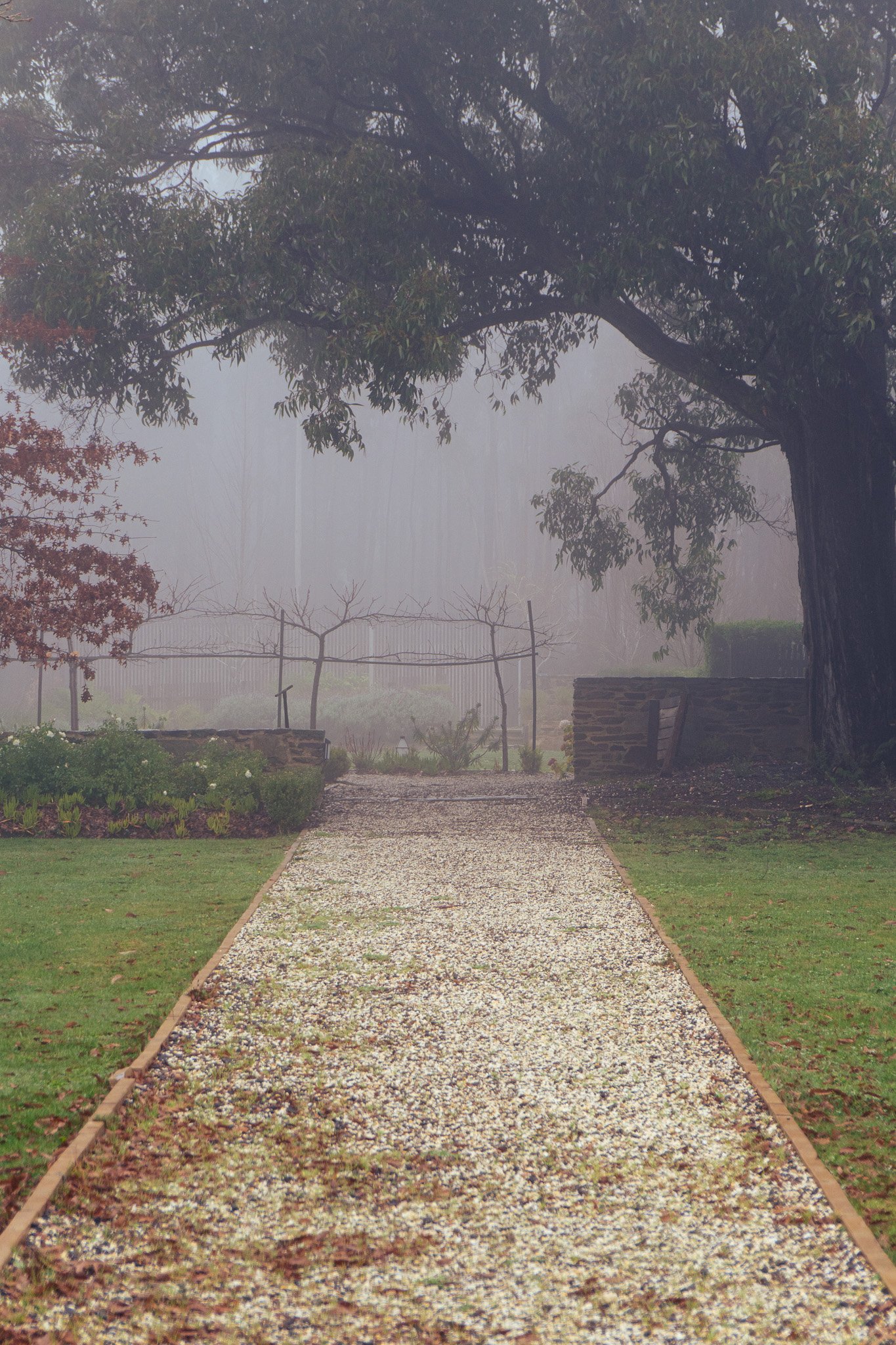
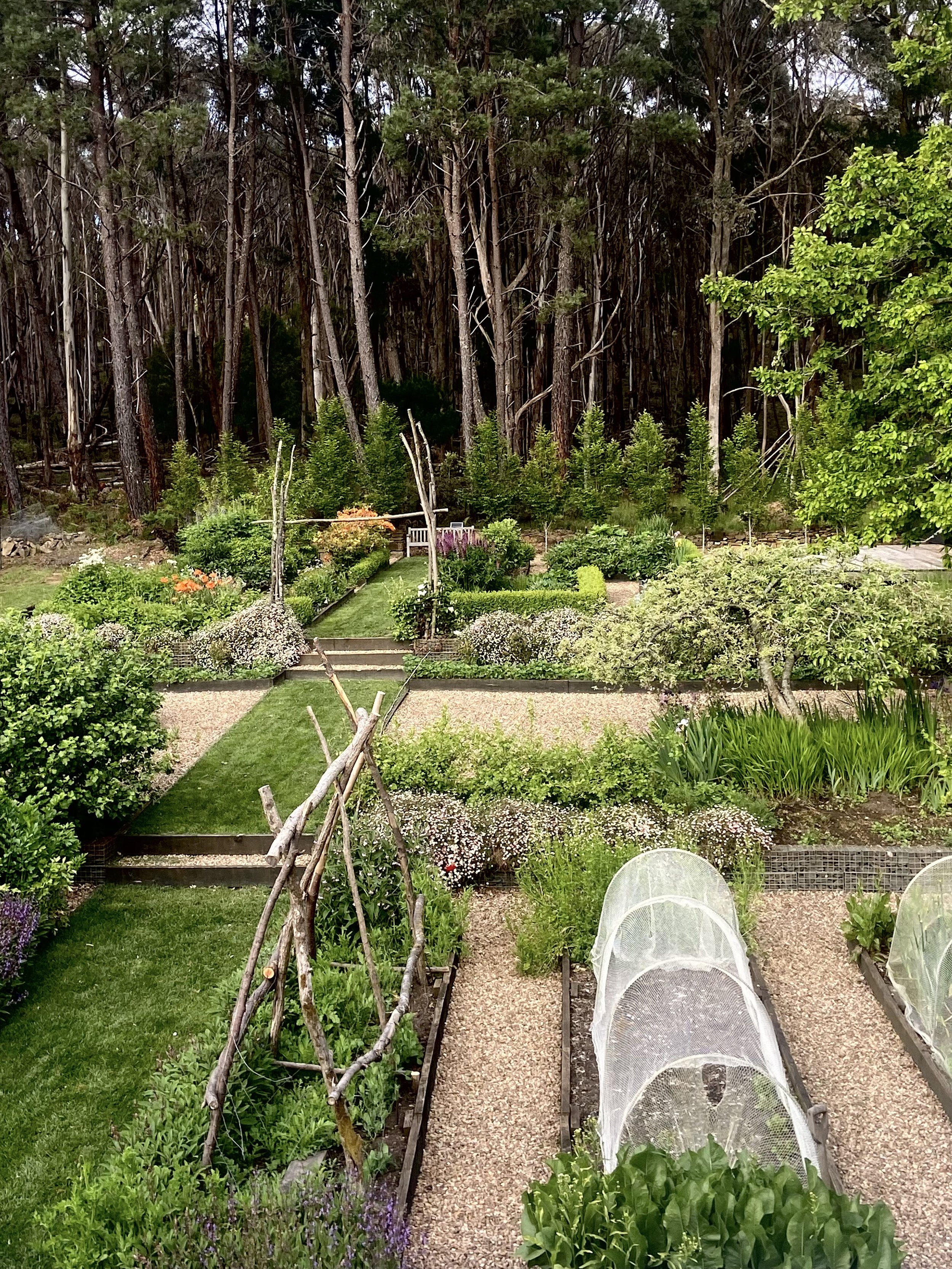
Oak & Monkey Puzzle - view down lawn spine to forest backdrop
What Winter Shows You
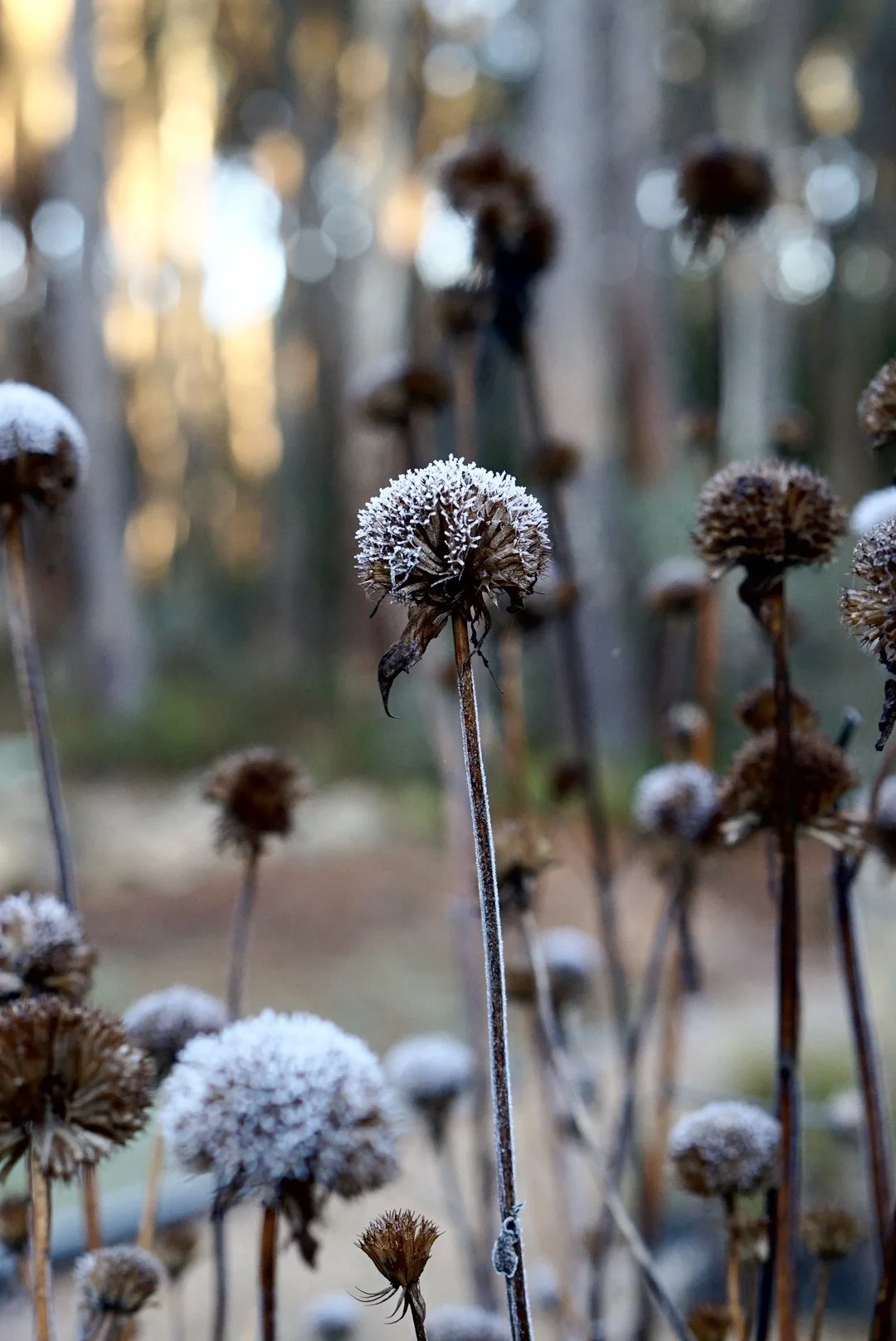
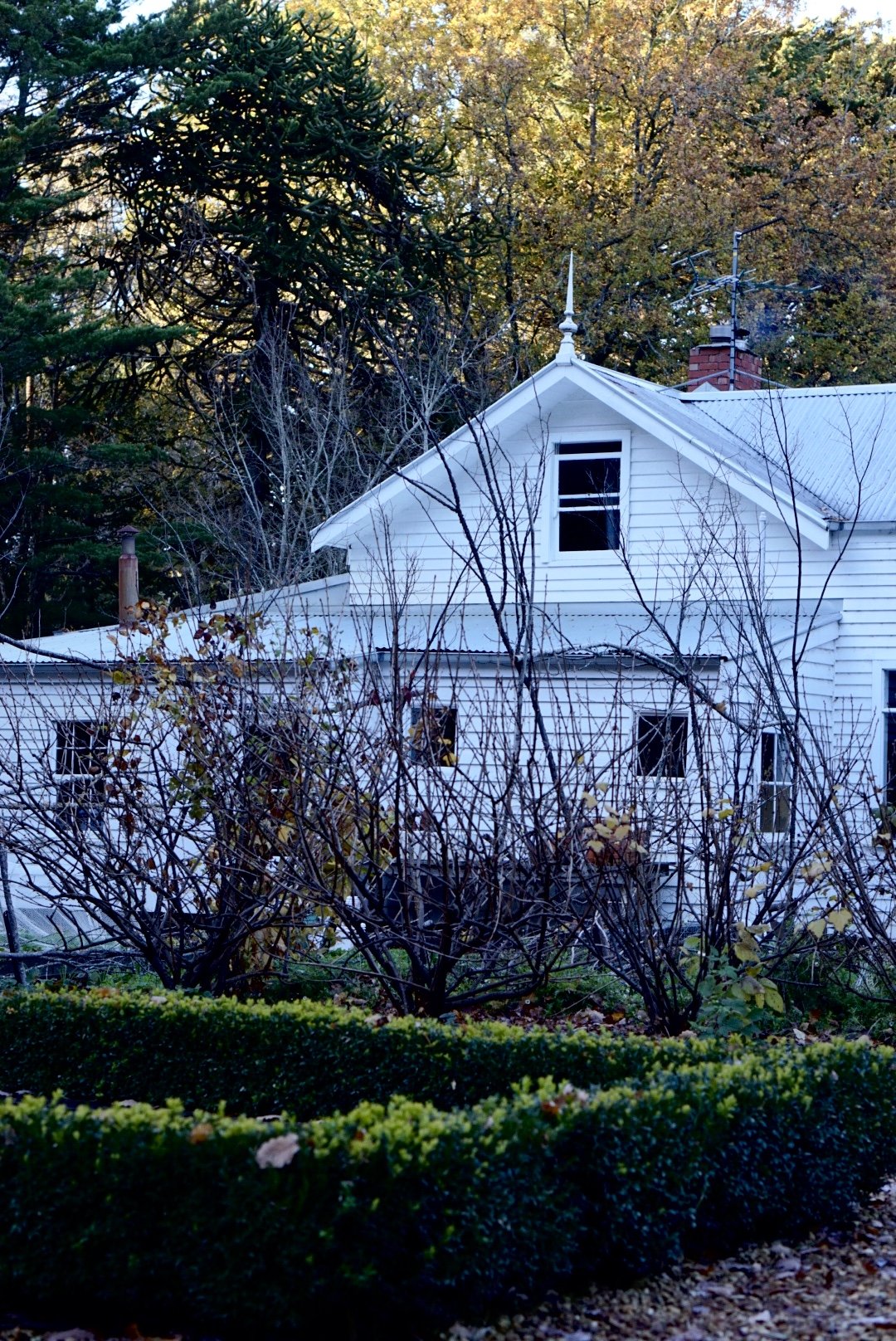
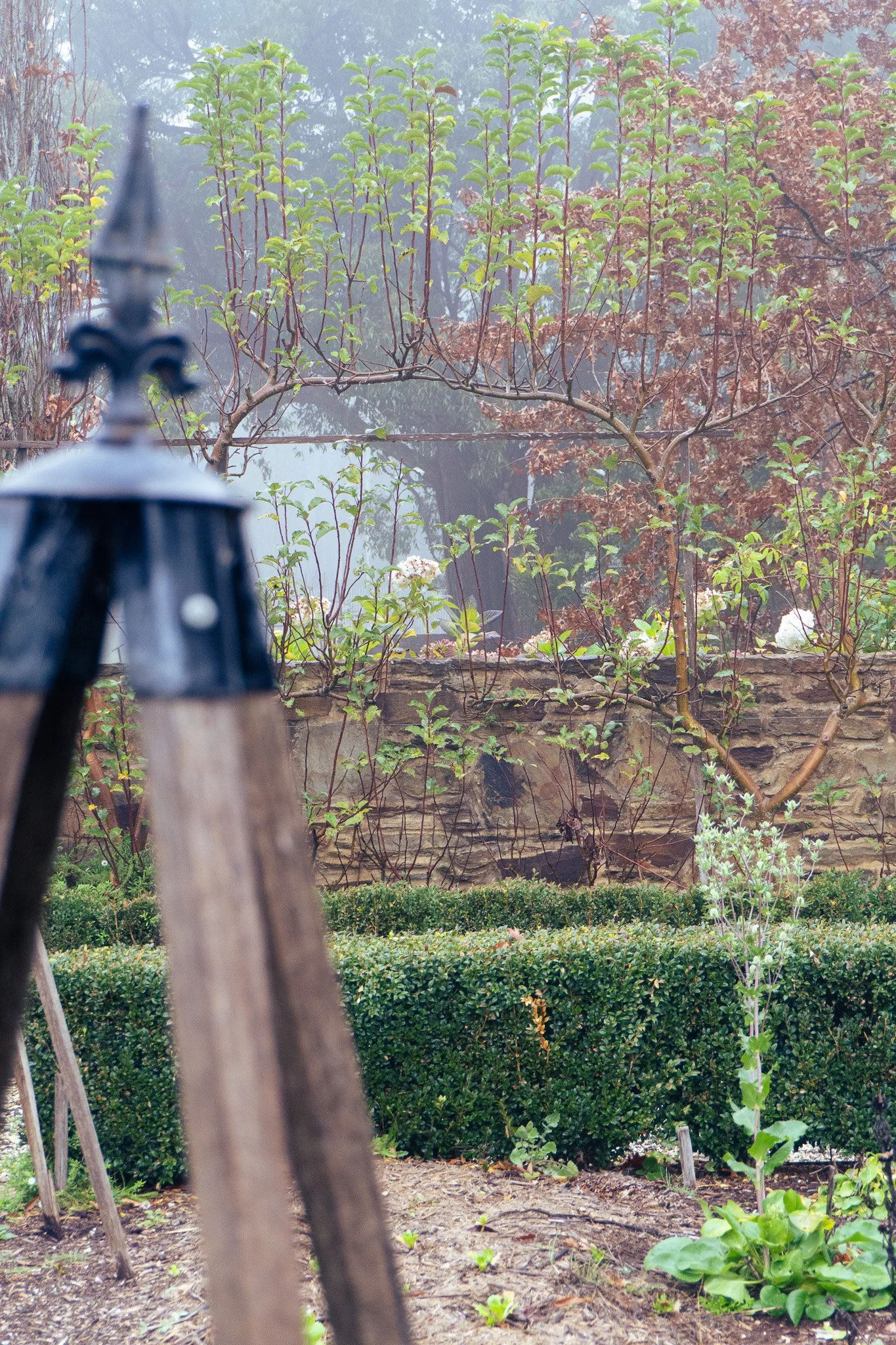
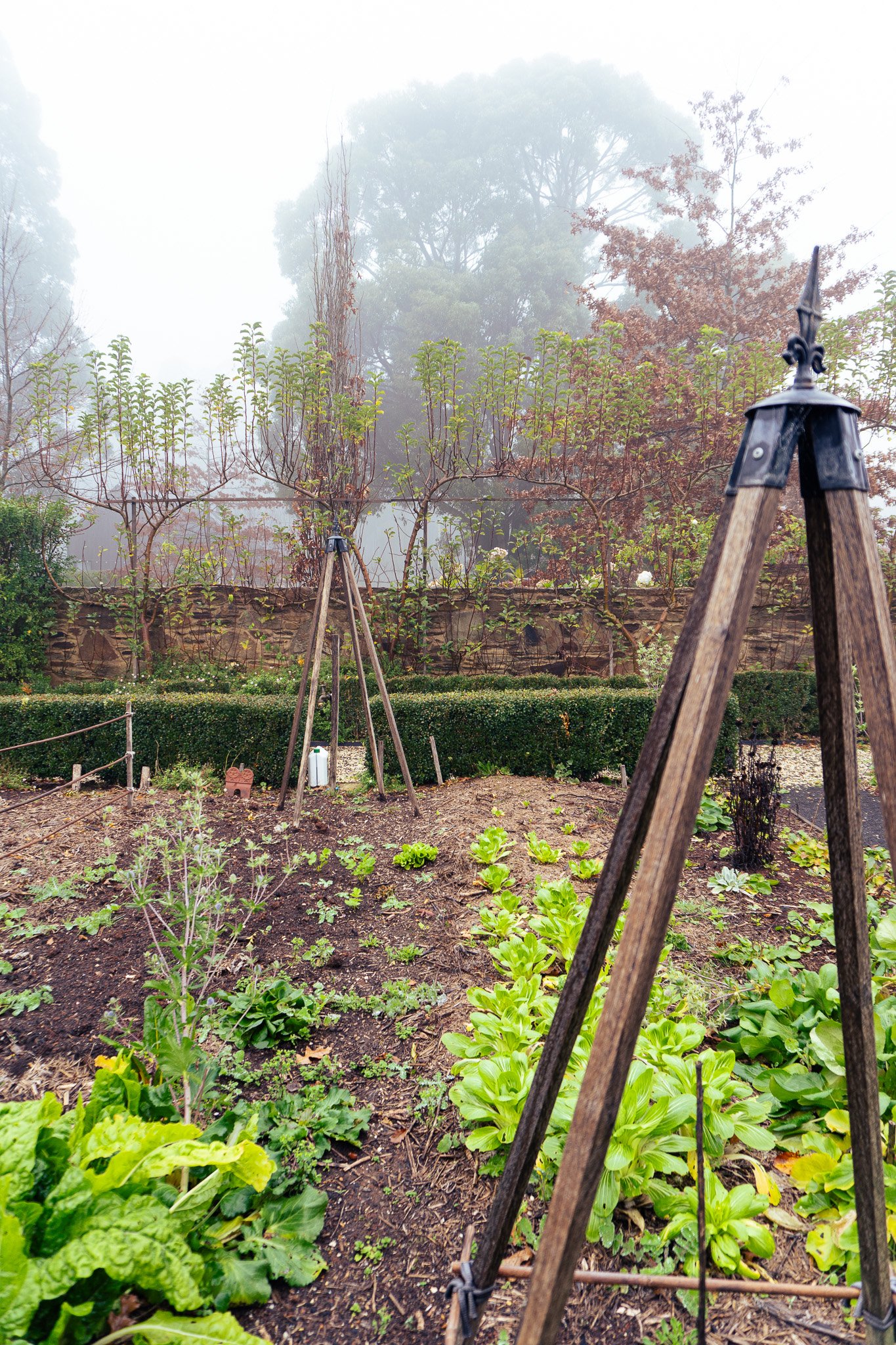
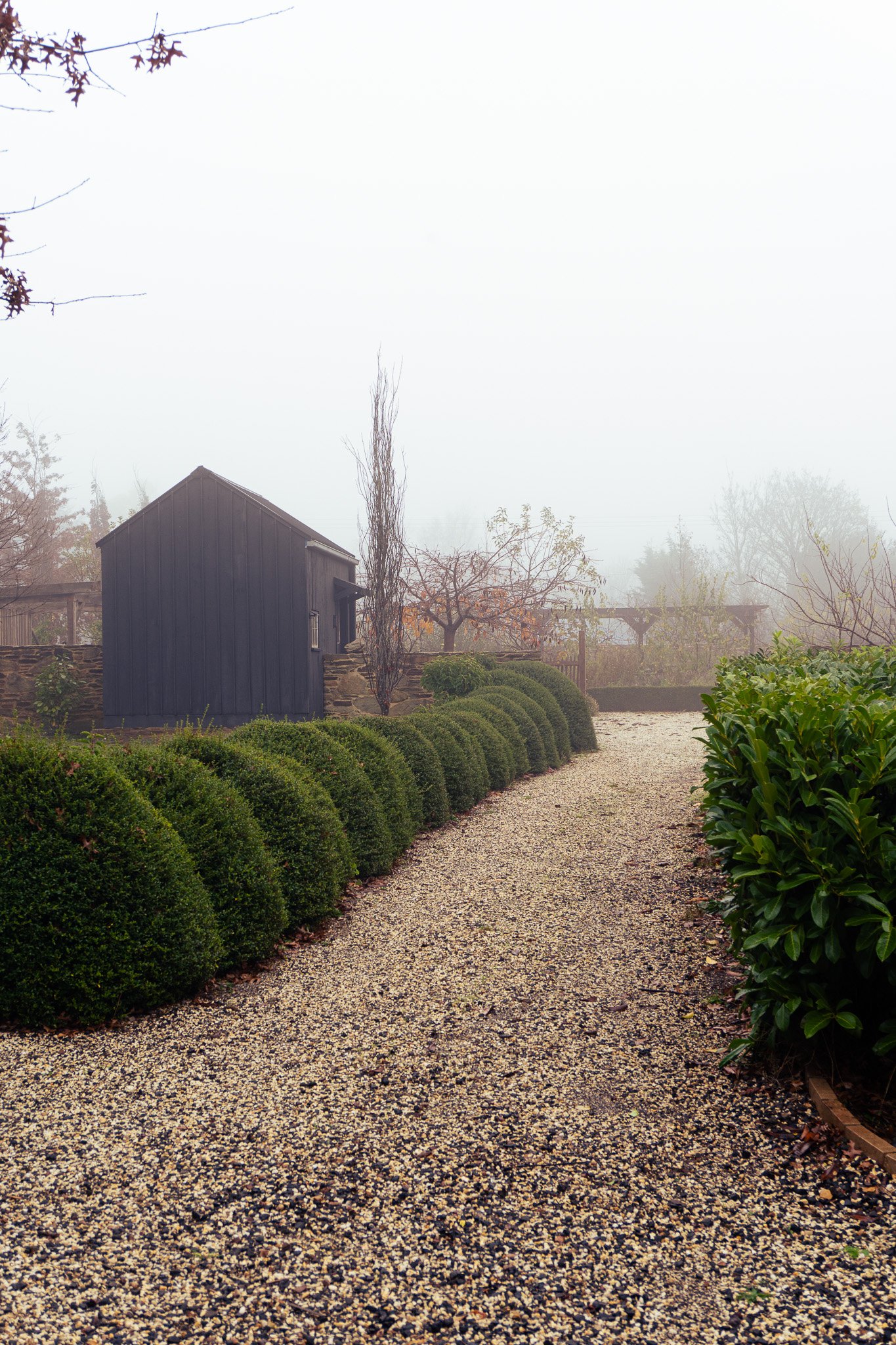
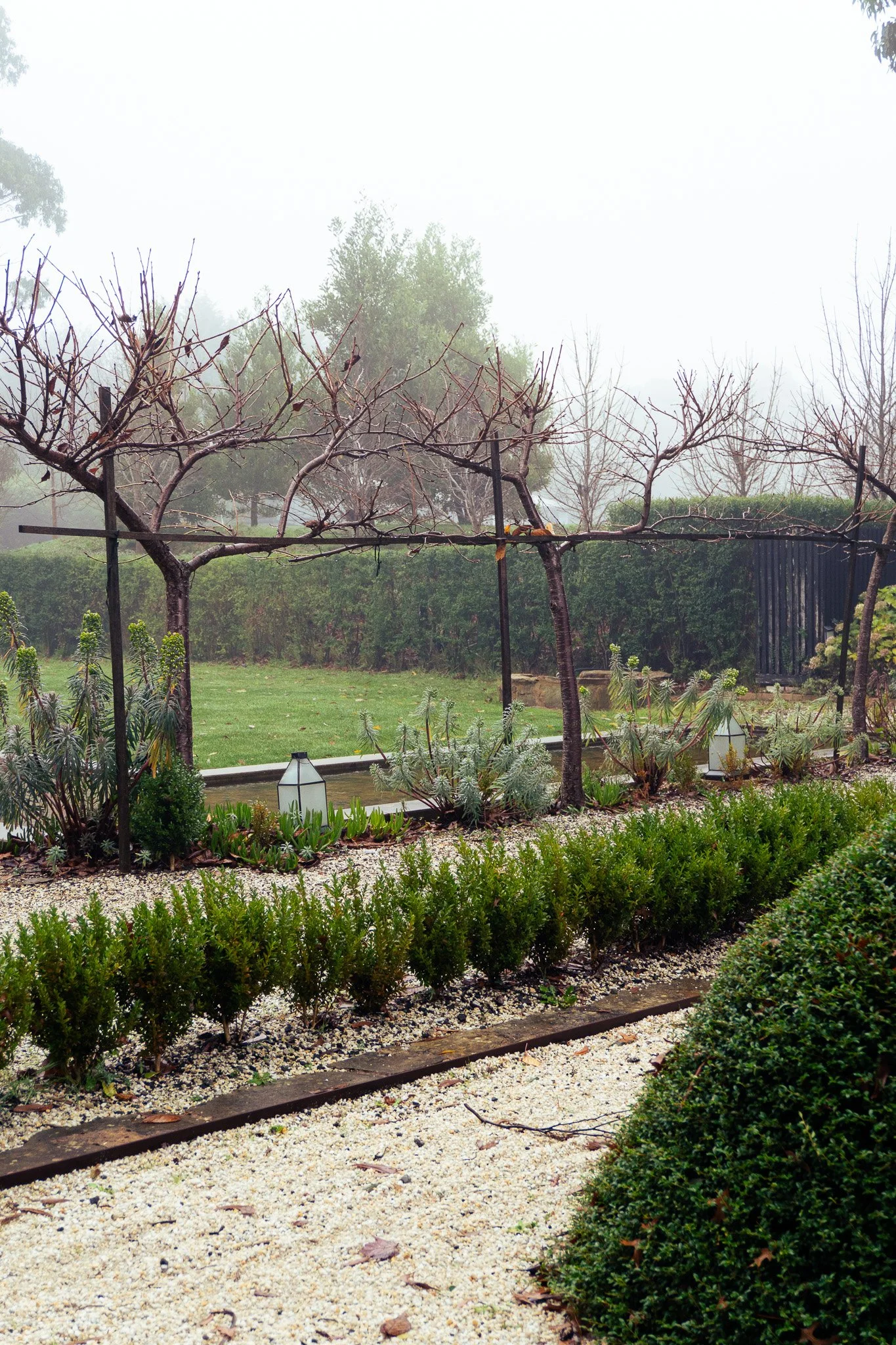
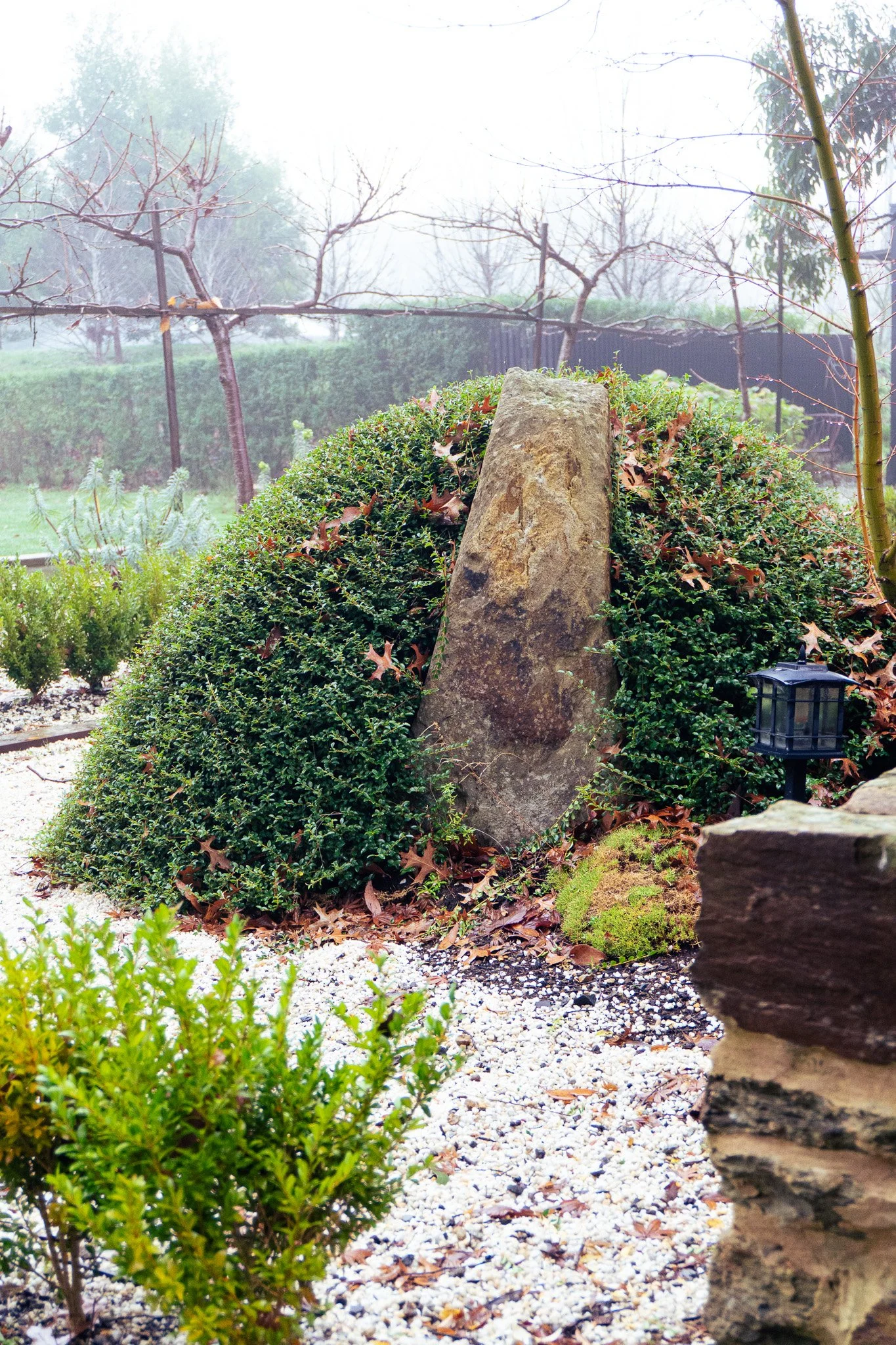
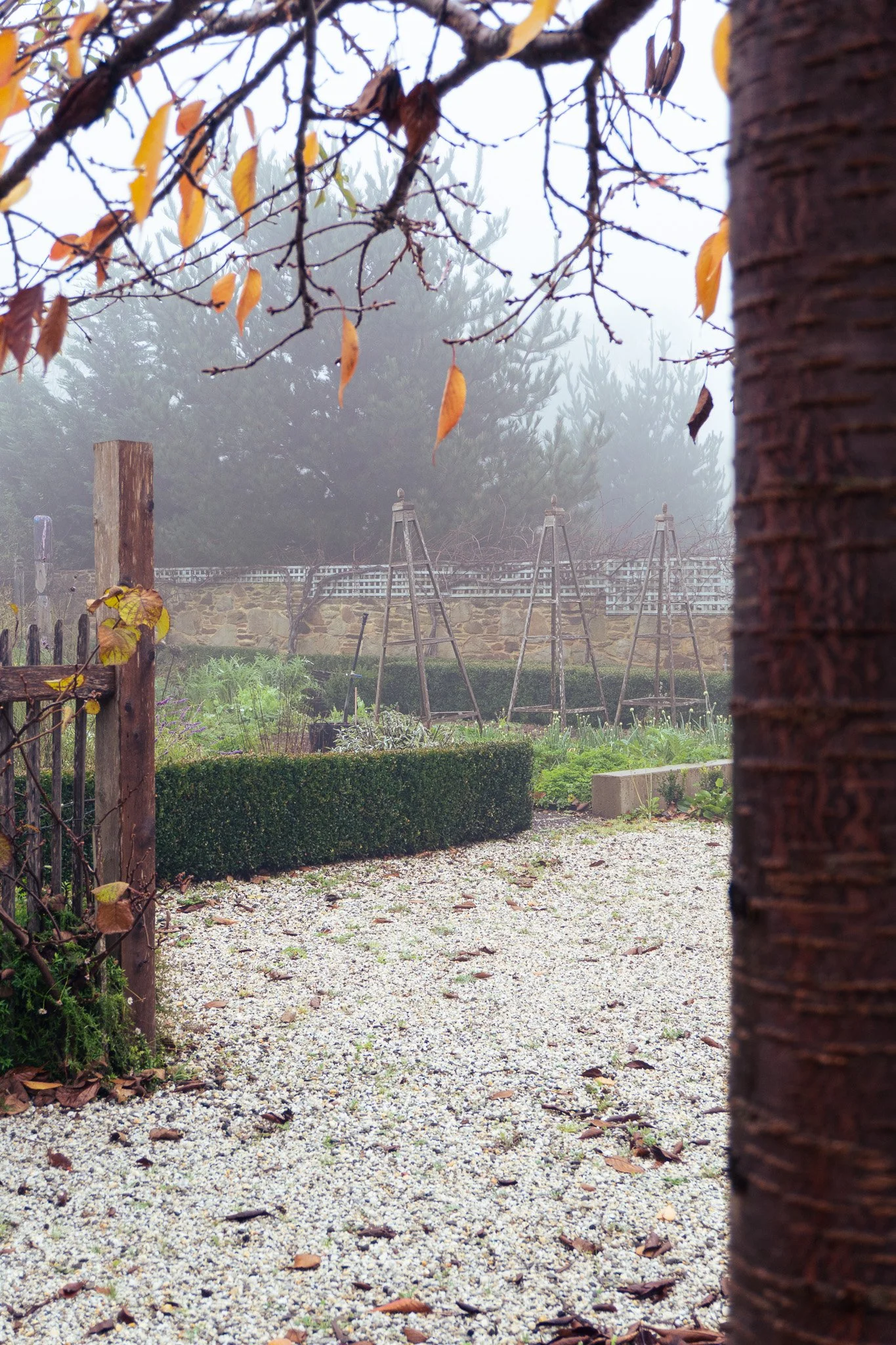
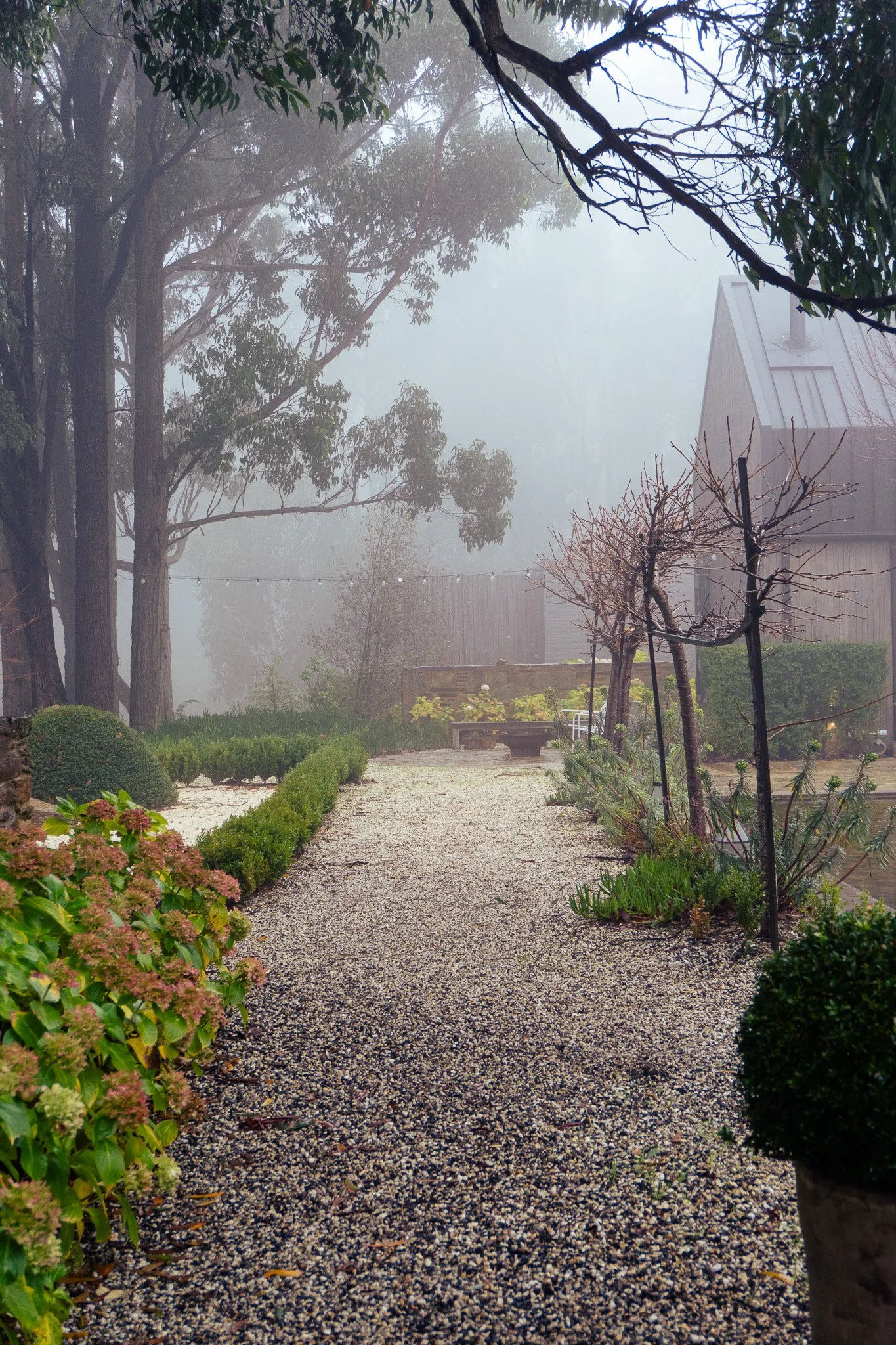
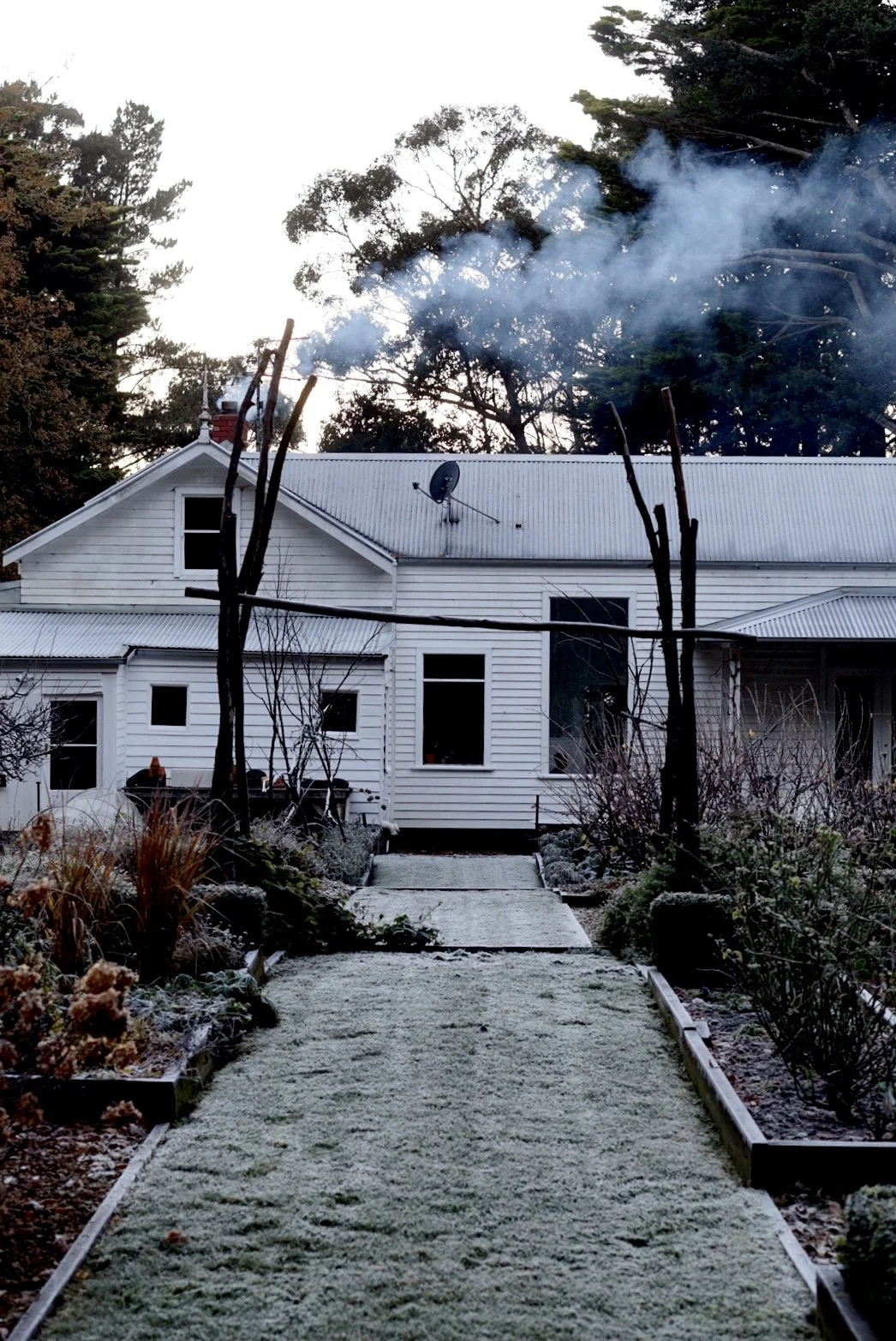
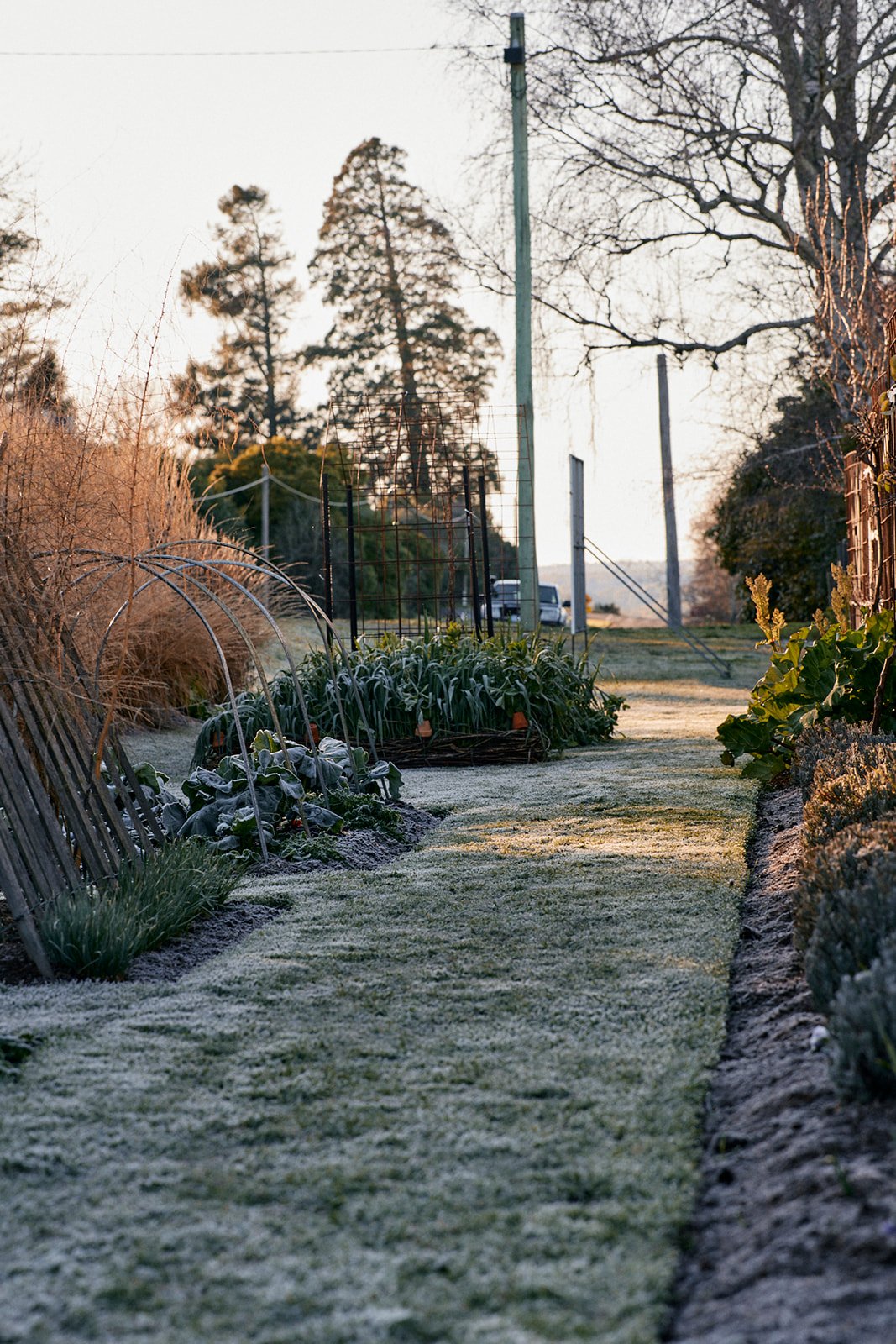
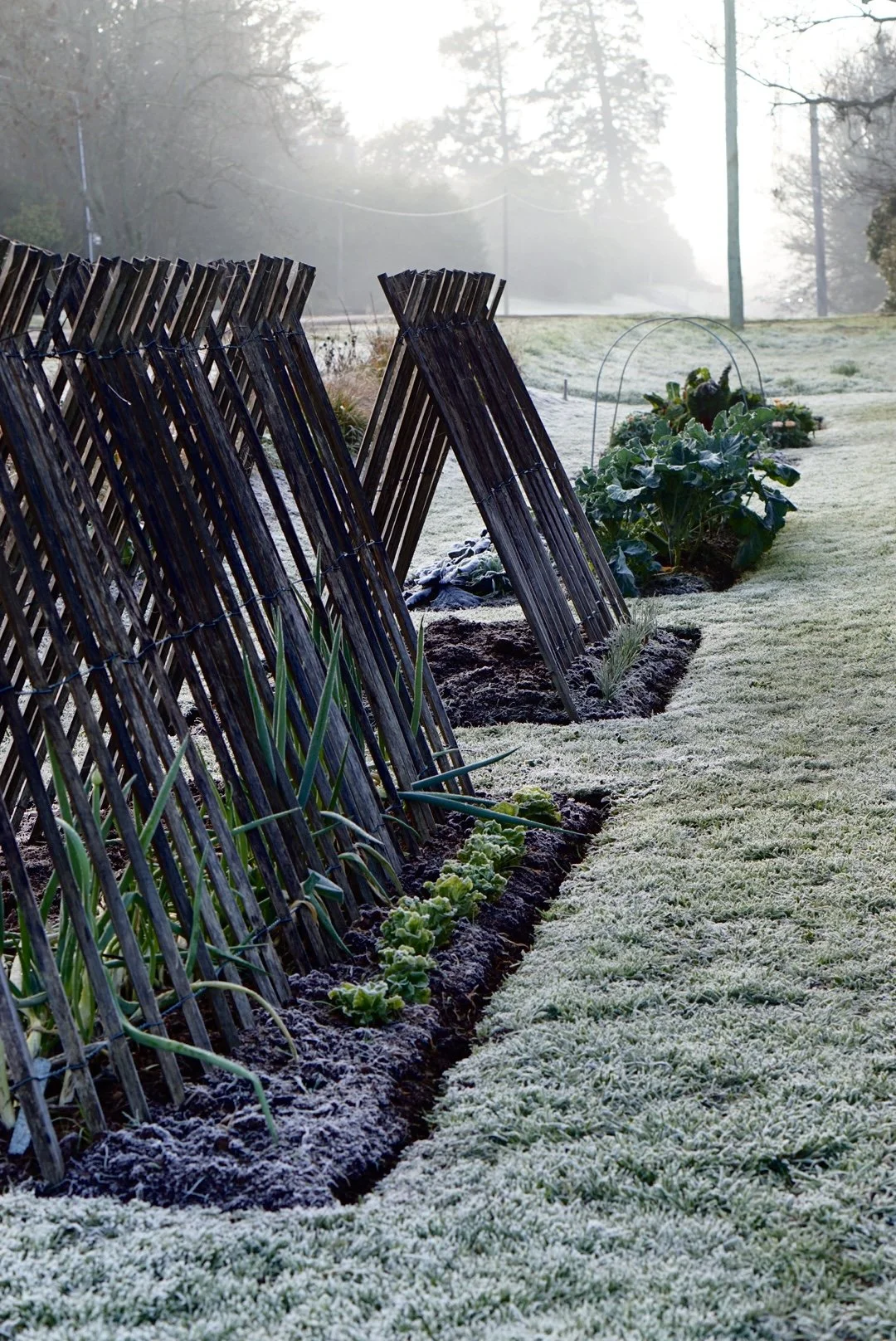
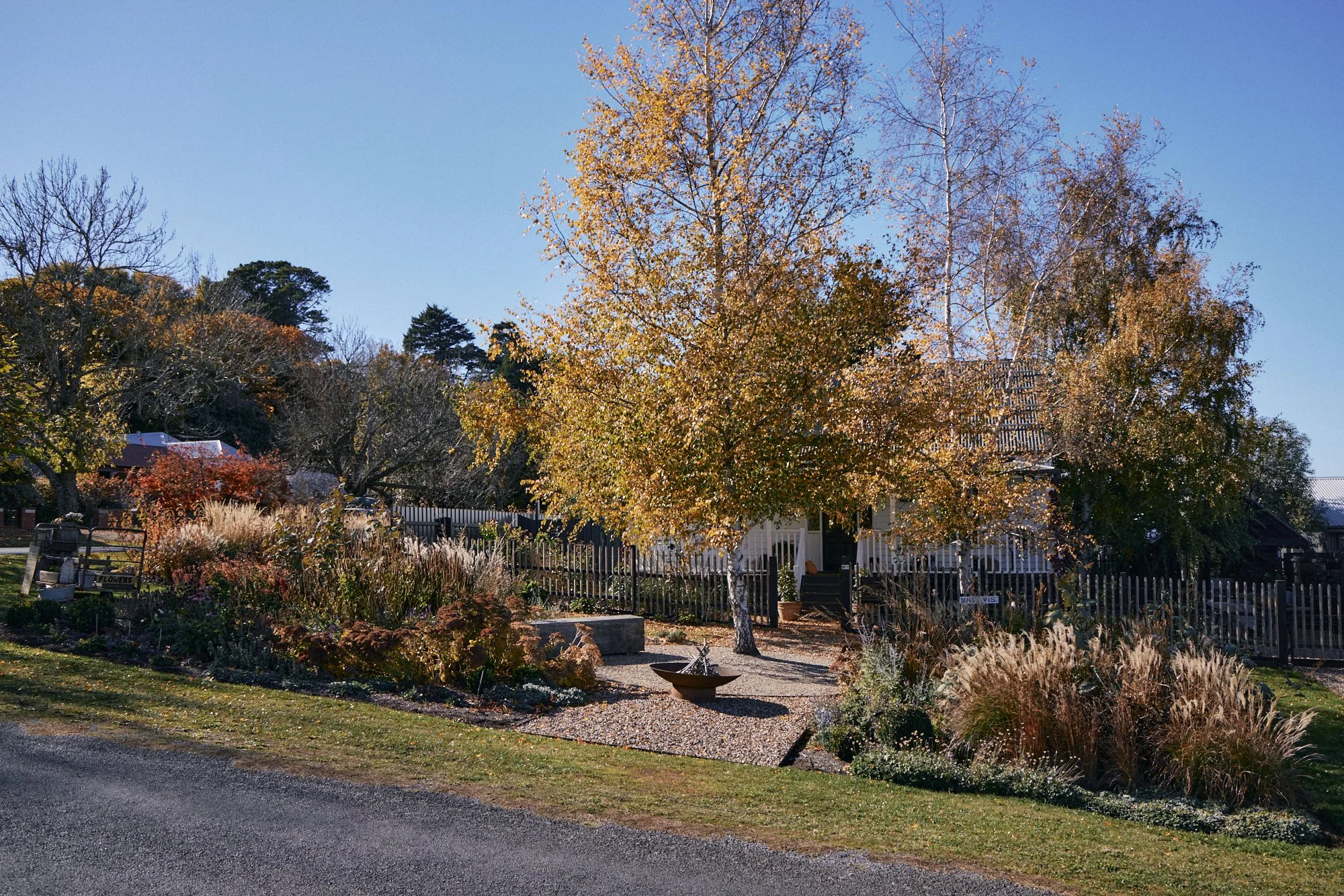
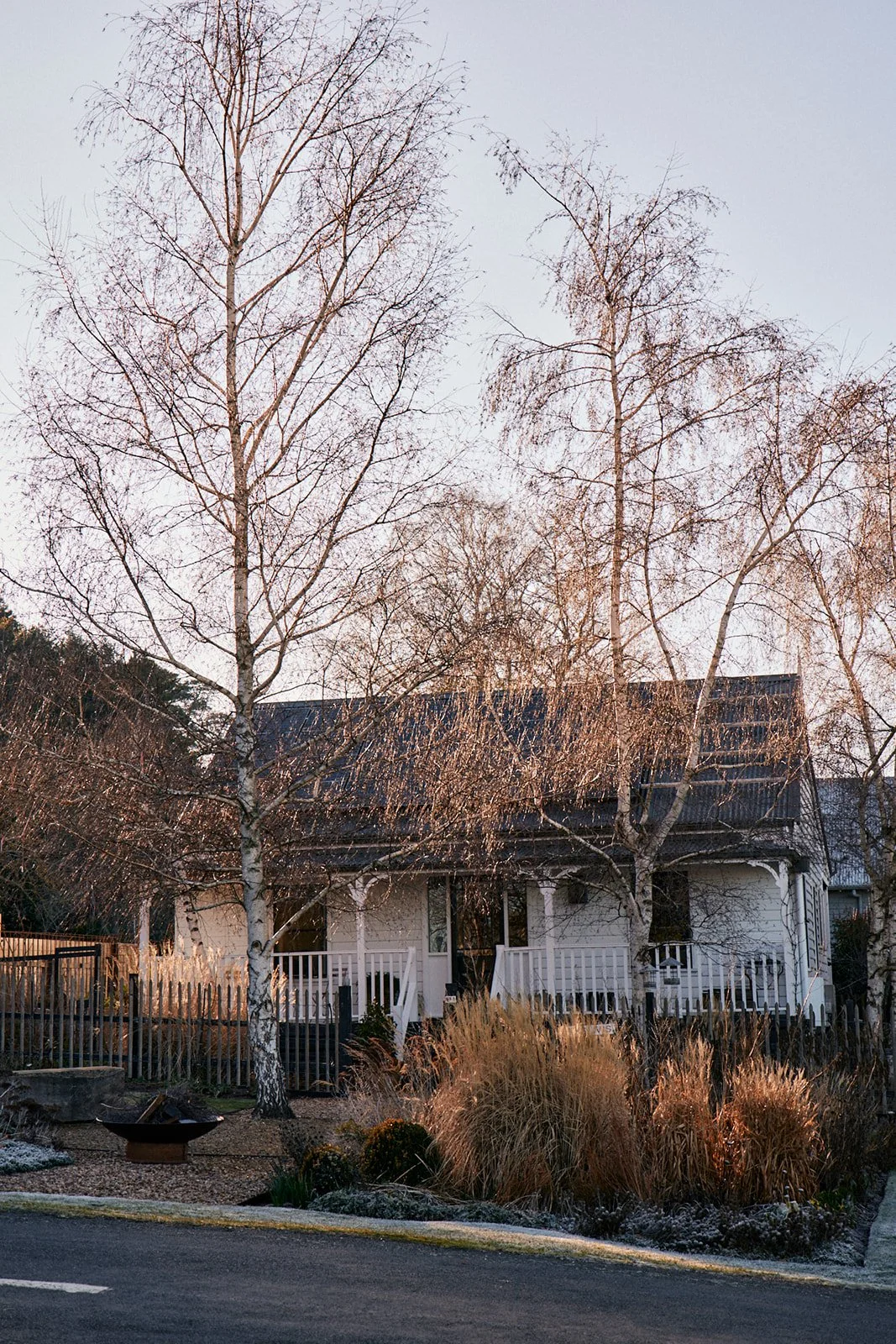
On the coldest mornings I take the same short walk around my garden before the day begins, and the lawn is the first thing I see. A crust of frost across the open grass, holding the low light, keeping the shape of every blade until the sun finds it. The garden at Little Cottage on a Hill is only five hundred and fifteen square metres, and on a morning like that it gives itself up to me completely. The grass reads as a kind of ground. The bare espalier along the fence becomes a drawn line. The trees are tone and mass and the spaces between them. Everything has been stripped of its colour, and in that stripping I can see, with almost embarrassing clarity, what holds the garden and what does not yet anchor it strongly enough.
Years ago, before my daughter was born, I spent Tuesday nights learning to paint in a studio in Clifton Hill — a converted stairmaker's factory that smelled of linseed oil and cigarettes and whiskey, where an esteemed old painter named Des set me the same task again and again. The underpainting. Before any colour, the old painters laid down a monochrome ground: the whole composition resolved first in greys, in light and dark, so they could see whether it held before a single true colour was allowed near the canvas. I did not understand, then, that I was being taught how to look at a garden. I understand it now, every July.
This is the thing I most want to say about winter, and I want to say it plainly, because it runs against the grain of how we are taught to feel about the season. Winter is not the garden at its emptiest. It is the garden at its most honest. You would be amazed how much a winter garden can teach you, if you let it. It takes away the froth of summer — the colour the eye runs to first, the abundance that papers over a weak structure — and leaves the bones exposed. It asks the one question every gardener tends to avoid and every designer should be asking: does this hold on its own terms, beneath everything I have laid on top of it?
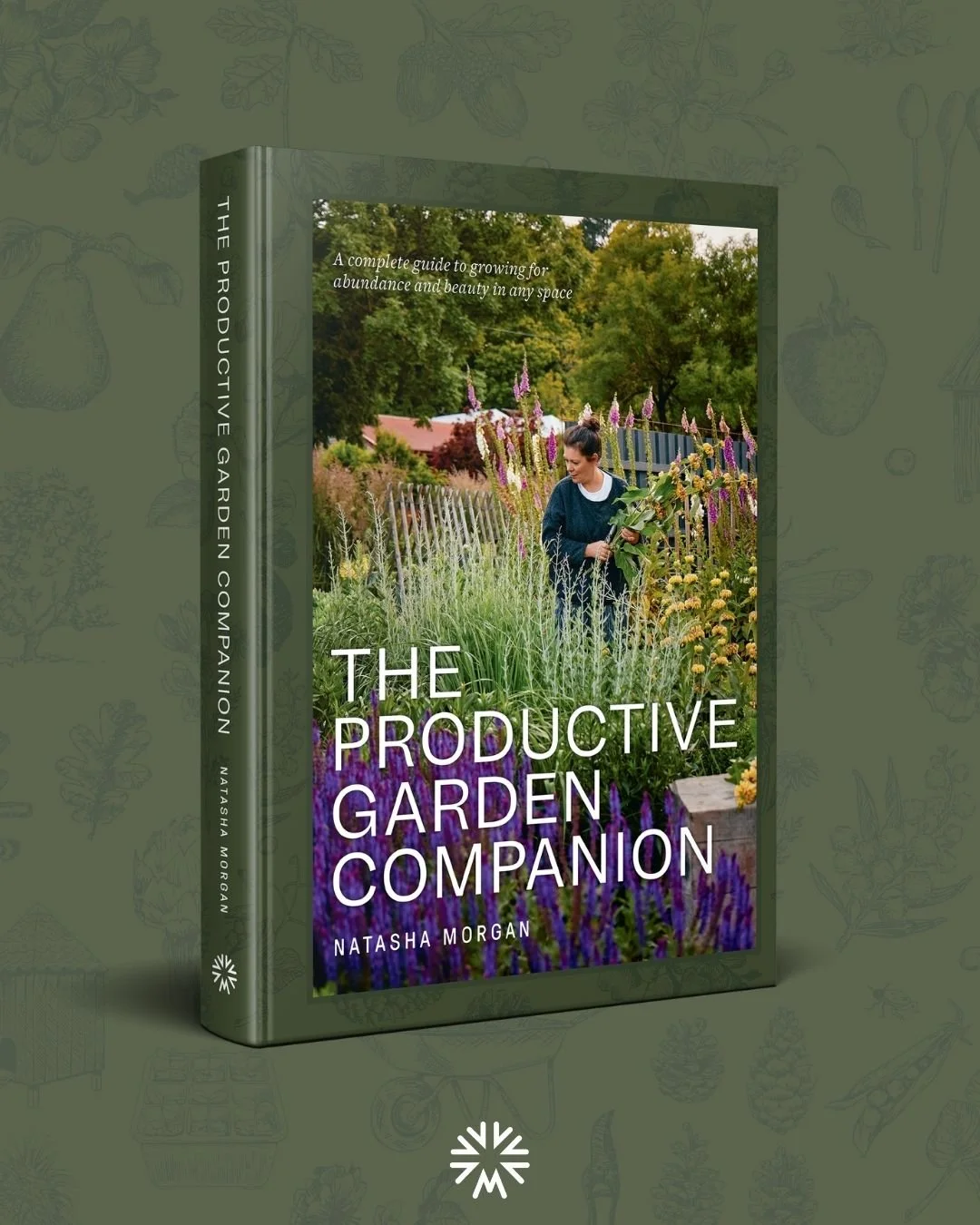
I came to that question the long way round. I have been a gardener since I was a child, loving the plants themselves — their beauty, the small triumph of coaxing something difficult into growth — long before I knew anything about design. Design came later, through study and then through fifteen years of practice, learning to read space before planting: mass and void, the way one volume sits against the next. What took me far longer to see is that winter performs that reading for you, for free, once a year. When I was finishing my book, The Productive Garden Companion, and battling with the cover direction as most authors do, I’m told, artist and friend Andrew O'Brien stripped its cover to black and white, to test it — because colour is the most seductive thing in any image, and only with the colour gone is the eye forced onto whether the composition is genuinely well made or merely attractive. That is precisely what winter does to a garden.
I am in good company here. Piet Oudolf, whose plantings have done more than anyone's to rehabilitate the idea of a garden in winter, chooses a plant as much for how it dies as for how it blooms — the echinacea for the cone it leaves behind, the miscanthus for the plume that frost turns to a small sculpture. Dan Pearson writes about the moment in autumn when you finally take your hands off the reins and simply look. Arne Maynard says that only in winter, stripped of its summer froth, can the true layout of his garden be seen for what it is. None of them is mourning a gap. They are describing a season of revelation that the rest of the gardening world has somehow agreed to call empty.
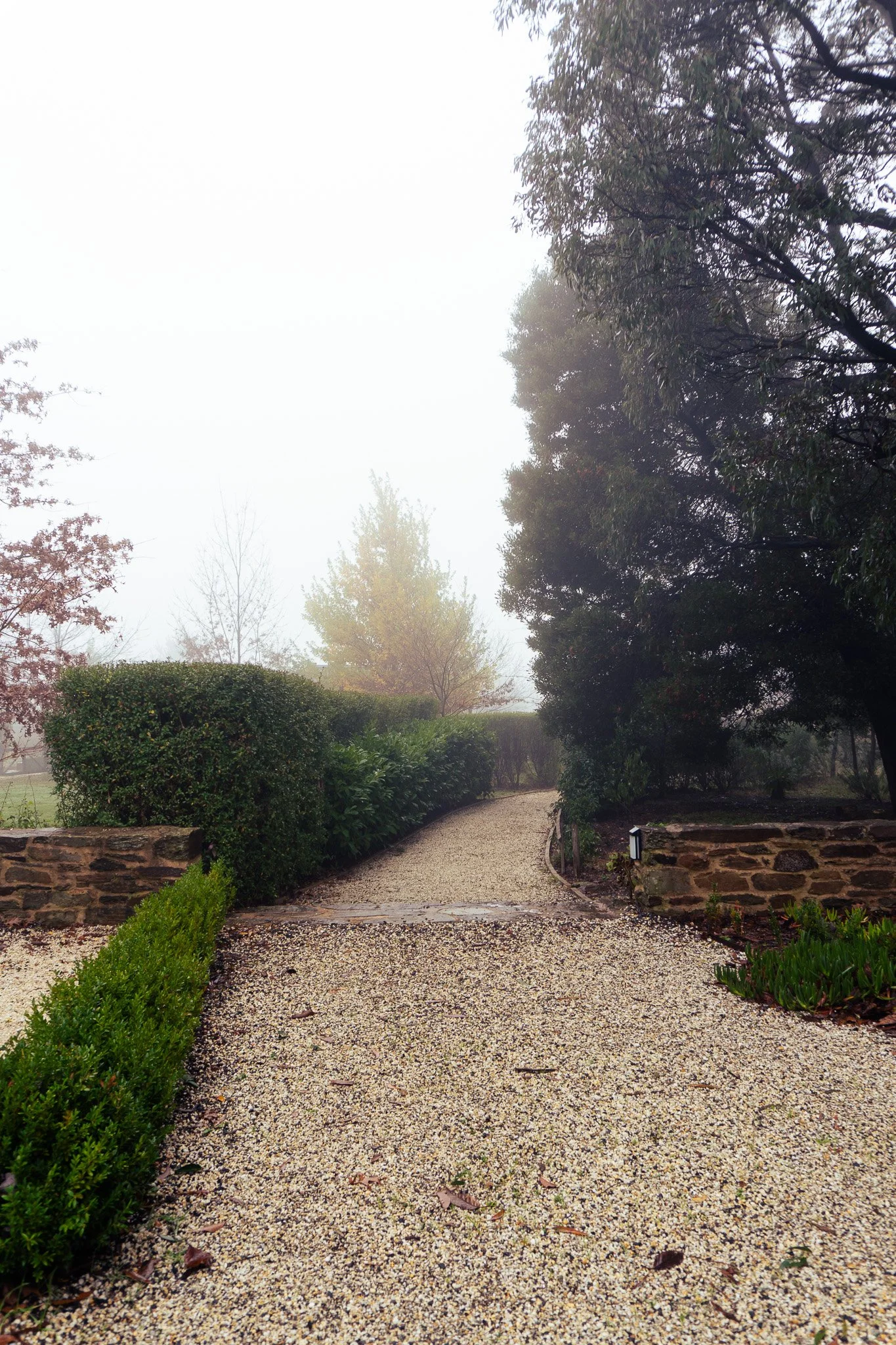
It helps that I garden where I do. There is a particular gift in this volcanic country of the Victorian Central Highlands, and it only becomes fully visible in the cold. Deep fog and real frost most mornings, settling in the low places and silvering everything they touch. A low, raking light that comes in almost horizontally and finds the texture in everything it crosses. From my garden I can see the old trees on Wombat Hill standing against a pale sky, reading almost like a wall beyond the fence. Five minutes away at Musk, where it snows some winters, Andrew has spent years making Stonewalls — twenty-five acres of garden and bushland shaped through a painter's eye.
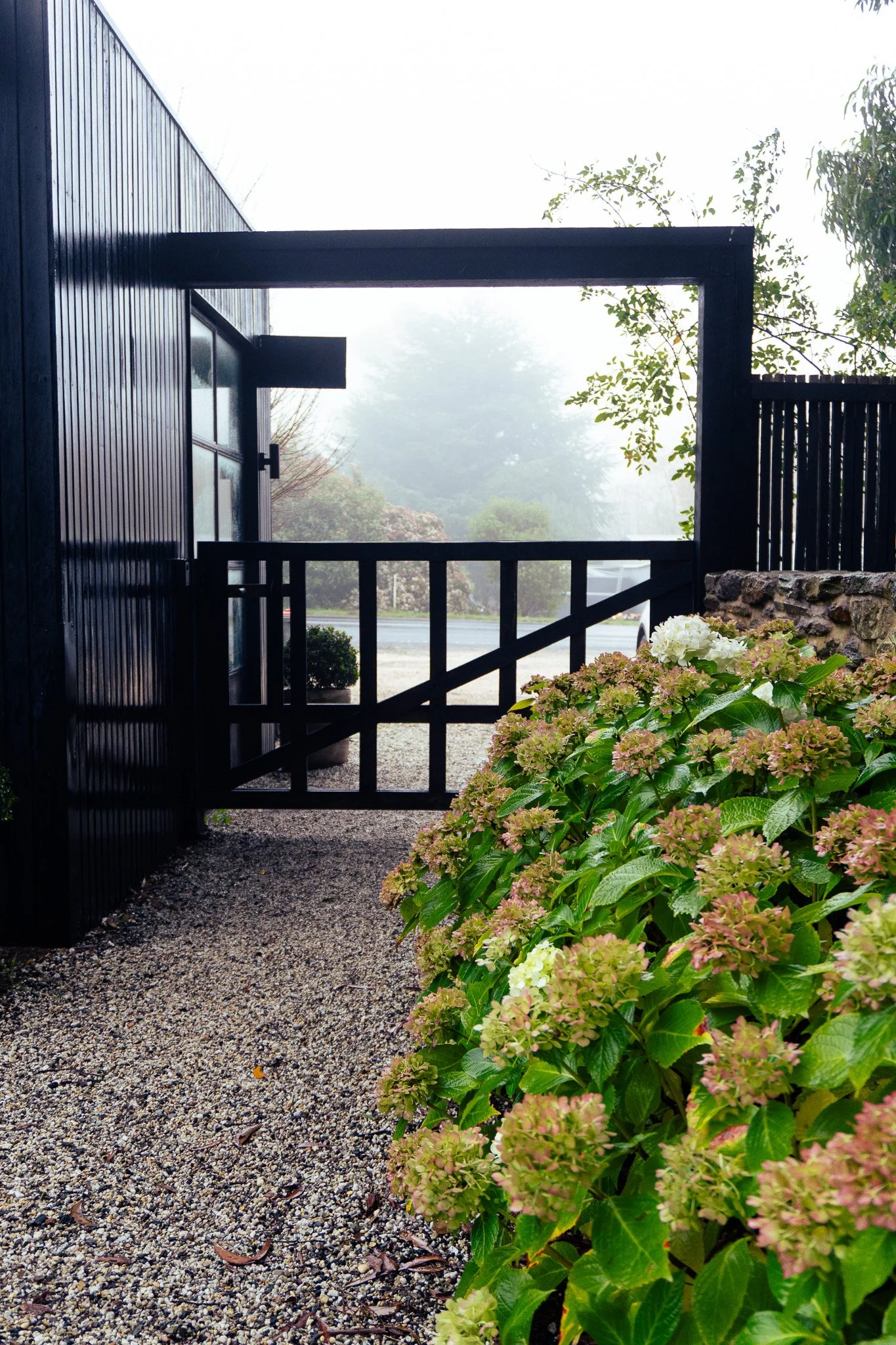
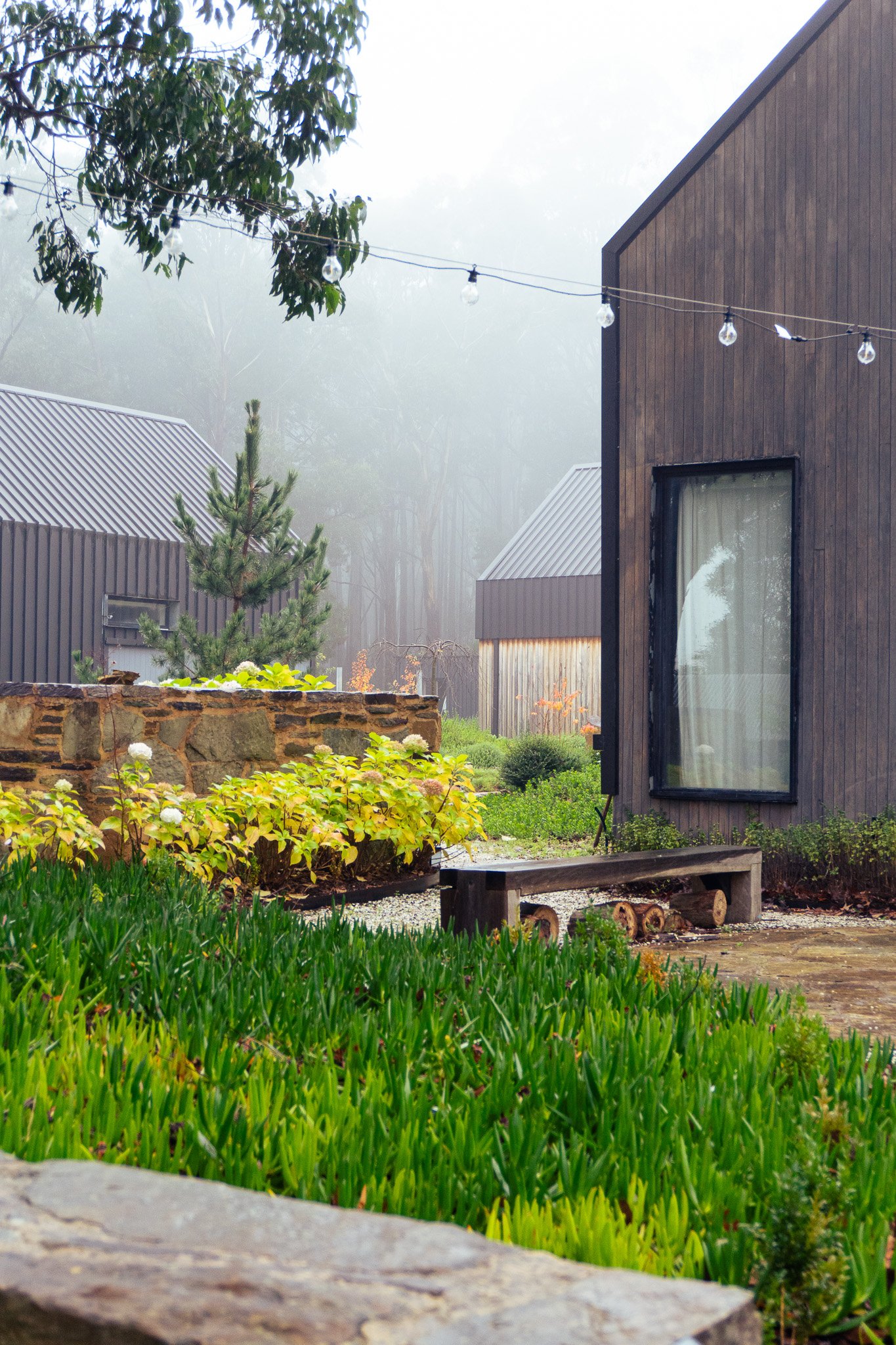
He comes to structure from the opposite direction to me, through paint, and he reads the gaps in a garden as the load-bearing parts: the space between two bare branches, the void between one plant and the next, the thing that gives a composition its tension. The black barn buildings he has set across the land do the same work as Des's monochrome ground. They hold the colour the way an underpainting holds the bloom.
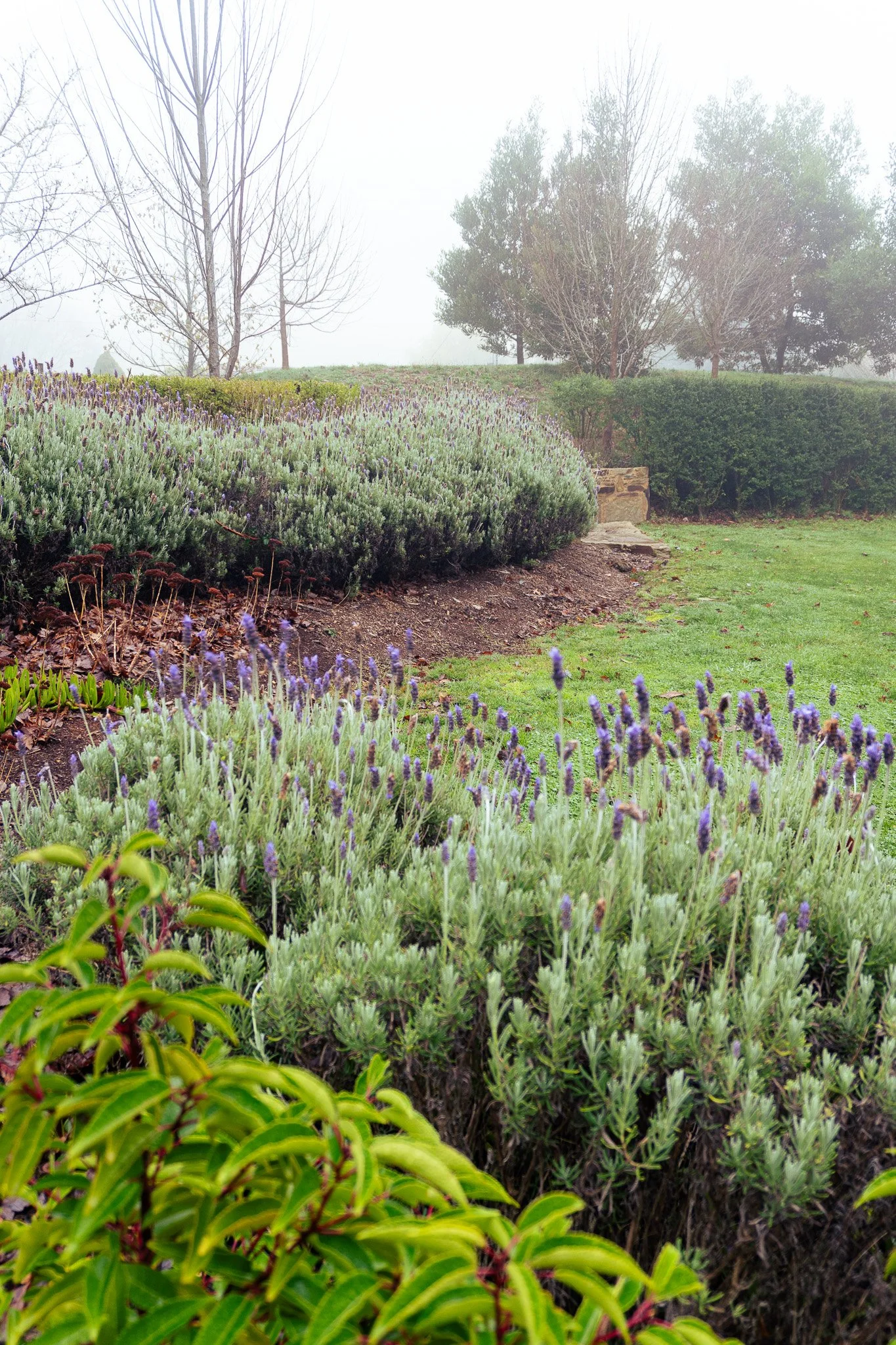
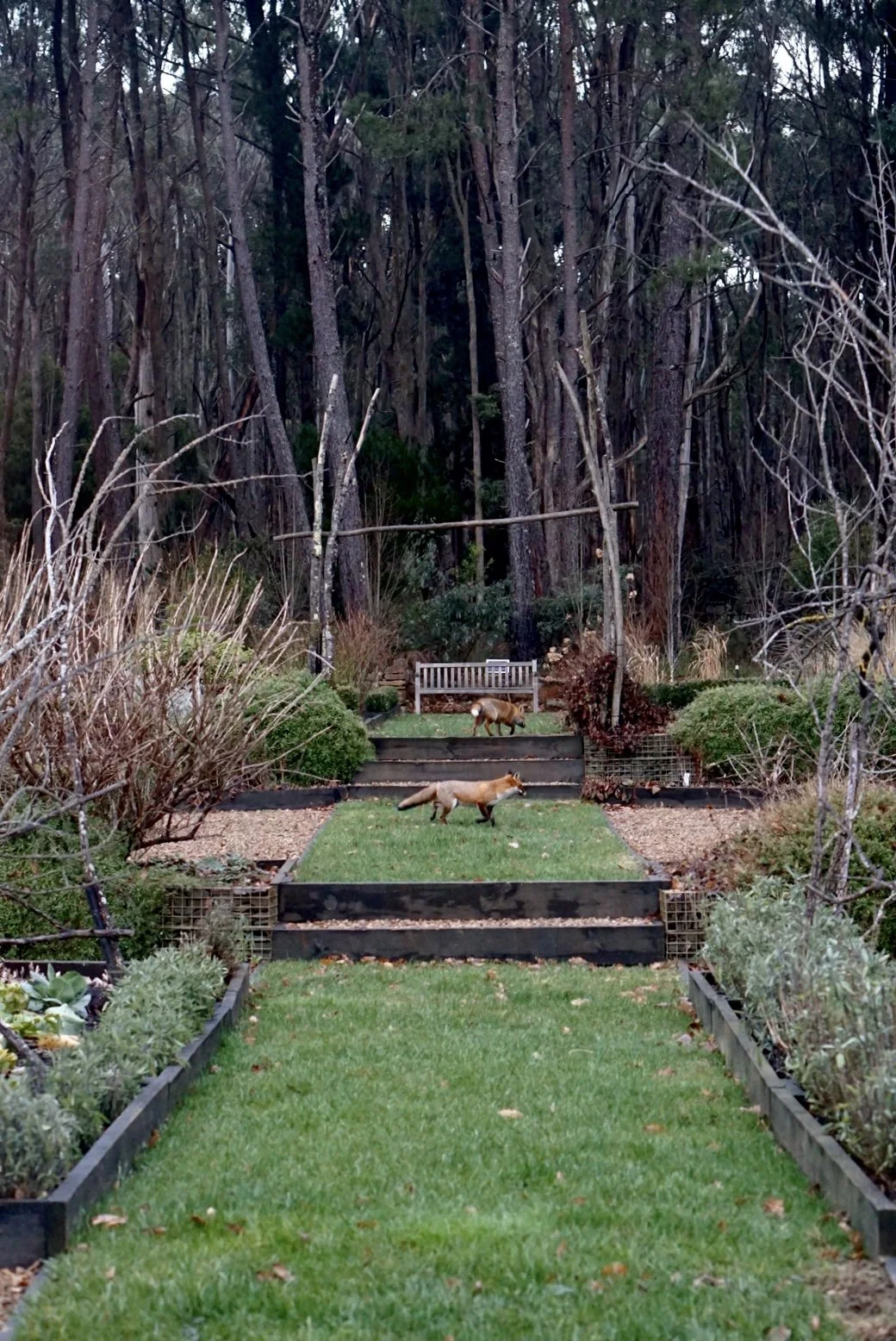
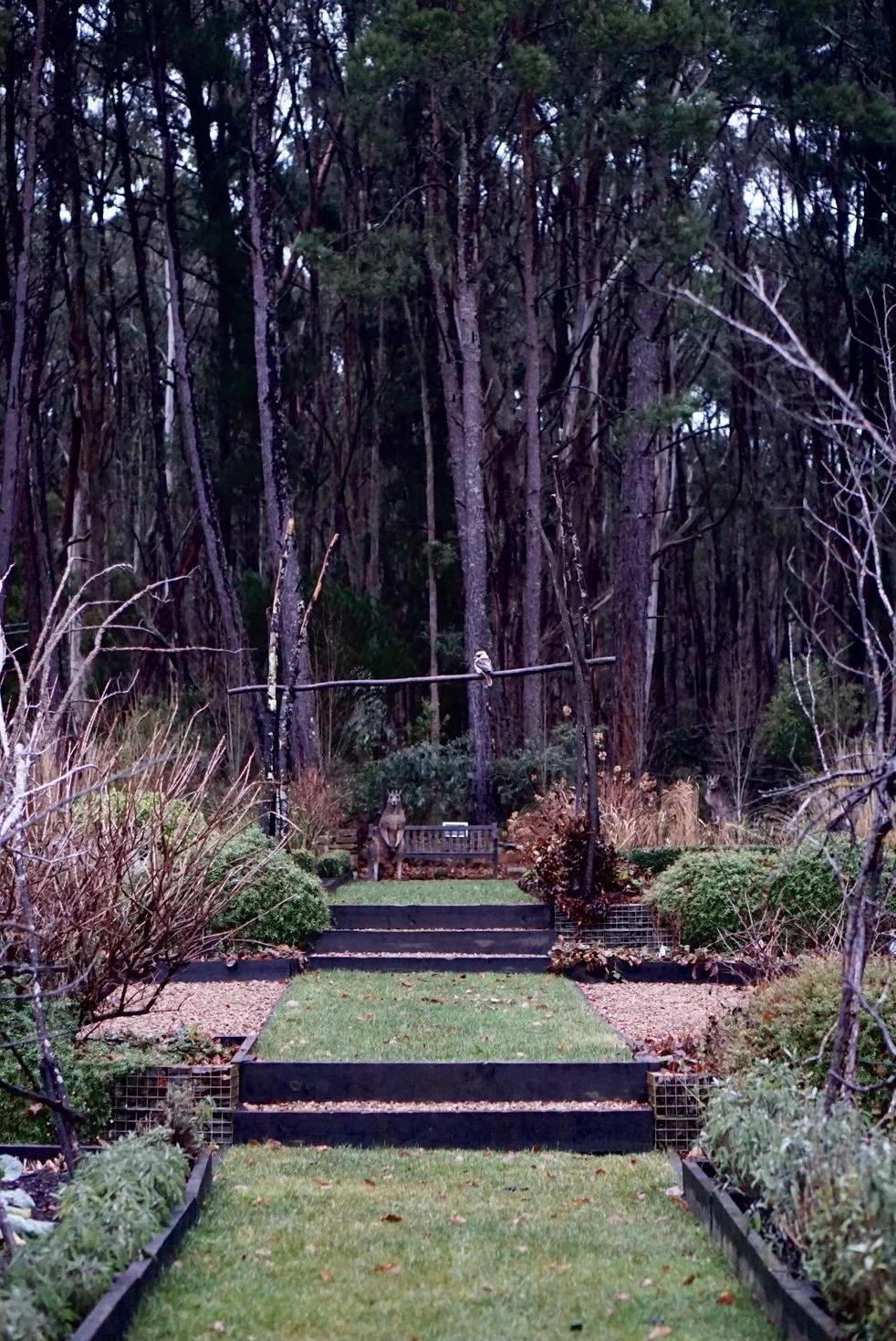
I have tested this at both ends of the scale. At Oak & Monkey Puzzle, my old five acres at Spargo Creek, the gesture that organised the whole garden was a long sweep of open lawn — a spine — and it was every winter, when the planting drew back, that I could see whether it still held the place together. The emptiest part was the most important part. The frost-crusted lawn at Little Cottage on a Hill now teaches me the same lesson in miniature, small enough to take in at a single glance.
People think of winter as the end of the gardening year. Since leaving city life and learning to live with the land, I have never been able to feel it that way. For me it is the prelude — the season of greatest promise, the months I spend dreaming and planning before anything is asked to grow. I sit with a cup of tea and I look: where the frost settles, where the structure isn't yet holding. You lay the monochrome ground first, in the cold, and everything bright comes afterwards, and comes better, because of it. This is the thinking that runs underneath my book, The Productive Garden Companion — that you plan by observation rather than by dates, and that the quiet seasons are where the foundations are laid. It is also what Andrew and I are opening both our gardens for, on a single and rare Sunday in July: a day to put your hand on a cold wall and your eye to a stripped border, and feel the argument for yourself.
The sun reaches the lawn eventually. The frost lifts in the first hour, and by then the garden is already reorganising itself in my head — the greys turning into a map of what they will hold once the colour comes back over the top.
Winter Structure Masterclass — with Andrew O'Brien of Stonewalls and Natasha Morgan.
Sunday 12 July
10.30am–3pm
Little Cottage on a Hill, Daylesford & Stonewalls, Musk
Limited to 25 places
Continue your gardening journey with me
If you enjoy this kind of content, my workshops offer more detail and guidance on design, productivity and seasonal care.
If you are building your garden from home right now, my e-books on Wicking Bed Gardens, Introduction to Backyard Chicken Keeping and Compost for Beautiful Productive Gardens offer practical step by step guidance that pairs well with the workshops.
I share seasonal tips, behind the scenes at Little Cottage on a Hill, and new resources through my newsletter. Subscribe to receive my entire plant list from the garden as a personal thank you.
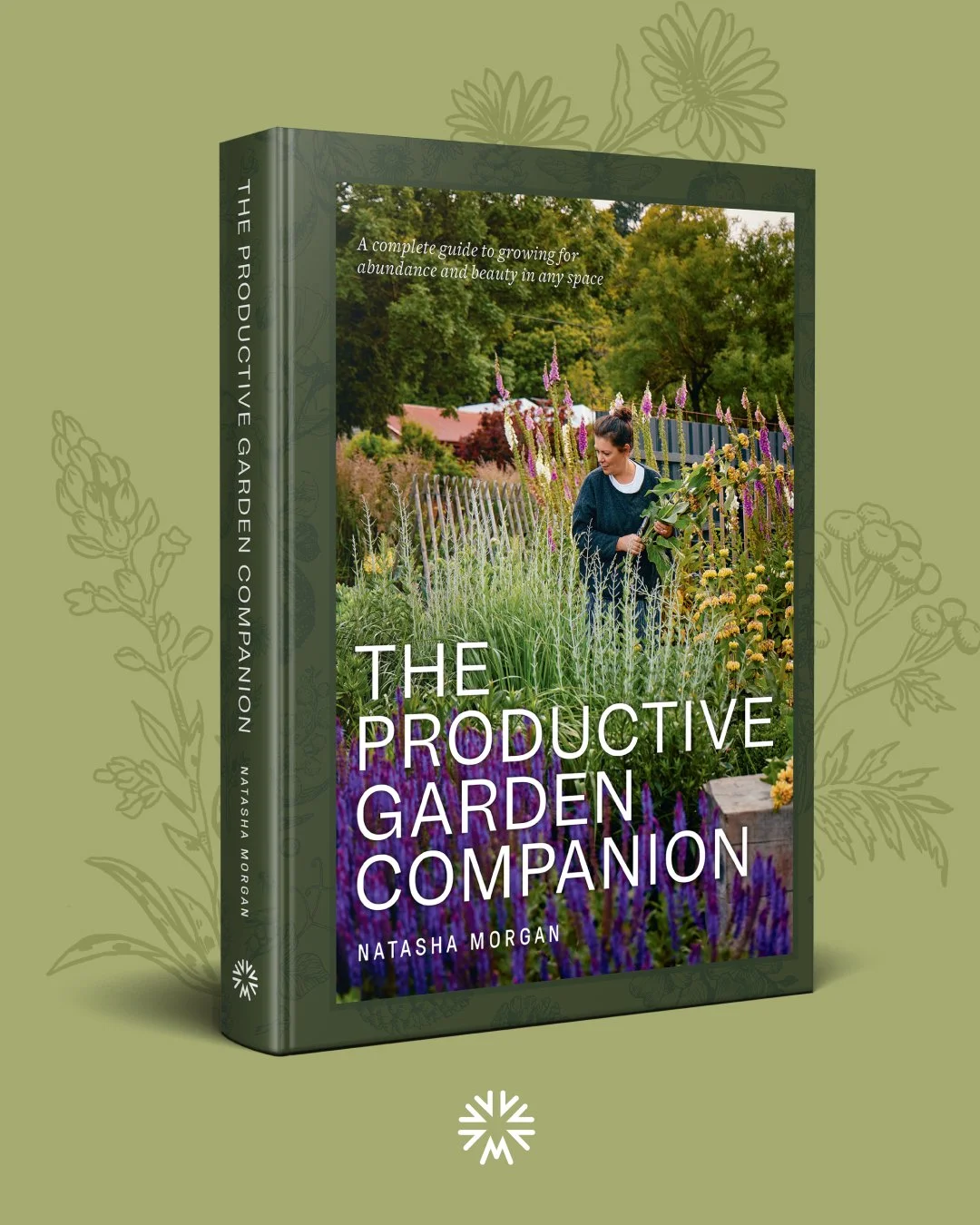
You can also pre-order my book The Productive Garden Companion, the book I have wanted to find my entire life. A complete guide to growing for abundance and beauty in any space. The Productive Garden Companion is a practical, reassuring and visually rich modern gardening book that meets gardeners wherever they are, from windowsill pots to generous acreage.
You may want to check out my related content below:
Looking Back - A Rare Glimpse Inside Oak and Monkey Puzzle
My top 5 plants - from Oak & Monkey Puzzle
Lessons in Abundance - Life at Little Cottage on a Hill
Stay connected for more seasonal inspiration:
Instagram | Facebook | Gardenstead | LinkedIn | Pinterest | YouTube | Website | Newsletter
Thanks so much for following along.
Natasha xx
Feijoas: the fruiting hedge that gives back
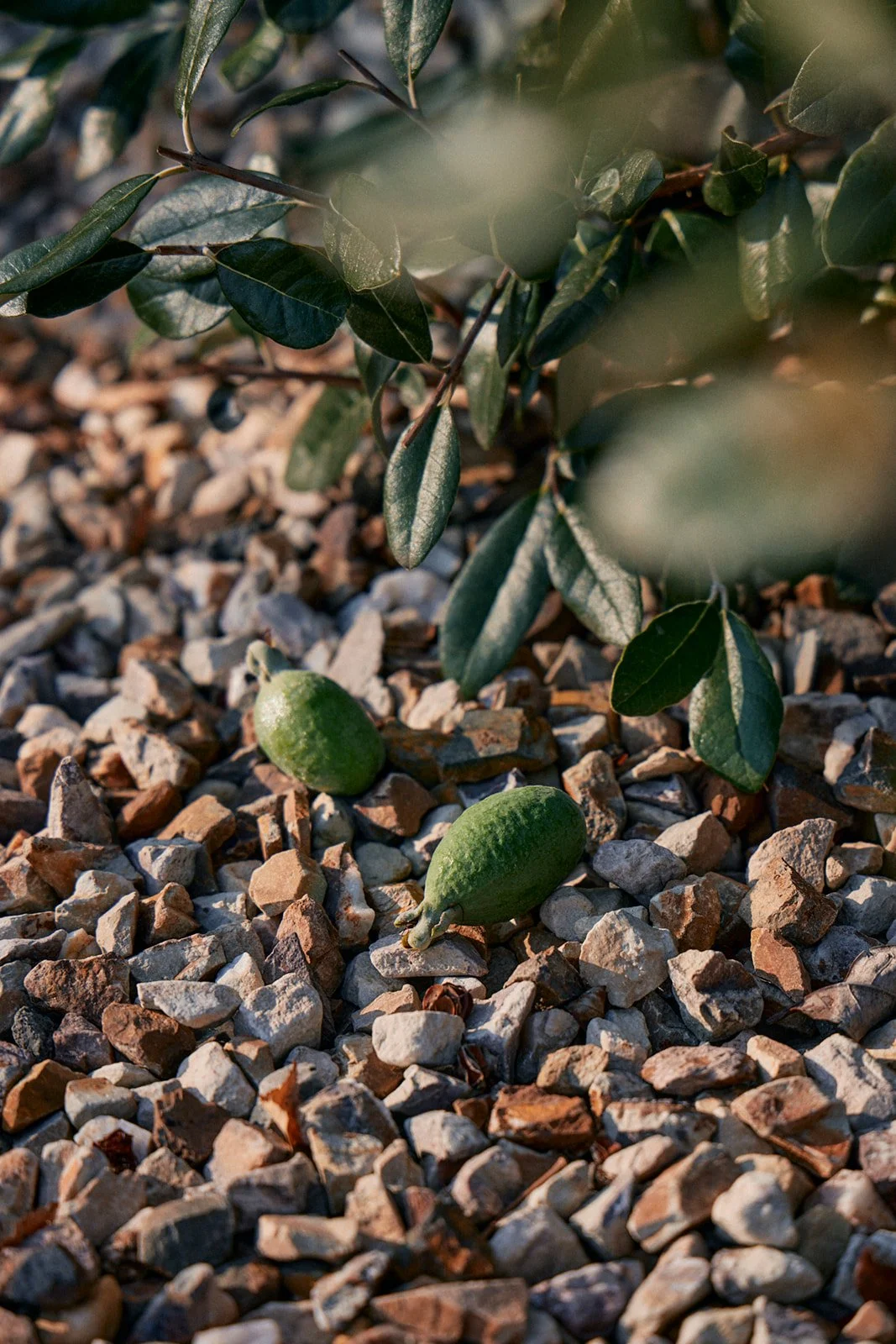
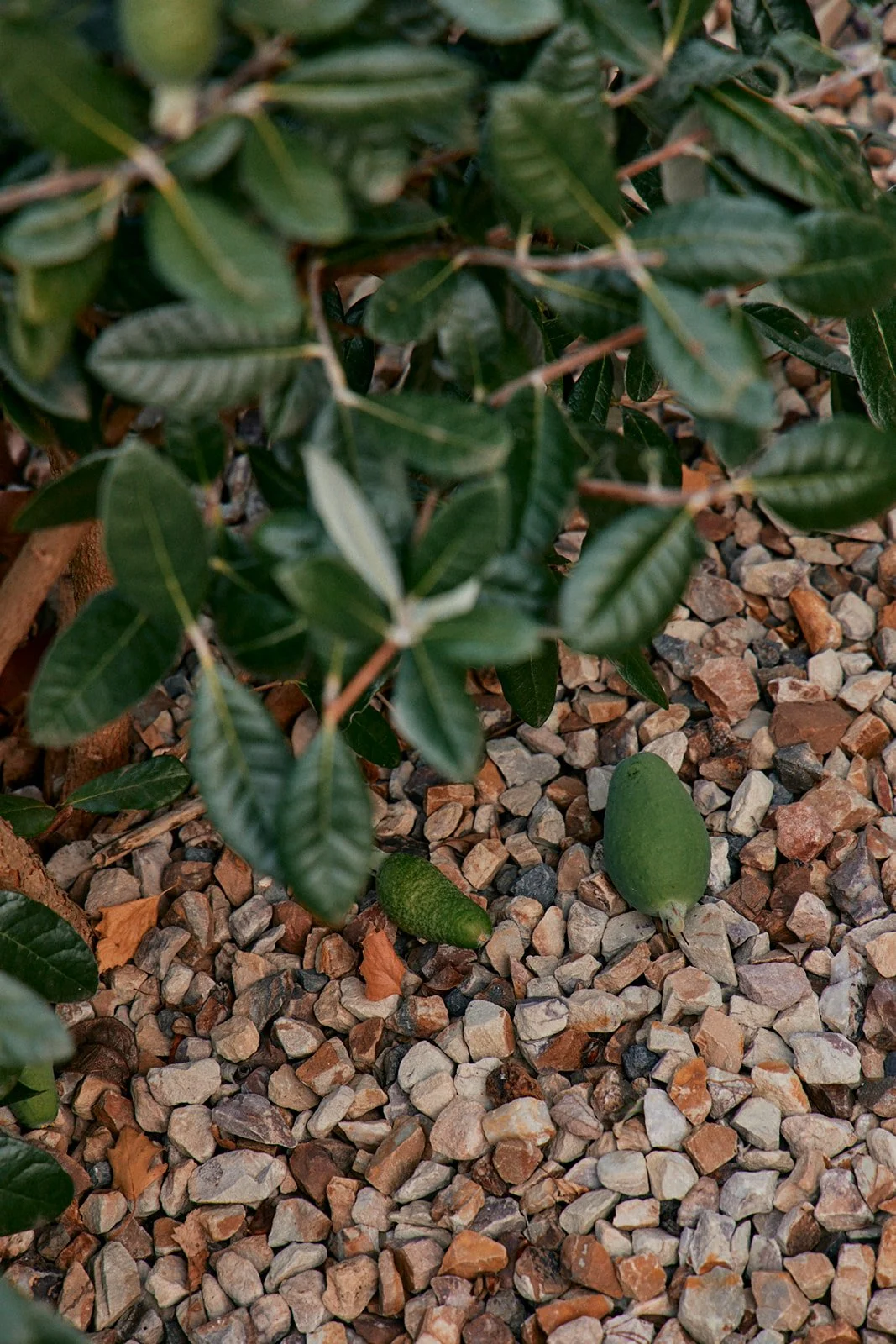
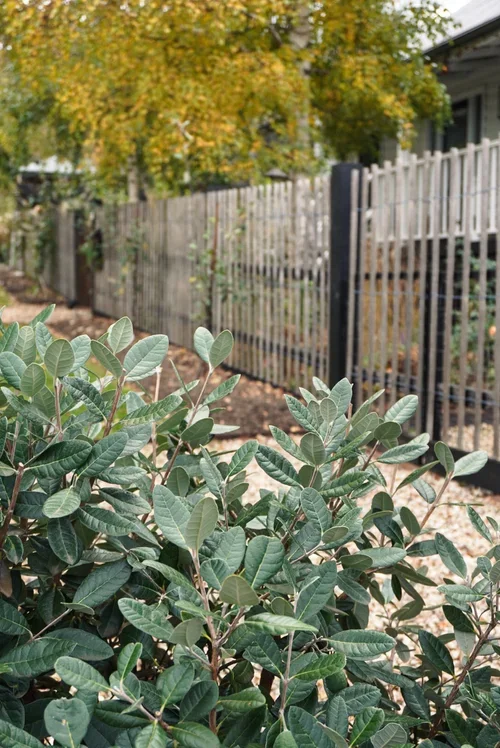
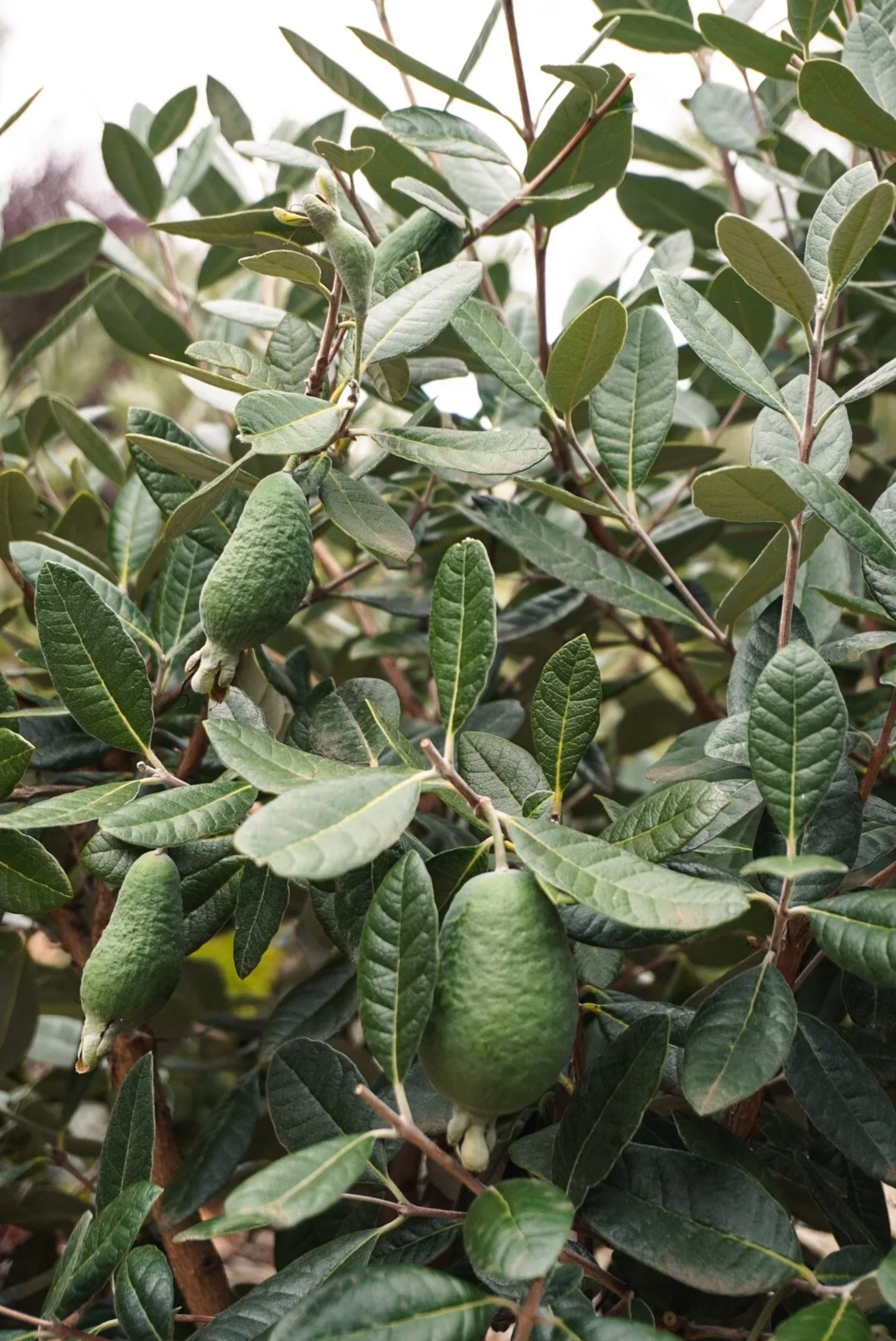
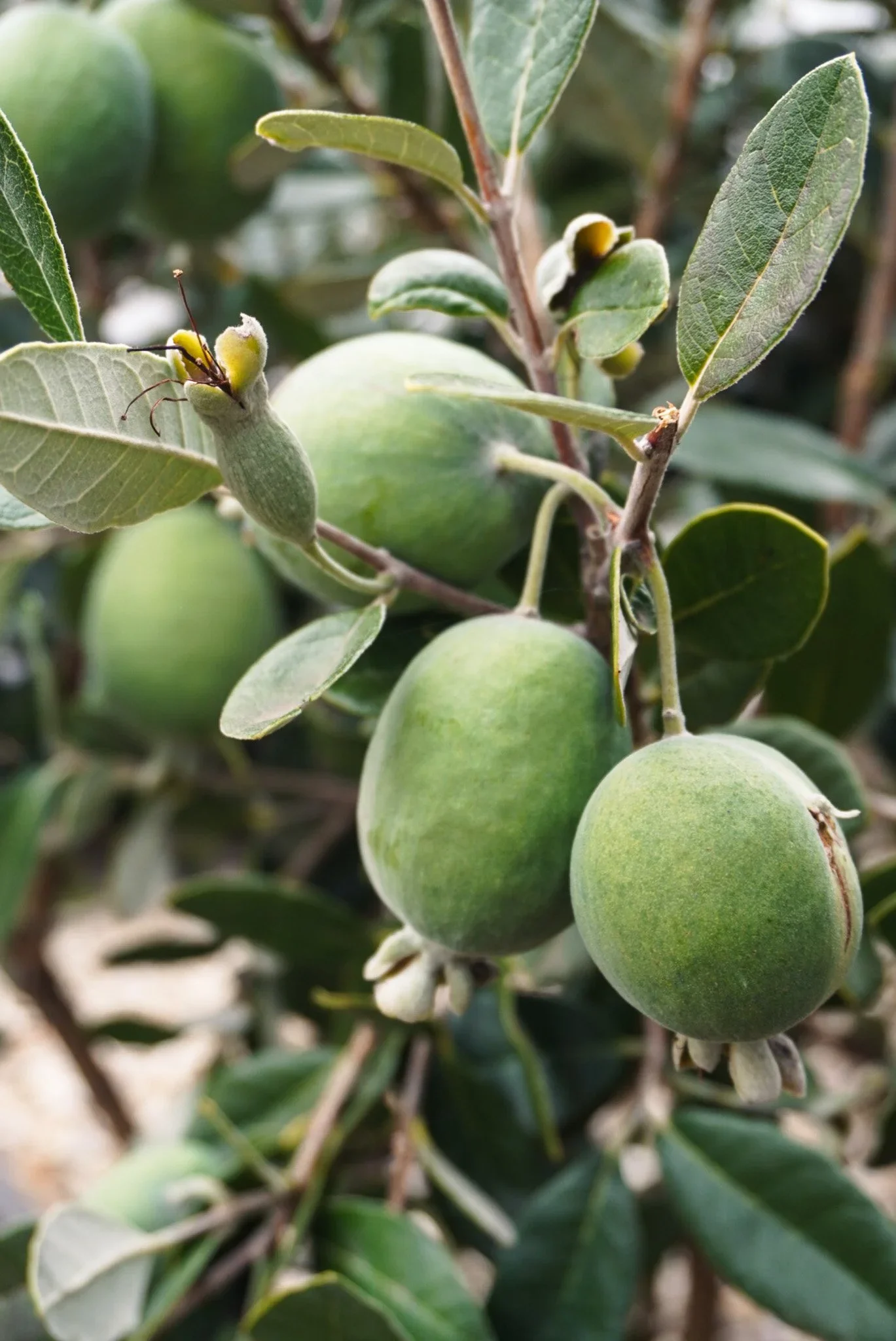
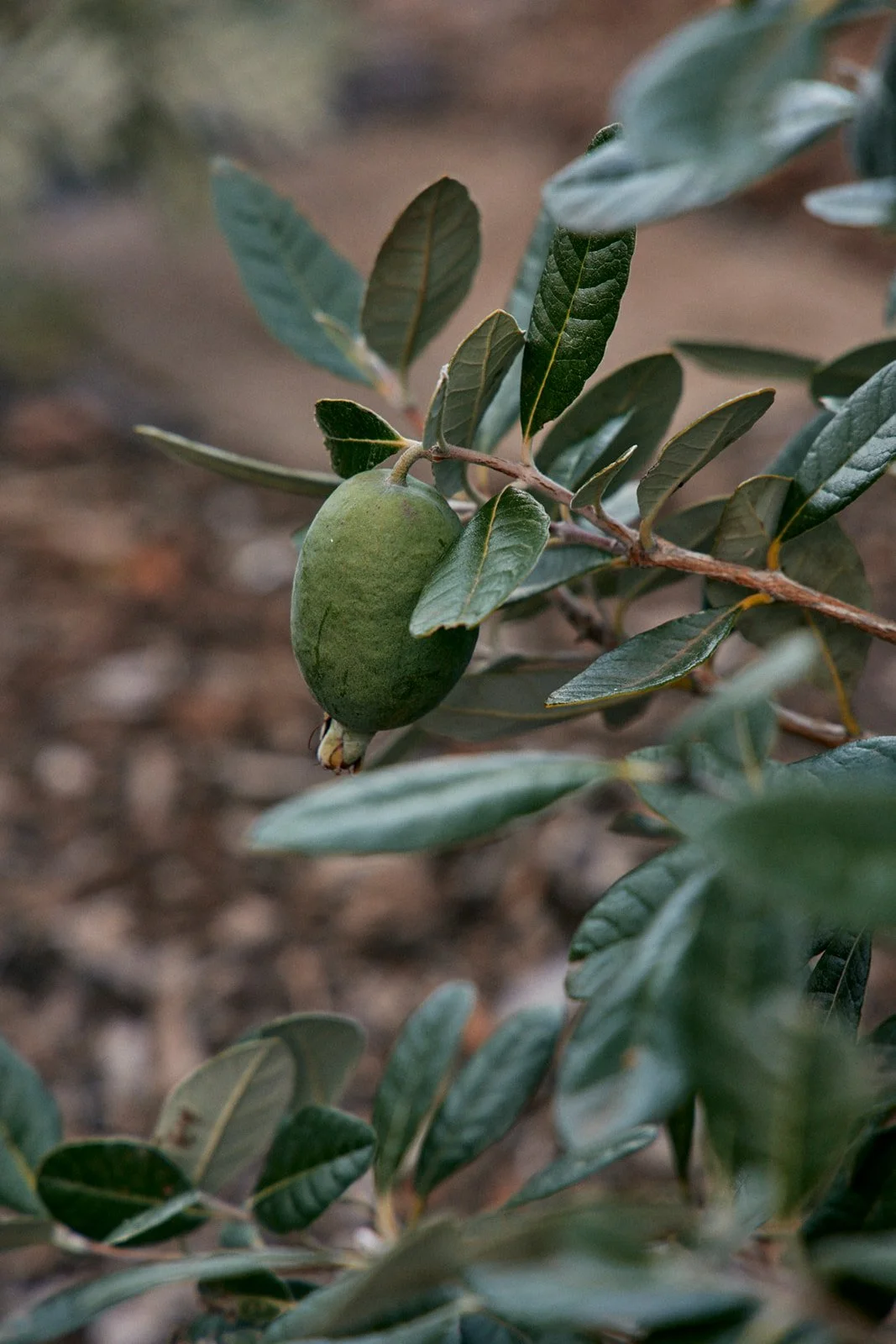
I smell them before I see them. I'll be walking the front of the garden on some errand that has nothing to do with fruit, and there it is — that perfume coming up off the gravel. Pineapple, guava, something floral underneath, a sherbet edge to it. I stop. I look down. And there, half-tucked under the foliage or sitting in the stones where they've fallen, are the feijoas. Plain green. Easy to miss entirely if your nose hadn't already told you they were there.
I still find it astonishing that a fruit so unremarkable to look at gives itself away by scent alone.
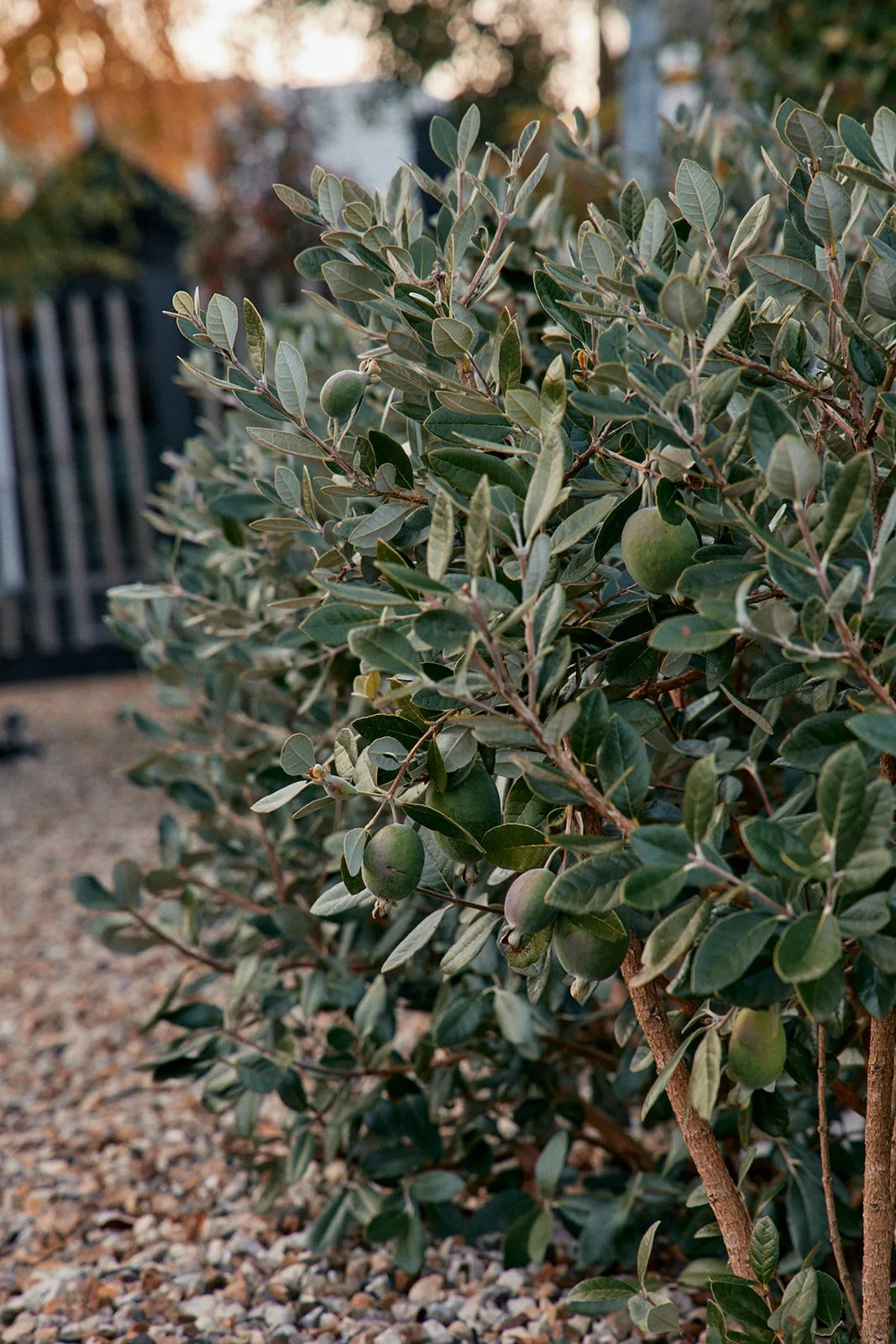
When I wrote about this hedge last year, the plants were barely a metre high and had only just begun to fruit. It was thrilling, and it was mostly promise. I'd put them in for fruit, yes, but also for structure, and for the privacy of a living screen that would, in time, soften the neighbouring rooftops that sit between me and the hills.
A year on, the rooftops are still there. Slightly less of them. The hedge hasn't reached its height — I didn't expect it to in a single year — and it hasn't yet done the screening job I planted it to do. But it has thickened and settled, and it has begun to behave like a part of the garden with something to do, rather than a row of new plants hoping to make it. And this year it has fruited properly.
That's where the satisfaction actually sits for me. Not in the finished picture — gardens rarely hand us that on our own timetable — but in the evidence that the thing is working. The roots have taken. The plants have read the place. A decision I made a couple of seasons ago has started to give something back.
Why a hedge, and why feijoas
At Little Cottage on a Hill, every plant has to earn its keep. That doesn't mean it has to be edible. It means it has to contribute. A plant might hold structure through winter, feed the bees, soften a fence, throw a little shade, carry scent, frame a view, or simply pull me out the back door in the morning. The ones I value most do several of those things at once.
Feijoas are exactly that kind of plant.
Pineapple guava, to use the other name — an evergreen shrub or small tree with thick, silver-green leaves, edible flowers, and that fragrant autumn fruit. You can grow a single specimen happily enough. For my block, a hedge made far more sense. I wanted a boundary that worked: something to hold the edge, screen the roofline over time, and still feed me. In a small garden I come back to this logic constantly. A hedge can also fruit. A windbreak can feed you. The plant that gives you privacy can also become part of what's happening in the kitchen.
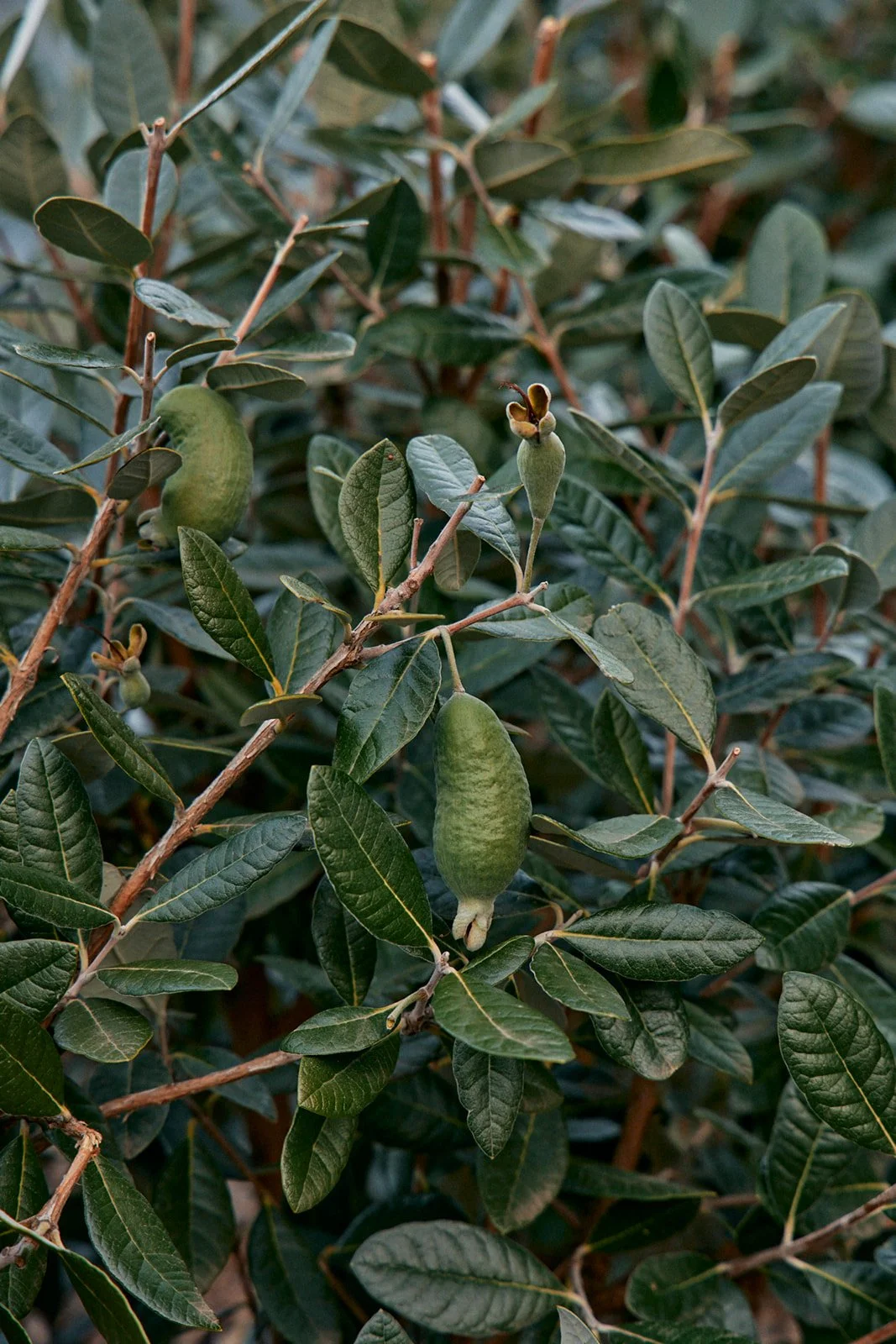
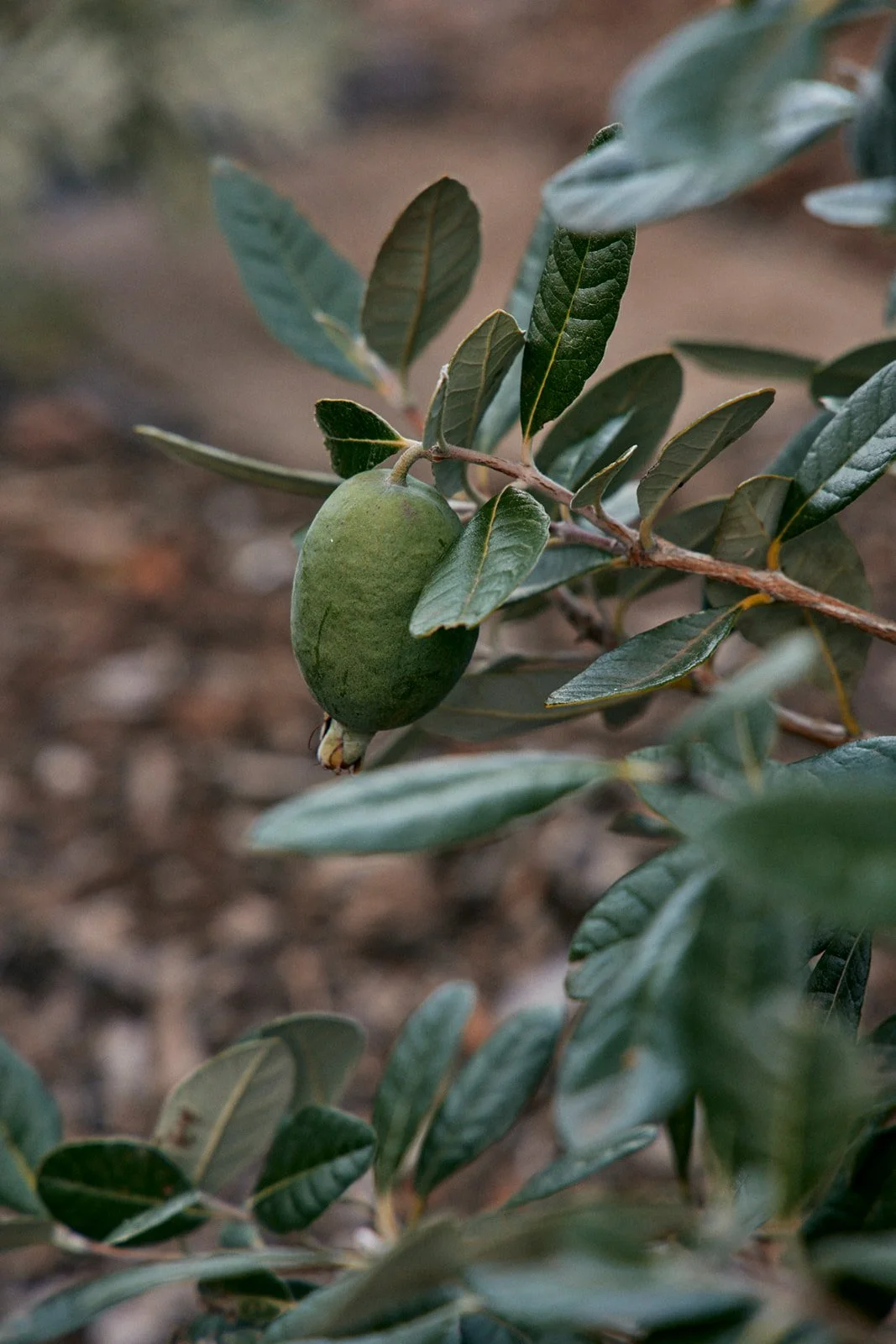
They aren't flashy. They ask very little. For most of the year they sit in the background holding their shape, and then in spring the flowers come — fleshy, sweet-petalled — and at the cold end of autumn, when much of the productive garden is winding down, the fruit begins to drop.
A fruit for the edge of winter
The timing is a large part of why I love them.
In a cool-climate garden, by the time feijoas ripen the berries are long gone, the stone fruit finished, the apples and pears winding down. The garden is moving into its quieter rhythm. And then the feijoas start to fall. They stretch the productive season out at exactly the point it can begin to feel as though the garden is closing in for the year. There's still fruit to gather. Still scent in the kitchen. Still something to scoop straight from the skin, or stew, or put away for later.
That last generous offering, right before the deeper work of winter begins, matters more than it might sound.
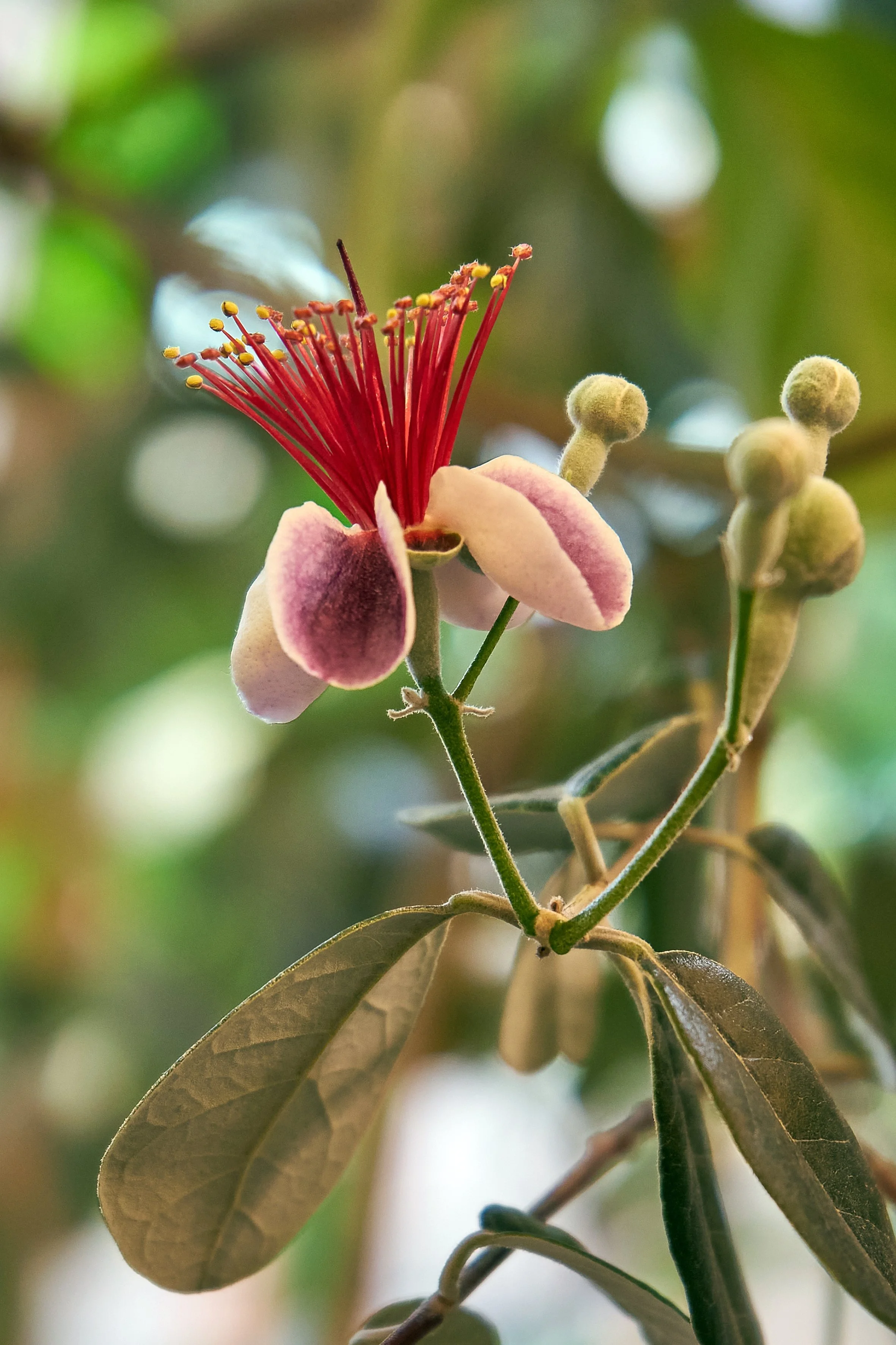
Feijoa blossoms.
A year on
This year the hedge has really started to give.
Not the way an old, established feijoa gives, where the fruit carpets the ground and you stand there wondering how you'll ever use it all. Mine is young. But against last year the shift is unmistakable — more fruit, more often, and more of those moments of bending down as I pass and coming up with a handful.
It still stops me. I think that's the part I love most about growing food at home — the way it punctuates a day. You're on your way to do something else, you glance down, and the garden has interrupted you. Gently. Asking you to notice.
The feijoas aren't doing everything I planted them for. The neighbours are still in view. The screen isn't there yet. But the fruit is the reminder that a garden doesn't have to be finished before it starts to give. We plant for a future we can't quite see, and we're fed along the way.
How to grow feijoas well
Feijoas get called easygoing, and they mostly are. Easygoing isn't the same as ignore-them-entirely, though. Like any fruiting plant, they reward thoughtful establishment, a bit of watching, and some seasonal care.
Plant more than one. Some varieties are self-fertile; many crop better with a partner for cross-pollination. In a home garden, more than one variety is the safer bet if it's fruit you're after rather than foliage. I planted mine as a row, which gives me the hedge and improves pollination at once. One plant can be useful. A repeated line of them becomes structure.
Give them light. Feijoas will tolerate some part shade, but they want sun, and for fruit I'd give them all the light the site allows. They want drainage too. They're tough, but they don't want wet feet. In heavier ground I plant them slightly proud of the surface and work in compost; on dry or exposed sites, mulch well and keep the water up while they establish. At Little Cottage the hedge sits where it can be both useful and seen — I don't like hiding the productive parts of a garden away.
Plant at the right time. For much of Australia, March to May is the window. Autumn planting lets the roots settle before the spring push, while there's still some warmth in the soil. In genuinely cold or frost-prone pockets I'd be more careful — young plants may want protection through their first winter, or you might wait for the soil to warm again in spring. Read your own site before anything else.
Water while they settle in. Established, they're resilient. Young, they still need you — deep watering through dry spells, especially as the fruit forms. I don't drown them and I don't forget them, and in a hedge that's worth saying twice, because closely planted shrubs end up competing with one another. A good mulch layer does an enormous amount of the work.
Prune with restraint. The temptation with a hedge is to shear it into a wall, but hard pruning costs you flowers and fruit, so I keep a light hand. I want density without stiffness — thickening and screening, but with light and movement still coming through. After fruiting I take out anything dead, crossing or awkward, and lightly shape where it's needed. In a cold area I'd hold off until the worst frosts have passed.
Let the fruit fall. This is one of the loveliest things about them. You don't tug, you don't guess. When they're ripe, they drop — that's the cue. I collect off the ground daily once they start. A ripe one has the strong perfume and a slight give: not squashy, just yielding. They bruise easily and they don't keep, so this isn't fruit to leave sitting in a bowl for a week.
Taste the flowers — gently. The petals are edible, sweet and soft, with that sherbet quality that's hard to resist while you're still waiting on the fruit. But no flowers, no fruit. So I taste a few and leave the rest to the bees. That's the constant negotiation in a productive garden: take what's offered, but not in a way that stops the next offering.
Making the most of the harvest
I still love them fresh — halved, scooped with a teaspoon, standing in the kitchen or out in the garden.
But roasting them changed how I think about the fruit entirely. The first time I had roasted feijoa was in a galette from Two Fold Bakehouse here in Daylesford, paired with apple and folded into sourdough pastry. Something shifted. The sharp, perfumed thing I knew turned soft and deep and almost spiced. I've been far more interested in cooking them ever since.
They stew beautifully, spooned over porridge or yoghurt or cake. They go into crumbles with apple. They make good jam, especially with ginger or fig or lemon. And they take well to preserving — bottled, fermented, folded into syrups and shrubs, where that floral perfume can be carried well past the short window it's actually here.
Because that's the thing with feijoas. The season is generous and brief. Once they begin to fall you have to keep up. Some get eaten where I stand, some go over the fence to neighbours, some sit scenting the kitchen for a day. But when the fruit really arrives, preserving stops being a romantic idea and becomes a practical rhythm — a way of carrying a short season forward into the cold months. A glut in May becoming syrup in July. That's the right kind of abundance, to my mind.
Would I do it again
Without hesitation. I'd probably plant more.
Every feijoa I find on the gravel reminds me why they went in: for the fruit, but also for the shape the garden is still growing into, for the privacy I'm waiting on, for the way a small block can hold so much more than seems possible when every plant is asked to pull its weight. One day I hope the hedge meets the horizon and the rooftops vanish behind the silver-green. For now, I'll take the fruit.
And if you're thinking about your own front garden, a boundary, or a verge, the feijoa is a good example of one plant doing several jobs at once — screening, flowering, fruiting, feeding pollinators, softening a street edge, and stretching the season into the start of winter.
Not every verge will suit one, mind. Council guidelines, sightlines, services, the path, car doors, the mature height of the plant — all of it matters. But where there's room and your local rules allow, productive screening is a clever and generous way to make a public edge work harder.
That's exactly the kind of thinking I get into in my newest free ebook, Nature Strip Gardens: Fundamentals for Beautiful, Compliant Verges — a practical guide to reading your site, working with your council's guidelines, building better verge soil, choosing plants with care, and making a strip of ground that's beautiful, safe, useful and generous to the street.
Download it, share it, and start with the ground you already have.
Thanks so much for following along.
Natasha xx
Continue your gardening journey with me
If you enjoy this kind of content, my workshops offer more detail and guidance on design, productivity and seasonal care.
If you are building your garden from home right now, my e-books on Wicking Bed Gardens, Introduction to Backyard Chicken Keeping and Compost for Beautiful Productive Gardens offer practical step by step guidance that pairs well with the workshops
I share seasonal tips, behind the scenes at Little Cottage on a Hill, and new resources through my newsletter. Subscribe to receive my entire plant list from the garden as a personal thank you.
You can also pre-order my book The Productive Garden Companion, the book I have wanted to find my entire life. A complete guide to growing for abundance and beauty in any space. The Productive Garden Companion is a practical, reassuring and visually rich modern gardening book that meets gardeners wherever they are, from windowsill pots to generous acreage.
You may want to check out my related content below:
June Garden Tasks - For Australian Climates
Landscape Lingo - The ‘Chelsea Chop’ and Ways to Have Plants Look Their Best
No Dig Gardening - Less Work, Healthier Soil
Stay connected for more seasonal inspiration:
Instagram | Facebook | Gardenstead | LinkedIn | Pinterest | YouTube | Website | Newsletter
Thanks so much for following along.
Natasha xx

Caring for Ornamental Grasses – When (and Whether) to Cut Back
As we head toward winter here in the southern hemisphere, it’s the time of year when I’m often asked: Should I be cutting back my grasses now?
My answer, more often than not, is not yet.
For many of us, ornamental grasses are still holding strong—bleached, upright, architectural. They continue to offer form, movement, and quiet seasonal interest right through the cooler months. Cutting them back too early removes not just their visual contribution, but also the habitats they offer to insects and birds.
So if you’re unsure what to do right now in late May, my suggestion is this: observe closely, and wait if you can. Let the garden keep offering what it still has to give.
Below, I’ve shared what I do in my own garden at this time of year—including when (and whether) to cut back each type of grass, how to divide them, and how to support them through the seasons.
Why I return to grasses, again and again
I return to grasses time and time again. They’re a favourite go-to in my garden design toolkit—they offer structure and softness, but also bring a kind of seasonal rhythm that anchors the garden and that just keeps on giving.
They catch the light, respond to the breeze, and shift with the seasons—moving from verdant to architectural, continuing to anchor the space even through winter.
That’s why I leave mine standing for as long as I can.
Here at Little Cottage on a Hill, the 27-metre long northern planting—filled with Miscanthus, Calamagrostis, Panicum, Molinia and others—does so much of the heavy lifting during the cooler months. It softens the boundary, offers a sense of enclosure, and holds a rhythm at the garden’s edge.
But eventually, they do need cutting back. And each one has its own rhythm.
When to cut back – species by species
Miscanthus (e.g. ‘Eileen Quinn’, ‘Kleine Fontaine’, ‘Yakushima Dwarf’)
Leave standing through winter. Cut back in late winter to early spring, just before new shoots emerge. Trim to around 10–20cm (4–8").
Calamagrostis ‘Karl Foerster’
Often pushes fresh growth early. Cut back in late winter, just before the green blades return. Trim to around 10–15cm (4–6").
Panicum (e.g. ‘Blue Steel’, ‘Iron Maiden’)
Hold their form well into winter. Cut back in late winter or early spring, down to 10–15cm (4–6").
Andropogon scoparius ‘Blaze’
Cut back just before new growth appears in late winter.
Molinia arundinacea
Cut back in late winter. These often flatten with heavy rain or frost, but their form is still beautiful when caught in low light or mist.
And once they’re cut? Don’t be too quick to compost what’s left behind.
Spent grasses make beautiful materials for vases, loose seasonal arrangements, or even twisted into wreaths. Their fine structure, bleached tones, and natural curves bring a quiet, sculptural quality indoors. I often gather armfuls of Miscanthus or Calamagrostis to use around the house—nothing too styled, just simply arranged in a jug or laid across a shelf.
Why not cut grasses back in autumn?
It’s a question I’m asked often—and I understand why. For years, autumn clean-up was the default. But I’ve found that grasses give so much more when left in place:
They provide visual structure and softness when everything else is pared back
They shelter overwintering insects and offer food for birds
They create contrast against bare branches, frosts, and low winter light
They add sound to the garden—seedheads rattling softly in the breeze
Unless the plant has collapsed or rotted at the base, I always choose to leave it be.
Can they be divided? What about in winter?
If a grass is thinning in the centre or starting to dominate a space, division is a simple way to rejuvenate it or create new plantings.
But winter isn’t the ideal time to divide. Most ornamental grasses are dormant through the colder months, and disturbing them too early can lead to stress, rot, or poor re-establishment.
Instead, wait until early spring—just as new growth begins to show. That’s when the crown is active, and divisions settle in more easily. I usually look for the first signs of green shoots before lifting and splitting a clump.
Use a sharp spade to divide the clump cleanly, replant or pot up the divisions, and water them in well. With the full growing season ahead, they’ll re-establish quickly.
Do they need feeding or mulching?
Most ornamental grasses are fairly low maintenance. I do mulch lightly with compost or aged mulch in early spring after cutting back—not to push excessive growth, but to support soil health and give the plants a good start for the season.
Are all grasses safe to leave through winter?
In wetter climates or heavy soils, some grasses can be prone to rotting at the crown if left standing too long. If a grass has flopped or shows signs of decay, it’s perfectly fine to cut it back a little earlier. As always: observe the plant, and respond accordingly.
Can I grow ornamental grasses in pots or small spaces?
Absolutely. Grasses can thrive in containers and smaller gardens—especially those with upright, clump-forming habits. Some of my favourites include:
Calamagrostis ‘Karl Foerster’ – strong vertical structure that holds its shape beautifully
Panicum ‘Blue Steel’ – upright with soft, airy flowering plumes through late summer
Miscanthus ‘Eileen Quinn’ – compact and elegant, ideal for pots or tight borders
The key is choosing varieties that are more restrained in size, and matching their mature height to the scale and depth of the container. A tall grass in a shallow pot will never thrive—so I always make sure the root zone has room to stretch, and the proportions are balanced.
A favourite pairing: grasses, Echinops and Echinacea pallida
One of the things I’ve observed this past year is how well Echinops works structurally in combination with grasses—particularly Calamagrostis. Where I’d planted Echinops ritro just in front of a drift of Calamagrostis ‘Karl Foerster’, the tall, rigid stems of the Echinops acted almost like a scaffold—quietly holding the grasses upright and preventing them from flopping in the wind.
It’s a small detail, but it’s shifted how I think about layering structure in the 27-metre north-facing verge bed. This winter, I’m propagating more Echinops from saved seed so I can carry that rhythm further through the planting. Grasses and Echinops have become one of my favourite combinations—offering contrast, resilience, and structure that carries through the seasons.
I love the way Echinops brings both edge and softness: thistle-like, globe-shaped flowers in mid-summer, followed by intricate seedheads that hold their form through winter. Their upright stems catch the light and hold their line long after flowering is finished—adding texture and subtle architecture to the garden in its quieter months.
Similarly, I’ve long admired the way Echinacea pallida moves with some of the finer, shorter grasses. There’s something so quietly graceful in the pairing—the fine, reflexed petals of the pallida drooping elegantly around a cone of dusky seed, mirrored by the movement of surrounding grasses. Miscanthus ‘Eileen Quinn’ works especially well here—tightly clumped, upright, and modest in scale without losing presence.
Other compact grasses I return to for these kinds of pairings include:
Panicum ‘Blue Steel’ – fine-textured with gentle autumn tones
Miscanthus ‘Kleine Fontaine’ – with a lovely upright form
I like to plant in drifts of four or five—a rhythm that brings coherence without feeling too uniform. It’s a tip shared with me by my dear friend Lily Langham, and it’s one I return to often. Whether it’s grasses, Echinacea, or Echinops, that repetition adds a softness and strength to the planting—giving enough body to hold space while still allowing for movement and light.
These combinations bring layered interest, seasonal movement, and a gentle wildness to planting—anchoring the space, yet always shifting with light and breeze.
Where I source my grasses
If you’re looking to introduce more ornamental grasses into your own garden, I’m often asked where I source mine from. These are nurseries I’ve personally used and return to again and again—for their quality, range, and thoughtful curation of plants suited to Australian conditions:
Antique Perennials – in King Lake, with a beautiful range of grasses and perennials that work beautifully in seasonal planting
Lambley Nursery and Gardens – in Ascot, known for their dry-climate plant palette and strong garden performance
The Diggers Club – online and their wonderful three Victoria locations, especially good for accessible, well-labelled plants and beginner-friendly information
If you know of any other specialist nursery you trust, I’d love to hear.
Wherever you source your plants, make sure to check the mature size, form, and growth habit—it makes all the difference when selecting grasses for the right rhythm, scale, and movement in your space. I’ve made mistakes in the past, assuming that Miscanthus ‘Yukashima Dwarf’ was in fact a dwarf, and I can guarantee you it certainly is not! (I’ll be shifting a clump of it this winter away from the front of a bed!!)
Some things I’ve learnt over time
Leave grasses standing through winter if they’re still holding well
Cut back in late winter to early spring, just before new growth appears
Divide in early spring—not winter—when growth begins
Mulch lightly after cutting back
Observe your climate and plant condition before acting
Use spent grass stems for sculptural arrangements or natural wreaths
You may want to check out my related content below:
My Top 3 Grasses For All Seasons Gardens – Discover the best ornamental grasses that bring year-round beauty and structure to your garden.
Curious about ornamental grasses?
If you’re exploring how to bring beauty, softness, and structure into your garden—whether through boundary planting, small courtyard moments, or grasses that catch the light just so—I share more in my e-books. They offer guidance on planting design, seasonal care, and combinations that bring function and beauty together.
→ Browse the e-books for more insight into thoughtful planting and garden layering.
→ Share this post with friends who love grasses as much as you do.
→ Sign up for the newsletter to receive seasonal tips, workshop updates, and more from Little Cottage on a Hill.
Thanks so much for following along.
Natasha xx
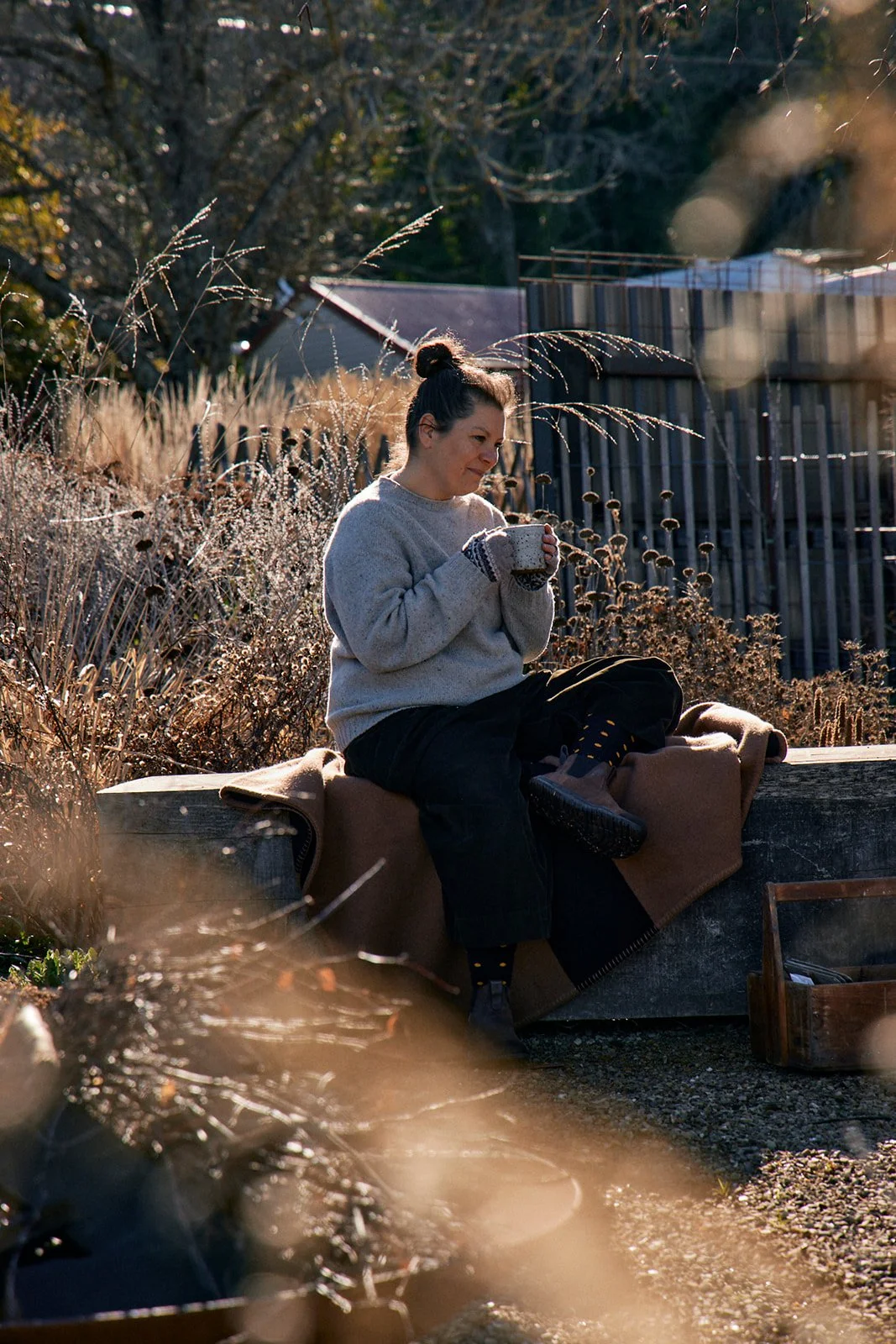
For glimpses into workshops, daily life, and my thoughts from Little Cottage on a Hill, you can find me on Instagram, Facebook, LinkedIn, and YouTube. And if you’d like a more personal update, subscribe to my Newsletter for a monthly note on what’s growing, what’s inspiring me, and what’s next.
Click the links below to stay connected—I’d love to have you along for the journey.
Redefining Productive: What it means in my Garden
The word productive is used often in gardening—and just as often misunderstood. In a world that ties productivity to industry, output, or how much we can do or grow in a day, I’ve come to define it quite differently. For me, a productive garden is not about squeezing more in or working harder. It’s about planting that is considered and seasonally responsive. About choosing to cultivate things that nourish life—mine, and the life around me.
Yes, there are the obvious harvests—fruits and vegetables, of course. But for me, a truly productive garden also offers herbs and flowers, medicinal plants and edimentals, aromatics that scent the air and calm the nervous system. It gives me ingredients to cook with, preserve, and share. Plants to distil, to dry, to make into teas, tinctures, or salves. Flowers that feed pollinators and brighten the kitchen table. Even fungi, self-seeded volunteers, or the tiniest harvest of lichen or moss in a shaded pocket—these are all part of it.
One of the things on my bucket list when I created the garden at Oak & Monkey Puzzle was to be able to grow armfuls of fragrant, old-world roses—just huge, beautifully scented blooms you’d never find in a florist. The kind you can only grow yourself. I still remember the first time I filled a fat vase with them. That moment—that experience of abundance, of purpose, of beauty you’ve grown with your own hands—that’s exactly what a productive garden means to me.
Productivity happens here too—in the quiet, layered architecture of a compost bay, where scraps become soil. It’s in the seed-saving, the slow rotation of beds, the gentle work of fungi under the surface. It’s not just about the garden’s offerings—it’s about the systems and relationships that sustain them.
When I speak of a productive garden, I’m speaking about a place that celebrates beauty as much as abundance. A space that gives something back, season after season. One that holds stories, rituals, and rhythms of tending and refining.
It doesn’t need to be big. My current garden is just 515m²—and it’s more productive than my five-acre property ever was. It’s not about scale—it’s about responding to constraint. The smaller space asks more of the design, and it rewards it. Because the constraints are tighter and the thinking has to be sharper, the garden becomes more intentional in response. Every square metre has a purpose, and most plants are multifunctional—chosen for their ability to offer both structure and scent, food and beauty, shade and shelter. It’s a garden that works with me, and for me.
Productivity, to me, is the art of creating something generous. It’s not about striving. It’s not about metrics. It’s not even about output. It’s about living in rhythm with the land—and letting that rhythm shape what the garden becomes.
You may want to check out my related content below:
From Forest Clearing to Town Garden: A Story of Growth – Discover the journey of transforming a space from raw nature to a thriving garden, filled with lessons and inspiration.
Landscape Lingo: The Chelsea Chop and Ways to Have Plants Look Their Best – Learn about the Chelsea Chop technique and other gardening tips to help your plants reach their full potential.
Your Ultimate Gardening Inspiration Resource – Curated by our community for our community, this resource is filled with inspiration and practical tips for your gardening journey.
Creativity, Connection, and Beauty at Babbington Park with Lean Timms– Inspired, grateful, and reminded that making time for creativity and connection isn’t always a luxury—sometimes it’s a necessity.
Want more like this?
If you’re drawn to this way of gardening—where design, purpose, and deep seasonal connection guide what and how we grow—I share more in my upcoming book, due for release in 2026 with Murdoch Books, as well as through my workshops, e-books, and seasonal newsletter.
→ Share this blog with your friends and gardening allies to spread the love and knowledge.
→ Sign up for the newsletter to stay up-to-date on upcoming workshops, garden tips, and exclusive updates from Little Cottage on a Hill.
As always, thanks so much for following along.
Natasha xx
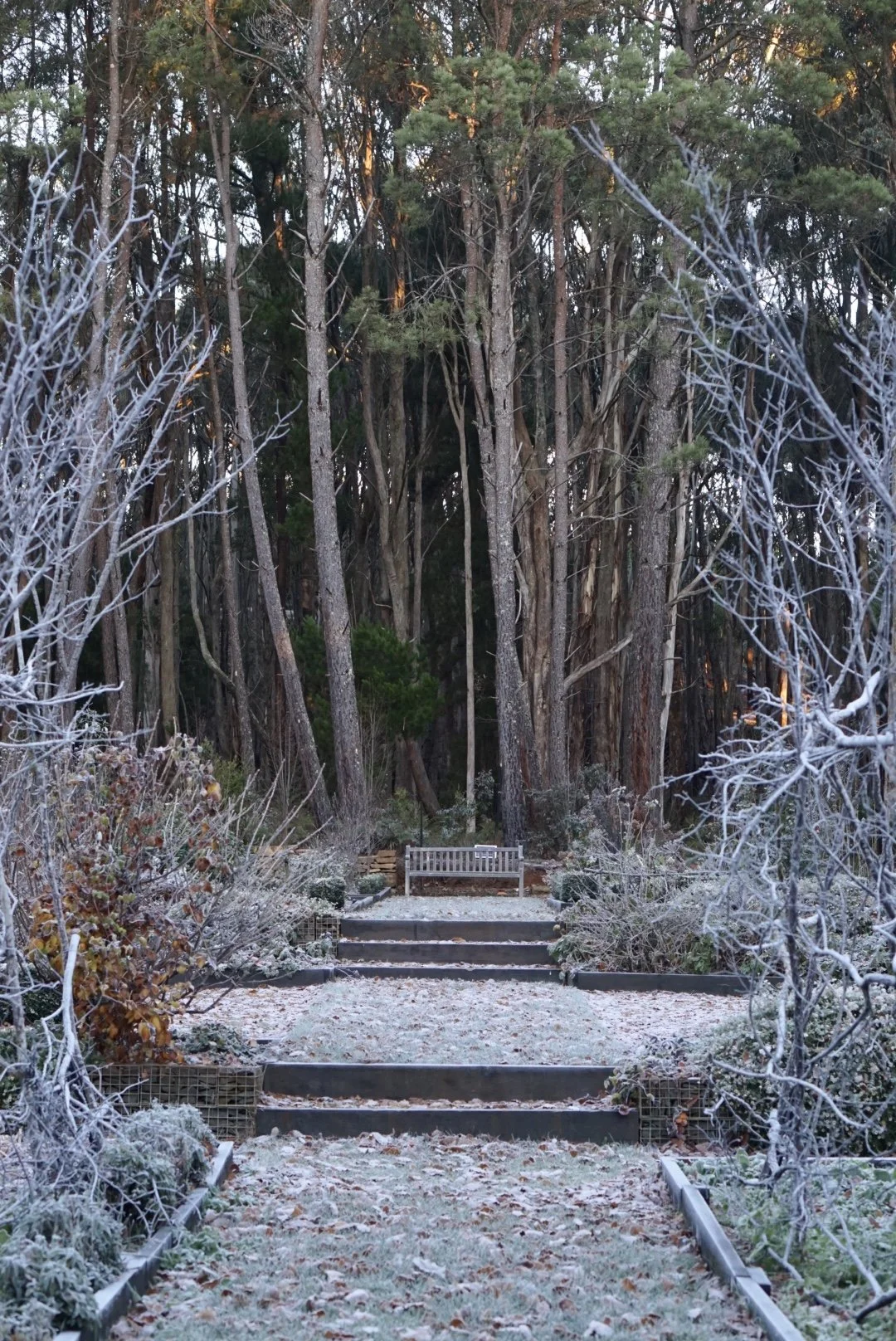
For glimpses into workshops, daily life, and my thoughts from Little Cottage on a Hill, you can find me on Instagram, Facebook, LinkedIn, and YouTube. And if you’d like a more personal update, subscribe to my Newsletter for a monthly note on what’s growing, what’s inspiring me, and what’s next.
Click the links below to stay connected—I’d love to have you along for the journey.
Feijoas: A Hedge That Earns Its Keep
I can’t tell you how thrilled I was when I saw the first feijoas on the ground this week. Just a few, nestled into the gravel under my hedge. But that’s how you know—they fall when they’re ready. No guesswork. No squeezing or poking. Just a gentle drop and the most incredible scent wafting up when you lean in close.
This hedge of mine was planted about a year and a half ago—still only around a metre high—but it’s already started producing. Here, everything in the garden has to work hard, even the hedges. So when one starts gifting much-anticipated fruit like this, it literally stops me in my tracks.
It’s not just a productive hedge either—it’s one of the many design devices at work in my small garden. Eventually, when it reaches around 2 metres tall, it will do what I planted it to do: screen out the neighbouring rooftops that currently interrupt my line of sight to Daylesford’s rolling hills. That’s the goal. A living screen that brings fruit, privacy, softness, and structure all at once.
Even though I live right in town on a small block, this hedge will eventually create the ‘illusion’ that I’m tucked away in the country. That moment—afternoons on the verandah, cuppa in hand, hills stretching out beyond, and little-to-no sight of neighbouring rooftops—feels just within reach now. It’s these layered, multifunctional elements that I think make a garden sing.
I’ve always loved feijoas, eaten fresh, cut in half with the pulp scooped out with a spoon, but the turning point was a galette from Two Fold Bakehouse. I’ll never forget it. Roasted feijoas, still in their skins, paired with apple and wrapped in Alison’s sourdough pastry. It absolutely blew me away. I hadn’t tasted feijoas like that before—soft, perfumed, almost spiced without anything added. I literally haven’t stopped thinking about it since.
What Makes a Feijoa Worth Growing?
Feijoas are one of those trees that quietly pull their weight. Evergreen, drought-tolerant once established, fire-retardant (which matters out here), and fruiting at the tail-end of the season—just when the apples are finishing and the garden starts to exhale.
I first came across the idea of a ‘fedge’—a feijoa hedge—through the team at Milkwood. It stuck with me. The practicality of it. A windbreak that feeds you. Shelter for a veggie patch or a chicken run. Pollination support if you plant a few different varieties close together. And that slow daily shuffle when the fruit starts dropping—bending down, collecting them one by one. It’s the sort of rhythm I love.
They’re slow to start, but once they do, they don’t muck around. As Milkwood puts it: “When feijoas fruit, they really, really fruit.” You’ll have more than enough for fresh eating, sharing, and preserving.
A Few Tips From the Patch
Planting: If you’ve got room, plant more than one. Some are self-pollinating, but many need a mate to produce well. I have 7 in a row.
Spacing: 1.5 metres apart is ideal for a fedge. I was impatient and planted thema little closer for faster ‘filling-out’.
Flowering: The petals are edible—sweet and sherbet-like. We always try a few at the very start of the season in anticipation of what’s to come, but go easy if you want a proper fruit set - no flowers, means no fruit!
Harvesting: Don’t tug them off the tree. If they’re ready, they’ll fall. That’s your cue.
And if you’re wondering what to do with a glut—don’t peel them. Trust me. And trust Milkwood. Roast or stew them skins-on, jam them with fig and ginger, or try your hand at a fermented soda, syrup or shrub.
For the Love of Feijoas
There’s something about them that feels old-world and underappreciated. I’m always amazed how many people don’t know what they are. Or worse—grow them for hedging and don’t pick the fruit. It’s a quiet sort of abundance. The sort that asks for a bit of observation. A bit of seasonal noticing. Which suits me just fine.
Would I plant a feijoa hedge again? Absolutely. It’s not just about the fruit—it’s the feeling of walking out into the garden, finding something unexpected, and being reminded why you planted it in the first place. And for me, it’s also the promise of those uninterrupted views—when the feijoas finally meet the horizon and I feel like it’s just me and the hills.
And if anyone reading this has a galette-worthy feijoa recipe—or another way to roast them whole—I’d love to hear it.
Local Love: Two Fold Bakehouse
The galette that made me fall in love with roasted feijoas came from Two Fold Bakehouse—a small home bakery here in Daylesford that quietly does extraordinary things.
Two Fold bakes naturally leavened, organic loaves using stoneground flours and works with the seasons, letting what’s growing locally shape what’s baked. But their bread is about far more than bread—it’s about relationships. Farmers in wheat fields, millers milling, bakers folding, and community gathering. Their commitment to regenerative agriculture and a local grain economy is felt in every bite. I feel fortunate that I can call the super humble sourdough baker extraordinaire, Allison, a dear friend.
You can buy their bread via:
Thursday Bread (weekly) – order online for pick-up in Daylesford, Yandoit or Kyneton
Daylesford Sunday Railway Market – every second Sunday
Hepburn Wholefoods Collective – fresh loaves every Thursday from 3pm
Join her mailing list – to find her latest news and wholewheat sourdough baking workshops
I love what she stands for—and I’m endlessly inspired by what Allison creates.
Further Reading
I highly recommend Milkwood’s guide to feijoas—practical, generous, and full of the good kind of seasonal wisdom.
You may want to check out my related content below:
From Fumigation to Flavour: What Happens to Imported Garlic Before It Reaches You – Explore the journey of garlic before it makes it to your kitchen in this insightful blog post.
Fermenting Garlic: A Recipe for Resilience – Learn how fermenting garlic can enhance its flavour and shelf life, while building resilience in your kitchen.
Enjoyed this blog?
→ Share this blog with your friends and gardening allies to spread the love and knowledge.
→ Sign up for the newsletter to stay up-to-date on upcoming workshops, garden tips, and exclusive updates from Little Cottage on a Hill.
Thanks so much for following along,
Natasha xx
For glimpses into workshops, daily life, and my thoughts from Little Cottage on a Hill, you can find me on Instagram, Facebook, LinkedIn, and YouTube. And if you’d like a more personal update, subscribe to my Newsletter for a monthly note on what’s growing, what’s inspiring me, and what’s next.
Click the links below to stay connected—I’d love to have you along for the journey.
Gardenstead: A New Digital Home for Gardeners
Over the past few weeks, I’ve been quietly exploring a new digital platform that feels a bit like discovering the potting shed of your dreams: full of good company, tools you never knew you needed, and a sense of grounded purpose. It’s called Gardenstead, and today I’m excited to share why I’ve joined—and why you might want to as well.
And no—this isn’t a paid collaboration or sponsorship. I’m not affiliated with Gardenstead in any formal way. I simply see it as a beautiful opportunity to be part of something that aligns deeply with what I believe gardening is truly about: generosity, community, knowledge-sharing, and connection to place.
What is Gardenstead?
Gardenstead is the first social media platform created solely for gardeners. Launched in April 2025, it’s a purpose-built space for people who grow—vegetables, herbs, flowers, trees, houseplants, or simply a curiosity about it all.
Unlike mainstream platforms, where garden content is scattered and often drowned out by the noise, Gardenstead brings everything into one place: a platform where gardeners of all kinds can connect with each other meaningfully, locally and globally. There are now tens of thousands of gardeners on the platform from over 100 countries, and it’s growing fast.
Here, you can:
Join or start groups dedicated to topics you love (e.g. no-dig methods, native planting, greenhouse gardening, composting, soil health)
Connect with others in your exact garden zone or climate, from your own neighbourhood to the other side of the world
Share updates, ask questions, and track your growing journey
Trade tips on everything from pruning techniques to seed saving
Check hyper-local weather forecasts and updates
Explore expert content tailored to your region and interests
Engage directly with seasoned gardening pros and passionate home growers alike
One of My Favourite Features:
My Neighbourhood
Gardenstead isn’t just about the global gardening community—it’s about strengthening the one just outside your door.
The My Neighbourhood feature is a standout. It allows you to connect with gardeners who live near you—whether that’s in the same suburb or just down the road. That means conversations about microclimates, specific pests, or where to source great compost aren’t just possible—they’re easy. It’s a refreshing shift from generic advice to highly relevant, place-based learning.
A Community Built on Generosity
From the moment I joined, I felt it. Gardenstead is more than a platform—it’s a shared table. A space where people don’t just showcase the after but generously share the during. Where failures are just as welcome as triumphs, and there’s a genuine sense that we’re all learning together.
I’ve already connected with home growers who’ve inspired me, and I’ve contributed where I can—whether that’s offering a tip on seed sowing or sharing seasonal observations from my own patch in Daylesford.
The tone is welcoming, the exchange is thoughtful, and it reminds me a little of what the internet used to feel like—a place to genuinely connect.
Co-Founded by Leading Garden Voices and Visionaries
It’s no surprise the platform already feels so well-considered. Gardenstead was co-founded by a unique team of creators and innovators who truly understand both gardening and digital community-building. Their combined vision is rooted in care, curiosity, and a real understanding of what gardeners need.
Meet the leadership team:
Patrick Vernuccio – Also known as @thefrenchiegardener, is a global gardening content creator, strategist and former exec at Netflix and Playstation.
Jamie Walton – The voice behind @nettlesandpettles, bestselling author and garden content creator.
Dave Friesema – Investor and entrepreneur, formerly CEO of Sleep Country Canada.
Srin Sridharan – Chairman of Boundaries North, known for his vision in purpose-driven investment.
John Barrack – Entrepreneur, lawyer, and florist.
Together, they’ve built something powerful: a platform that is at once warm, intentional, and scalable. Their global network of gardening influencers already reaches over 5 million people, giving Gardenstead a head start in building real momentum.
“There was no online space where gardeners could truly feel at home. We built Gardenstead to change that,” said co-founder Patrick Vernuccio. “This is more than a gardening app—it’s a lifestyle community organically rooted in holistic sustainable practices and the love for growing food, plants & biodiversity.”
Jamie Walton echoes that energy:
“The growth potential of Gardenstead is incredible. We’re tapping into a passionate, global community that’s been underserved for too long.”
You Can Find Me There
If you’re already part of Gardenstead—or if you’re curious to explore it—I’d love for you to connect with me. I’m there under my usual handle natasha_morgan_, the same as Instagram, to keep it easy.
You’ll find a mix of my thoughts on garden design, seasonal planting notes, soil health, and behind-the-scenes glimpses from my home garden at Little Cottage on a Hill. It’s early days, but I’ll be building out more content over time.
This feels like the beginning of something meaningful—and I’d love to grow it alongside you.
Come Along
If you’ve ever wished for a quieter, deeper, more generous corner of the internet where people care about soil, seeds, and sustainability—Gardenstead might be the place.
Whether you’re an experienced grower, a new gardener feeling your way, or someone dreaming of their first raised bed or windowsill of herbs, there’s room for you here.
💬 Let’s connect on Gardenstead
🔗 My handle: natasha_morgan_
Enjoyed this blog?
→ Share this blog with your friends and gardening allies to spread the love and knowledge.
→ Sign up for the newsletter to stay up-to-date on upcoming workshops, garden tips, and exclusive updates from Little Cottage on a Hill.
Thanks so much for reading and for sharing this garden journey with me.
With gratitude and excitement,
Natasha x
For glimpses into workshops, daily life, and my thoughts from Little Cottage on a Hill, you can find me on Instagram, Facebook, LinkedIn, and YouTube. And if you’d like a more personal update, subscribe to my Newsletter for a monthly note on what’s growing, what’s inspiring me, and what’s next.
Click the links below to stay connected—I’d love to have you along for the journey.
May in the Garden: Slowing Down, Tending What Matters
As May unfolds, the Little Cottage On A Hil garden here in Daylesford, Victoria, begins to slow. The light softens. The days shorten. There’s a quietness that settles in if you let yourself notice it.
This is a working month — not the fast, frantic kind of work that spring demands, but the steady, grounding kind. Clearing, planting, moving things to better places. Making the sorts of decisions that shape not just this season, but the ones to come.
It’s the last month of autumn… and it matters.
Across Every Australian Climate: The Quiet Work of May
No matter where you garden in Australia — cool mountains, dry inland plains, lush subtropical backyards — the rhythm in May is much the same. It’s a time to:
Plant trees, shrubs, climbers, and perennials while the soil still holds some warmth.
Lift and divide perennials that have outgrown their space, giving tired clumps a new lease on life.
Cut back spent berry canes and tidy deciduous shrubs.
Compost fallen leaves, layering them to feed the soil.
Sow cool-season green manures like broad beans, mustard, or vetch to build soil fertility.
Strengthen the structure of your garden: repair trellises, replace stakes, check tree ties before the winter winds arrive.
It’s not glamorous work. But it’s the work that sets up a garden to thrive quietly through winter and burst back with strength in spring.
May by Australian Climate Zone: Knowing What to Lean Into
Every garden carries its own micro-season, but May still offers some broad guideposts depending where you are.
Cool and Alpine Climates
(Think Canberra, Hobart, and the high country)
Frosts are on their way, and the coldest places may even have had one already.
Sow hardy greens like rocket, spinach, and broad beans.
Start lifting parsnips now — a brush with frost only makes them sweeter.
Divide rhubarb crowns while the soil is still workable.
Temperate Climates
(Think Melbourne, Adelaide, Perth)
Rain is more frequent now, especially in Perth and Adelaide.
It’s a good month to sow peas, snow peas, rocket, mizuna, lettuce, and broad beans.
Plant garlic, shallots, and strawberries if you haven’t already.
Begin winter pruning on fruit trees and ornamentals once the leaves have fallen and the garden’s skeleton is easier to read.
Subtropical Climates
(Think Brisbane, Northern NSW)
May is generous here — mild, sunny, forgiving. (Hopefully, the rains are giving you some sort of reprieve!)
Sow beetroot, carrots, broccoli, fennel, onions, silverbeet, and snow peas.
It’s also the right time to plant garlic, shallots, and strawberry runners.
Keep an eye on citrus for signs of gall wasp — this is the moment to get on top of it.
Tropical Climates
(Think Darwin, Far North Queensland)
May marks the beginning of the dry — warm days, little humidity, few storms.
Ideal for sowing beans, cucumbers, capsicum, chillies, basil, and coriander.
Keep the soil covered and shaded. Mulching becomes essential as the dry season sets in.
Arid Climates
(Think Alice Springs, inland WA and SA)
Crisp mornings, warm sun, and cooling soil.
Garlic, peas, broad beans, spinach, silverbeet, and onions all go in now.
Compost and mulch whatever you can — every scrap of organic matter counts in these landscapes.
What May Teaches Us
May in Australia reminds me that gardens aren’t built on grand gestures. They’re shaped through small, consistent actions. Quiet choices. A bit of lifting and transplanting. A handful of seeds tucked into soft soil. Noticing what needs shifting — and having the patience to do it.
This month, I’ll be spending time clearing out the last of summer’s tangle at Little Cottage on a Hill, moving a few perennials that have outgrown their place, and quietly preparing the beds for winter crops.
It’s not about racing toward an end. It’s about tending what’s here — and trusting that the work of today will unfold, quietly and generously, in its own time.
You may want to check out my related content below:
What to Plant in April: A Regional Autumn Guide for Australian Gardeners– Learn how to make the most of April’s golden gardening moment by sowing for the season ahead, no matter your climate.
Growing Pumpkins Up: Maximising Small Spaces for a Thriving Productive Garden – Learn how to maximise small for a Thriving Productive Garden.
Growing Zucchini: Space-Saving and Pollination Tips for an Abundant Harvest – Learn how to maximise space and boost pollination for a bountiful zucchini crop in your garden.
The Joy of Growing Strawberries: A Journey Through Every Climate – Explore how to successfully grow strawberries in different climates and enjoy a sweet, seasonal harvest.
Watering Deeply: The Key to Thriving, Resilient Plants – Watch my Instagram reel for tips on how deep watering helps your plants grow stronger with deeper roots.
Growing Soil: The Foundation to Vibrant Gardens and Nutrient-Dense Plants – Dive into my blog post where I explore how healthy soil is essential for supporting vibrant, thriving plants.
Want more seasonal garden guidance and behind-the-scenes updates?
→ Share this blog with your friends and gardening allies to spread the love and knowledge.
→ Sign up for the newsletter to stay up-to-date on upcoming workshops, garden tips, and exclusive updates from Little Cottage on a Hill.
Wishing you slow days and small victories in your garden this May.
Natasha xx
For glimpses into workshops, daily life, and my thoughts from Little Cottage on a Hill, you can find me on Instagram, Facebook, LinkedIn, and YouTube. And if you’d like a more personal update, subscribe to my Newsletter for a monthly note on what’s growing, what’s inspiring me, and what’s next.
Click the links below to stay connected—I’d love to have you along for the journey.
Solitude and Connection Through Gardens
There is a quiet presence in a garden. The kind that is felt rather than seen—the rustle of leaves shifting in the breeze, the hum of pollinators moving from bloom to bloom, the slow exhale of the earth after rain. To stand within it, hands in the soil, is to be held by something larger than oneself.
People often think of gardening as a solitary act, but I have never found myself alone in a garden. Whether in the sprawling expanse of Oak & Monkey Puzzle or the intimate confines of Little Cottage On A Hill, I have always been surrounded—by the unseen networks beneath my feet, the birds and insects that move through the landscape, and the shifting rhythms of the seasons.
Gardening is an act of connection. It is a dialogue, a conversation without words. The soil responds to our touch, plants lean towards our care, and in return, we are nourished—not just with food but with something deeper, something instinctive. When we nurture and nourish the earth, we nourish and nurture ourselves.
Part of Something Greater
Humans are not separate from nature. We are not visitors or caretakers—we are participants. There is no ‘other’ when it comes to the land; we are woven into its fabric, as much a part of the cycle as the rain that feeds the roots or the fungi that thread through the earth.
This is why a garden, no matter how small, holds such power. It is a reflection of this interconnectedness, a reminder that every action ripples outward. A seed planted is not just the beginning of a plant—it is a commitment, an agreement between you and the land. You tend to it, and in return, it sustains you, offering beauty, nourishment, and a place to rest.
The Solitude of Gardening
There is a certain solitude in gardening, but it is not loneliness. It is the kind that allows you to slow down, to listen, to be fully present. The kind that quiets the noise of the world and makes space for something deeper—intuition, instinct, knowing.
I often find myself alone in the garden as the day draws to a close, the golden light casting long shadows, the air cooling after the heat of the afternoon. These are the moments that shape me, that ground me. The hum of bees still lingers in the air, weaving between the last blooms of the day, and the earth, warmed by the sun, releases its scent. There is no rush, no expectation—only the quiet rhythm of my breath and the land settling into the night.
Gardens as Places of Connection
For all the solitude a garden offers, it is also where I have built some of my strongest connections. A garden is a gathering place—where hands come together to plant and harvest, where stories are shared over a basket of just-picked produce, where skills and knowledge are passed from one generation to the next.
At Oak & Monkey Puzzle, this was at the heart of everything I created—a space where people could come together to learn, to share, to build something greater than themselves. At Little Cottage On A Hill, this spirit continues, in the small acts of tending and growing, in the workshops where hands meet soil, in the quiet moments where a garden teaches more than words ever could.
A Reflection of Life Itself
A garden is never just a collection of plants. It is a reflection of the seasons, of time passing, of growth and renewal. It mirrors our own lives—the stillness and the storms, the moments of dormancy and the bursts of abundance.
To be in a garden is to be reminded of this. To know that we are part of something far greater than ourselves. That in tending the earth, we are tending to our own well-being. That in seeking solitude, we find connection.
And so, when I wander the garden in the evening light, I do so knowing that I am never alone. The land, the seasons, the unseen rhythms of life—they are all there, waiting, reminding me that I belong.
Would you like to cultivate a deeper connection with your garden?
Explore my workshops, where we bring hands to soil and stories to life.
Natasha xx
Follow along on Instagram, Facebook, LinkedIn, YouTube, or visit my website for more insights into gardening, sustainable living, and the quiet magic of growing.
Watering Deeply: The Key to Thriving, Resilient Plants
Watering is one of the simplest yet most misunderstood aspects of gardening. It’s easy to fall into the habit of a quick sprinkle every day, thinking we’re doing the right thing. But in reality, this approach does more harm than good. Instead, watering deeply and less frequently is the key to nurturing strong, resilient plants that can withstand the extremes of our climate.
What Does Deep Watering Mean?
Deep watering is about ensuring moisture reaches the entire root zone of a plant rather than just wetting the surface of the soil. When you water deeply, the water soaks into the soil, encouraging roots to grow further down in search of moisture. This is in stark contrast to a light sprinkle, which only wets the top few centimetres of soil and encourages shallow roots that are more vulnerable to heat, drought, and fluctuations in weather.
The Benefits of Watering Deeply
• Encourages Deep Root Growth
When plants develop deep roots, they can access moisture stored further down in the soil, making them more self-sufficient. This means they require less frequent watering and are far better equipped to cope with dry spells.
• Reduces Water Waste
A light sprinkle often evaporates before it can penetrate the soil, particularly in the heat of the day. Deep watering allows moisture to reach the root zone, where it’s needed most, reducing runoff and wastage.
• Promotes Plant Resilience
Plants with deeper root systems are more resilient to environmental stress. Whether it’s a scorching summer or an unexpected dry period, they can draw on the moisture stored deeper in the soil, reducing their dependency on irrigation.
• Improves Soil Health
Regular, deep watering encourages beneficial microbial activity in the soil, which in turn supports plant health. A well-hydrated soil structure retains nutrients more effectively, leading to stronger, more productive plants.
How to Water Deeply and Effectively
1. Water Less Often, But for Longer
Rather than giving your plants a quick sprinkle every day, aim to water deeply once or twice a week, depending on the season and soil type. This allows the moisture to soak in and encourages roots to grow deeper.
2. Use the Right Method
Soaker hoses, drip irrigation, or slow, steady watering with a hose at the base of plants ensures the water is delivered where it’s needed—at root level—without unnecessary evaporation.
3. Water Early or Late in the Day
Watering in the early morning or late afternoon reduces evaporation and ensures the water has time to penetrate before the heat of the day sets in.
4. Mulch to Retain Moisture
A thick layer of organic mulch (such as straw, bark, or compost) around plants helps lock in moisture, reducing the frequency of watering while keeping the soil cool.
5. Check Soil Moisture
To gauge whether your plants truly need watering, dig a few centimetres into the soil with your hand. If it’s dry below the surface, it’s time to water. If it’s still moist, you can hold off.
Watering for a More Sustainable Garden
By shifting away from frequent shallow watering and embracing deep watering techniques, you’re not only saving time and water—you’re also fostering a garden that is more independent, resilient, and in tune with natural cycles. Plants that learn to seek moisture deep in the soil will reward you with stronger growth, increased productivity, and the ability to withstand the harsh conditions so common in our climate.
If you’d like to dive deeper into sustainable gardening practices, join me for a workshop on productive gardening.
Explore my workshops:
~ Garden Design with Natasha Morgan – Craft a garden that balances structure, beauty, and functionality.
~ The Productive Garden with Natasha Morgan – Learn how to grow abundantly, no matter your space.
~ The Wicking Bed Garden with Natasha Morgan – Build a self-watering, water-wise garden for effortless growing.
~ Preserving The Seasons with Natasha Morgan – Capture seasonal flavours with time-honoured preserving techniques.
~ Introduction to Backyard Chicken Keeping with Saffron and Natasha – Learn how to raise happy, healthy chickens at home.
And don’t forget to follow along on Instagram, Facebook, LinkedIn, YouTube, and my Newsletter for more gardening wisdom.
Thanks so much for following along.
Natasha xx
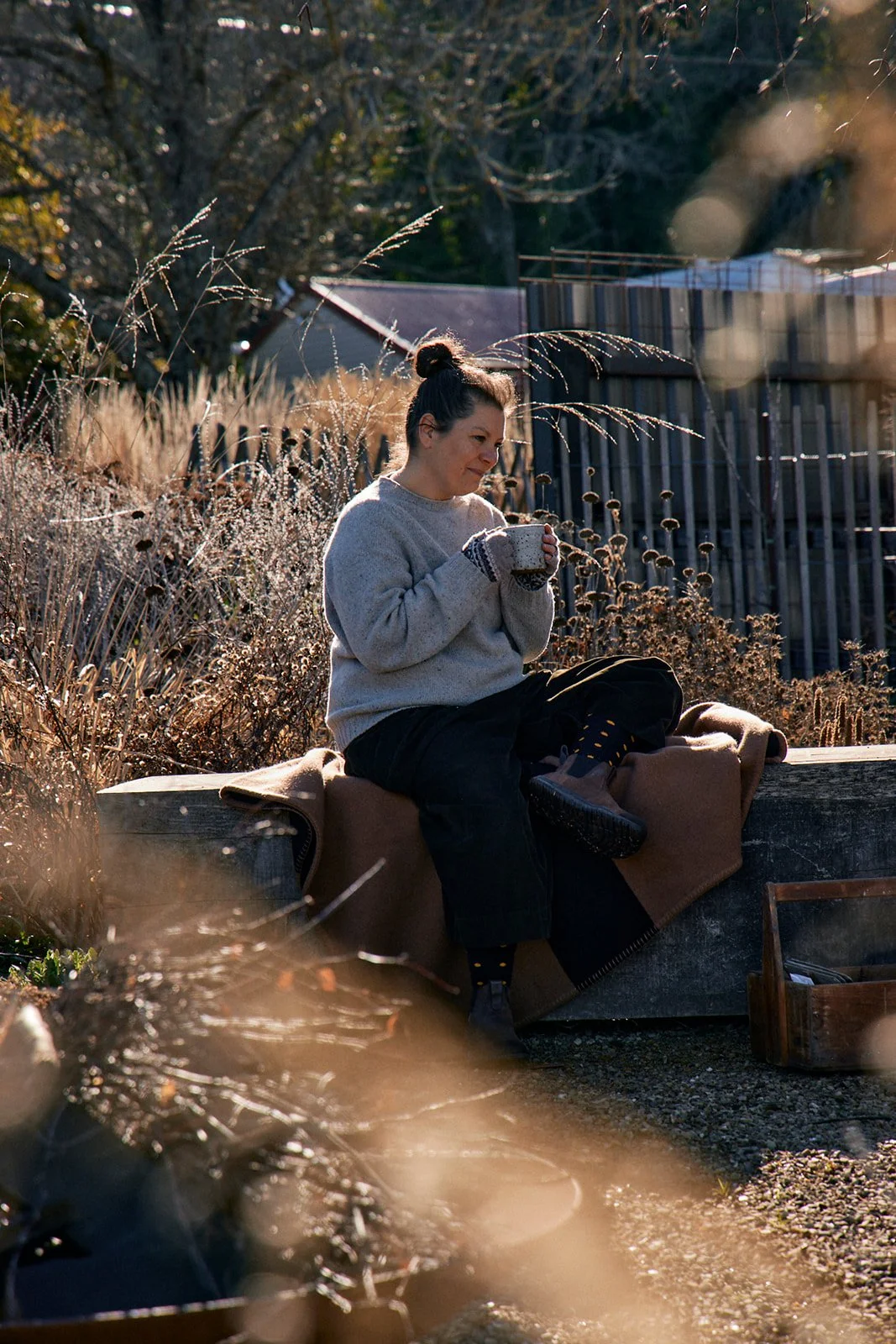
Hydrangea Paniculata: A Year-Round Beauty in the Garden
There are few plants in my garden that offer as much beauty and seasonal transformation as Hydrangea paniculata. From the moment its blooms emerge in early summer, shifting through a palette of colours with the changing seasons, to the way it holds onto its flowers deep into winter—this is a plant that never fails to bring joy.
A Symphony of Colour Through the Seasons
The first time I planted Hydrangea paniculata, it came without a cultivar name, yet its beauty was undeniable. Over the last decade, I have propagated it from winter cuttings, carrying its legacy from one garden to the next, from Oak & Monkey Puzzle to Little Cottage on a Hill. Each cutting tells a story, a reminder of the way gardens evolve yet remain connected through plants passed on with care.
The flowers start out in a soft green hue before transforming into creamy whites, blush pinks, and deeper rose tones. As the season progresses, they shift into rich burgundy, burnt amber, and, finally, golden hues in winter. Even as the blooms fade, they leave behind a sculptural filigree of veins, a delicate, skeletal beauty that holds its own against the starkness of winter.
Growing Hydrangea Paniculata
Unlike the more delicate mophead hydrangeas, Hydrangea paniculata thrives in full sun and is significantly hardier. It flourishes in cool to temperate climates, easily handling frost and winter dormancy before bursting back into life in spring. Well-drained soil enriched with compost will support vigorous growth, but beyond that, it’s a remarkably resilient plant requiring little maintenance.
Sun & Position: Prefers full sun to part shade. More sun encourages the strongest flower colour.
Soil: Well-draining, fertile soil with added compost or organic matter.
Watering: Requires regular watering in the first year but becomes more drought-tolerant once established.
Pruning: Best pruned in late winter or early spring before new growth emerges. Cutting back encourages a fresh flush of large, showy flowers.
Propagation: Easily propagated from winter hardwood cuttings—a technique I’ve used for years to continue its presence in my gardens.
Uses in the Garden & Beyond
Beyond its sheer beauty, Hydrangea paniculata is a workhorse in the garden. It makes an exceptional hedge or mass planting, offering a bold display of floral drama. When planted en masse, it creates a breathtaking wave of seasonal colour and texture.
For florists, it’s a dream. The fresh blooms are perfect for extravagant wedding arbours, centrepieces, and bouquets. As they dry, their form remains intact, lending themselves to hanging installations and arrangements that carry the beauty of the season forward.
Where to Source Hydrangea Paniculata
Once difficult to find, Hydrangea paniculata is now much easier to source, with many cultivars available to suit different garden styles and preferences. Whether you're looking for classic varieties or more unique selections, here are some great places to find them in Australia:
Woodbridge Nursery – Website | Instagram: @woodbridge_nursery
Woodside Plants & Design – Website | Instagram: @woodsideplantsanddesign
Lambley Nursery – Website | Instagram: @lambley_nursery
These nurseries offer a variety of cultivars, from the elegant ‘Grandiflora’ to the blush-toned ‘Pink Diamond.’ Whether you're looking to create a bold hedge, a feature planting, or floristry material, these sources provide excellent quality plants ready for your garden.
A Lasting Presence
Now, in the height of summer here in Daylesford, Victoria, Hydrangea paniculata is in full bloom, its flowers catching the golden light of the season. It reminds me that beauty in the garden is not just about fleeting moments but about plants that evolve, adapt, and offer something at every stage of the year. This is why Hydrangea paniculata remains one of my most treasured plants, a constant presence through changing seasons and changing gardens.
For anyone seeking a plant that delivers on beauty, resilience, and versatility, this is the one. A true garden companion, from the first flush of summer green to the golden glow of winter.
If the seasonal beauty of Hydrangea Paniculata has inspired you, I’d love to welcome you to one of my upcoming workshops at Little Cottage on a Hill, Daylesford. Whether you’re looking to design your garden oasis, cultivate a productive and beautifully abundant space, or explore skills in preserving, sustainability and seasonal living, my workshops offer hands-on learning in an intimate, inspiring setting.
Upcoming Workshops:
~ Garden Design with Natasha Morgan – Craft a garden that balances structure, beauty, and functionality.
~ The Productive Garden with Natasha Morgan – Learn how to grow abundantly, no matter your space.
~ The Wicking Bed Garden with Natasha Morgan – Build a self-watering, water-wise garden for effortless growing.
~ Preserving The Seasons with Natasha Morgan – Capture seasonal flavours with time-honoured preserving techniques.
~ Introduction to Backyard Chicken Keeping with Saffron and Natasha – Learn how to raise happy, healthy chickens at home.
Stay connected for more seasonal inspiration:
Thanks so much for following along—I love sharing this journey with you.
Natasha xx
Growing Zucchini: Space-Saving and Pollination Tips for an Abundant Harvest
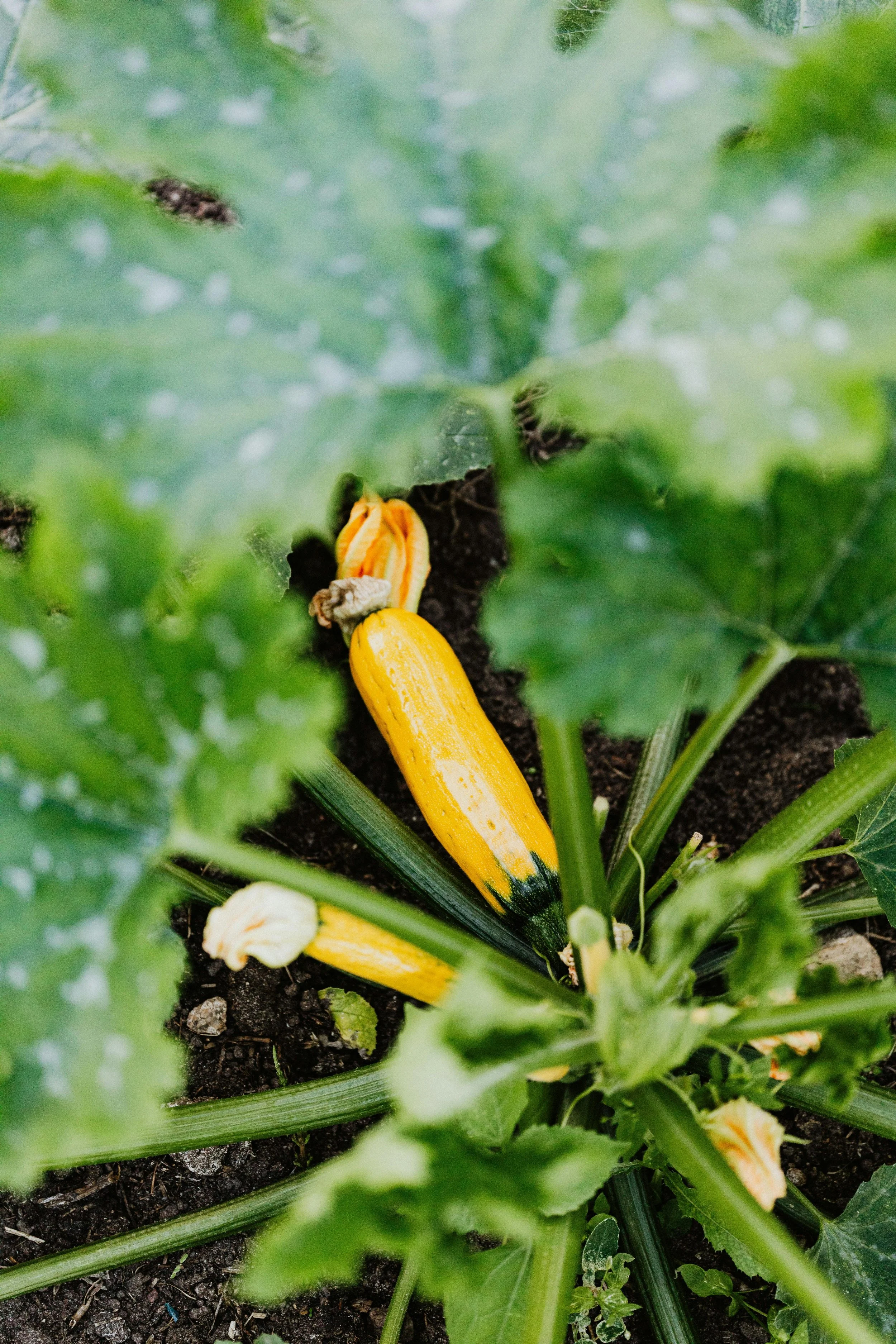
Zucchini are a joy to grow, but let’s be honest—they can be space-hungry plants! This morning, as I harvested a mix of Zucchini ‘Nitro’ (green) and ‘Goldy’ (yellow), grown from seeds by the brilliant team at Lambley Nursery, I reflected on the tips and tricks I’ve learnt over the years to grow zucchini successfully without letting them overrun the garden.
If you’ve been struggling with space constraints or are noticing issues with fruit development, this guide is for you. Whether you’re working with a sprawling veggie patch or a modest raised bed, these tips will help you cultivate an abundant, healthy crop of zucchini.
1. Prepare the Soil for Success
Zucchini thrive in a sunny spot with rich, well-draining soil. They’re heavy feeders, so taking the time to enrich their growing area with plenty of compost and aged manure will reward you with lush, productive plants.
In my cool temperate climate here at Little Cottage on a Hill, zucchini can be planted between September and January. Aim to space plants about a metre apart if you’re growing them traditionally.
2. Save Space with Vertical Growing
One of the best lessons I’ve learned is to encourage zucchini to grow vertically. By staking plants or training them to trail over the edges of raised beds, you can save precious garden space and improve airflow around the leaves. This not only keeps your garden looking tidy but also helps reduce the risk of powdery mildew—a common problem during warm, humid summers.
I use sturdy bamboo or hardwood stakes, securing the stems gently with elastic ties as they grow. If you’re using raised beds, consider planting near the edges and allowing the plants to cascade over the sides. It’s a simple change that can make a huge difference.
3. Harvest Regularly for Continuous Yields
Zucchini are most tender and flavourful when picked young. Regular harvesting not only ensures you’re enjoying them at their best but also encourages the plants to produce more flowers and fruit.
During peak season, I make it a habit to check my plants every couple of days. It’s incredible how quickly zucchini can grow—leave them too long, and they’ll transform from petite and perfect to oversized marrows in no time!
4. Water Wisely
Consistent, deep watering is key to growing healthy zucchini plants. Water at the base of the plant to encourage deep root growth and avoid wetting the leaves, as this can exacerbate mildew problems.
During the hottest parts of summer, I water early in the morning or late in the evening, ensuring the soil is evenly moist but not waterlogged. Mulching around the base of the plants can help retain moisture and keep weeds at bay.
5. Address Pollination Problems
If your zucchini are starting to form but the ends are rotting before they mature, the issue is likely poor pollination. Zucchini plants produce both male and female flowers, and for fruit to develop, the pollen needs to be transferred between them.
If you’re not seeing many bees around, don’t despair—you can hand-pollinate. Early in the morning, pick a male flower (it has a straight stem), remove the petals, and gently brush the pollen onto the centre of a female flower (the one with a small swelling at the base). It’s a simple process and one that can make all the difference to your harvest.
What’s Your Experience with Growing Zucchini?
Zucchini are a staple in my summer garden, not only for their abundance but also for their versatility in the kitchen. From quick sautés to homemade pickles, they’re a reminder of why I garden in the first place—to enjoy fresh, seasonal produce straight from the soil.
Have you tried growing zucchini in your garden? I’d love to hear your tips, tricks, and challenges in the comments below. Let’s continue to share and grow together.
The Beauty of Diverse Productive Gardens: Finding Inspiration in Every Space
The morning light streams through the summer haze as I sit here, tea in hand, watching the bees buzz between the flowering herbs and vegetables. The garden is approaching its most abundant time now, with tomatoes ripening on their vines and zucchini seemingly doubling in size overnight. From a life of making productive gardens and my transition between Oak & Monkey Puzzle's sprawling 5 acres to Little Cottage on a Hill's intimate 515m², I've learnt that productive gardens come in all shapes and sizes, each with their own unique story to tell.
Nature has a way of teaching us that there's no one-size-fits-all approach to creating a productive garden. Each space holds its own magic, whether it's a tiny urban courtyard or a sprawling rural property. The potential for abundance is always there, if we learn to work with what we have - especially when the earth feels warm beneath our feet and the air is thick with the scent of ripening tomatoes.
Today, I want to share a round-up of inspiring productive gardens that form part of a ridiculously large collection of images in my Pinterest library (I am a serial collector of 'precedent images'). Each demonstrates the myriad of ways productive gardens can be designed and implemented and that with abundance there can be great beauty whilst meeting the needs of each context.
The Layered Garden
There's something magical about a garden that grows up as well as out. I love how climbing beans create living walls, their flowers drawing in buzzing bees while their leaves cast dancing shadows on the plants below. At Little Cottage on a Hill, these vertical spaces have become some of our most precious growing areas. On hot summer days, the layers of green create cool, sheltered spots where tender lettuces can thrive even as the temperature soars.
The Urban Oasis
It fills me with joy to see how creative gardeners become when space is limited. Some of the most inspiring productive gardens I've seen are tucked into the smallest corners of city life. Pots overflow with herbs, vertical walls burst with strawberries, and clever trellises transform bare walls into green havens. These spaces remind me that gardening isn't about the size of your plot - it's about working with what you have and finding beauty in the possibilities.
The Traditional Kitchen Garden
Perhaps it's the rhythm of repeated plantings or the satisfaction of neat rows bursting with life, but there's something deeply grounding about a traditional kitchen garden. Right now, ours is a symphony of summer abundance - tomatoes reaching for the sky, basil perfuming the air, and zucchini flowers opening to greet the morning sun. Between these ordered rows, nature adds her own touch - self-seeded flowers pop up in unexpected places, creating moments of surprise and delight.
The Orchard Garden
Orchards are, for me, special landscape spaces. At Oak & Monkey Puzzle, the fruit trees created their own rhythm through the seasons, from spring blossoms to summer's abundance. The skills I learnt in trying out espaliering was a particular joy - watching fruit trees trained along wires transform a simple fence line into a productive, living wall. Now at Little Cottage on a Hill, we're creating our own espalier orchard along the north-facing fenceline, proving that even in a small space, we can work with nature to create beautiful, productive boundaries. On hot summer days, I'm especially grateful for the dappled shade fruit trees cast, creating perfect spots for both plants and people to gather.
Lessons from an Ever-Evolving Garden
What I've learnt through my own journey is that productive gardens are truly "open works" - they're never finished, always evolving through seasons and years. Right now, they're teaching me about resilience, about adapting to heat and how to preserve precious water while still creating abundance. This is my driest summer in years, and now, being located in Daylesford, I’m learning about what that means in this location.
Growing Through Change: Productive Gardening for Every Space
As we continue to adapt to our changing climate and smaller spaces, these diverse approaches to productive gardening become increasingly valuable. They show us that whether we have acres or square metres, there's always room to grow, to learn, and to create beauty - even in the challenges of an Australian summer.
Want to learn more about creating your own productive garden? Join me for my upcoming workshop: Workshop with Natasha Morgan. Together, we'll explore how to transform your space, whatever its size, into a thriving productive garden that reflects your unique vision of living well.
I'd love to hear about your favourite productive gardens. What style speaks to you? Share your faves in the comments below —- It’s so good to know from others what inspires them too.
The Root: Shoot Ratio – Why Bigger Isn’t Always Better
In the world of gardening, there’s a quiet but profound truth that often goes unnoticed amidst the allure of lush foliage and mature plants in oversized pots. It’s the relationship between a plant’s roots and its shoots, and why, when it comes to creating a thriving garden, bigger isn’t always better.
As someone who has spent decades immersed in the nuances of horticulture, I’ve learned that the root: shoot ratio—a plant’s balance between its underground root system and aboveground growth—plays a pivotal role in its health and performance. Let me share why I often favour the humble tubestock plant over its more advanced counterparts and why you might want to do the same.
Understanding the Root: Shoot Ratio
At its core, the root: shoot ratio is a measure of equilibrium. Roots anchor the plant, absorb water and nutrients, and store energy, while the shoots (leaves, stems, and flowers) drive photosynthesis, growth, and reproduction. A healthy balance ensures that a plant can sustain itself, particularly during stressors like drought, transplantation, or pest attacks.
When a plant’s foliage is disproportionately large compared to its root system—often the case with advanced plants in oversized pots—it struggles to support itself. The roots may be unable to uptake enough water and nutrients to fuel the demands of the canopy, leading to stress, slower growth, and reduced vigour.
The Hidden Strength of Tubestock
Buying a smaller, less-developed plant might seem counterintuitive, but tubestock has an inherent advantage. These younger plants typically have root systems proportionate to their size, allowing them to establish quickly when transplanted. Because they haven’t been restricted in oversized pots, their roots are less likely to be pot-bound or encircled, which can lead to long-term issues like girdling and poor nutrient uptake.
From my own experience, tubestock plants tend to “hit the ground running.” Their compact root systems adapt more readily to the garden soil, growing outwards to establish a strong, extensive network. This adaptability often means that within a season or two, tubestock plants outpace their larger, more mature counterparts, both in growth and resilience.
Why Tubestock Outgrows Potted Plants
I’ve come to appreciate the quiet magic of tubestock. These young plants, full of potential, adapt swiftly to the world beyond the nursery’s care. Unlike their older, potted counterparts, they haven’t lingered too long in comfort, tethered by roots bound tightly in circles. Instead, they are ready to stretch and grow, their roots eager to anchor deeply into the soil. It’s a gentle reminder that sometimes, less time in the safety of ideal conditions leads to greater strength and resilience in the wild beauty of a garden.
As illustrated in the the KES Community Nursery’s case study (images below), the difference between tubestock (right-hand images) and potted plants (left-hand images) becomes clear when you see their results. In February 2009, they planted three messmate gums at the nursery—two tubestock and one more mature tree in a 30cm pot.
Fast forward 20 months, and the results speak for themselves. The tubestock trees had grown to nearly double the height of the potted tree, as seen in their comparison photos. Against the fence railing, the striking contrast in growth rates highlights the advantage of starting with tubestock. Younger, adaptable plants establish faster and grow stronger than their older, pot-bound counterparts - those lacking the vital root-to-shoot ratio.
For more details and to see the comparison yourself, visit their page: KES Community Nursery.
30cm pot Tubestock
One week after planting.
Five months after planting.
Fourteen months after planting.
Twenty months after planting.
The nursery was hit by strong winds 2 years after planting. The tubestock plant performs considerably better.
Reference: (https://www.kes.org.au/nursery/tubes)
The Practical and Sustainable Choice
Opting for tubestock isn’t just better for plant health; it’s also a more sustainable choice. Smaller plants require fewer resources to grow and transport, making them a more environmentally friendly option. They’re often more economical, too—perfect for filling out larger garden spaces without breaking the budget.
A Personal Perspective
I vividly recall planting a windbreak at Oak and Monkey Puzzle using nothing more than a collection of small tube plants. The results were astonishing. Within a few years, the slender saplings had grown into a robust, thriving hedge, outpacing neighbouring advanced plantings. Witnessing the transformation reinforced my belief in the power of starting small.
Even now, at Little Cottage on a Hill, I often find myself reaching for tubestock to create layers of growth in my productive garden. Watching these small plants establish, flourish, and eventually take centre stage is a testament to their hidden strength and potential.
Tips for Success with Tubestock
1. Prepare the Soil: Loosen the planting area and enrich it with organic matter. A well-aerated, nutrient-rich soil gives roots the perfect start.
2. Water Wisely: Young roots need consistent moisture, but avoid waterlogging, which can cause rot. Drip irrigation systems are ideal.
3. Mulch Generously: Mulch helps retain soil moisture and regulate temperature, creating the perfect environment for roots to grow.
4. Patience is Key: While it might take a little longer to see the results you’re after, the long-term rewards are well worth the wait.
Rooted in this understanding…
Gardening teaches us that growth is not a race but a journey. By embracing the root:shoot ratio and the inherent vigour of smaller plants, we not only set our gardens up for success but also align with the rhythms of nature—working with the land rather than imposing upon it.
So next time you’re choosing plants for your garden, consider reaching for the tubestock. These unassuming little plants may just surprise you with their strength and vitality. After all, in gardening, as in life, it’s not about how big you start but how well you grow.
Designing Gardens for All Seasons
Designing Gardens for Every Season: A Personal Reflection
Gardens, like the landscapes they inhabit, are storytellers. With every turn of the season, they whisper tales of change, resilience, and quiet beauty. From the tender green shoots of spring to summer’s exuberant crescendo, the muted richness of autumn, and the stark, sculptural lines of winter, a garden evolves—a narrative in motion.
At Little Cottage on a Hill, I’ve come to cherish this seasonal rhythm, weaving it into the very fabric of my garden’s design. Each element has a purpose, a role to play across the year, ensuring the space feels alive and beautiful, no matter the time.
Here’s how I approach designing gardens for all seasons, where structure and plant selection work in symbiosis to create a landscape that feels timeless and ever-changing.
The Backbone of the Garden: Structure Across Seasons
When blossoms fade and foliage retreats, structure is what remains. It’s the backbone of a garden, holding everything together through the quiet months. In my garden, clipped spheres of Buxus provide a thread of continuity, their evergreen forms anchoring each space with a quiet elegance. These sculptural shapes endure through every season, offering a constant amidst nature’s ebb and flow.
Hedges, too, play an invaluable role. Whether it’s the glossy green of Portuguese laurel or the steadfast presence of yew, hedges create enclosures, guide the eye, and bring a sense of rhythm to the garden. They’re living architecture—soft yet strong, functional yet beautiful.
Paths and walls add another layer of structure. Gravel pathways curve through planting beds, inviting exploration, while stone walls weather with age, their textures deepening the garden’s story. Even vertical trellises lend height and a touch of whimsy, transforming bare walls into canvases for climbers that change with the seasons.
Plants That Earn Their Place
In a smaller garden, every plant must pull its weight. There’s little room for those that offer only fleeting moments of beauty. Instead, I seek out plants that contribute across multiple seasons—plants that evolve with time, revealing new facets as the year unfolds.
Hydrangea Paniculata: Summer sees its conical blooms in full glory, but even as they fade, their papery forms bring a delicate beauty to winter’s starkness.
Echinacea: Bright, pollinator-friendly flowers in summer give way to seed heads that stand tall in autumn and catch the frost’s sparkle in winter.
Miscanthus: Ornamental grasses like this bring movement and texture. Their golden tones in winter soften the garden’s edges, a reminder of warmth even in the coldest months.
Cornus alba (red-stemmed dogwood): It’s in the depth of winter that this plant truly shines, its vivid red stems a striking contrast against muted backdrops.
These are the quiet achievers of the garden, their beauty unfurling with the seasons, always offering something new.
Celebrating Seasonality in Design
Garden designers like Piet Oudolf have shown us how to embrace seasonality with grace and creativity. His planting designs, characterised by drifts of perennials and grasses, are a masterclass in letting plants express their full life cycles—from their exuberant peak to their quiet decline. Oudolf’s gardens, such as the High Line in New York, demonstrate the power of seed heads, faded flowers, and winter stems to carry a garden through its quieter months.
Other designers who excel in creating year-round interest include:
• Dan Pearson: His work often feels like a conversation with the landscape, integrating naturalistic planting with a sensitivity to structure. His Millennium Forest project in Japan is a stunning example of how structure and planting create a narrative across the seasons.
• Nigel Dunnett: Known for his innovative approach to sustainable planting, Dunnett’s schemes use perennials, annuals, and grasses to create dynamic, seasonally evolving gardens, such as the Olympic Park in London.
• Arne Maynard: His formal gardens often combine traditional clipped shapes with naturalistic planting. The juxtaposition of structure and wildness creates an ever-evolving interplay between control and spontaneity.
• Sarah Price: With an emphasis on texture, light, and movement, her designs celebrate the changing seasons, often drawing on natural landscapes for inspiration.
Designing for Small Spaces
In my own garden at Little Cottage On A Hill, every element has to work hard. Plants that offer a singular moment of beauty—a “one-hit wonder”—simply don’t have a place. By combining structure with hardworking plants and designing with the seasons in mind, even the smallest garden can feel expansive and dynamic.
Think about layering: the interplay of bulbs in spring, perennials in summer, and seed heads in autumn, all underpinned by structural elements like clipped shrubs or a carefully placed trellis. Consider planting for transitions—how does one season flow into the next? Choose plants that soften the edges and draw the eye through the space, making the garden feel larger and more unified.
A Reflection on the Seasons
Gardening for all seasons is, at its heart, an act of mindfulness. It’s about pausing to witness the frost glinting on a seed head, the warmth of winter stems catching the light, or the promise held in the first green shoots of spring.
By designing with structure, selecting hardworking plants, and embracing the rhythm of the seasons, we create gardens that not only endure but bring endless joy. Whether you’re working with acres of land or a tiny urban courtyard, this approach ensures your space remains alive with beauty and meaning.
As the seasons shift, so too does the garden. And in those quiet moments—when we stop to marvel at a seed head or trace the curve of a path—we find ourselves connected, not just to the earth beneath our feet but to the passage of time itself.
Here’s to designing gardens that carry us through every season, reminding us of the wonder that lies in change.
Landscape Lingo: The ‘Chelsea Chop’ and Ways to Have Plants Look Their Best
Gardening is a quiet dialogue with nature—a dance between allowing plants their wild freedom and offering a gentle hand when they need it. My sedums have taught me this over time. They’re endlessly generous, resilient companions in the garden, giving so much while asking for so little. But as their blooms swell and grow heavy, they sometimes sprawl outward, leaving a bare patch at their heart and encroaching on their neighbours. There’s charm in their natural sprawl, but in a garden that’s both my sanctuary and a living workshop space, a touch of refinement feels right.
It’s in these moments that the artistry of gardening reveals itself. Over generations, gardeners have discovered thoughtful ways to help plants present their best selves—not just for our pleasure but for their own health and vitality. Among these techniques is one cherished by horticulturists preparing for the Chelsea Flower Show: the celebrated ‘Chelsea Chop.’
The Chelsea Chop: Timing, Precision, and Beauty
The Chelsea Chop is a pruning technique as practical as it is poetic. Named for its timing—late May, coinciding with the Chelsea Flower Show—it involves cutting back herbaceous perennials like sedums by up to half their height. This clever intervention delays flowering, strengthens stems, and encourages a bushier, more compact growth. The result? Later blooms that stand tall and elegant, supported by sturdier frames.
I admire the elegance of this technique, its balance of science and intuition. But for my sedums, whose blooms are a signature of the garden’s display, I’ve chosen another approach. Instead of delaying their beauty, I’ve found a way to support it—a solution that feels as practical as it does poetic.
Crafting Support: A Gentle Hand for Garden Grace
Gardening, to me, is always a collaboration—a conversation between the garden’s wild instincts and the care I bring to its growth. For my sedums, the answer came in the form of handmade frames. Using leftover sections of reinforcing mesh, I crafted curved supports that hold their stems upright, celebrating their natural shape while keeping them from sprawling. With their rusted patina, these frames blend seamlessly into the garden, offering a kind of invisible grace.
This simple act—creating support rather than imposing control—feels deeply satisfying. It’s a reminder that gardening is as much about enhancing as it is about tending, about working with the plant’s nature rather than against it.
Finding Balance: Techniques to Prevent Flopping
While I’ve chosen bespoke frames for my sedums, there are so many ways to support plants with thoughtfulness and creativity. Each technique offers its own charm and practicality:
Staking: Bamboo canes tied with twine offer simple elegance for taller, singular stems like delphiniums or foxgloves, gently guiding them skyward.
Grow-Through Supports: Circular or grid-like frames, either crafted or ready-made, allow sprawling plants to grow with structure, naturally weaving through the support.
Cages: Early-season circular cages help encourage upright growth, perfect for plants that love to tumble outwards.
Twine Supports: A series of stakes connected by twine creates a rustic corral, offering a soft, intentional way to gather wayward stems.
Strategic Pruning: For plants like salvias or asters, trimming portions early encourages stronger stems and prevents legginess.
Creativity Meets Practicality
What I love most about these solutions is their blend of artistry and utility. Whether bending wire to shape a bespoke frame or carefully pruning for balance, each decision feels like a small act of creation. Gardening, after all, is a partnership. It’s about listening to the garden, understanding its needs, and crafting solutions that bring beauty and vitality into harmony.
A Place of Both Productivity and Respite
Gardening isn’t just about neatness or control; it’s about creating spaces that feel alive—balanced, welcoming, and abundant. Supporting plants, whether with a Chelsea Chop, a handmade frame, or a rustic twine corral, is a way of nurturing not just the garden but the spirit of the gardener too.
So, as you wander through your own garden, take a moment to notice the plants that might benefit from a little extra care. Imagine how a thoughtful touch—a frame, a stake, or a light pruning—might transform their growth. Each act of support is a gesture of connection, an invitation to collaborate with the natural world.
After all, even the smallest acts of care can help a garden thrive. And in those moments, as you tend to your plants, you might find that the garden is tending to you too.
“As we help a garden bloom, it gently teaches us the art of patience and presence.”
The Sunshine Secret: What Your Veggies Need
The Sunshine Secret: Illuminating Your Garden’s Potential
Every garden has its own story of light. The sun’s gentle dance across your space shapes where tomatoes thrive, where soft mosses carpet the earth, and where leafy greens find their sanctuary. Understanding this light—its patterns and rhythms—is one of the most transformative steps in gardening. It’s the language of nature, quietly guiding us toward creating spaces that flourish.
Decoding the Language of Light
When you start a garden, the words “full sun,” “part shade,” and “full shade” appear again and again, like clues to a puzzle. These aren’t just suggestions—they’re essential keys to knowing where each plant belongs.
Full Sun: These are the open, sun-soaked areas of your garden that bask in 6–8 hours of direct sunlight daily. They’re the perfect home for fruiting vegetables like tomatoes and zucchinis, Mediterranean herbs like rosemary, and bright flowers that revel in the light.
Part Shade: These spots receive 3–6 hours of sunlight, often in the cooler morning hours or filtered through leafy trees. They offer a balanced light, ideal for greens like spinach and lettuce or delicate blooms like hydrangeas and foxgloves.
Full Shade: With less than 3 hours of sunlight each day, these tranquil spaces are often tucked beneath trees or alongside buildings. They may seem like a challenge, but they’re the perfect canvas for shade-loving plants like ferns, hostas, and the understated beauty of hellebores.
Seeing the Light in Your Garden
When I first arrived at Little Cottage on a Hill, I spent hours simply watching the sun move across the garden. There’s a quiet joy in discovering how sunlight touches your space—it’s like getting to know a dear friend. Here’s how you can begin:
Sketch Your Space: Start with a simple map of your garden. Throughout the day, observe where the light falls and make notes. In the morning, trace the golden pools of sunlight, and as the day progresses, watch how shade stretches and shifts.
Seasonal Shifts: Remember, the sun’s angle changes with the seasons. A corner bathed in summer sunlight may rest in winter shadow. Take time to observe how these patterns evolve throughout the year.
Intuitive Tools: Your eyes and intuition are often the best guides, but if you want extra help, sunlight meters or garden apps can measure light levels for you.
Planting with Purpose
Understanding your garden’s light is like finding its heartbeat. Once you know how the sun moves, you can plan with intention:
For Full Sun: Let these spaces glow with sun-hungry crops like capsicums, sunflowers, and melons. They’ll thrive in the warmth, but don’t forget to water often—these areas dry out quickly.
For Part Shade: Embrace soft, leafy greens, parsley, and shade-loving flowers. These plants will enjoy the gentler light and respite from the heat of the day.
For Full Shade: Turn these cool corners into lush retreats. Fill them with ferns, mosses, and hostas, creating pockets of peace and texture.
Visualising Your Garden’s Light
To make sense of these patterns, visual aids can be invaluable. I love drawing simple sun maps of my garden, noting the changing light throughout the day. Photographs taken at different times can also help capture how light and shadow dance across your space.
Another simple trick is to use markers—small stones or flags placed where different light levels fall. These little guides can help you visualise which plants will feel most at home in each corner of your garden.
A Reflection on Light
For me, sunlight is more than a practical element—it’s a mindful teacher. Watching it move through the garden slows me down, reminds me to pause, and connects me to the rhythms of the earth. Every garden is unique, and the way sunlight touches yours will shape its soul.
Take some time this week to observe your garden’s light. Sketch a map, dream about what you’ll plant, and let the sun guide you as you create a garden that not only provides but also inspires.
Join Me to Discover the Light in Your Garden
If you’d like to explore how to work with light and space to create a garden that thrives, I’d love to invite you to my Garden Design workshop. Together, we’ll unlock the secrets of your garden, from understanding sunlight to crafting a space that’s as productive as it is beautiful.
Let’s spend a day planning, dreaming, and designing your perfect garden. You’ll leave with practical tools, creative inspiration, and the confidence to bring your vision to life. Visit Garden Design Workshop for details.
Because a garden shaped by the light is a garden filled with life.
Growing Philosophies: Permaculture for Beginner
Permaculture: A Way of Life for Sustainable Living and Connection to the Land
As November ends, there’s a quiet beginning—a time to reflect, reset, and plan for what’s to come. The end of one season holds the promise of another, and for me, it’s a moment to look closely at the land, observe its rhythm, and consider how to work with it as we step into summer. This mindful pause reminds me of permaculture’s essence: a philosophy deeply rooted in observation, connection, and thoughtful action.
Oak & Monkey Puzzle
Little Cottage On A Hill
At its heart, permaculture is about balance—creating ecosystems that are both productive and regenerative. Whether in a sprawling garden or a small urban space, it invites us to consider how each element contributes to the whole. It’s about making the most of what we have and finding beauty in the functionality of a space. This philosophy has shaped everything I’ve done, from the expansive gardens at Oak & Monkey Puzzle to the more intimate spaces at Little Cottage on a Hill.
Permaculture in Action: Lessons from Bill Mollison and David Holmgren
Permaculture isn’t just a method; it’s a way of understanding our relationship with the world around us. Coined by Bill Mollison and David Holmgren in the 1970s, it combines the words “permanent” and “culture” (or “agriculture”), speaking to the creation of resilient, self-sustaining systems. It’s about designing spaces that thrive alongside nature, not in opposition to it. As someone who has spent years exploring the interplay of garden design, sustainability, and community, this approach is a natural extension of how I live and work.
I’ve always been inspired by David Holmgren’s idea that a productive and beautiful garden can exist within the smallest of spaces. His work, alongside the teachings of Milkwood Permaculture, has deeply influenced my journey. Wicking beds, for example, are one way I’ve embraced permaculture principles in my own gardens. These water-conserving beds provide consistent moisture for plants with minimal effort—an elegant solution that reflects permaculture’s focus on working smarter, not harder.
Living the Land: Core Principles of Permaculture
Permaculture principles are as much about mindset as method—a way of working with the land rather than imposing upon it. These principles guide how I think, design, and create in my gardens and beyond, each one integral to how I live:
Observe and Interact
Everything begins with observation. Spending time with the land—watching, listening, and learning—reveals its secrets. Every garden I’ve tended is an evolving space shaped by the lessons hidden in its soil, sunlight, and seasonal rhythms.Use and Value Renewable Resources
There’s a quiet satisfaction in working with what’s naturally available. From reusing materials in garden structures to planting in tune with the seasons, this principle reminds us to find value in what’s already around us.Catch and Store Energy
Small actions create significant impacts. Whether it’s harvesting rainwater or building wicking beds to conserve moisture, this principle is about creating systems that sustain themselves, offering resilience in return.Design from Patterns to Details
Every design starts with the big picture. Understanding the land’s broader context—its sunlight, wind, and natural flow—clarifies the finer decisions that allow a garden to truly thrive.
These principles ground me in the process, reminding me to slow down, observe, and act with intention. Whether you’re tending a sprawling garden or a small windowsill pot, these principles can guide you to create something meaningful.
Permaculture in Practice: My Garden Journey
But beyond the techniques and principles, permaculture reminds us of something more profound: that we are part of the landscape, not separate from it. It teaches us to slow down, observe, and find joy in the small details. Whether it’s watching a bee dart between blossoms, the subtle shift in the air as summer approaches, or the satisfaction of harvesting from the garden, there’s a deep connection waiting to be nurtured.
Embracing Change: Lessons from the Garden
As November gives way to a new season, I’m reminded that permaculture isn’t about perfection—it’s about the process. It’s about learning from nature, experimenting, and finding joy in the unexpected. I encourage you to take a moment to pause, observe your garden (or even a potted plant on your windowsill), and consider how you might work with what you have to create something abundant and meaningful.
This season, as the garden transitions, let it inspire your own new beginnings. Whether it’s through planning a small edible verge, learning a new skill, or simply slowing down to notice the world around you, permaculture has something to offer.
The takeaway is simple yet profound: start small, observe closely, and trust the process. Every season—every moment—is an opportunity to create a garden, a space, a life that reflects who you are and what you value. Let this be your beginning.