
Feijoas: the fruiting hedge that gives back
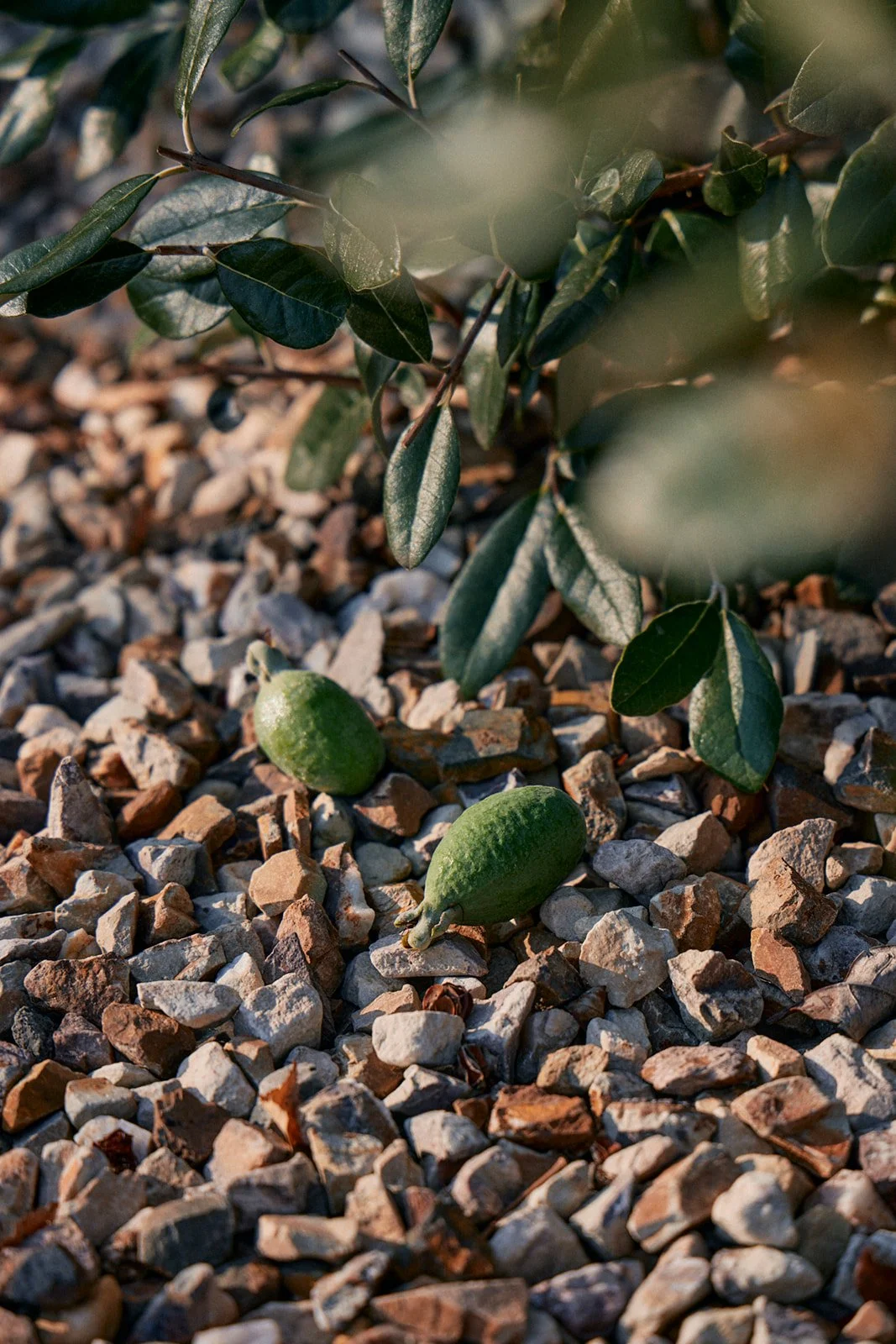
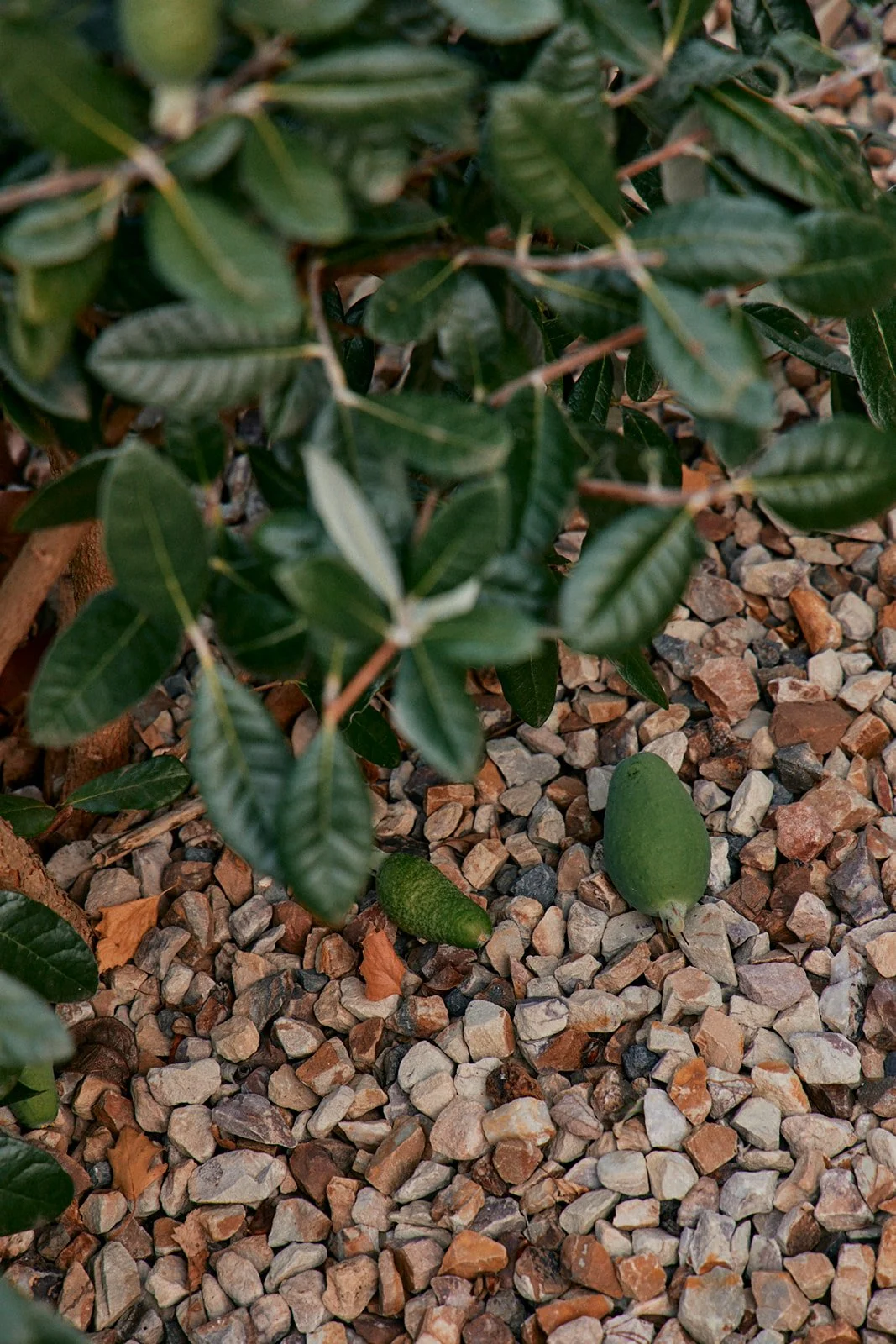
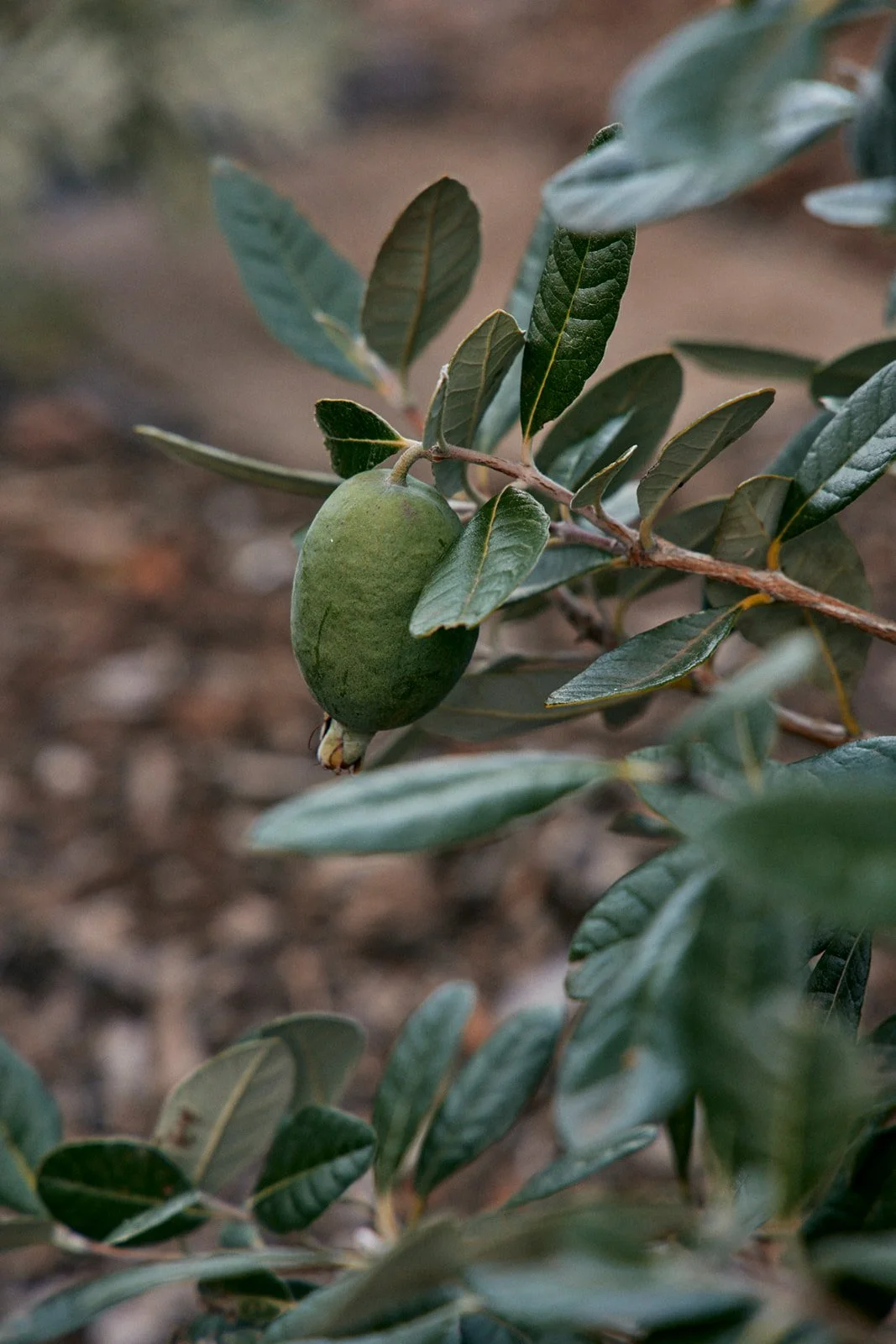
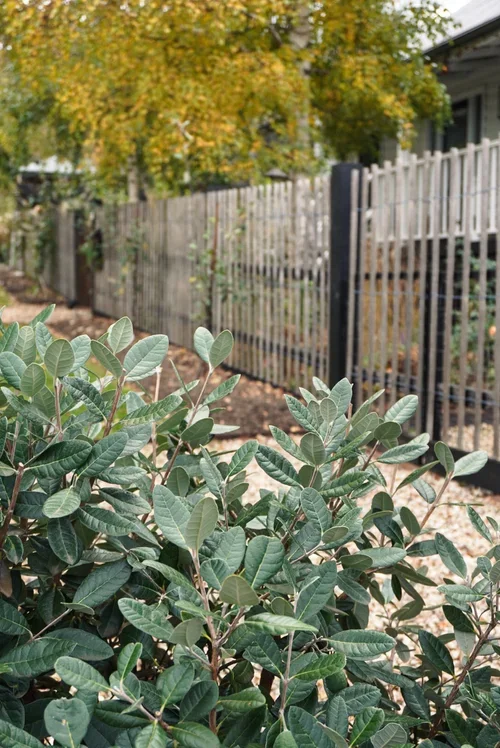
I smell them before I see them. I'll be walking the front of the garden on some errand that has nothing to do with fruit, and there it is — that perfume coming up off the gravel. Pineapple, guava, something floral underneath, a sherbet edge to it. I stop. I look down. And there, half-tucked under the foliage or sitting in the stones where they've fallen, are the feijoas. Plain green. Easy to miss entirely if your nose hadn't already told you they were there.
I still find it astonishing that a fruit so unremarkable to look at gives itself away by scent alone.
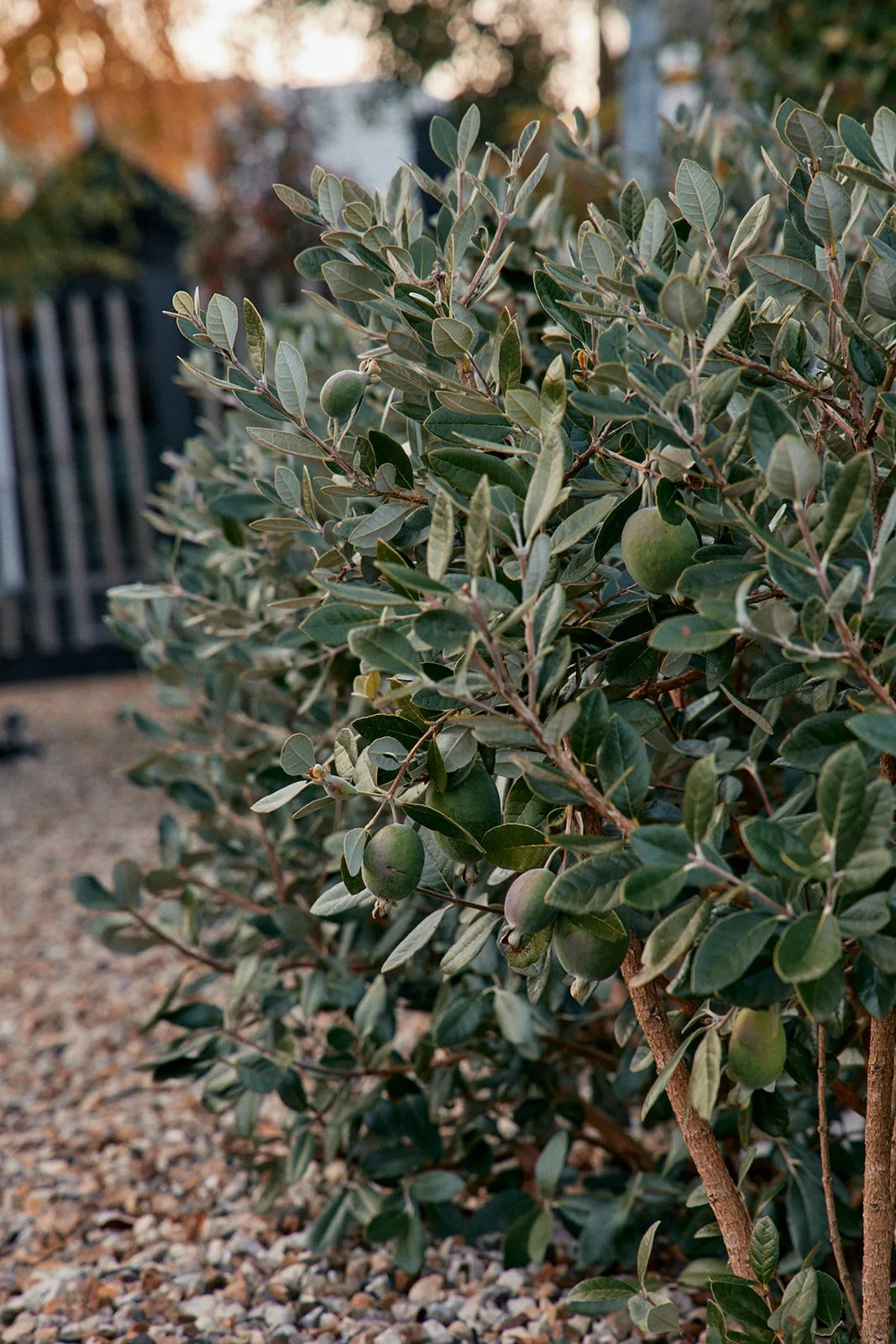
When I wrote about this hedge last year, the plants were barely a metre high and had only just begun to fruit. It was thrilling, and it was mostly promise. I'd put them in for fruit, yes, but also for structure, and for the privacy of a living screen that would, in time, soften the neighbouring rooftops that sit between me and the hills.
A year on, the rooftops are still there. Slightly less of them. The hedge hasn't reached its height — I didn't expect it to in a single year — and it hasn't yet done the screening job I planted it to do. But it has thickened and settled, and it has begun to behave like a part of the garden with something to do, rather than a row of new plants hoping to make it. And this year it has fruited properly.
That's where the satisfaction actually sits for me. Not in the finished picture — gardens rarely hand us that on our own timetable — but in the evidence that the thing is working. The roots have taken. The plants have read the place. A decision I made a couple of seasons ago has started to give something back.
Why a hedge, and why feijoas
At Little Cottage on a Hill, every plant has to earn its keep. That doesn't mean it has to be edible. It means it has to contribute. A plant might hold structure through winter, feed the bees, soften a fence, throw a little shade, carry scent, frame a view, or simply pull me out the back door in the morning. The ones I value most do several of those things at once.
Feijoas are exactly that kind of plant.
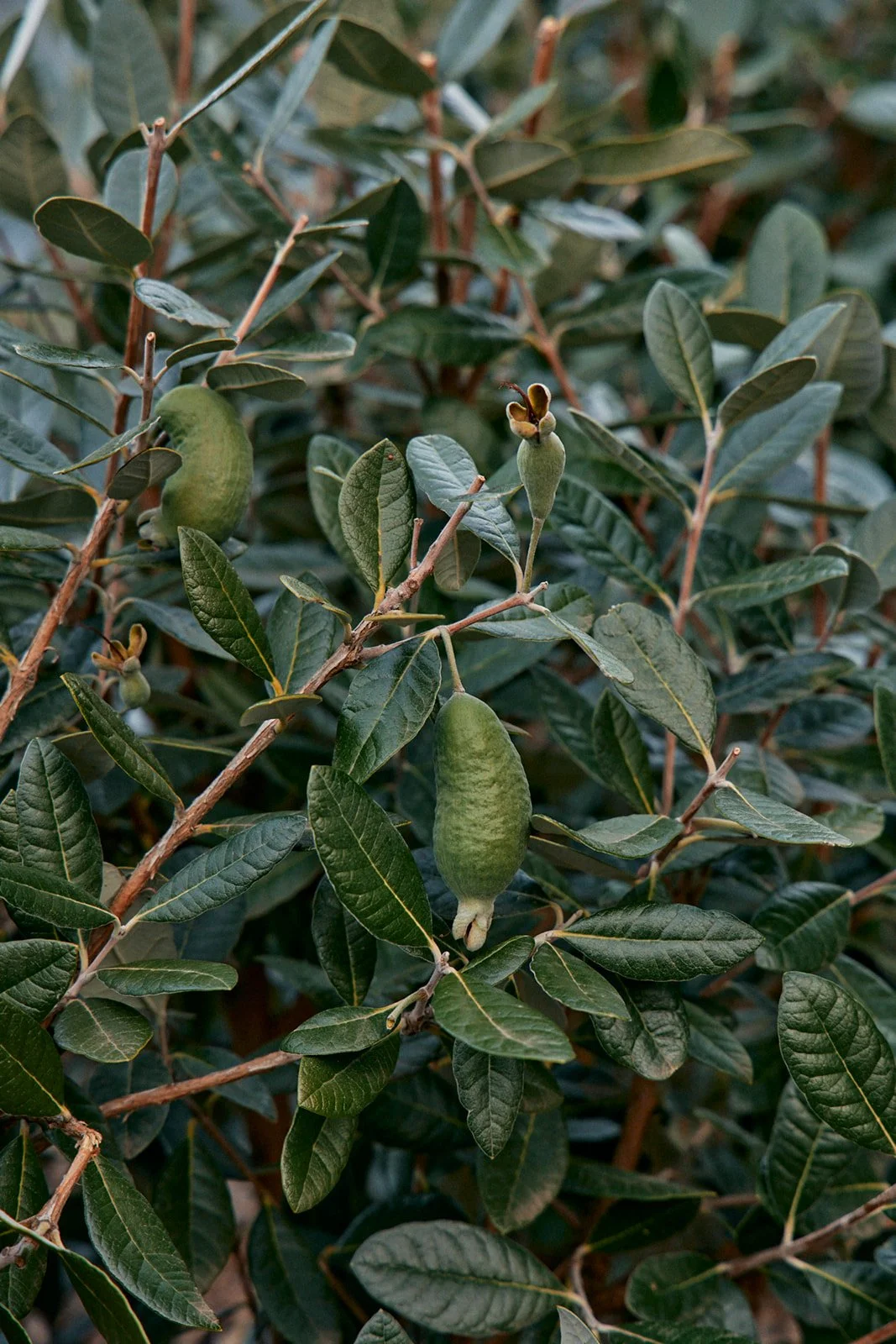
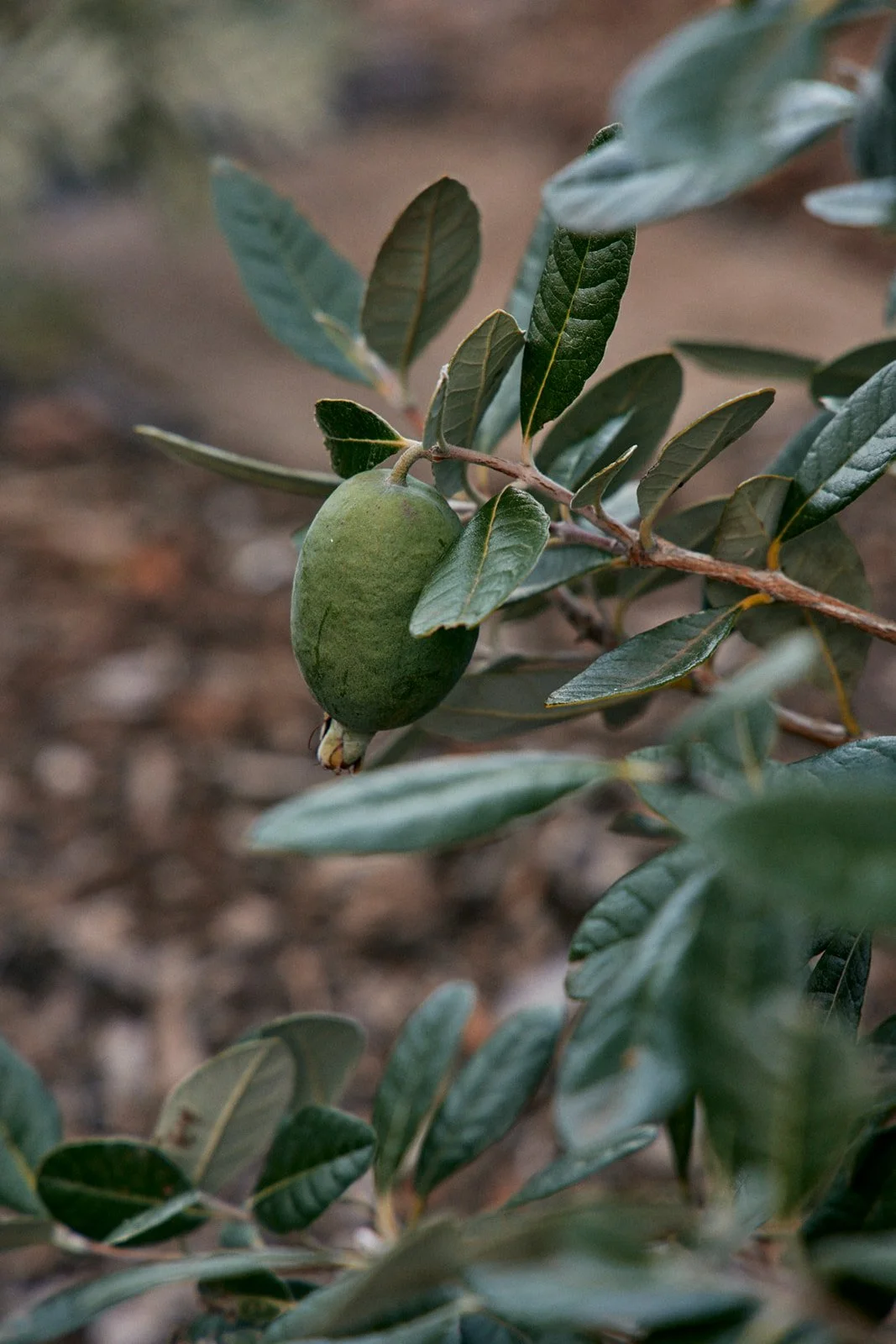
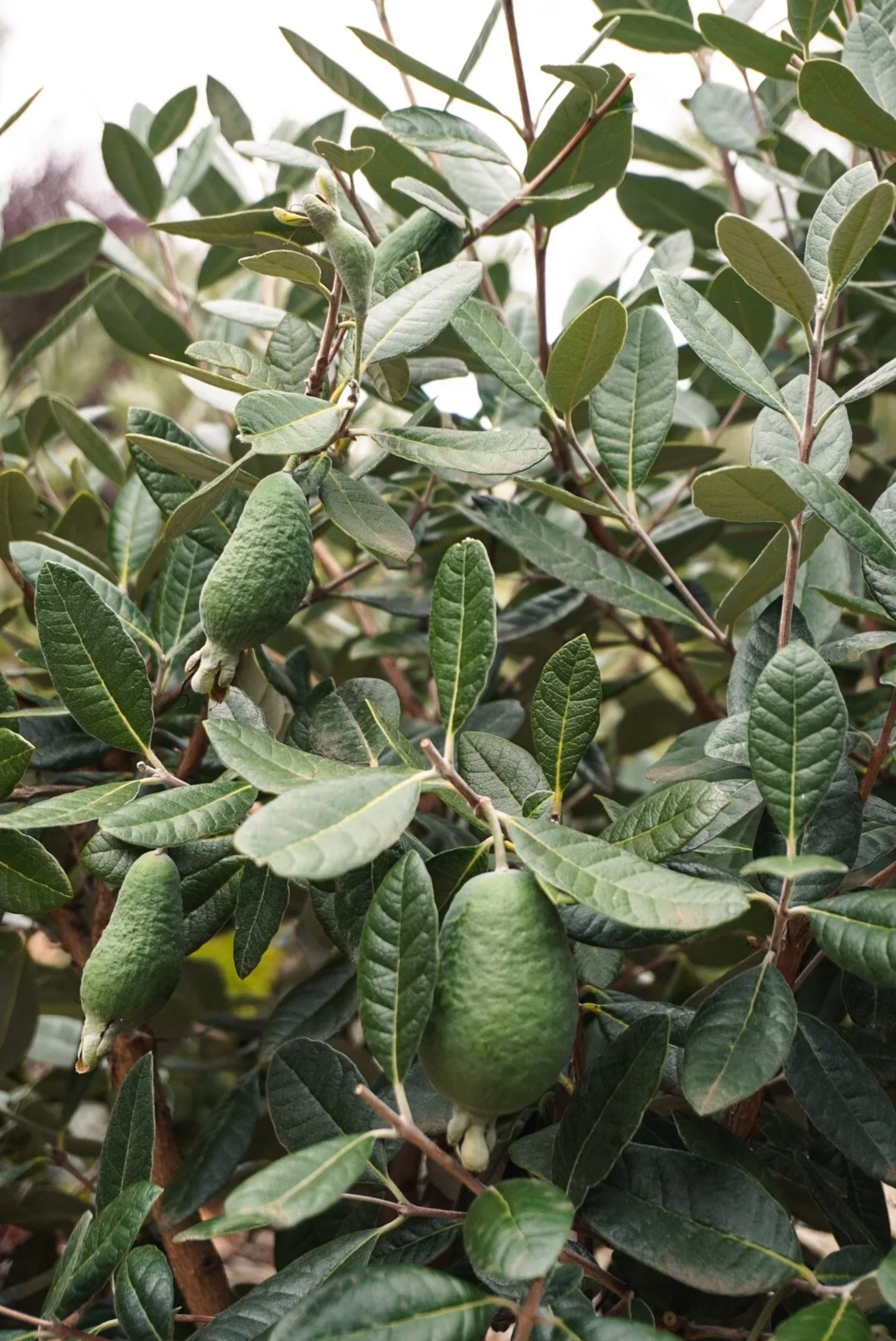
Pineapple guava, to use the other name — an evergreen shrub or small tree with thick, silver-green leaves, edible flowers, and that fragrant autumn fruit. You can grow a single specimen happily enough. For my block, a hedge made far more sense. I wanted a boundary that worked: something to hold the edge, screen the roofline over time, and still feed me. In a small garden I come back to this logic constantly. A hedge can also fruit. A windbreak can feed you. The plant that gives you privacy can also become part of what's happening in the kitchen.
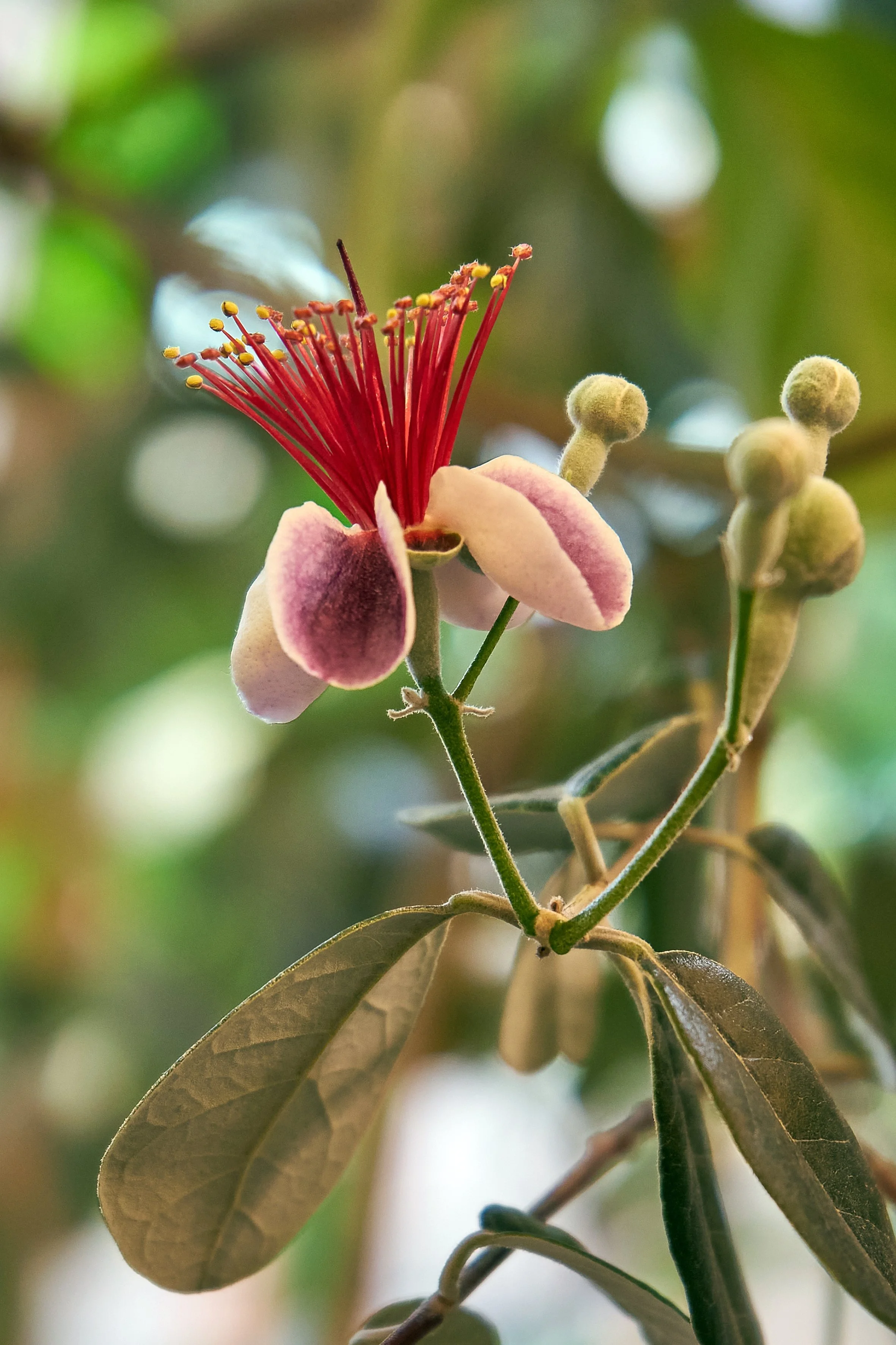
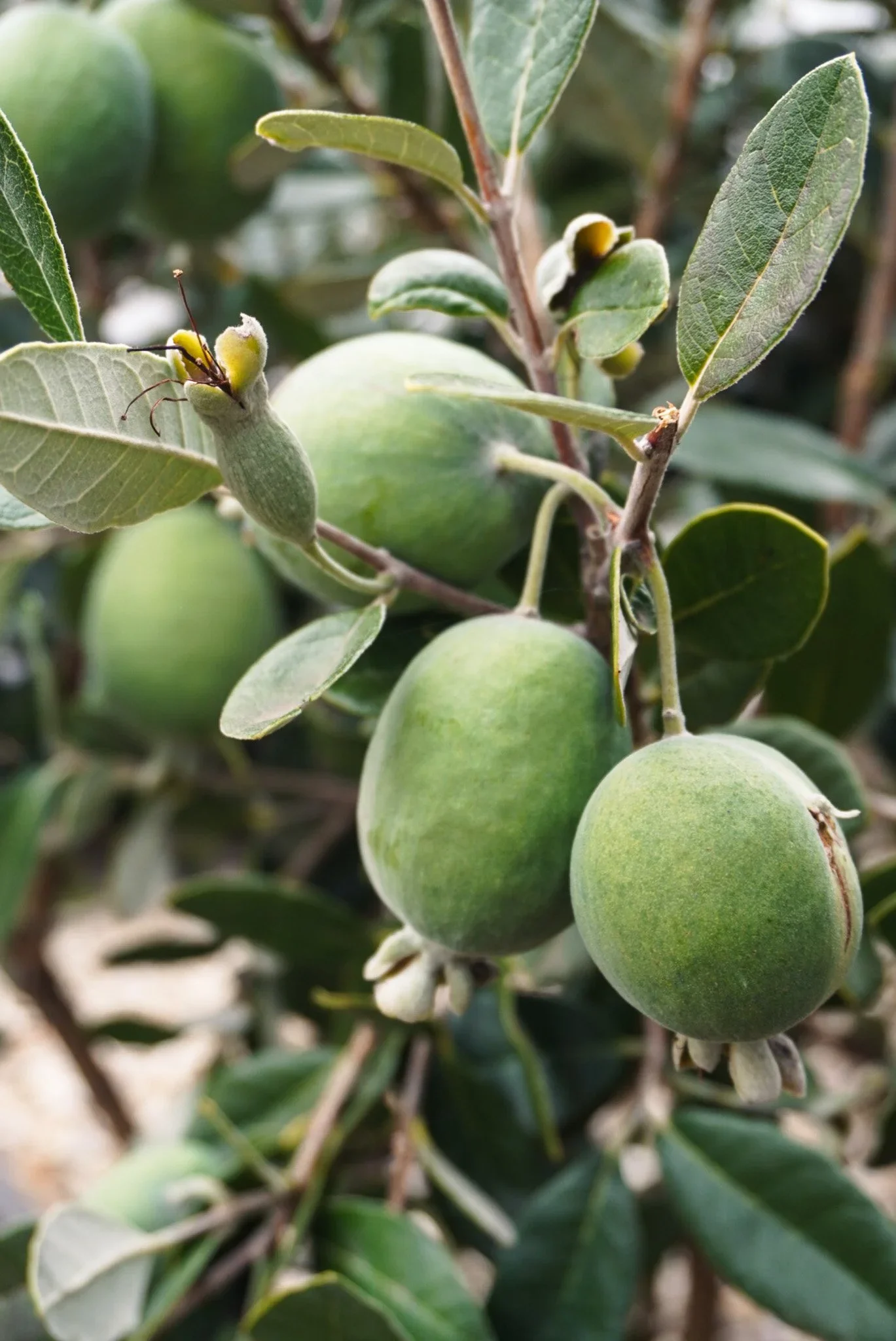
They aren't flashy. They ask very little. For most of the year they sit in the background holding their shape, and then in spring the flowers come — fleshy, sweet-petalled — and at the cold end of autumn, when much of the productive garden is winding down, the fruit begins to drop.


A fruit for the edge of winter
The timing is a large part of why I love them.
In a cool-climate garden, by the time feijoas ripen the berries are long gone, the stone fruit finished, the apples and pears winding down. The garden is moving into its quieter rhythm. And then the feijoas start to fall. They stretch the productive season out at exactly the point it can begin to feel as though the garden is closing in for the year. There's still fruit to gather. Still scent in the kitchen. Still something to scoop straight from the skin, or stew, or put away for later.
That last generous offering, right before the deeper work of winter begins, matters more than it might sound.
Feijoa blossoms.
A year on
This year the hedge has really started to give.
Not the way an old, established feijoa gives, where the fruit carpets the ground and you stand there wondering how you'll ever use it all. Mine is young. But against last year the shift is unmistakable — more fruit, more often, and more of those moments of bending down as I pass and coming up with a handful.
It still stops me. I think that's the part I love most about growing food at home — the way it punctuates a day. You're on your way to do something else, you glance down, and the garden has interrupted you. Gently. Asking you to notice.
The feijoas aren't doing everything I planted them for. The neighbours are still in view. The screen isn't there yet. But the fruit is the reminder that a garden doesn't have to be finished before it starts to give. We plant for a future we can't quite see, and we're fed along the way.
How to grow feijoas well
Feijoas get called easygoing, and they mostly are. Easygoing isn't the same as ignore-them-entirely, though. Like any fruiting plant, they reward thoughtful establishment, a bit of watching, and some seasonal care.
Plant more than one. Some varieties are self-fertile; many crop better with a partner for cross-pollination. In a home garden, more than one variety is the safer bet if it's fruit you're after rather than foliage. I planted mine as a row, which gives me the hedge and improves pollination at once. One plant can be useful. A repeated line of them becomes structure.
Give them light. Feijoas will tolerate some part shade, but they want sun, and for fruit I'd give them all the light the site allows. They want drainage too. They're tough, but they don't want wet feet. In heavier ground I plant them slightly proud of the surface and work in compost; on dry or exposed sites, mulch well and keep the water up while they establish. At Little Cottage the hedge sits where it can be both useful and seen — I don't like hiding the productive parts of a garden away.
Plant at the right time. For much of Australia, March to May is the window. Autumn planting lets the roots settle before the spring push, while there's still some warmth in the soil. In genuinely cold or frost-prone pockets I'd be more careful — young plants may want protection through their first winter, or you might wait for the soil to warm again in spring. Read your own site before anything else.
Water while they settle in. Established, they're resilient. Young, they still need you — deep watering through dry spells, especially as the fruit forms. I don't drown them and I don't forget them, and in a hedge that's worth saying twice, because closely planted shrubs end up competing with one another. A good mulch layer does an enormous amount of the work.
Prune with restraint. The temptation with a hedge is to shear it into a wall, but hard pruning costs you flowers and fruit, so I keep a light hand. I want density without stiffness — thickening and screening, but with light and movement still coming through. After fruiting I take out anything dead, crossing or awkward, and lightly shape where it's needed. In a cold area I'd hold off until the worst frosts have passed.
Let the fruit fall. This is one of the loveliest things about them. You don't tug, you don't guess. When they're ripe, they drop — that's the cue. I collect off the ground daily once they start. A ripe one has the strong perfume and a slight give: not squashy, just yielding. They bruise easily and they don't keep, so this isn't fruit to leave sitting in a bowl for a week.
Taste the flowers — gently. The petals are edible, sweet and soft, with that sherbet quality that's hard to resist while you're still waiting on the fruit. But no flowers, no fruit. So I taste a few and leave the rest to the bees. That's the constant negotiation in a productive garden: take what's offered, but not in a way that stops the next offering.
Making the most of the harvest
I still love them fresh — halved, scooped with a teaspoon, standing in the kitchen or out in the garden.
But roasting them changed how I think about the fruit entirely. The first time I had roasted feijoa was in a galette from Two Fold Bakehouse here in Daylesford, paired with apple and folded into sourdough pastry. Something shifted. The sharp, perfumed thing I knew turned soft and deep and almost spiced. I've been far more interested in cooking them ever since.
They stew beautifully, spooned over porridge or yoghurt or cake. They go into crumbles with apple. They make good jam, especially with ginger or fig or lemon. And they take well to preserving — bottled, fermented, folded into syrups and shrubs, where that floral perfume can be carried well past the short window it's actually here.
Because that's the thing with feijoas. The season is generous and brief. Once they begin to fall you have to keep up. Some get eaten where I stand, some go over the fence to neighbours, some sit scenting the kitchen for a day. But when the fruit really arrives, preserving stops being a romantic idea and becomes a practical rhythm — a way of carrying a short season forward into the cold months. A glut in May becoming syrup in July. That's the right kind of abundance, to my mind.
Would I do it again
Without hesitation. I'd probably plant more.
Every feijoa I find on the gravel reminds me why they went in: for the fruit, but also for the shape the garden is still growing into, for the privacy I'm waiting on, for the way a small block can hold so much more than seems possible when every plant is asked to pull its weight. One day I hope the hedge meets the horizon and the rooftops vanish behind the silver-green. For now, I'll take the fruit.
And if you're thinking about your own front garden, a boundary, or a verge, the feijoa is a good example of one plant doing several jobs at once — screening, flowering, fruiting, feeding pollinators, softening a street edge, and stretching the season into the start of winter.
Not every verge will suit one, mind. Council guidelines, sightlines, services, the path, car doors, the mature height of the plant — all of it matters. But where there's room and your local rules allow, productive screening is a clever and generous way to make a public edge work harder.
That's exactly the kind of thinking I get into in my newest free ebook, Nature Strip Gardens: Fundamentals for Beautiful, Compliant Verges — a practical guide to reading your site, working with your council's guidelines, building better verge soil, choosing plants with care, and making a strip of ground that's beautiful, safe, useful and generous to the street.
Download it, share it, and start with the ground you already have.
Thanks so much for following along.
Natasha xx
Continue your gardening journey with me
If you enjoy this kind of content, my workshops offer more detail and guidance on design, productivity and seasonal care.
If you are building your garden from home right now, my e-books on Wicking Bed Gardens, Introduction to Backyard Chicken Keeping and Compost for Beautiful Productive Gardens offer practical step by step guidance that pairs well with the workshops
I share seasonal tips, behind the scenes at Little Cottage on a Hill, and new resources through my newsletter. Subscribe to receive my entire plant list from the garden as a personal thank you.
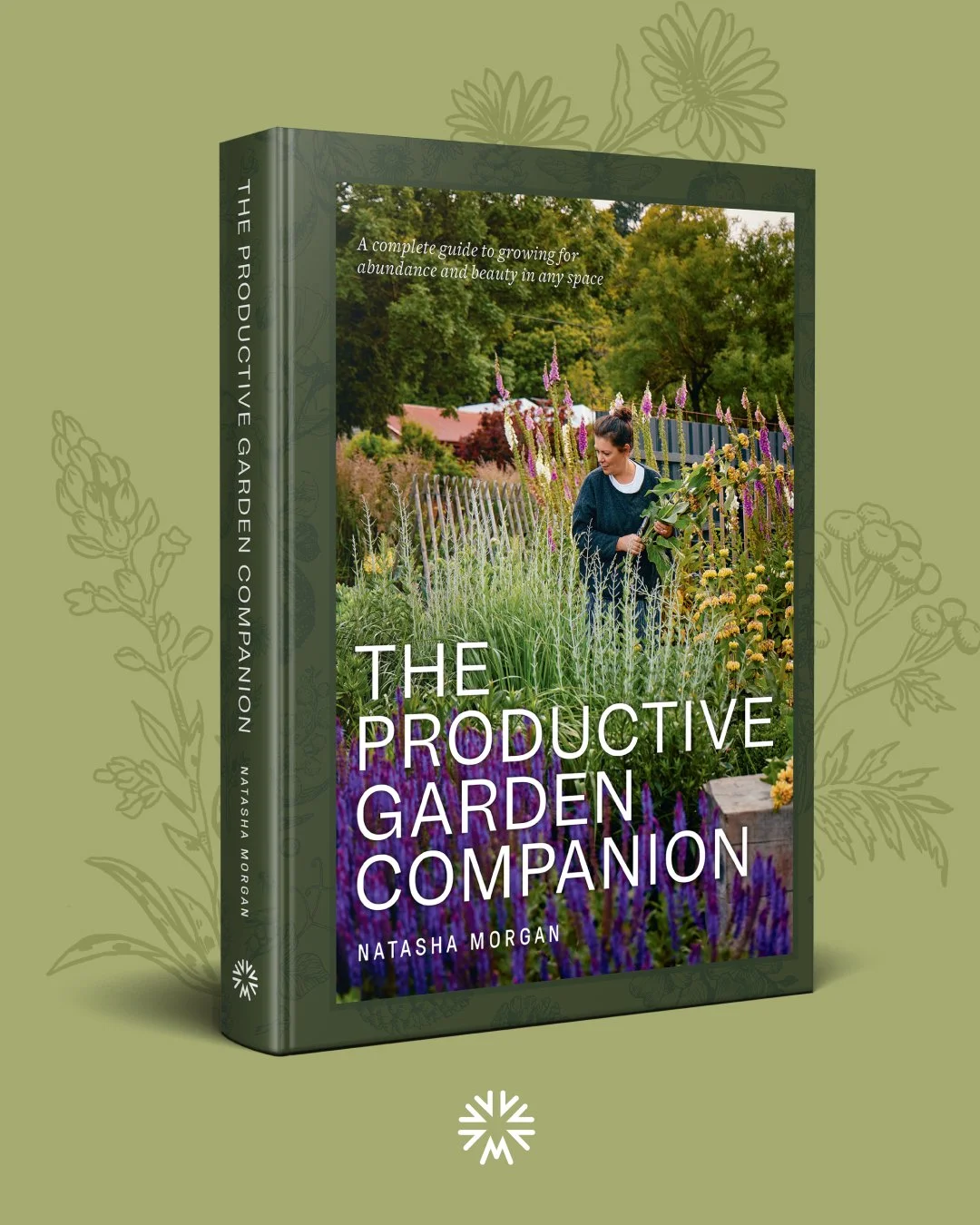
You can also pre-order my book The Productive Garden Companion, the book I have wanted to find my entire life. A complete guide to growing for abundance and beauty in any space. The Productive Garden Companion is a practical, reassuring and visually rich modern gardening book that meets gardeners wherever they are, from windowsill pots to generous acreage.
You may want to check out my related content below:
June Garden Tasks - For Australian Climates
Landscape Lingo - The ‘Chelsea Chop’ and Ways to Have Plants Look Their Best
No Dig Gardening - Less Work, Healthier Soil
Stay connected for more seasonal inspiration:
Instagram | Facebook | Gardenstead | LinkedIn | Pinterest | YouTube | Website | Newsletter
Thanks so much for following along.
Natasha xx
