• Pre-order the Book
  • About
  • Shop
  • Oak & Monkey Puzzle
  • Blog
  • Contact
  • Cultivate
  • Forage
  • Preserve
  • Menu

Natasha Morgan

  • Pre-order the Book
  • About
  • Shop
  • Oak & Monkey Puzzle
  • Blog
  • Contact
  • Cultivate
  • Forage
  • Preserve

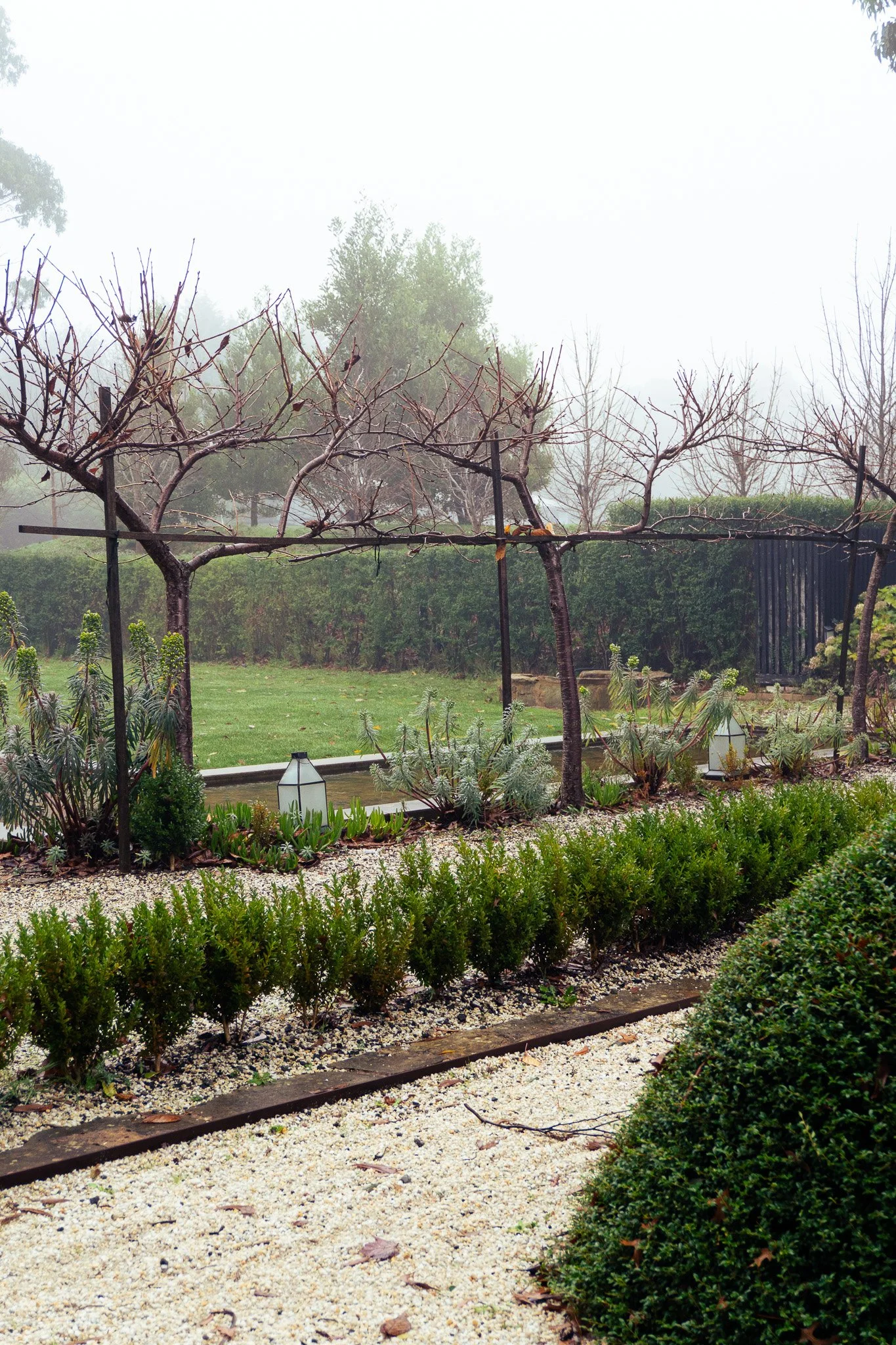
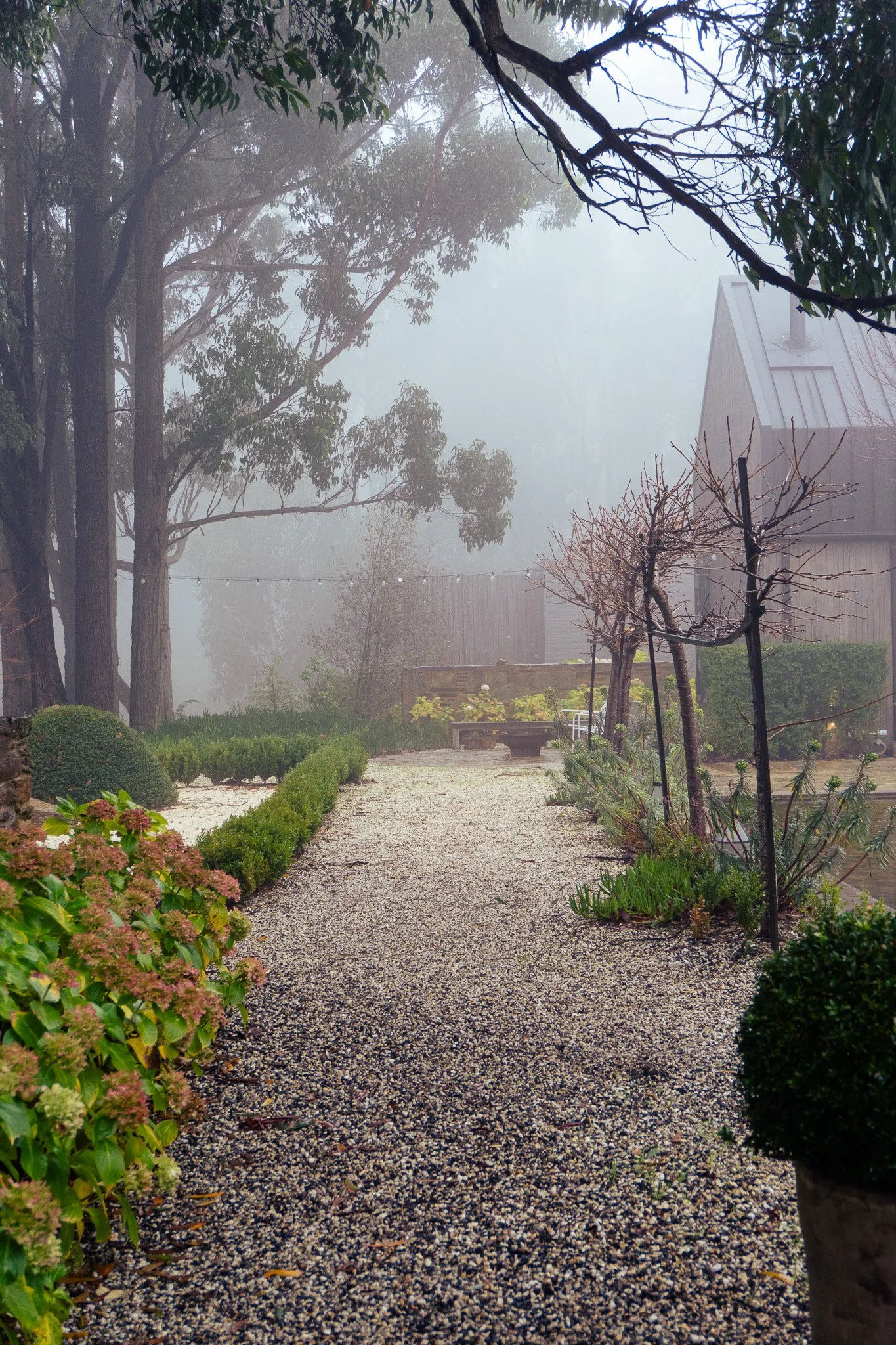
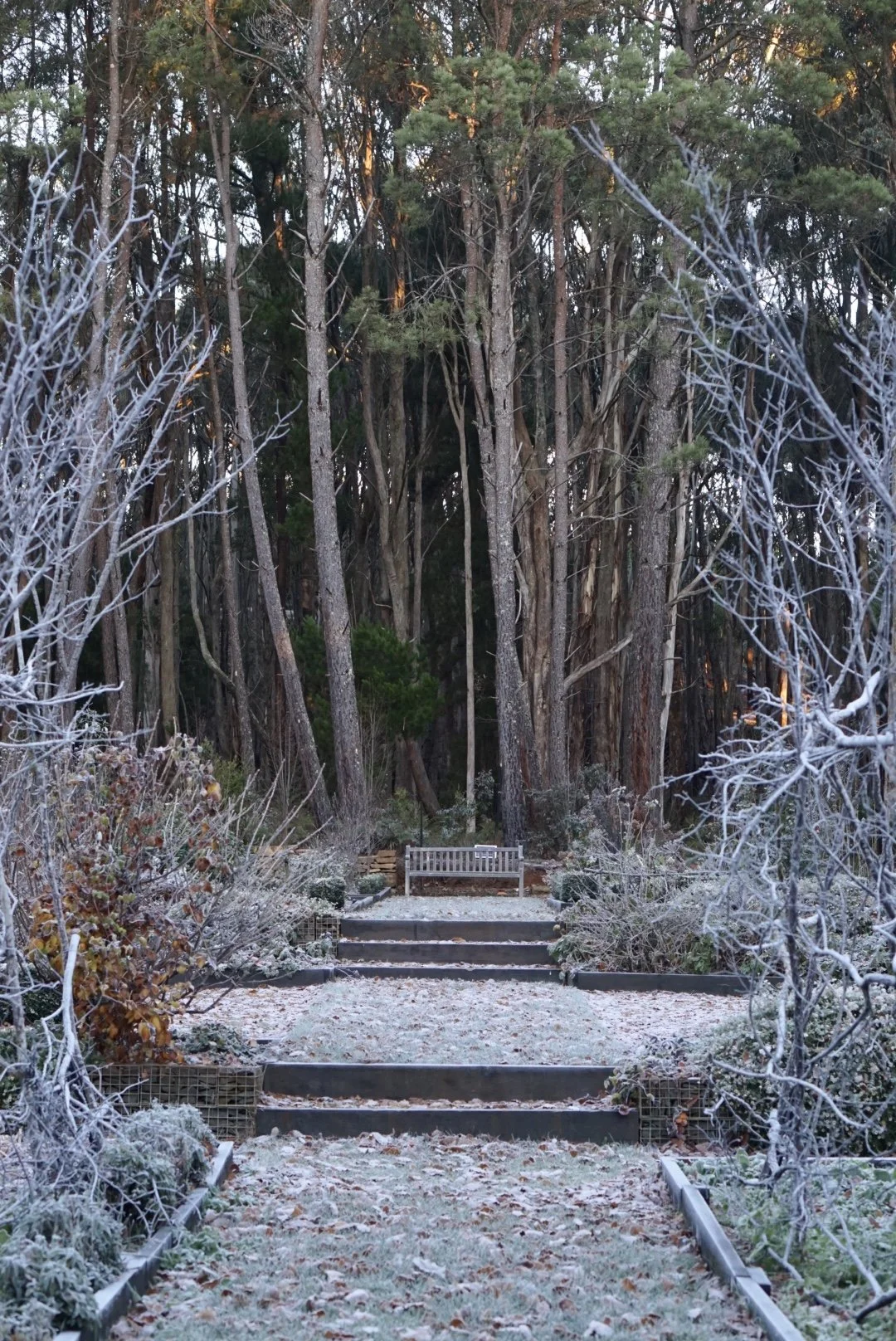
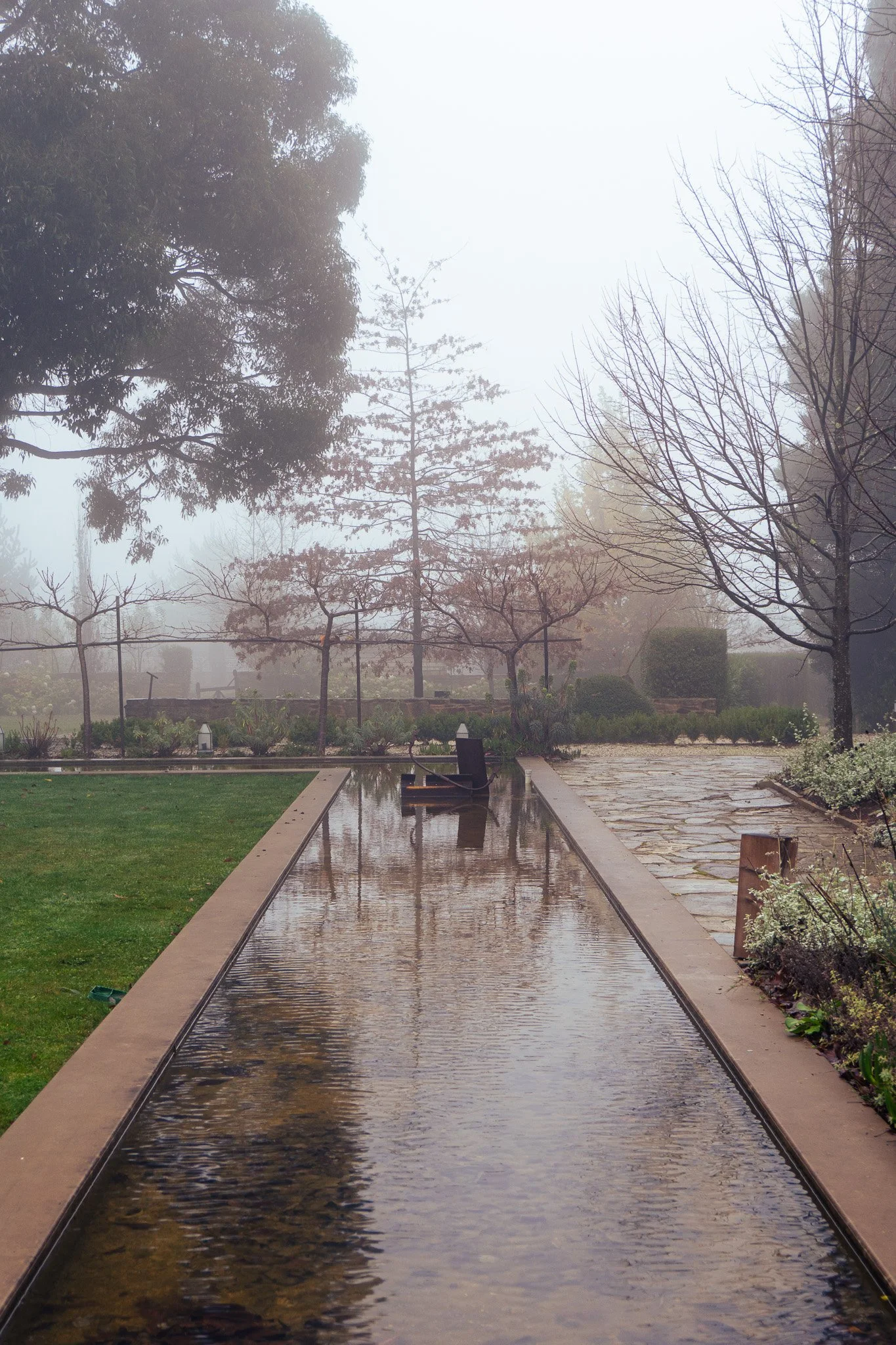
Oak & Monkey Puzzle - view down lawn spine to forest backdrop

What Winter Shows You

June 13, 2026

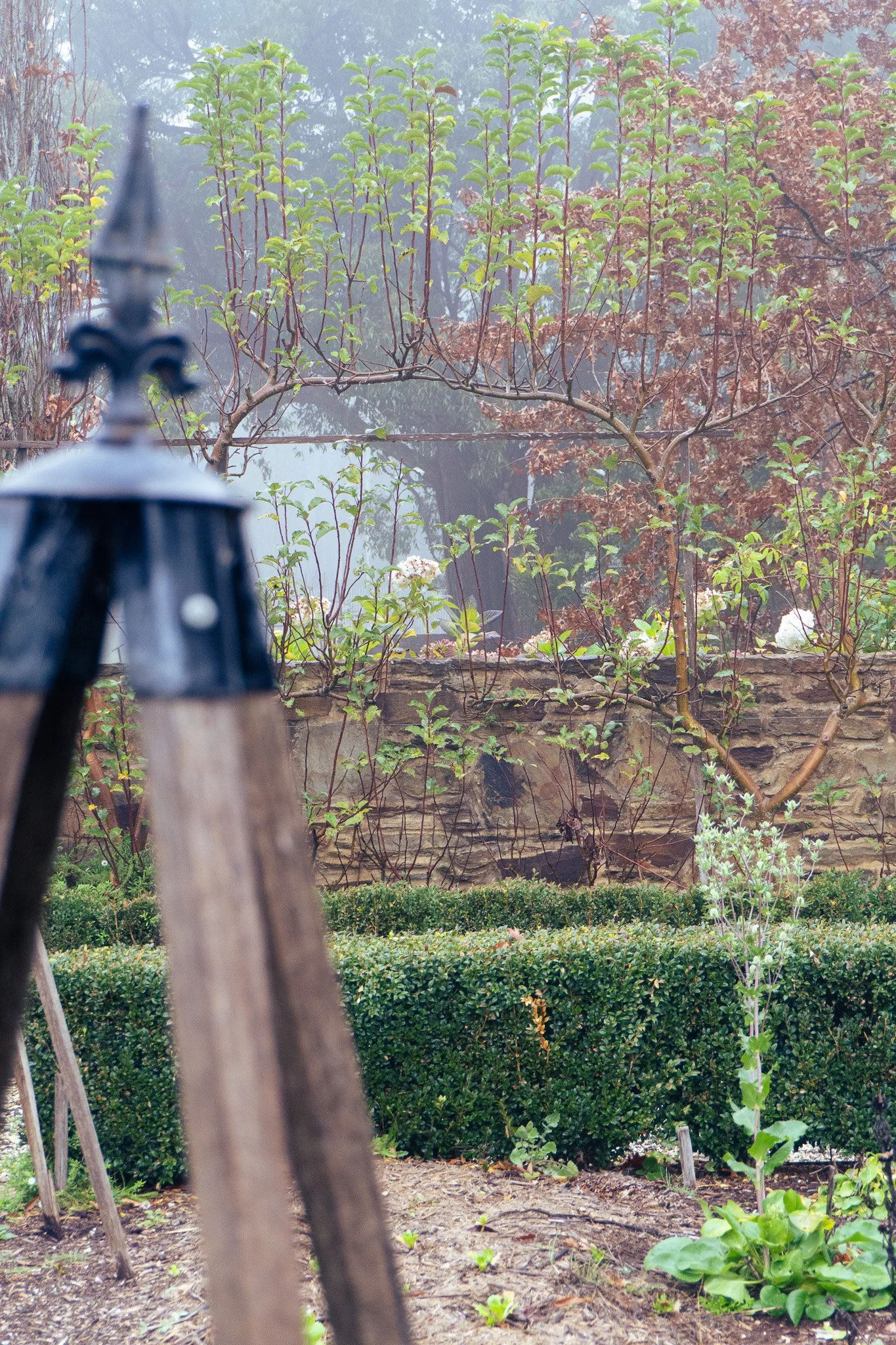
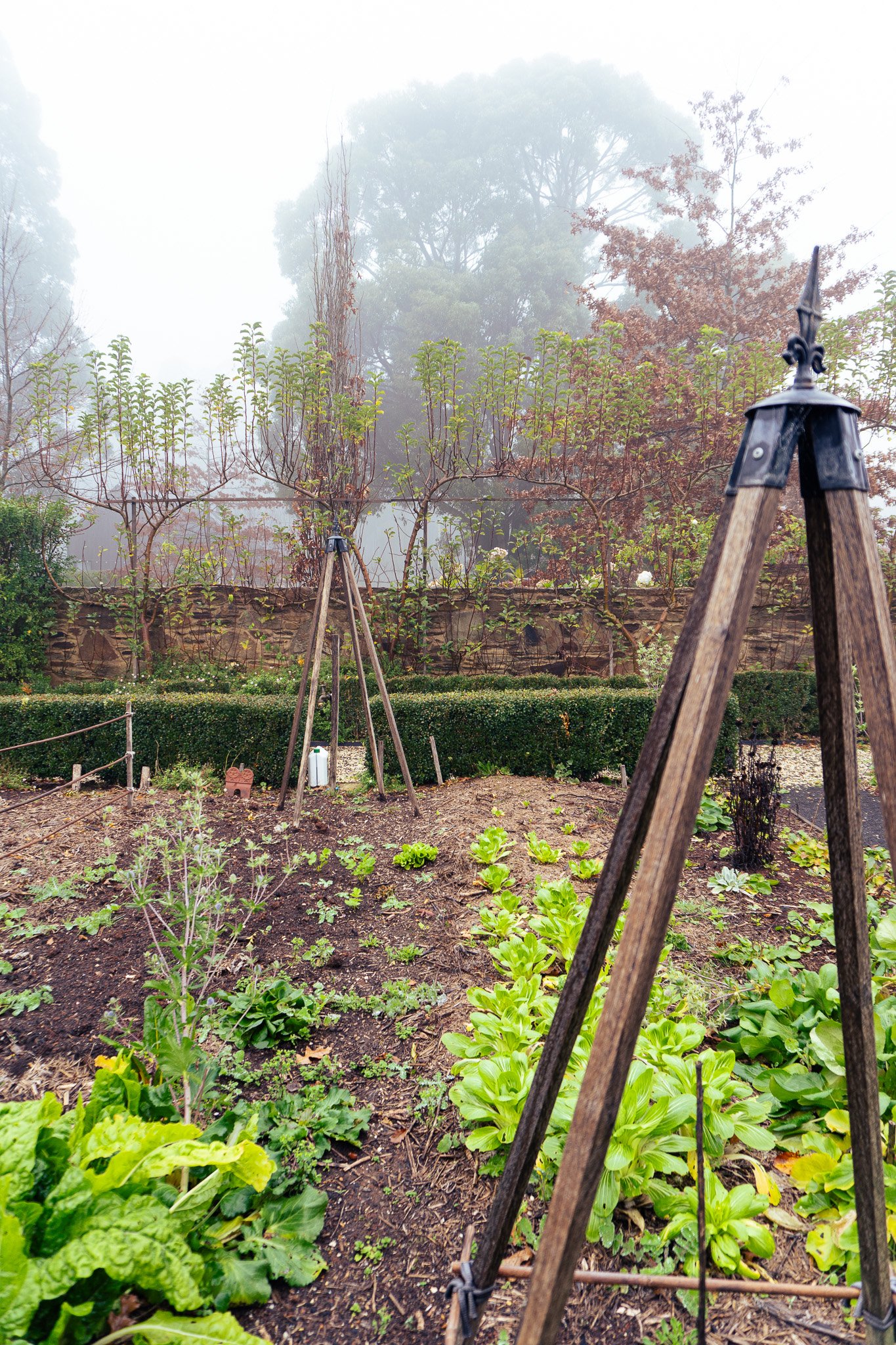
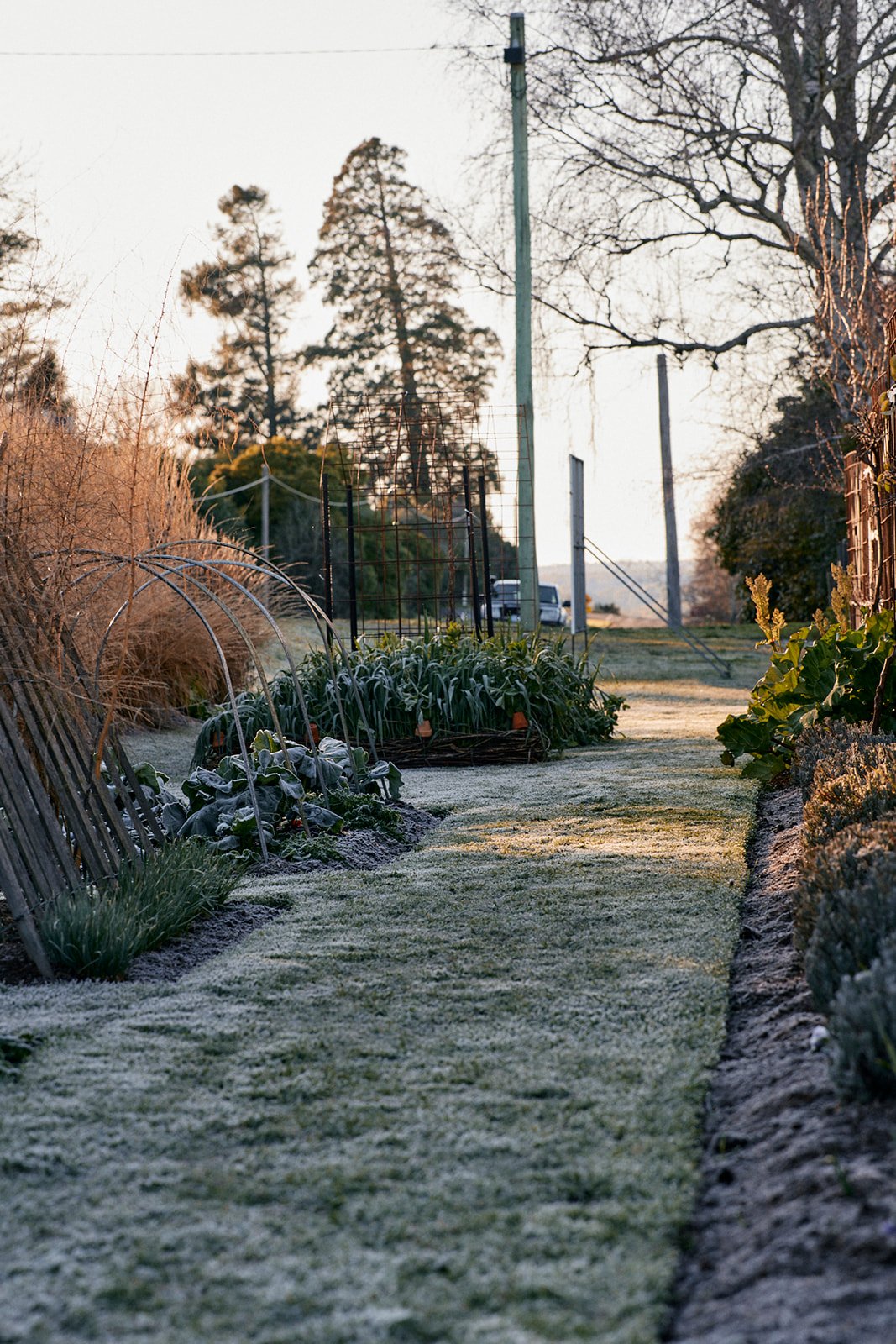
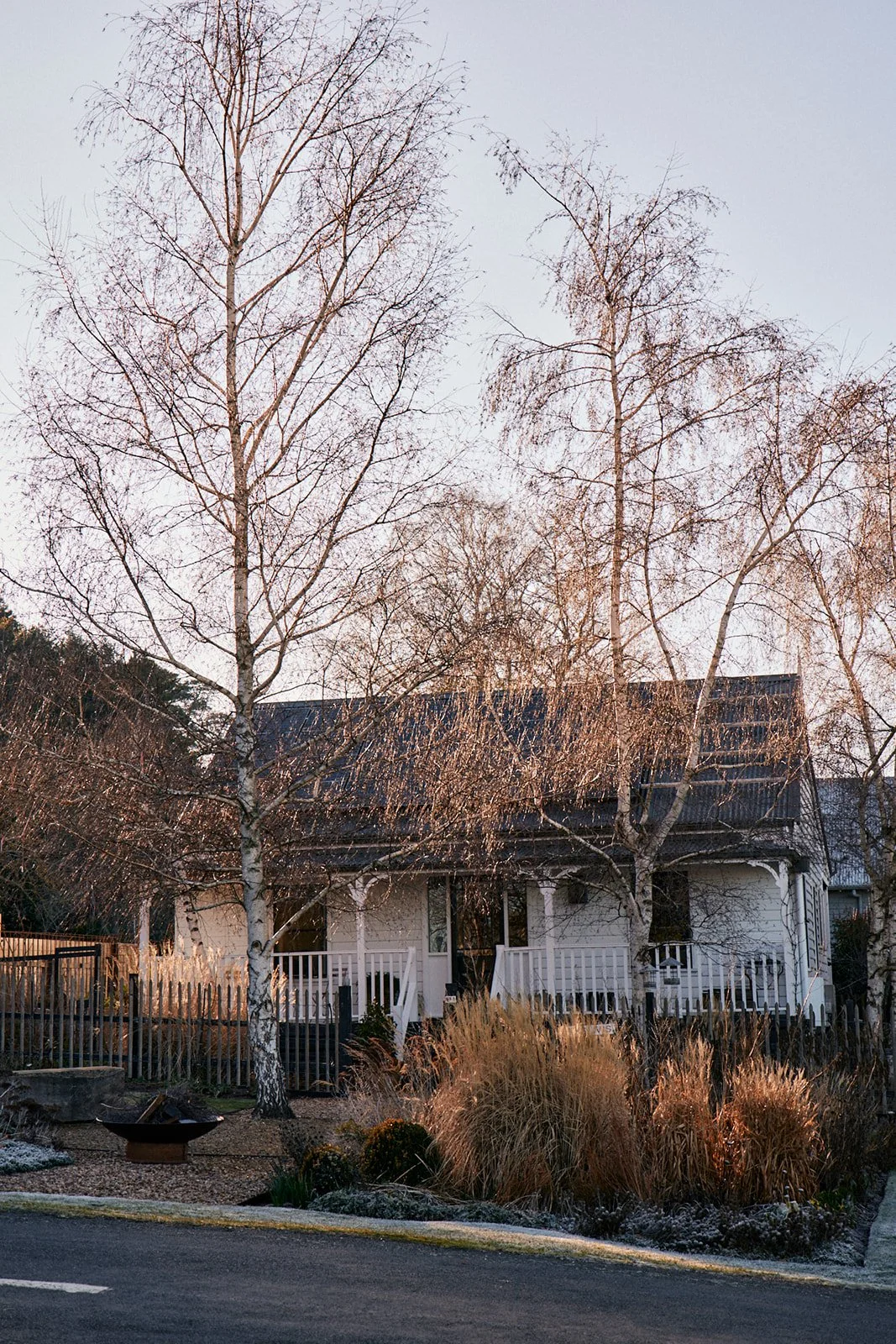
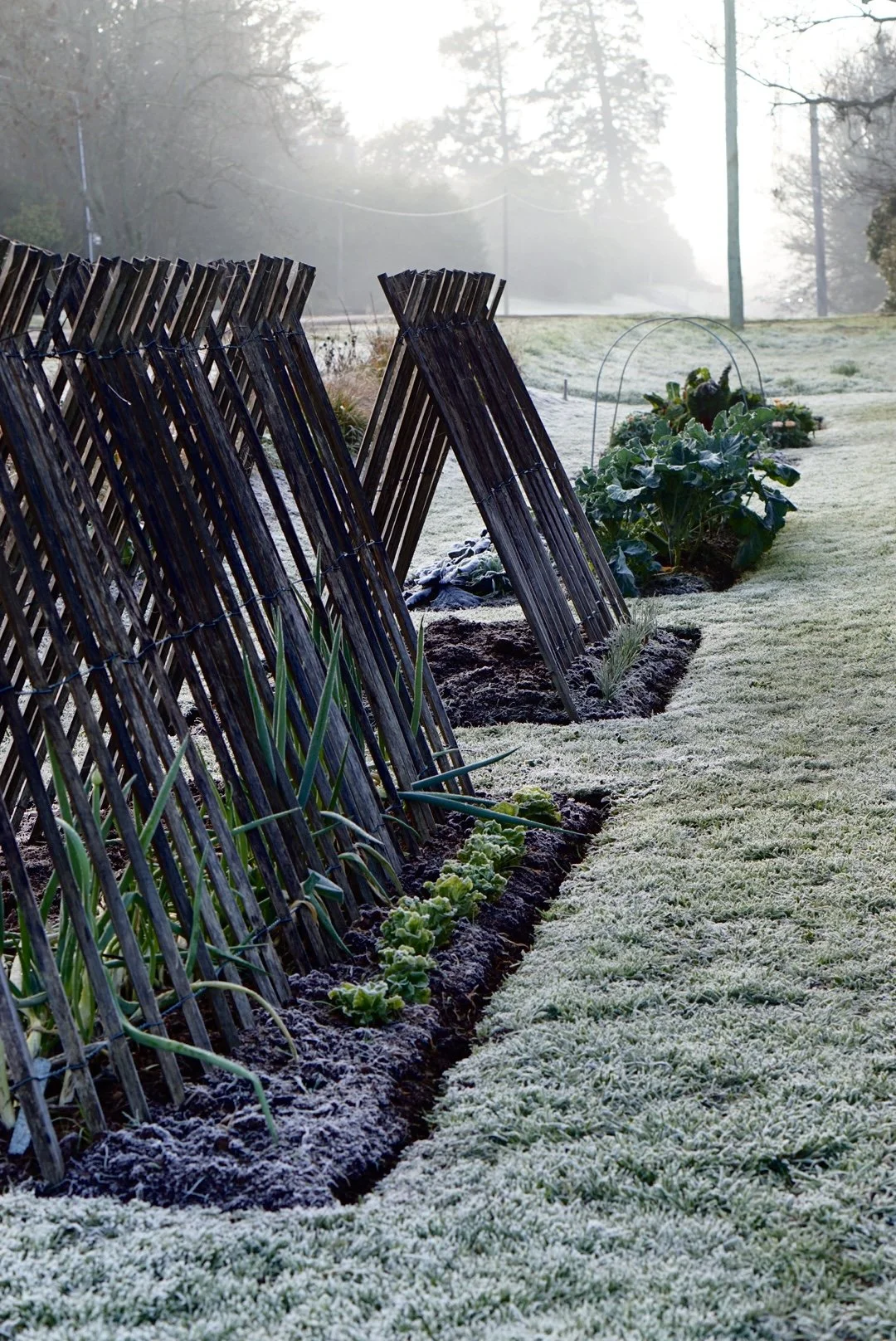
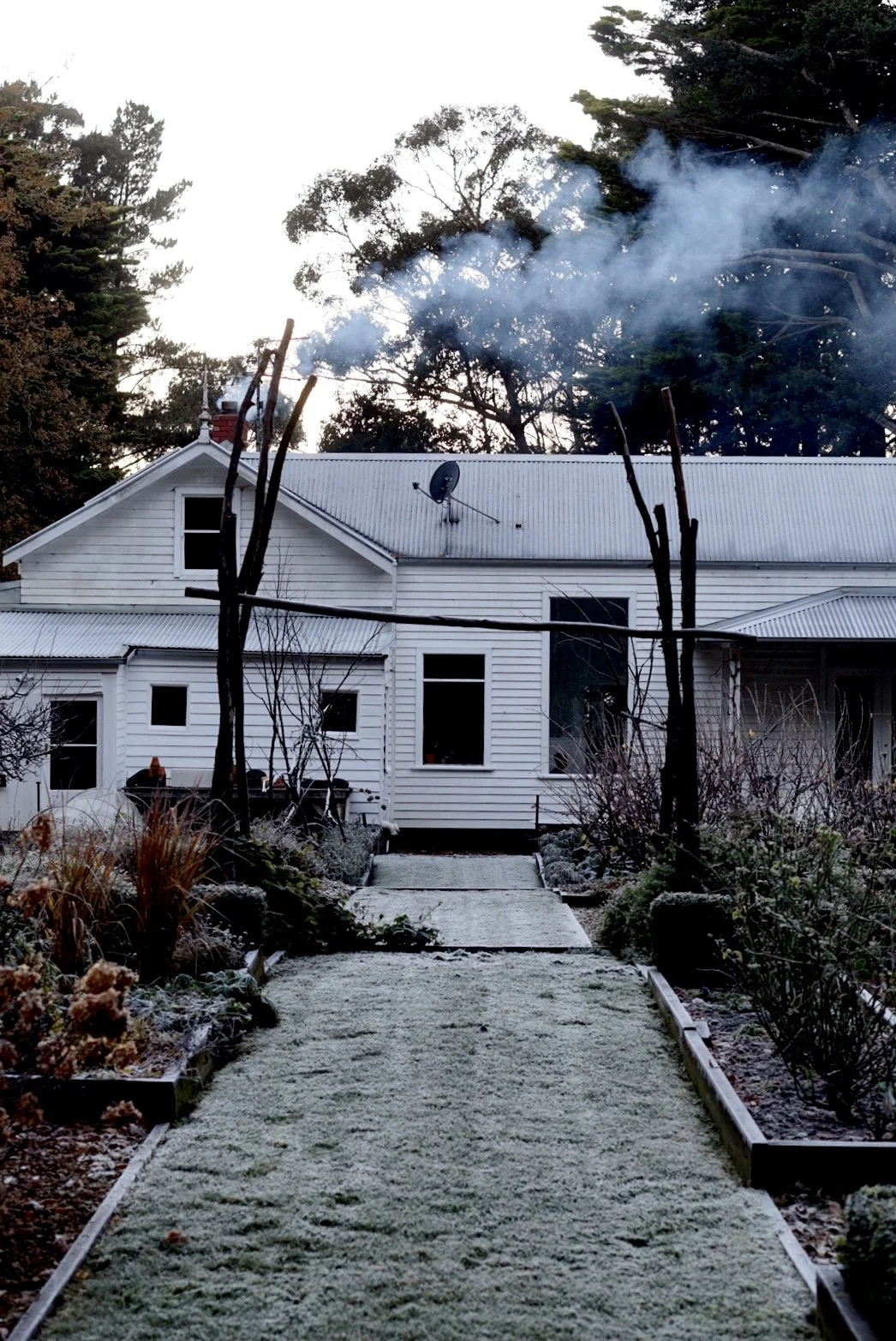
On the coldest mornings I take the same short walk around my garden before the day begins, and the lawn is the first thing I see. A crust of frost across the open grass, holding the low light, keeping the shape of every blade until the sun finds it. The garden at Little Cottage on a Hill is only five hundred and fifteen square metres, and on a morning like that it gives itself up to me completely. The grass reads as a kind of ground. The bare espalier along the fence becomes a drawn line. The trees are tone and mass and the spaces between them. Everything has been stripped of its colour, and in that stripping I can see, with almost embarrassing clarity, what holds the garden and what does not yet anchor it strongly enough.

Years ago, before my daughter was born, I spent Tuesday nights learning to paint in a studio in Clifton Hill — a converted stairmaker's factory that smelled of linseed oil and cigarettes and whiskey, where an esteemed old painter named Des set me the same task again and again. The underpainting. Before any colour, the old painters laid down a monochrome ground: the whole composition resolved first in greys, in light and dark, so they could see whether it held before a single true colour was allowed near the canvas. I did not understand, then, that I was being taught how to look at a garden. I understand it now, every July.

Natasha Morgan-EWeaving-Aug2025-166A2953.jpg
DSC06897.jpg

This is the thing I most want to say about winter, and I want to say it plainly, because it runs against the grain of how we are taught to feel about the season. Winter is not the garden at its emptiest. It is the garden at its most honest. You would be amazed how much a winter garden can teach you, if you let it. It takes away the froth of summer — the colour the eye runs to first, the abundance that papers over a weak structure — and leaves the bones exposed. It asks the one question every gardener tends to avoid and every designer should be asking: does this hold on its own terms, beneath everything I have laid on top of it?

I came to that question the long way round. I have been a gardener since I was a child, loving the plants themselves — their beauty, the small triumph of coaxing something difficult into growth — long before I knew anything about design. Design came later, through study and then through fifteen years of practice, learning to read space before planting: mass and void, the way one volume sits against the next. What took me far longer to see is that winter performs that reading for you, for free, once a year. When I was finishing my book, The Productive Garden Companion, and battling with the cover direction as most authors do, I’m told, artist and friend Andrew O'Brien stripped its cover to black and white, to test it — because colour is the most seductive thing in any image, and only with the colour gone is the eye forced onto whether the composition is genuinely well made or merely attractive. That is precisely what winter does to a garden.
I am in good company here. Piet Oudolf, whose plantings have done more than anyone's to rehabilitate the idea of a garden in winter, chooses a plant as much for how it dies as for how it blooms — the echinacea for the cone it leaves behind, the miscanthus for the plume that frost turns to a small sculpture. Dan Pearson writes about the moment in autumn when you finally take your hands off the reins and simply look. Arne Maynard says that only in winter, stripped of its summer froth, can the true layout of his garden be seen for what it is. None of them is mourning a gap. They are describing a season of revelation that the rest of the gardening world has somehow agreed to call empty.

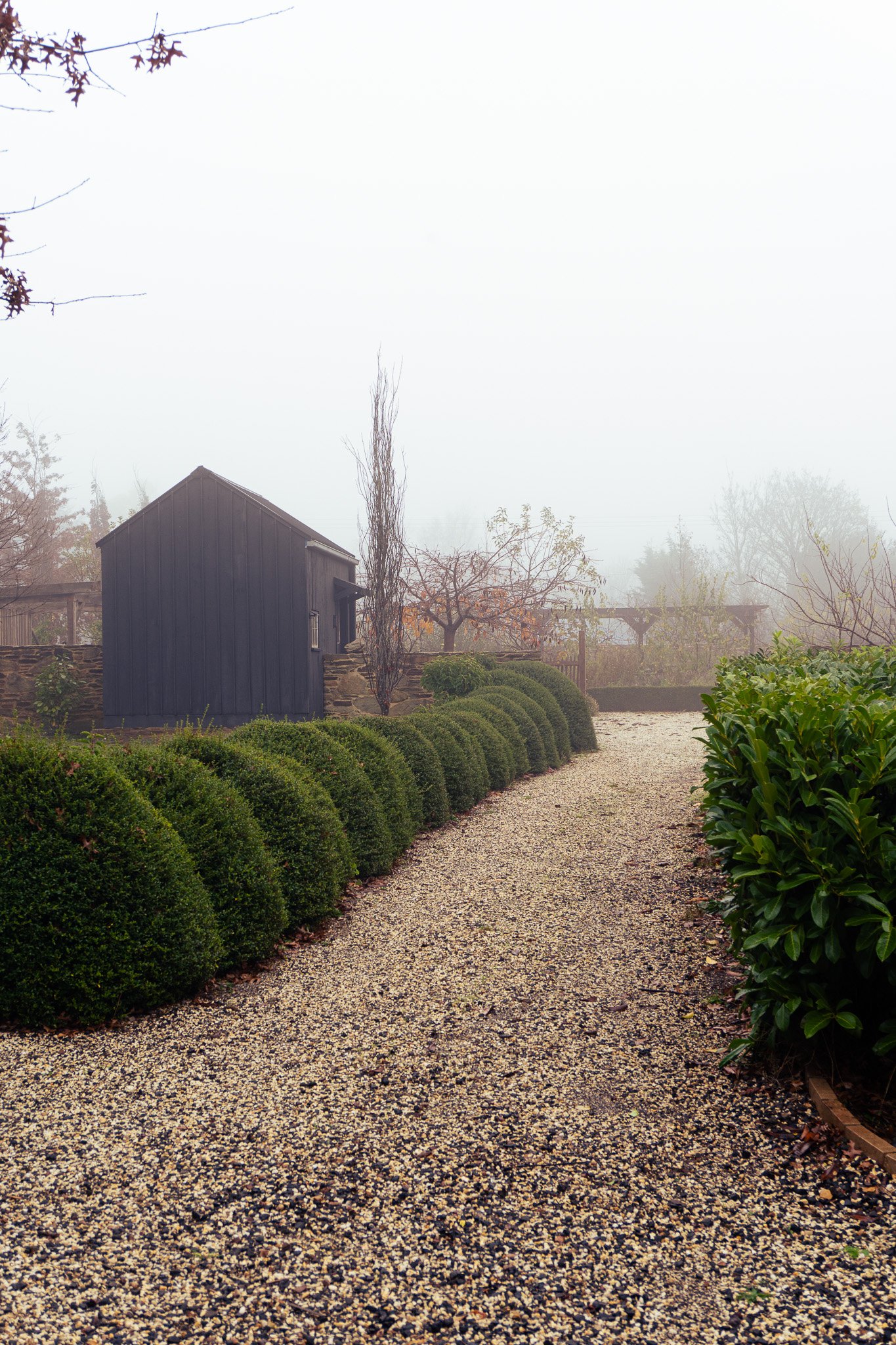
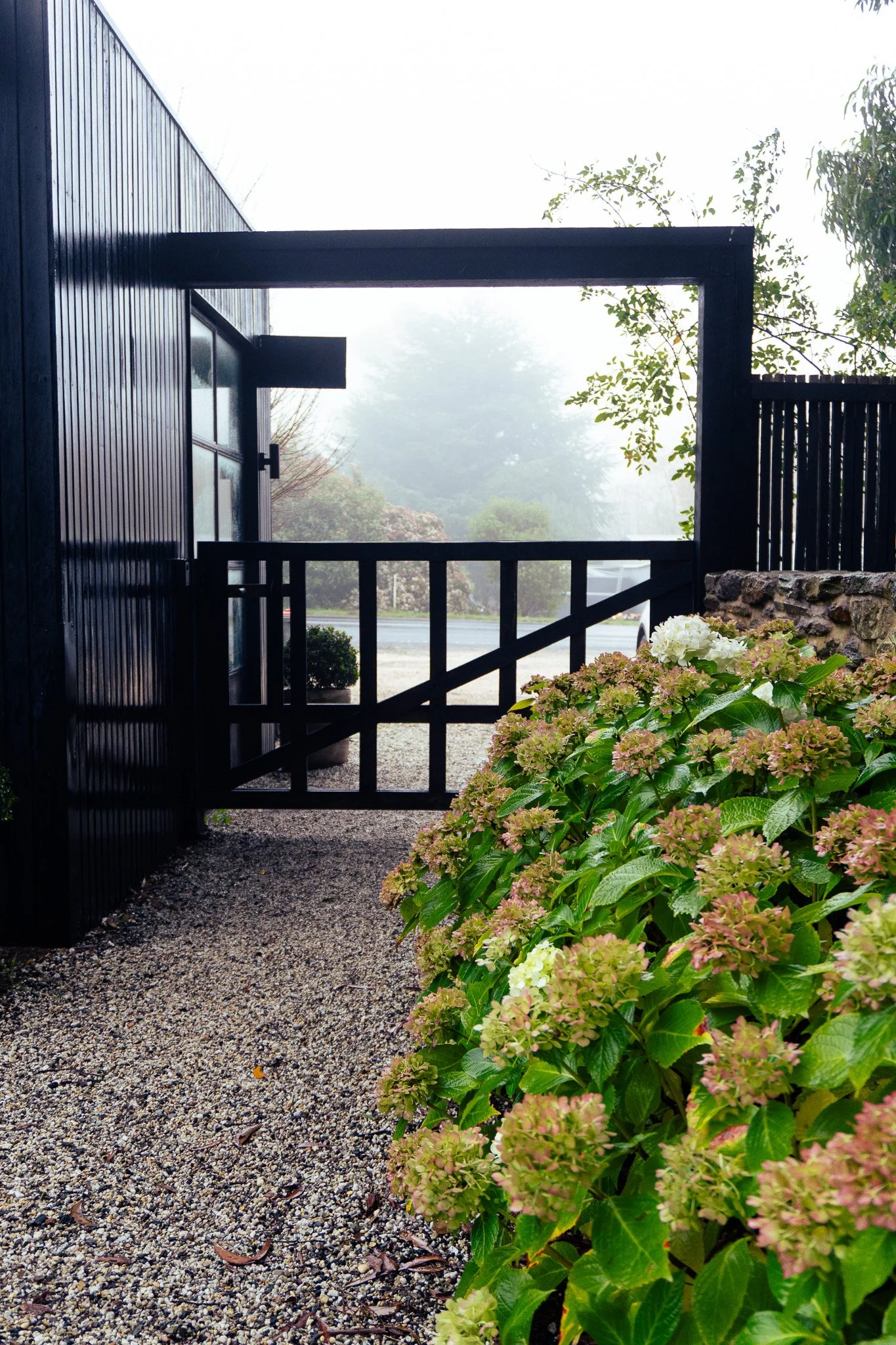
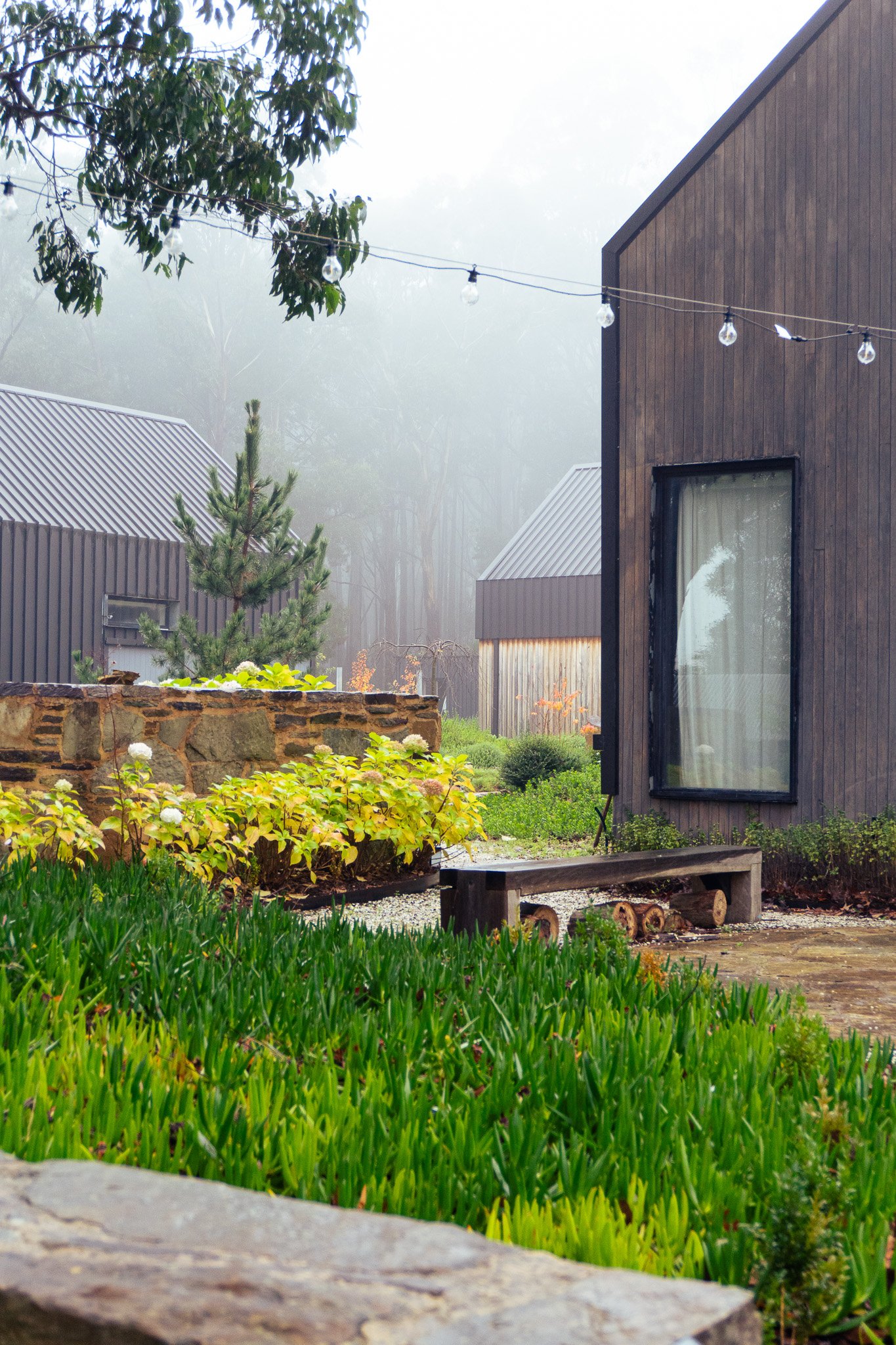
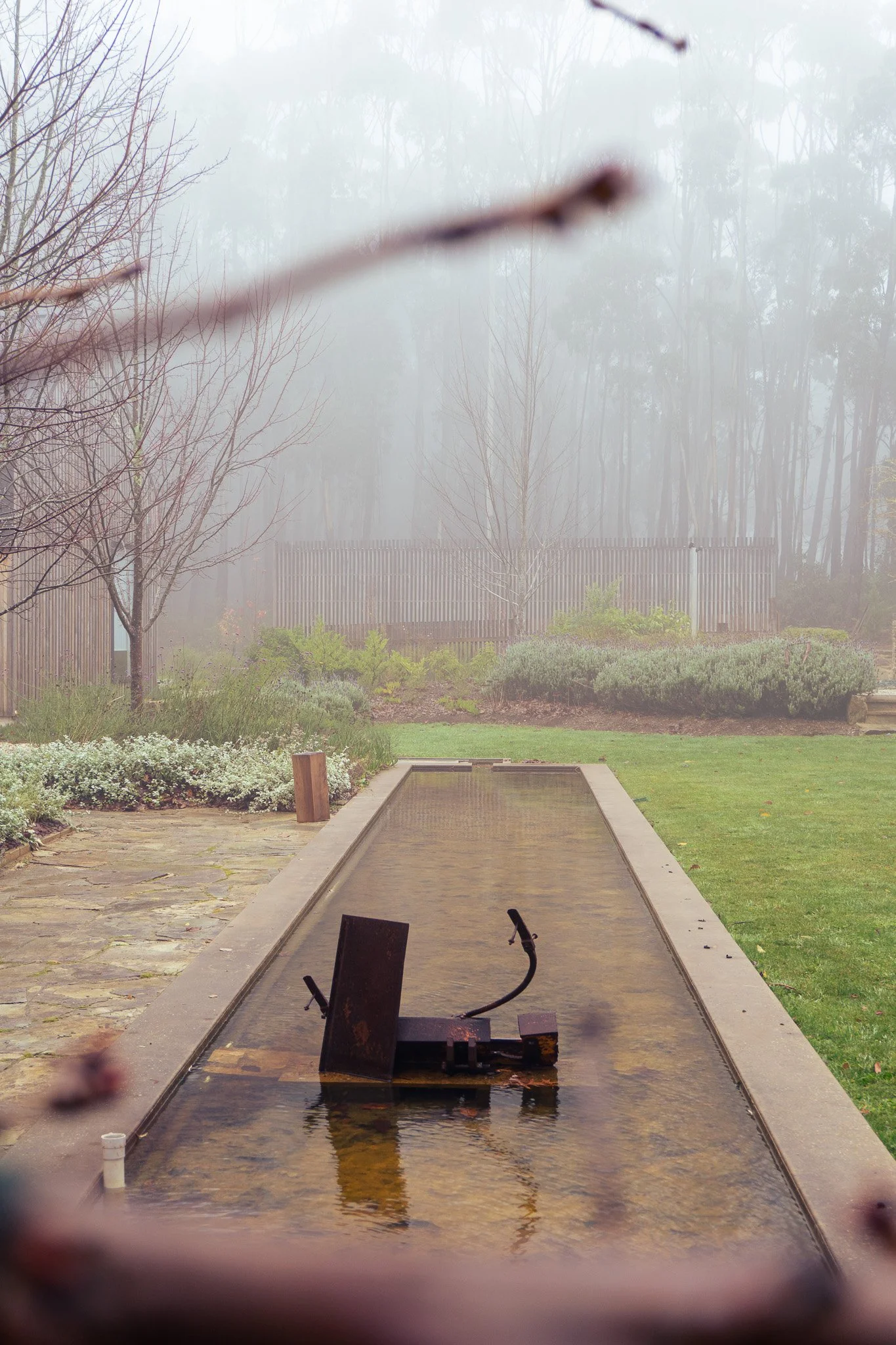
It helps that I garden where I do. There is a particular gift in this volcanic country of the Victorian Central Highlands, and it only becomes fully visible in the cold. Deep fog and real frost most mornings, settling in the low places and silvering everything they touch. A low, raking light that comes in almost horizontally and finds the texture in everything it crosses. From my garden I can see the old trees on Wombat Hill standing against a pale sky, reading almost like a wall beyond the fence. Five minutes away at Musk, where it snows some winters, Andrew has spent years making Stonewalls — twenty-five acres of garden and bushland shaped through a painter's eye. He comes to structure from the opposite direction to me, through paint, and he reads the gaps in a garden as the load-bearing parts: the space between two bare branches, the void between one plant and the next, the thing that gives a composition its tension. The black barn buildings he has set across the land do the same work as Des's monochrome ground. They hold the colour the way an underpainting holds the bloom.
PREFERRED_DSC00205.jpg
PREFERRED_DSC00209.jpg
PREFERRED_DSC00226.jpg
PREFERRED_DSC00225.jpg
PREFERRED_DSC00216.jpg
PREFERRED_DSC00230.jpg
PREFERRED_DSC00249.jpg
PREFERRED_DSC00248.jpg
PREFERRED_DSC00267.jpg
PREFERRED_DSC00224.jpg
PREFERRED_DSC00204.jpg
PREFERRED_DSC00247.jpg
PREFERRED_DSC00211.jpg
PREFERRED_DSC00253.jpg

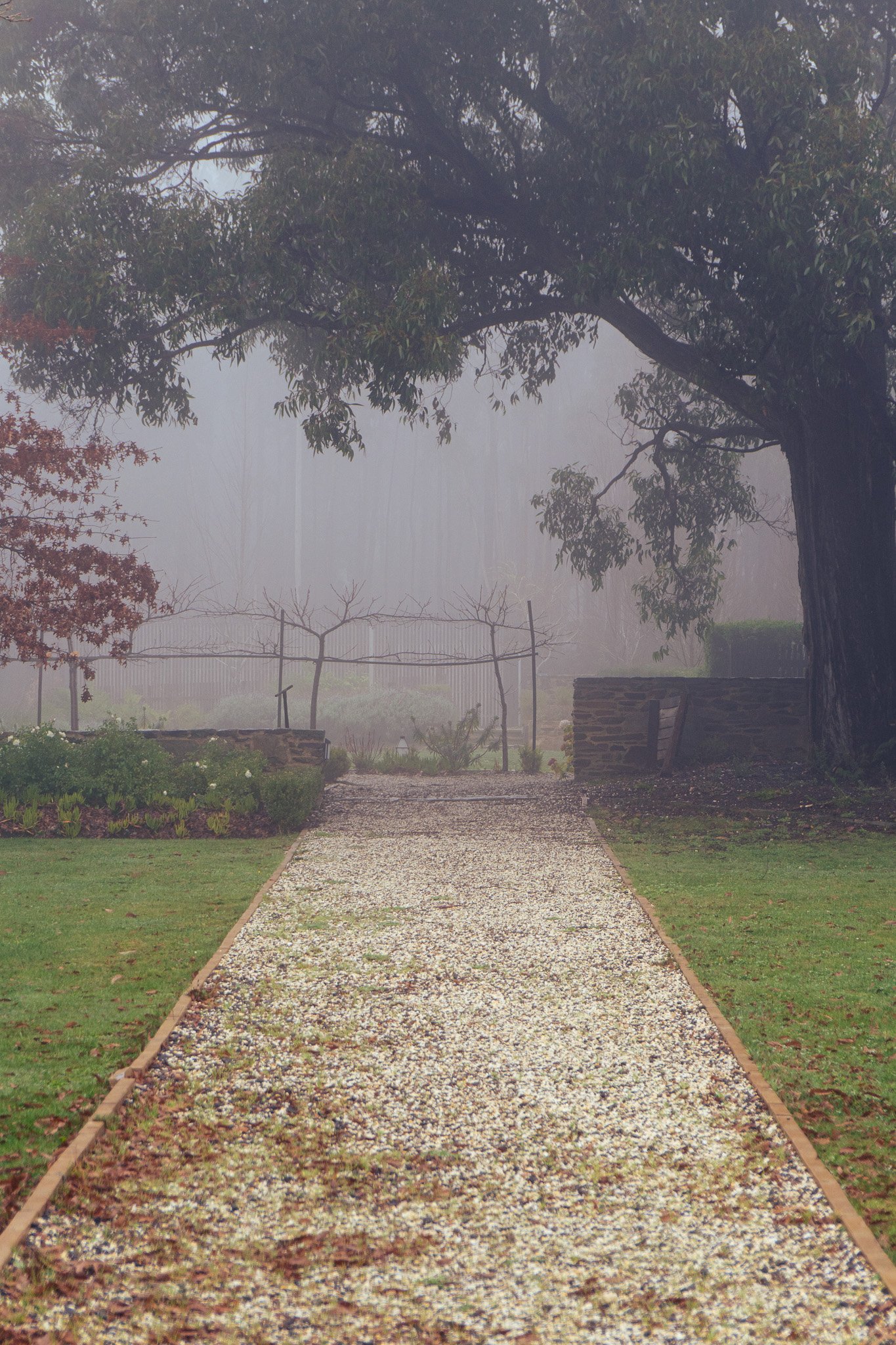
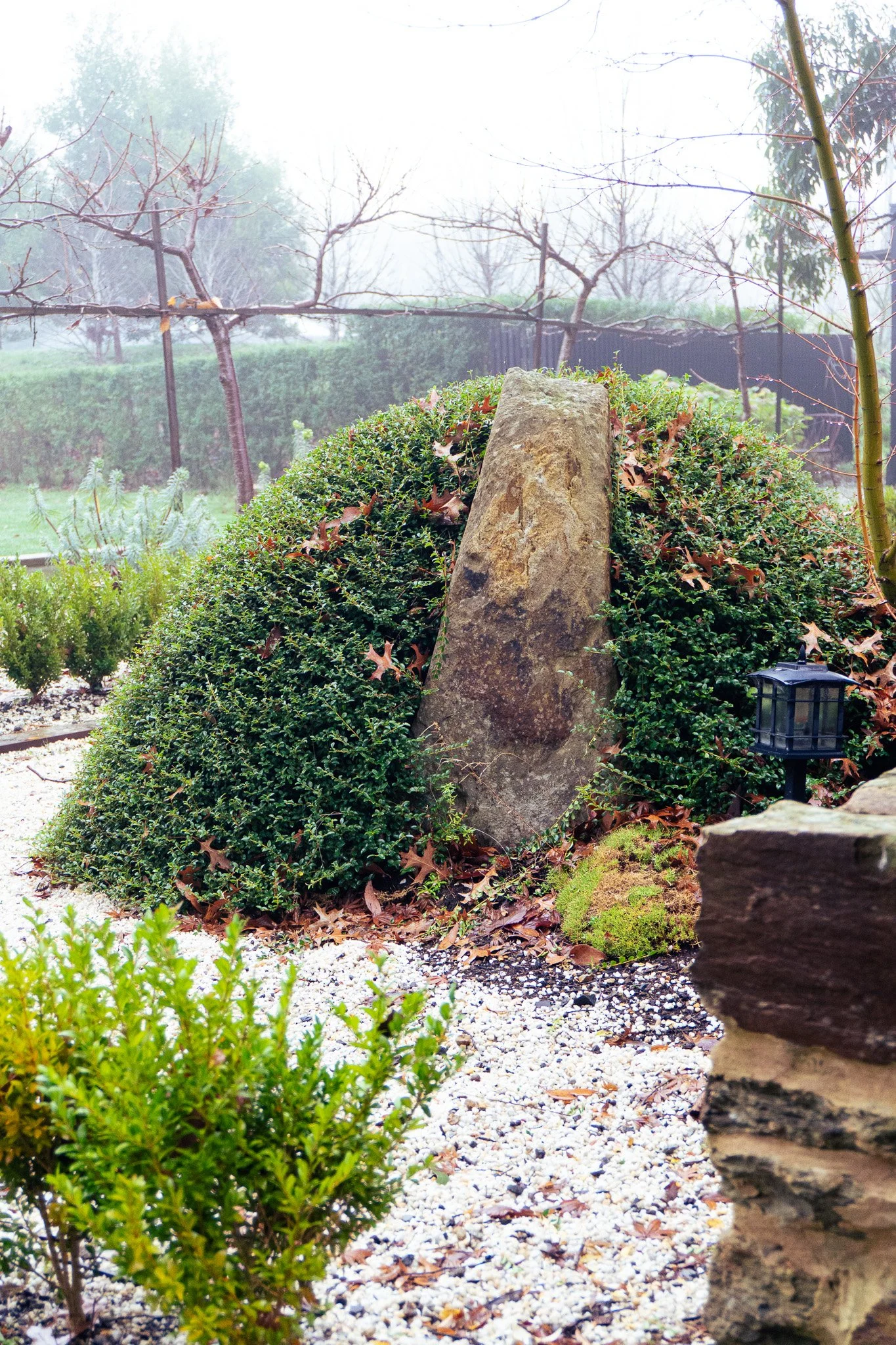
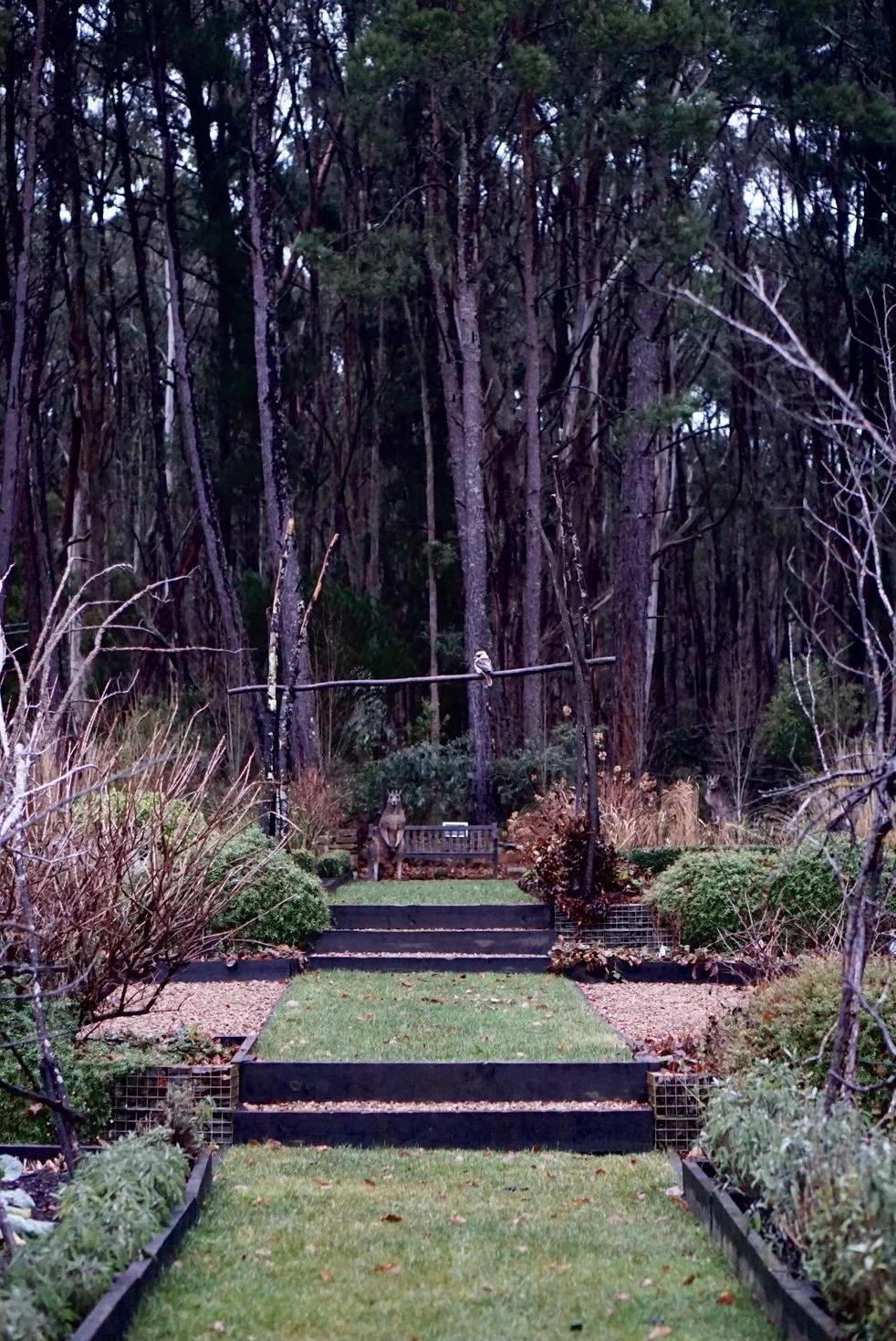
I have tested this at both ends of the scale. At Oak & Monkey Puzzle, my old five acres at Spargo Creek, the gesture that organised the whole garden was a long sweep of open lawn — a spine — and it was every winter, when the planting drew back, that I could see whether it still held the place together. The emptiest part was the most important part. The frost-crusted lawn at Little Cottage on a Hill now teaches me the same lesson in miniature, small enough to take in at a single glance.

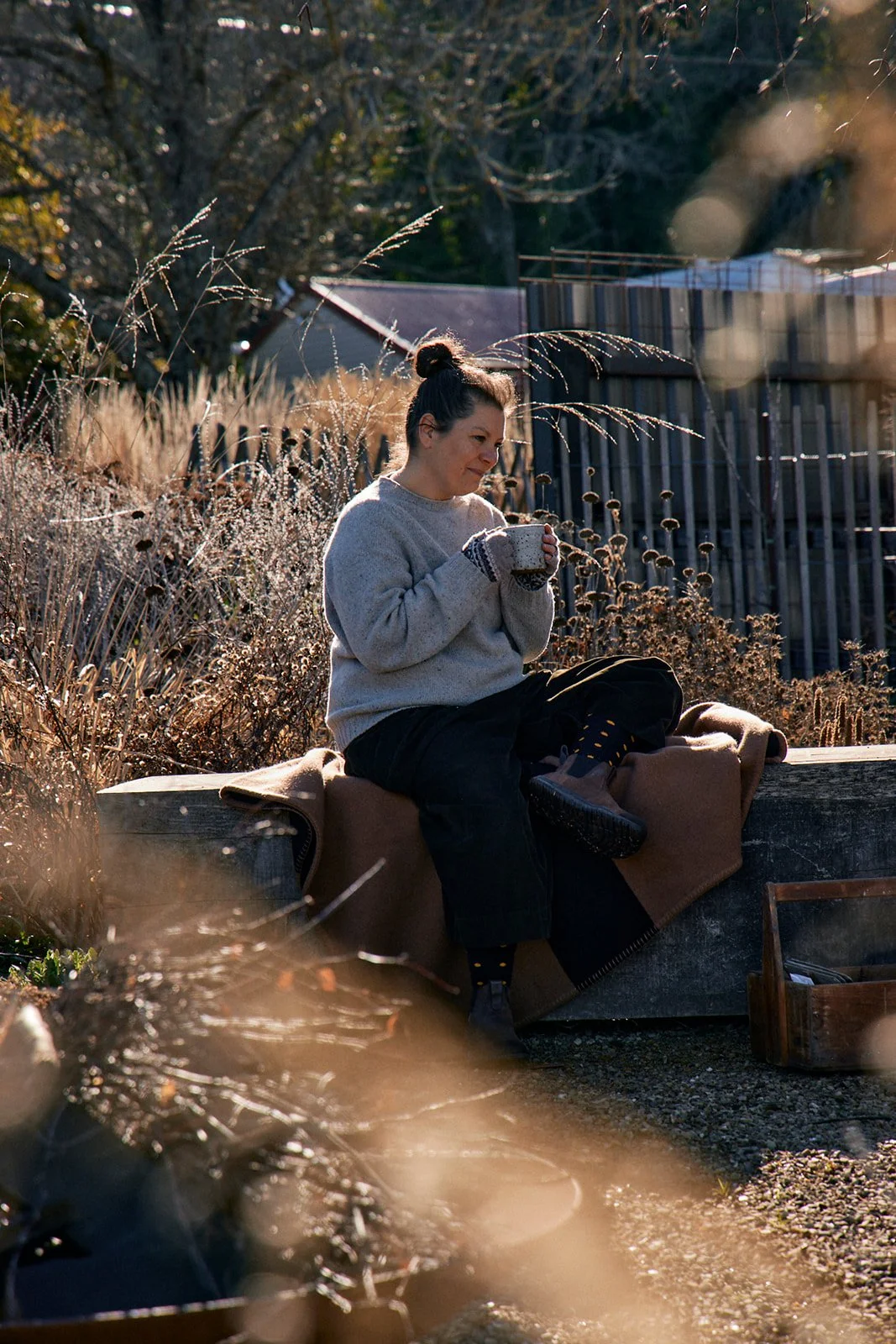
People think of winter as the end of the gardening year. Since leaving city life and learning to live with the land, I have never been able to feel it that way. For me it is the prelude — the season of greatest promise, the months I spend dreaming and planning before anything is asked to grow. I sit with a cup of tea and I look: where the frost settles, where the structure isn't yet holding. You lay the monochrome ground first, in the cold, and everything bright comes afterwards, and comes better, because of it. This is the thinking that runs underneath my book, The Productive Garden Companion — that you plan by observation rather than by dates, and that the quiet seasons are where the foundations are laid. It is also what Andrew and I are opening both our gardens for, on a single and rare Sunday in July: a day to put your hand on a cold wall and your eye to a stripped border, and feel the argument for yourself.
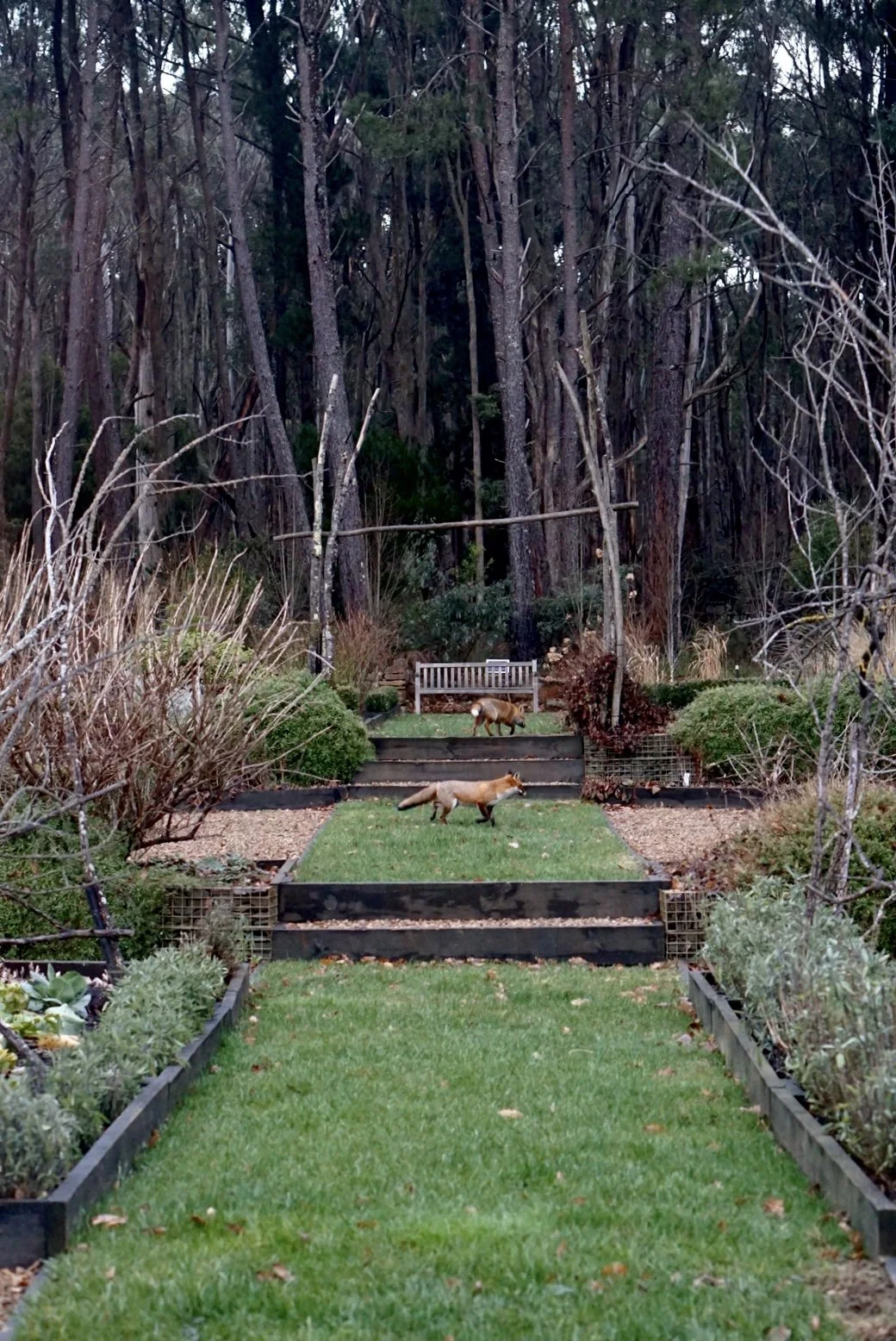
When I left Oak & Monkey Puzzle — five acres, nine years of accumulation — for the 515 square metres of Little Cottage on a Hill, I had to cull my life radically to fit. I watched Marie Kondo, slightly desperate, and borrowed her question: does it spark joy? It turned out to be exactly the right question, and it’s never really left. It's the layer still running in my head years later — why I don't wear synthetic clothes anymore, why the microfibre cloths went, why the cascading volcano of takeaway containers that lives in everyone's kitchen cupboard no longer lives in mine. Not because I'm extreme about any of it. I just don't want to live that way anymore. The black pots are useful; I propagate constantly, and they earn their keep. But I can tell you honestly, they do not spark joy. What sparks joy is the toilet roll tubes I save all year, each one holding a seedling, each one destined to soften and disappear into the soil that grows the plant on. Nothing to wash, nothing to stack, nothing to send anywhere.

None of this makes me perfect. Nobody is, and perfection was never the point. The point is smaller, and it works.

The sun reaches the lawn eventually. The frost lifts in the first hour, and by then the garden is already reorganising itself in my head — the greys turning into a map of what they will hold once the colour comes back over the top.
DSC00472.jpg
DSC09958.jpg
DSC02689.jpg
DSC02552.jpg
Natasha Morgan-EWeaving-Aug2025-166A2407.jpg
Natasha Morgan-EWeaving-Aug2025-166A2459.jpg
Natasha Morgan-EWeaving-Aug2025-166A4399.jpg
DSC06354 2.jpg

Winter Structure Masterclass — with Andrew O'Brien of Stonewalls and Natasha Morgan.

  • Sunday 12 July,

  • 10.30am–3pm,

  • across Little Cottage on a Hill and Stonewalls, Musk.

  • Limited to 25 places.

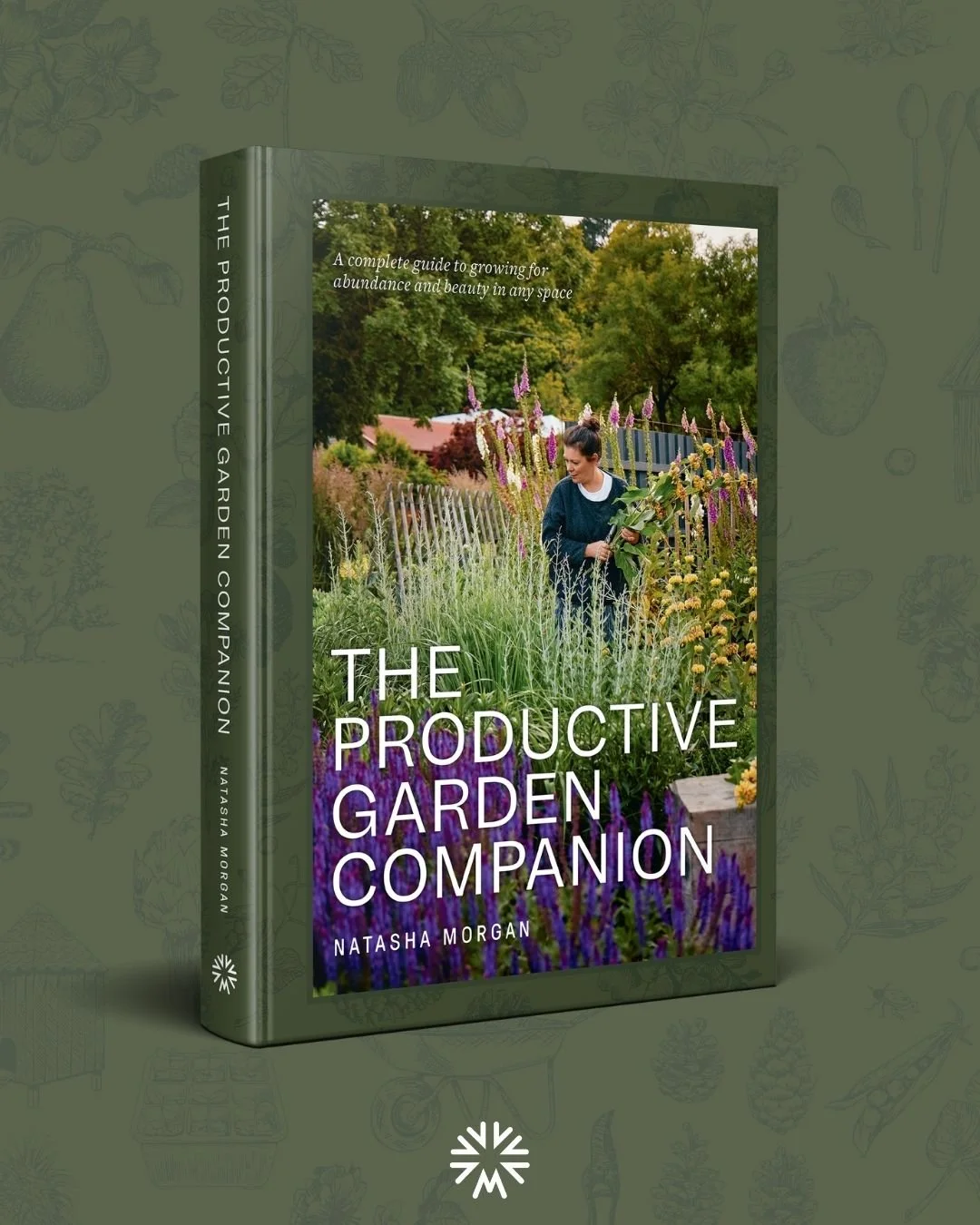
The Productive Garden Companion (Murdoch Books) is available for presale now at here.
Find the full masterclass details & book here

Pre-order The Productive Garden Companion today.

pre-Order The Productive Garden Companion here

Continue your gardening journey with me

If you enjoy this kind of content, my workshops offer more detail and guidance on design, productivity and seasonal care.

If you are building your garden from home right now, my e-books on Wicking Bed Gardens,  Introduction to Backyard Chicken Keeping and Compost for Beautiful Productive Gardens offer practical step by step guidance that pairs well with the workshops.

I share seasonal tips, behind the scenes at Little Cottage on a Hill, and new resources through my newsletter. Subscribe to receive my entire plant list from the garden as a personal thank you.

You can also pre-order my book The Productive Garden Companion, the book I have wanted to find my entire life. A complete guide to growing for abundance and beauty in any space. The Productive Garden Companion is a practical, reassuring and visually rich modern gardening book that meets gardeners wherever they are, from windowsill pots to generous acreage.


You may want to check out my related content below:

Looking Back - A Rare Glimpse Inside Oak and Monkey Puzzle

My top 5 plants - from Oak & Monkey Puzzle

Lessons in Abundance - Life at Little Cottage on a Hill

Stay connected for more seasonal inspiration:
Instagram | Facebook | Gardenstead | LinkedIn | Pinterest | YouTube | Website | Newsletter

Thanks so much for following along.
Natasha xx

Tags: productive gardens, the productive garden, Skill-Sharing, gardening, garden systems, fruit trees
Prev / Next

Subscribe

Sign up with your email address to receive news and updates.

We respect your privacy.

Thank you!
~ Living Well Spotlight: My Bucket List ~⁠
⁠
As I sit in the garden at Little Cottage on a Hill, surrounded by nature’s hum, I reflect on what it means to live well—and how my ‘bucket list’ connects to that.⁠
⁠
For me, living
~ Living Well Spotlight: My Bucket List ~⁠ ⁠ As I sit in the garden at Little Cottage on a Hill, surrounded by nature’s hum, I reflect on what it means to live well—and how my ‘bucket list’ connects to that.⁠ ⁠ For me, living well is about balance. It’s finding joy in simple moments—the warmth of a freshly harvested tomato, the ritual of making preserves, or laughter shared with friends. It’s creating spaces that nurture not just the land, but the people who connect with it, fostering community and creativity.⁠ ⁠ My bucket list isn’t about lofty ambitions—it’s a collection of dreams and aspirations that align with these values. Here are a few that inspire me:⁠ ⁠ ~⁠ Create a Community Garden at Little Cottage on a Hill⁠ My vision is a space where people come together to learn, share, and grow, celebrating sustainability and collaboration. This dream is already coming to life—join me at a workshop!⁠ ⁠ ~⁠ Spot a Blue-Banded Bee⁠ A blue-banded bee in my garden would mark the success of the verge garden and its growing biodiversity.⁠ ⁠ ~⁠ Consider Writing My First Book⁠ A guide to creating beautiful, sustainable spaces—still in the idea-making, but exciting!⁠ ⁠ ~⁠ Host a Seasonal Preserving Workshop Series⁠ Sharing the joy of preserving the garden’s abundance and celebrating the year’s rhythms. Join me!⁠ ⁠ Living well isn’t about perfection. It’s about being present and appreciating life’s beauty. If you’re looking to dive deeper into the beauty of gardening, read the full story on the blog. For those interested in learning how to design a garden that brings life and balance to your own space, my Garden Design Workshop is the perfect opportunity to get started.⁠ ⁠ Read the full story on the blog via the link in my bio.⁠ ⁠ Tickets via the workshop link in my bio.⁠ ⁠ #LivingWell #BucketList #MindfulLiving #SustainableGardening #GardenDesign #CommunityGarden #PreservingTheSeasons #CreativeLiving #ProductiveGardens #SustainableLifestyle #GardeningJourney #LittleCottageOnAHill #NatashaMorgan
~ Garden Tour: Early Summer Blooms at Little Cottage on a Hill ~⁠ ⁠ Welcome to a little tour of the verge garden at Little Cottage on a Hill, where the garden is bursting with colour as we welcome summer. Despite a dry start to the season, the plants are thriving, creating a lush, vibrant atmosphere filled with texture and colour.⁠ ⁠ Penstemon ‘Electric Blue’ stands out, paired beautifully with fiery orange oriental poppies and the Helianthemum ‘Fire Dragon.’ Red lupins create a striking contrast to the purple blooms of Salvia ‘Ostfriesland.’ Together with the cheerful orange geums, which sway in the summer breeze, the west-facing verge garden is a riot of colour.⁠ ⁠ I love the dainty geums sitting up above the foliage against the vertically structured forms of Phlomis russeliana and Salvia ‘Ostfriesland’. Penstemon ‘Electric Blue’ is a new plant for me and I’m absolutely loving its brilliant blue hues welcoming in summer.⁠ ⁠ If you’re looking to dive deeper into the beauty of gardening and dream of creating your own garden oasis, my ‘Garden Design’ workshop is the perfect opportunity to get started. Together, we’ll explore how to create gardens that are both beautiful and functional, no matter the size or space.⁠ ⁠ There’s a couple of lucky last spots available for our final workshop of the year - the ‘Garden Design’ workshop on Sunday 8 December 2025, or why not gift this wonderful experience for a 2025 date? ⁠ ⁠ Tickets via the workshop link in my bio⁠ ⁠ #GardenTour #SummerBlooms #MindfulGardening #SustainableLiving #GardenDesign #CreativeGardening #ProductiveGardens #Geum #SalviaOstfriesland #Penstemon #Lupin #PhlomisRusseliana #LittleCottageOnAHill #NatashaMorgan #LandscapeArtchitecture #PlantingDesign
~ Quote of the Day ~⁠
⁠
"Tell me, what is it you plan to do with your one wild and precious life?" —Mary Oliver⁠
⁠
I absolutely love the poetry of Mary Oliver, especially her poem The Summer Day. ⁠
⁠
This line, in particular, has alwa
~ Quote of the Day ~⁠ ⁠ "Tell me, what is it you plan to do with your one wild and precious life?" —Mary Oliver⁠ ⁠ I absolutely love the poetry of Mary Oliver, especially her poem The Summer Day. ⁠ ⁠ This line, in particular, has always struck a chord with me. It feels like an invitation to pause, reflect, and live with deep intention. For me, it’s about embracing the life I’ve shaped—a life steeped in creativity, connection, and the joy of making spaces that nourish both the soul and the land.⁠ ⁠ My one wild and precious life is devoted to living well as I define it: finding meaning through the seasons, grounding myself in the rhythms of nature, and pursuing passions that hardly ever feel like work. I’ve chosen a path that honours my values—designing landscapes, sharing skills, and crafting moments of beauty and community.⁠ ⁠ The garden is a mirror of this philosophy. Every seed sown, every tiny moment of observation, reminds me of the power of intentional living. It’s not about perfection or grand gestures but about showing up and appreciating life’s small, profound offerings.⁠ ⁠ How about you? How do you approach your one wild and precious life? Are there small, intentional choices you’ve made that connect you to your values and passions? I’d love to hear your thoughts. I’m so grateful for having you here. ⁠ ⁠ #MaryOliver #WildAndPreciousLife #LivingWell #GardeningWithIntention #NatashaMorgan #QuoteOfTheDay #MindfulLiving #GardeningWithPurpose #CreativeSelfCare #SustainableLiving #GardensAsReflections #PurposefulLiving #SlowLiving #NatureConnection #MindfulGardening #Inspiration #ReflectAndGrow #SustainableGardens #CommunityInNature⁠
~ ‘Introduction to Backyard Chicken Keeping’ workshop with Saffron & Natasha Morgan ~⁠
⁠
Chickens have always been part of life at Little Cottage on a Hill. Their soft clucks add a comforting soundtrack to our days, and their antics b
~ ‘Introduction to Backyard Chicken Keeping’ workshop with Saffron & Natasha Morgan ~⁠ ⁠ Chickens have always been part of life at Little Cottage on a Hill. Their soft clucks add a comforting soundtrack to our days, and their antics bring joy. Over the years, many of you have followed my girl, Saffron, our chicken whisperer, and her deep connection with these feathered friends. Now, we’re thrilled to share the next chapter of our journey with a stunning artisan-built chicken coop I designed and locals Anthony and Ian brought to life, as well as a new workshop offering!⁠ ⁠ The new coop blends seamlessly with our productive garden, balancing form and function. It features a pitched roof with overlapping scalloped shingles reminiscent of feathers, plus birch branch perches and nesting boxes—designed to prioritise the health and happiness of our flock. It honours the animals that sustain us while sparking creativity and joy.⁠ ⁠ This isn’t just a beautiful home for our chickens—it’s also the inspiration for our ‘Introduction to Backyard Chicken Keeping’ workshop, led by Saffron, who brings over 10 years of experience in raising chickens. Whether you’re dreaming of gathering fresh eggs, enriching your garden with natural fertiliser, or enjoying the companionship of chickens, this workshop is for you.⁠ ⁠ Join us on Saturday, 25 January 2025, where Saffron will guide you through everything needed to start your own backyard flock. Learn about choosing the right breeds, setting up a coop, and how chickens contribute to a productive garden. Plus, enjoy a tour of our gardens and artisan-built coop, a space where beauty meets function.⁠ ⁠ Spaces are limited—book now and start your chicken-keeping journey in 2025.⁠ ⁠ What you’ll take away:⁠ • Practical chicken-keeping skills.⁠ • A deeper understanding of how chickens can enrich your garden.⁠ • A garden tour and knowledge to get started.⁠ ⁠ Tickets via the workshop link in my bio (Instagram CTA)⁠ ⁠ #BackyardChickens #SustainableLiving #ChickenKeeping #GardenInspiration #ProductiveGarden #Workshop #SustainableGardening #OrganicLiving #NatashaMorgan #LittleCottageOnAHill
~ ‘Growing Philosophies: Permaculture for Beginners’ with Natasha Morgan ~

Permaculture is more than a method; it’s a philosophy—a way of living that connects us to the land, nature, and each other. Coined by Bill Mollison an
~ ‘Growing Philosophies: Permaculture for Beginners’ with Natasha Morgan ~ Permaculture is more than a method; it’s a philosophy—a way of living that connects us to the land, nature, and each other. Coined by Bill Mollison and David Holmgren in the 1970s, permaculture combines "permanent" and "agriculture" to create resilient, self-sustaining systems. As a landscape architect, it resonates deeply with me, not just in my work but in my approach to life. At its heart, permaculture is about creating ecosystems that are both productive and regenerative. It’s about designing gardens, farms, and even communities to work with nature, rather than against it. Through careful observation, thoughtful planning, and a deep respect for natural rhythms, we can build spaces that thrive. The core principles of permaculture are simple yet profound, and they are quietly woven into every garden I design: ~ Observe and Interact: Take time to understand your space. Every garden is a living, breathing entity, constantly evolving and teaching us. ~ Use and Value Renewable Resources: Work with what you have. Whether it’s planting with the seasons or reimagining recycled materials, permaculture shows us how to make the most of what’s available. ~ Catch and Store Energy: Harvesting rainwater, building wicking beds—these methods help conserve resources and allow gardens to sustain themselves. ~ Design from Patterns to Details: Start with the broader context—sunlight, wind, and natural patterns—before focusing on the finer details like plant placement and structure. Permaculture is an invitation to embrace observation, experimentation, and the joy of working alongside nature. It’s about creating spaces that are not only beautiful but abundant and resilient. Learn more about permaculture and how to apply it in your garden by following accounts like @milkwood and on my blog. Read the full story on the blog via the link in my bio. #NatashaMorgan #Permaculture #SustainableLiving #GardenDesign #EcoFriendlyLiving #OrganicGardens #RegenerativeAgriculture #SustainableGardening #NatureInspired #GardeningWithPurpose #LittleCottageOnAHill #OakAndMonkeyPuzzle #MilkwoodPermaculture
~ ‘Forest Bathing for Creative Self-Care’ with Natasha Morgan ~⁠ ⁠ Nature has always been a companion in my life, whether I was wandering through my expansive gardens at Oak and Monkey Puzzle, or now living next to Wombat Hill Botanic Gardens. Nature isn’t just a backdrop for me—it’s an active, healing presence. One practice that has deeply supported my creative and mindful journey is what the Japanese call shinrin-yoku, or forest bathing.⁠ ⁠ Despite what the name might suggest, forest bathing isn’t about plunging into water; it’s about immersing yourself in the atmosphere of the forest. It’s about walking quietly among the trees and allowing the sights, sounds, and scents of nature to wash over you. It’s a practice of slowing down and reconnecting with the earth.⁠ ⁠ For me, this practice has always felt innate. Whether I’m walking the winding paths of Wombat Hill or wandering through my garden, I feel a sense of grounding that can’t be found anywhere else. The trees root me, especially when life feels chaotic, and remind me of the importance of being present.⁠ ⁠ What’s remarkable is that the benefits of forest bathing are backed by science. Studies show that spending time in nature—especially among trees—lowers stress, reduces blood pressure, and boosts mood. Trees release phytoncides—natural oils that help strengthen our immune systems. Walking through the forest is not just good for the soul; it’s a form of physical healing.⁠ ⁠ Forest bathing doesn’t require a grand gesture. It’s about taking a slow walk in your garden, a local park, or any green space and letting nature guide you. I encourage you to leave the rush behind, breathe deeply, and let the trees remind you of what’s most important.⁠ ⁠ To read the full blog and learn more about the healing benefits of forest bathing, visit the link in my bio. ⁠ ⁠ #NatashaMorgan #ForestBathing #ShinrinYoku #CreativeSelfCare #MindfulLiving #NatureHeals #WellnessJourney #SustainableLiving #GardeningWithPurpose #ProductiveGardens #NatureConnection #SlowLiving #HealingNature #WombatHillBotanicGardens #SustainableLifestyle #NatureInspired
AND THE WINNER IS…. 🎉 

~ Natasha Morgan x Acre of Roses Spring Giveaway ~⁠
⁠
In the spirit of community and collaboration, I’m excited to announce this special spring giveaway with @acreofroses. ⁠
⁠
We had 100s and 100s… AND 100
AND THE WINNER IS…. 🎉 ~ Natasha Morgan x Acre of Roses Spring Giveaway ~⁠ ⁠ In the spirit of community and collaboration, I’m excited to announce this special spring giveaway with @acreofroses. ⁠ ⁠ We had 100s and 100s… AND 100s of entries in this opportunity to win a mid-week stay at the stunning Acre of Roses (including an outdoor bath and firepit experience) and a ticket to one of my upcoming workshops. @kabbles has won a glorious retreat in the Daylesford Macedon Ranges and a day of creativity and learning at Little Cottage On A Hill for a listed workshop date of your choice (valued at $915).⁠ Congratulations @kabbles xxx ⁠
Sunday morning. Waiting for the rain. (We desperately need rain as everything is so dry around the region.) The garden is picture perfect right now if you’d like to visit by way of a workshop. Details via the link in my bio. Sending love from my oasis to you xx
The garden is changing so quickly at the moment. Every evening as I wander to soak up the last of the day there’s something else to discover. More colour, more texture, more immersive, more joy. It just keeps getting better 🌱
I’m a little bleary eyed here this morning, but bear with me as I take you on a wander through the ‘Little Cottage On A Hill’ garden. So much is changing here at the moment, and every morning, with tea in hand, I find new pops of colour emerging. If you’re keen to join me here for a wander in the garden with @thecottageherbalist we have 3 spots left for ‘The Medicinal Garden’ workshop. The garden is full of incidental medicinal treasures and so much beauty right now. I’d love to see you here! Tickets via the link in my bio. A few people I mentioned in the video can be found here: Lupins - @adsumfarmhouse Cisus - @friendswombathill My all time trusty plants person - @lilylangham_gardens (can you shed some light on which cisus this is?)