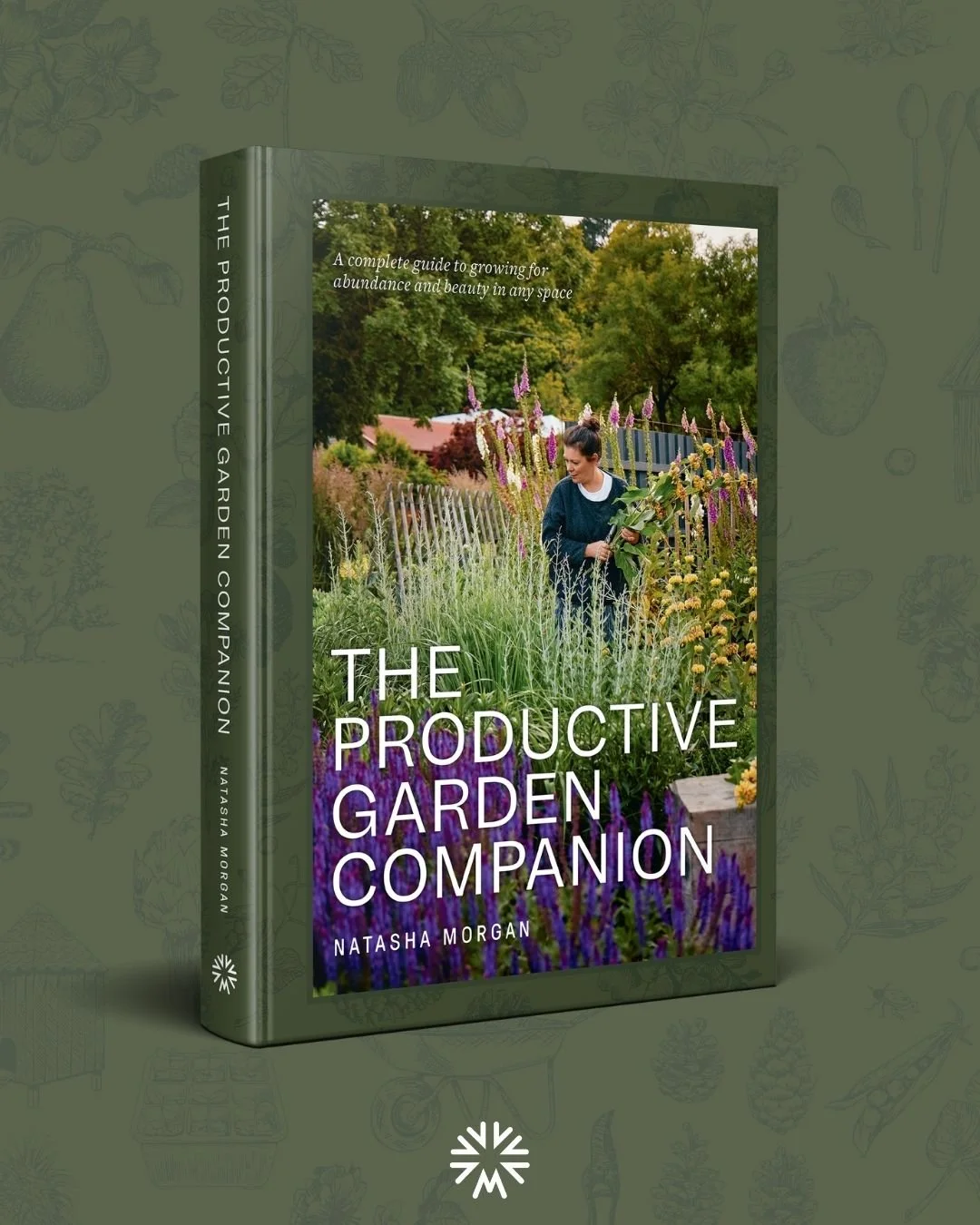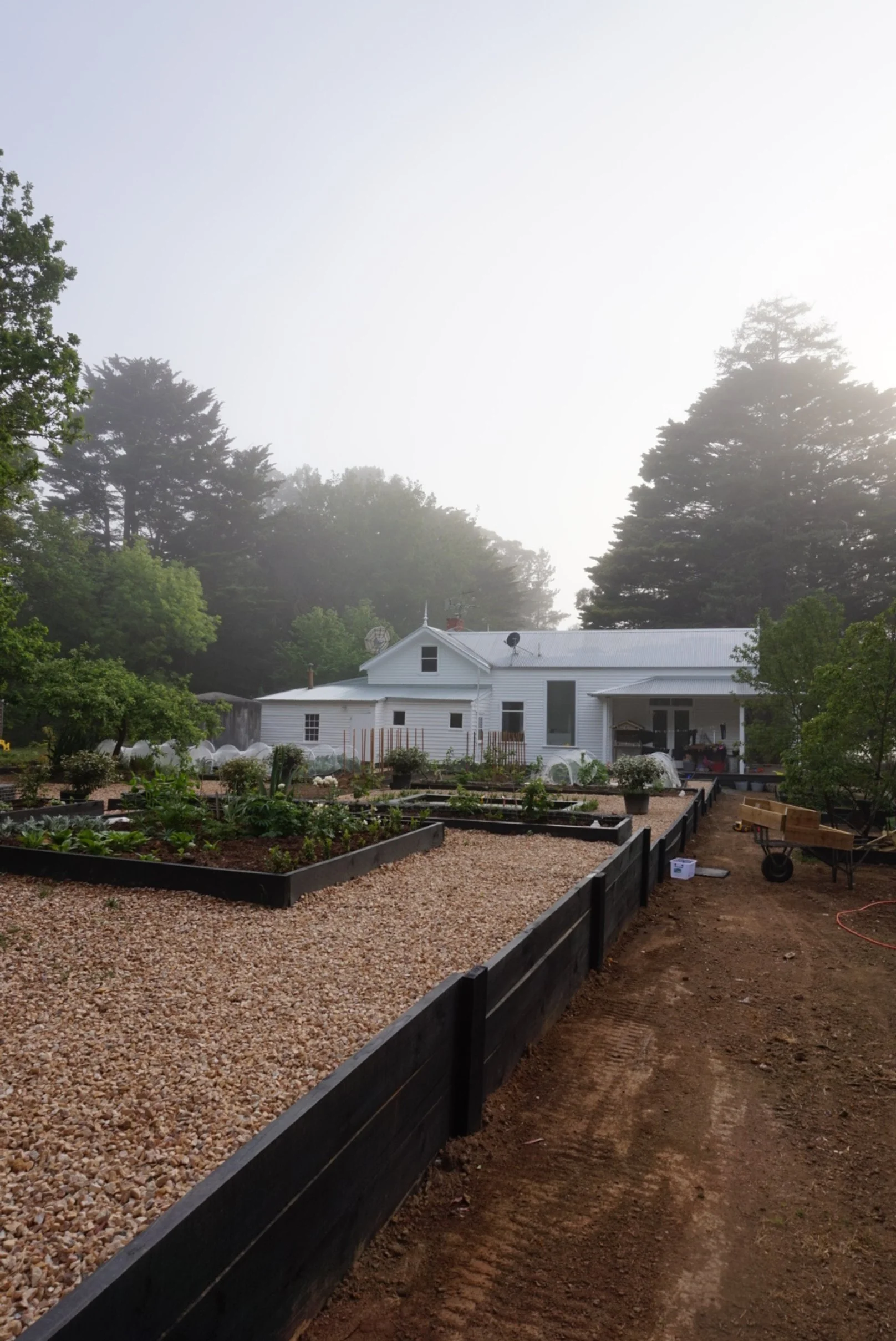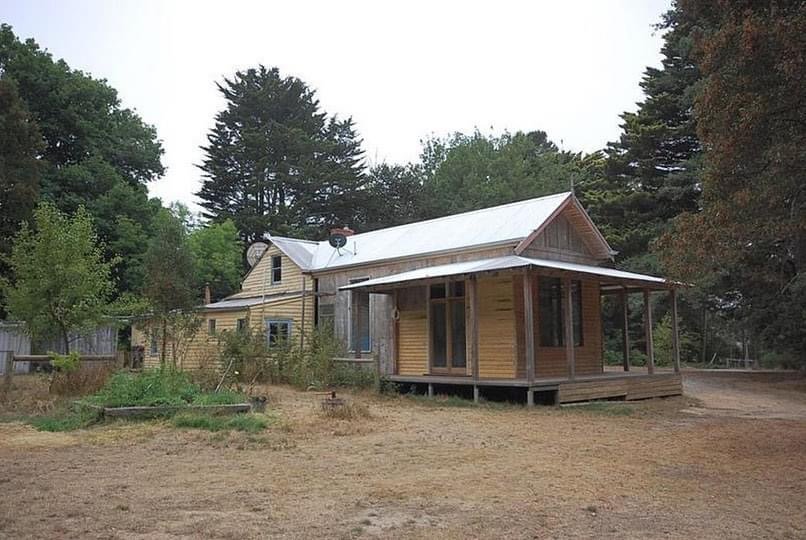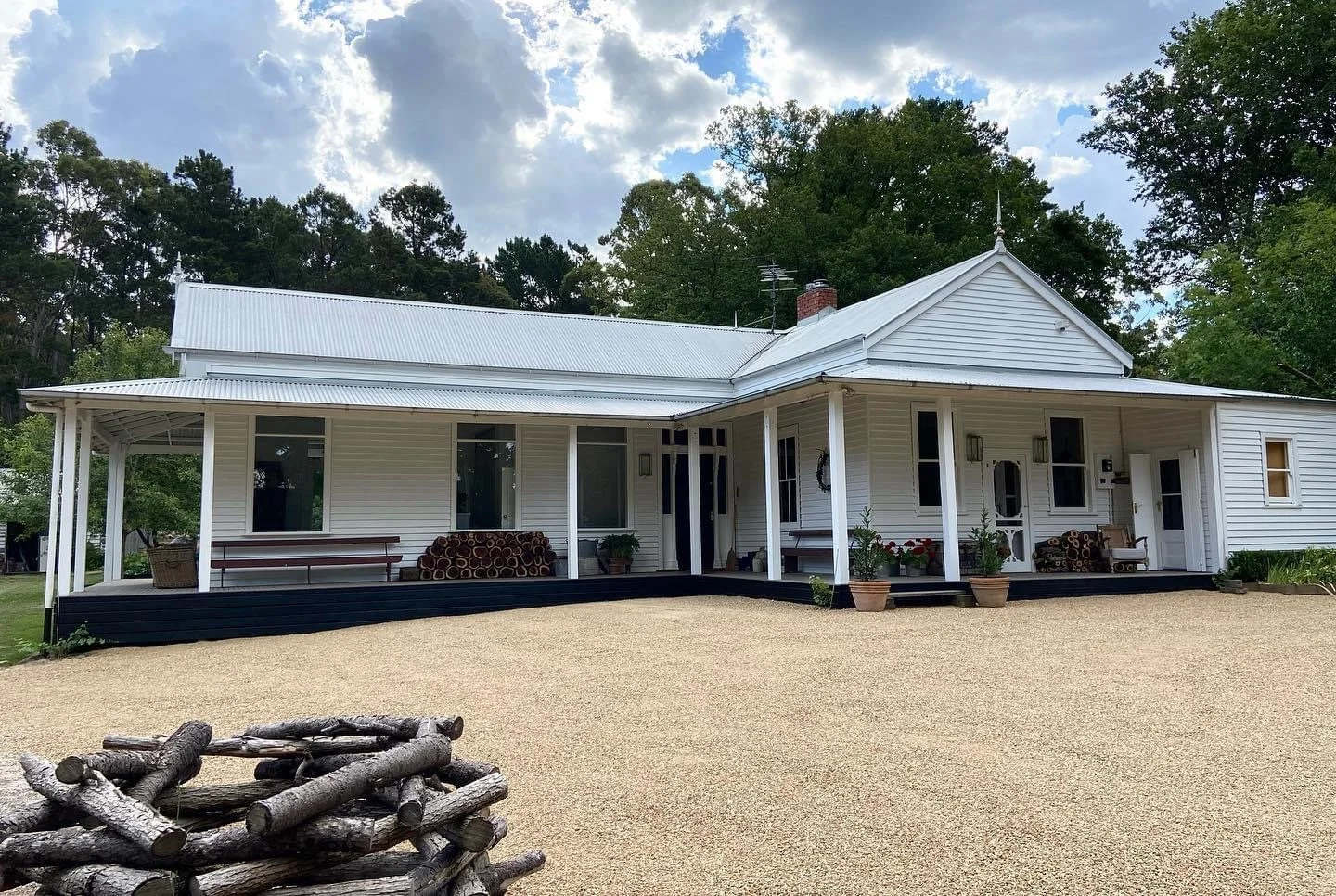

I spent an hour this week talking with Joel from InStyle Gardens for his podcast, and somewhere in the middle of it I heard myself once again sharing something that is at the core of what I do and believe: that I design through experience, and that the size of a garden has almost nothing to do with whether it's any good.
Read MoreSkill-Sharing
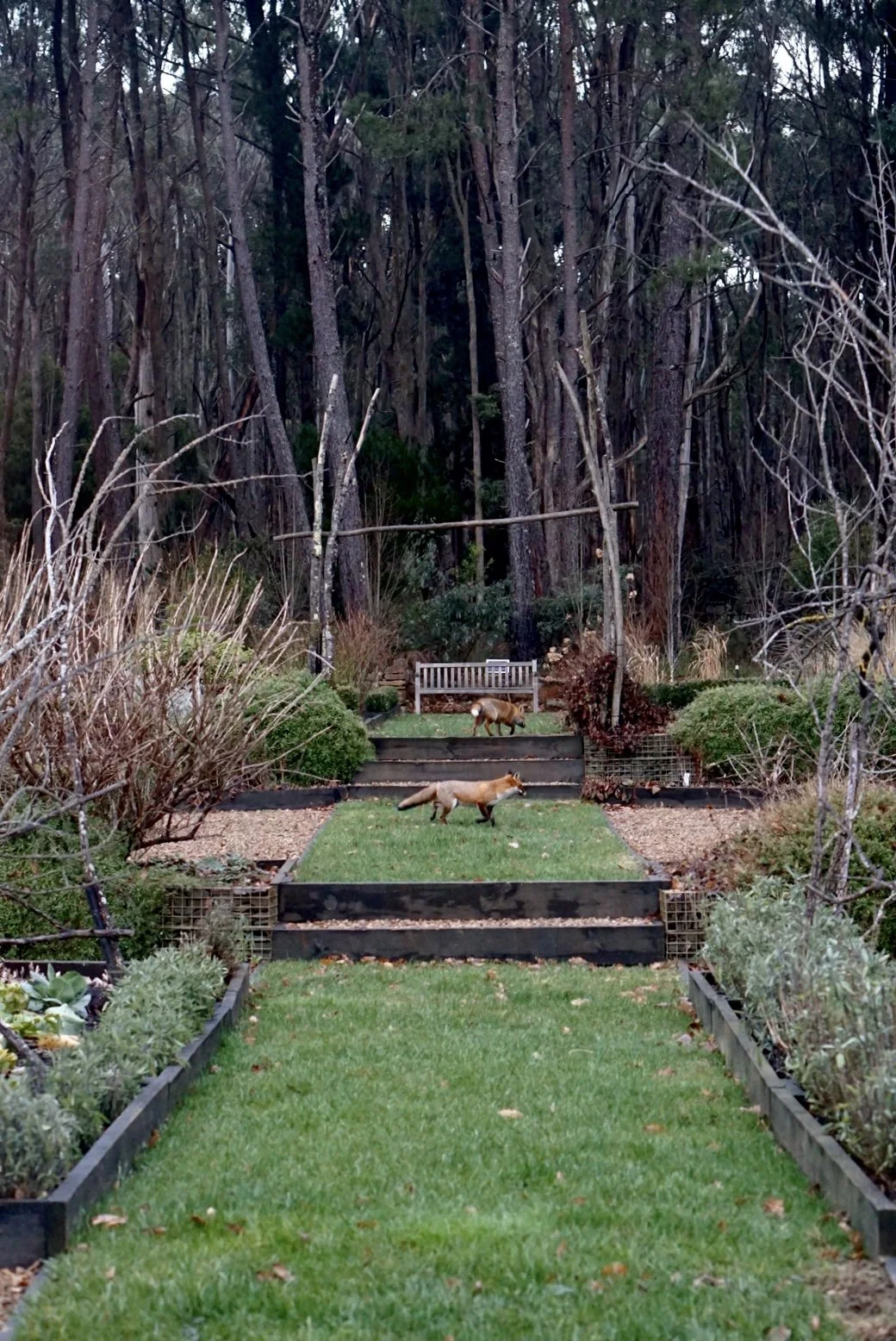
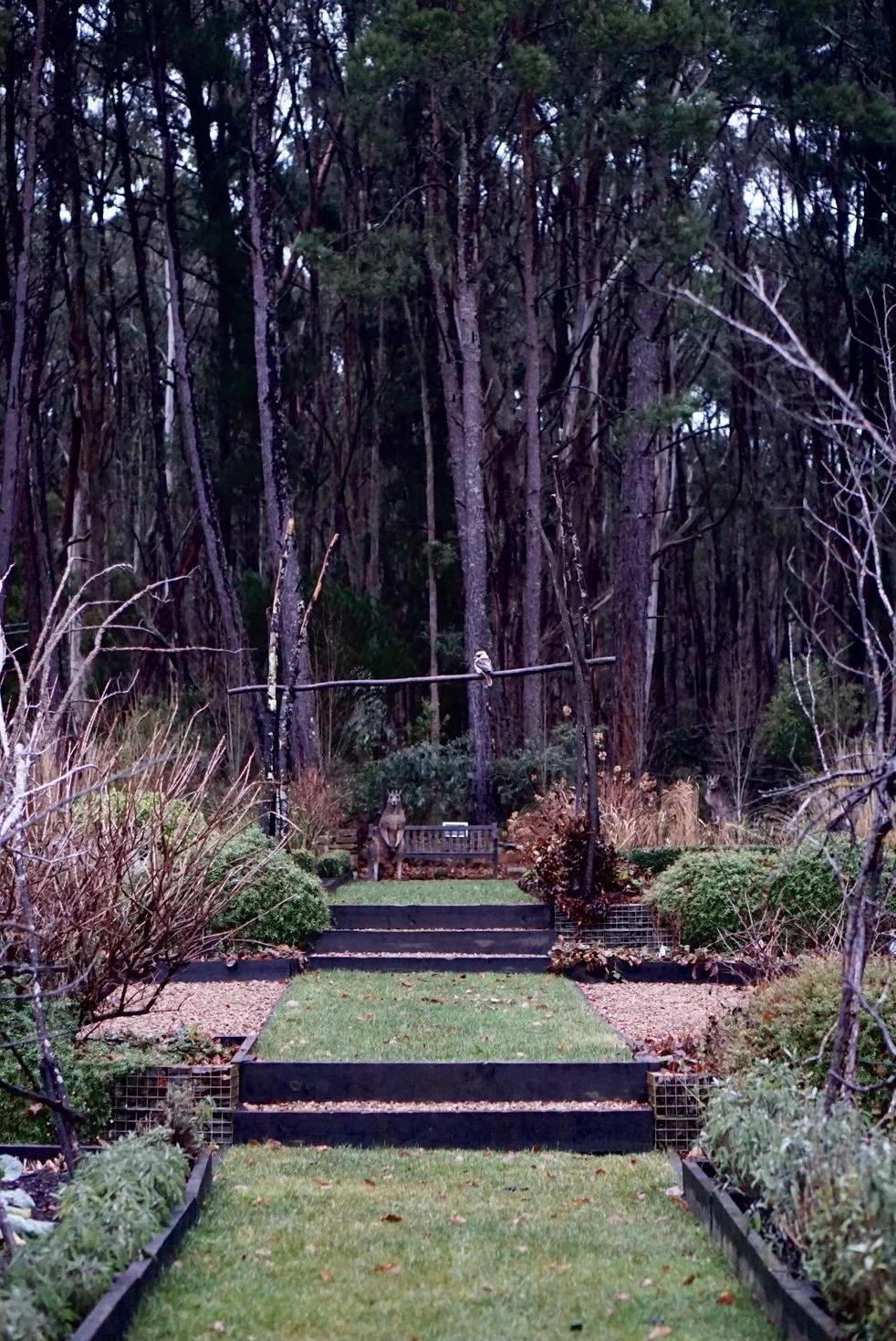
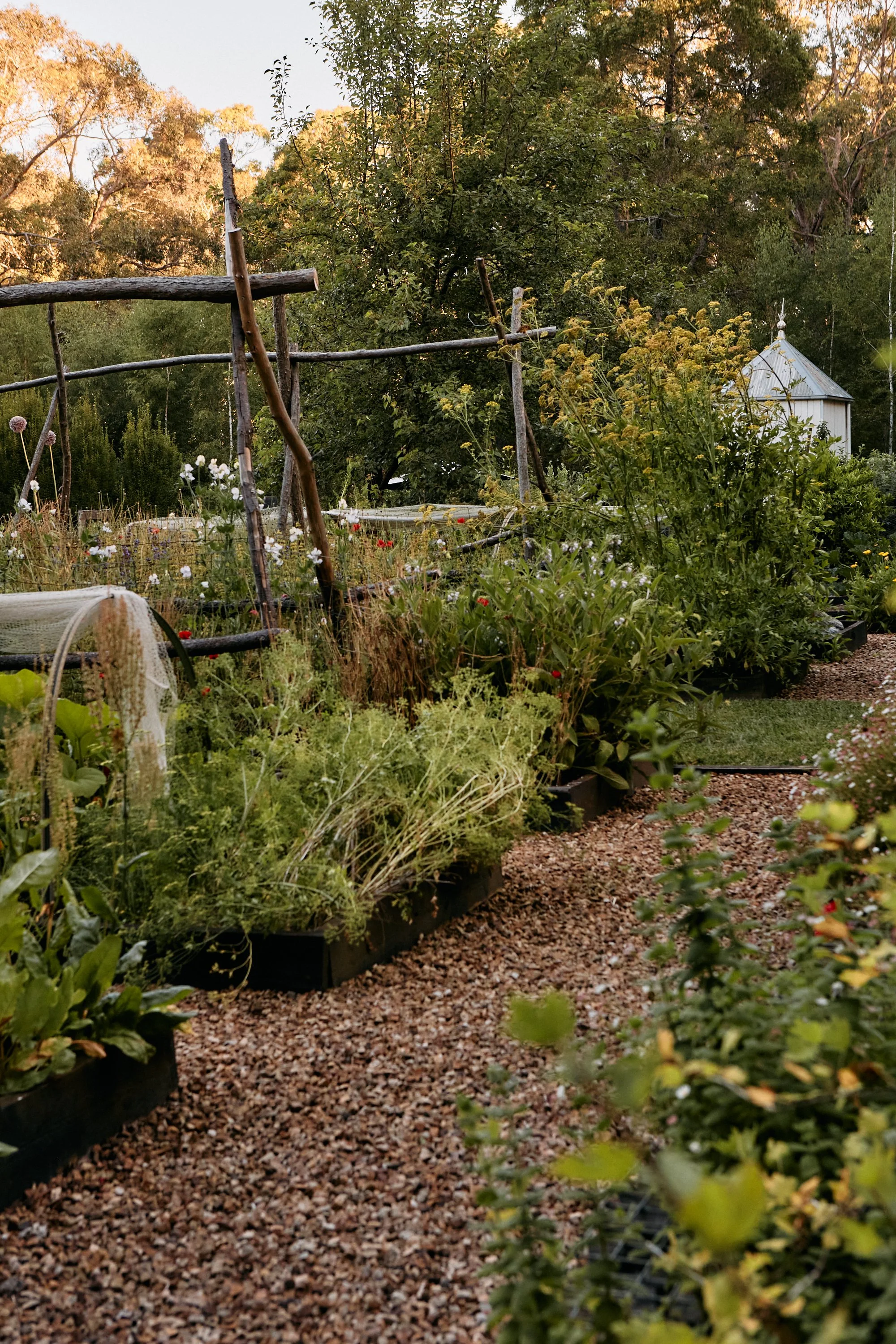
Oak & Monkey Puzzle - view down lawn spine to forest backdrop
What Winter Shows You
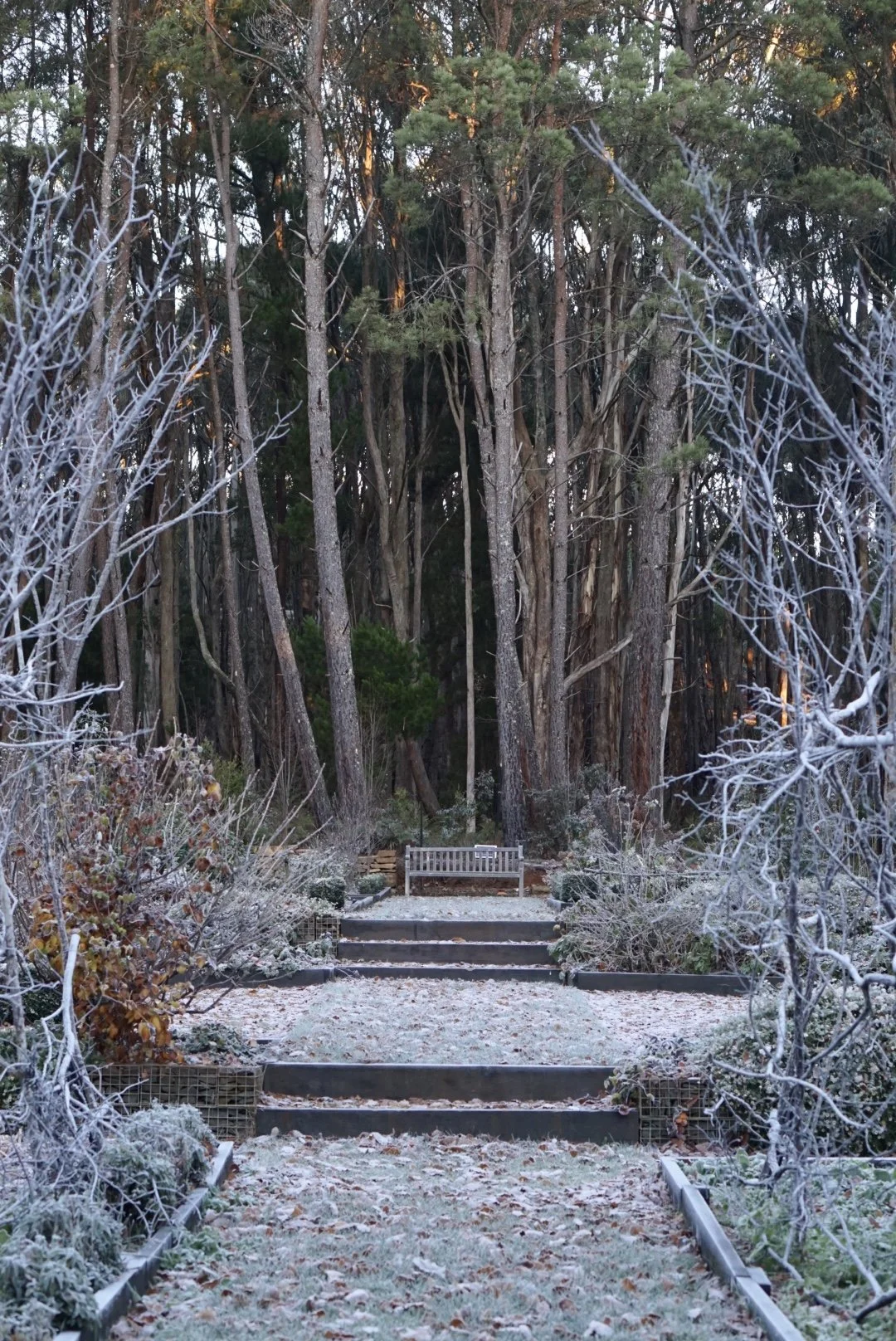
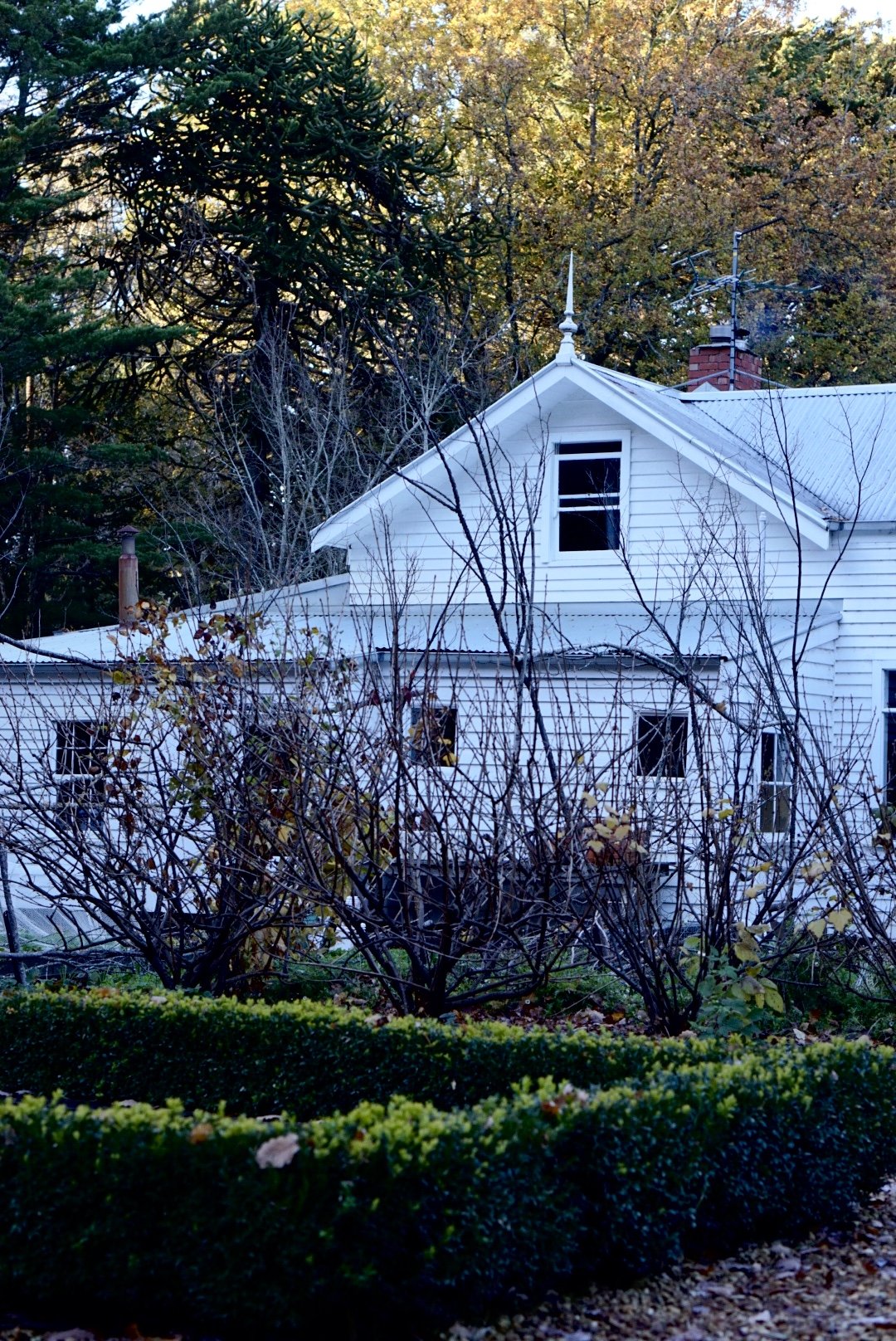
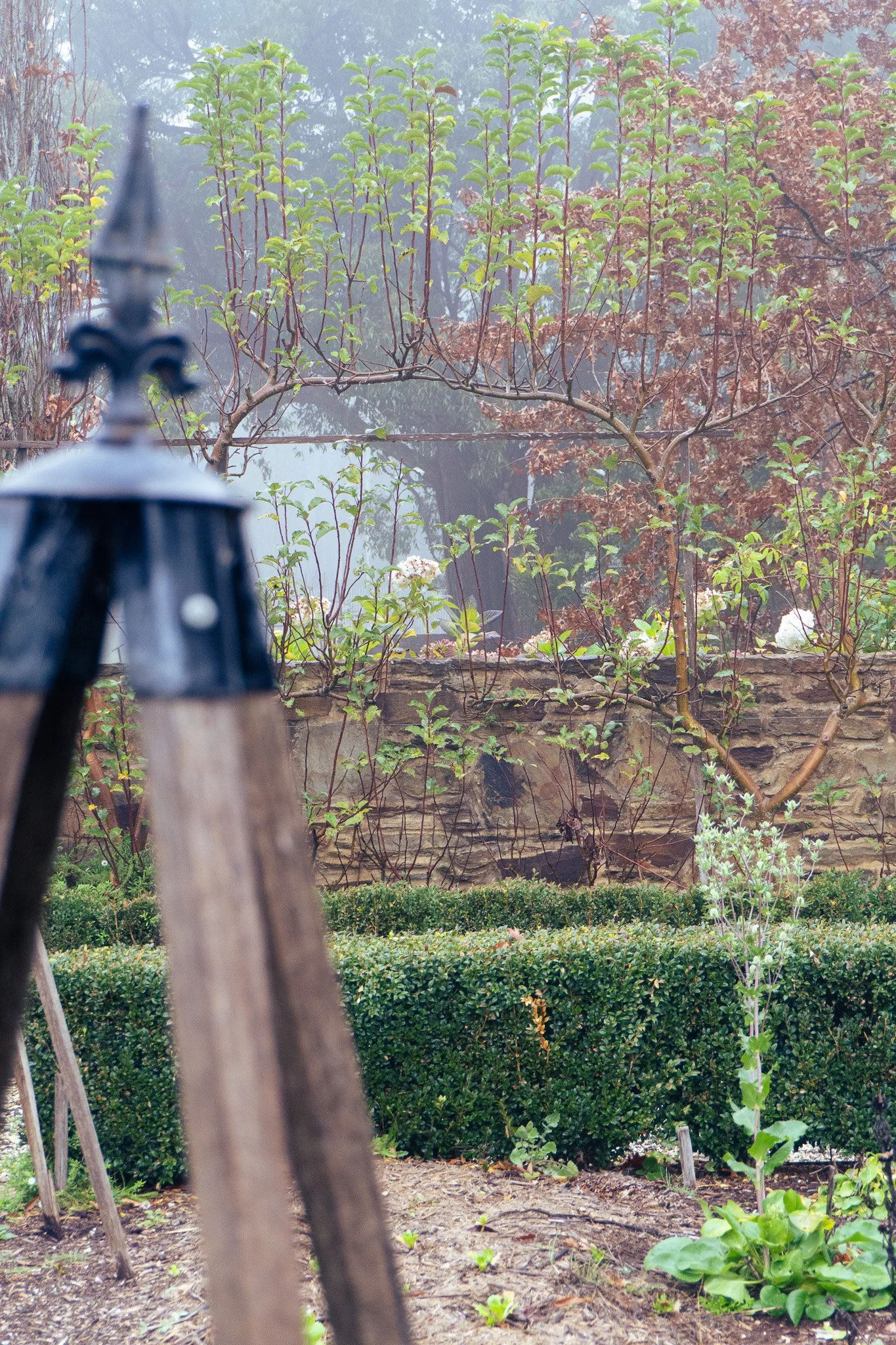
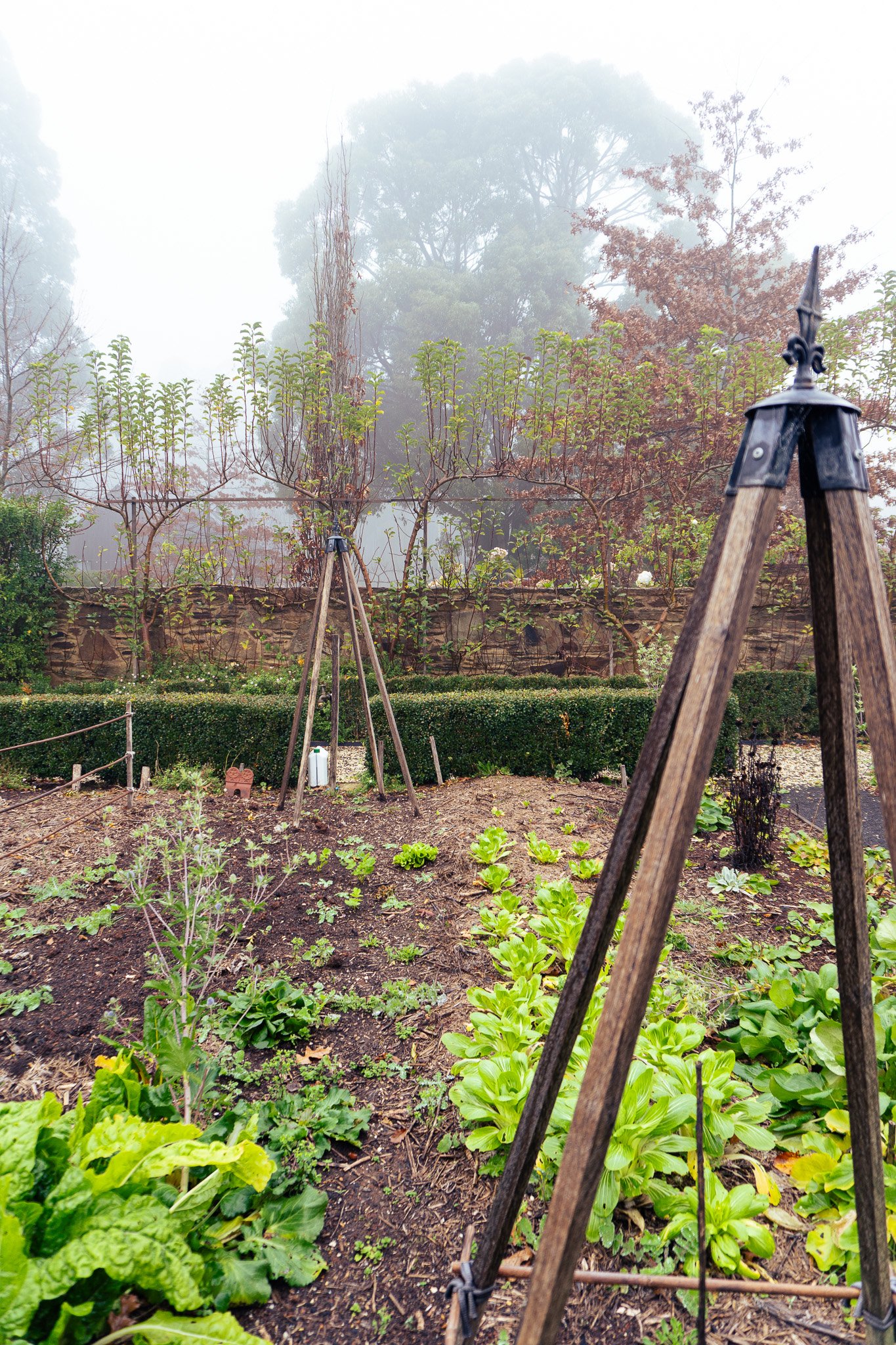
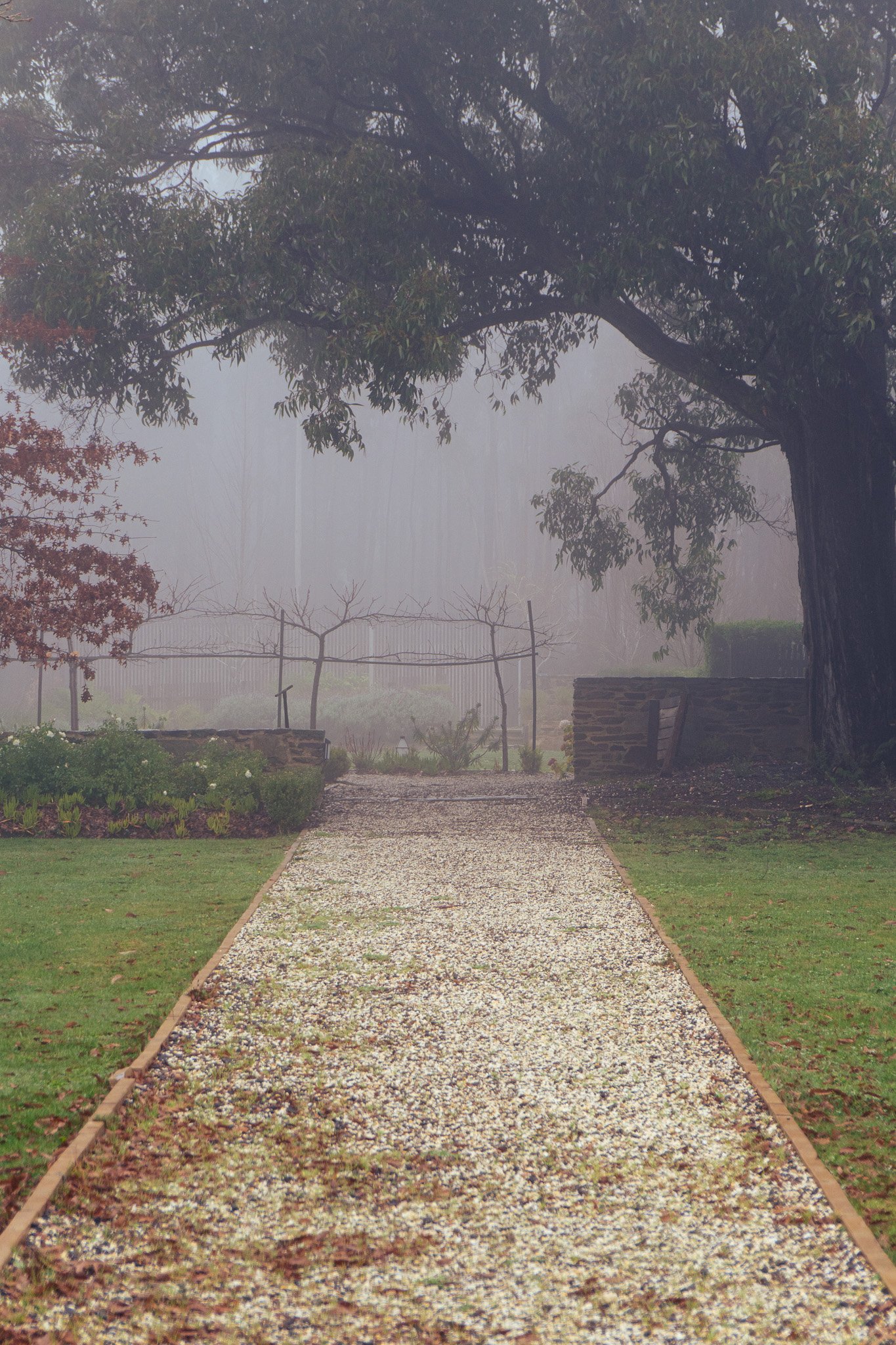
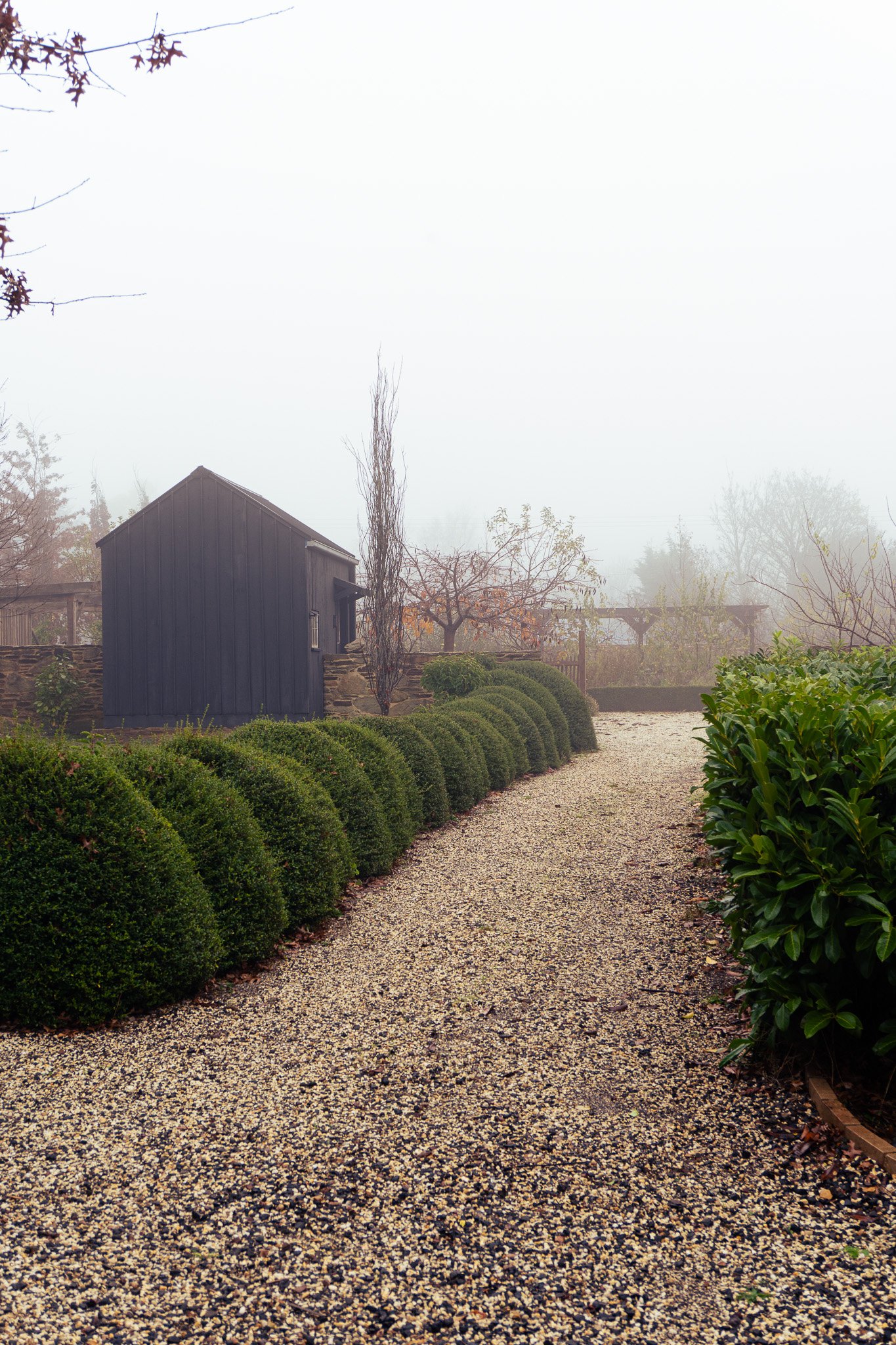
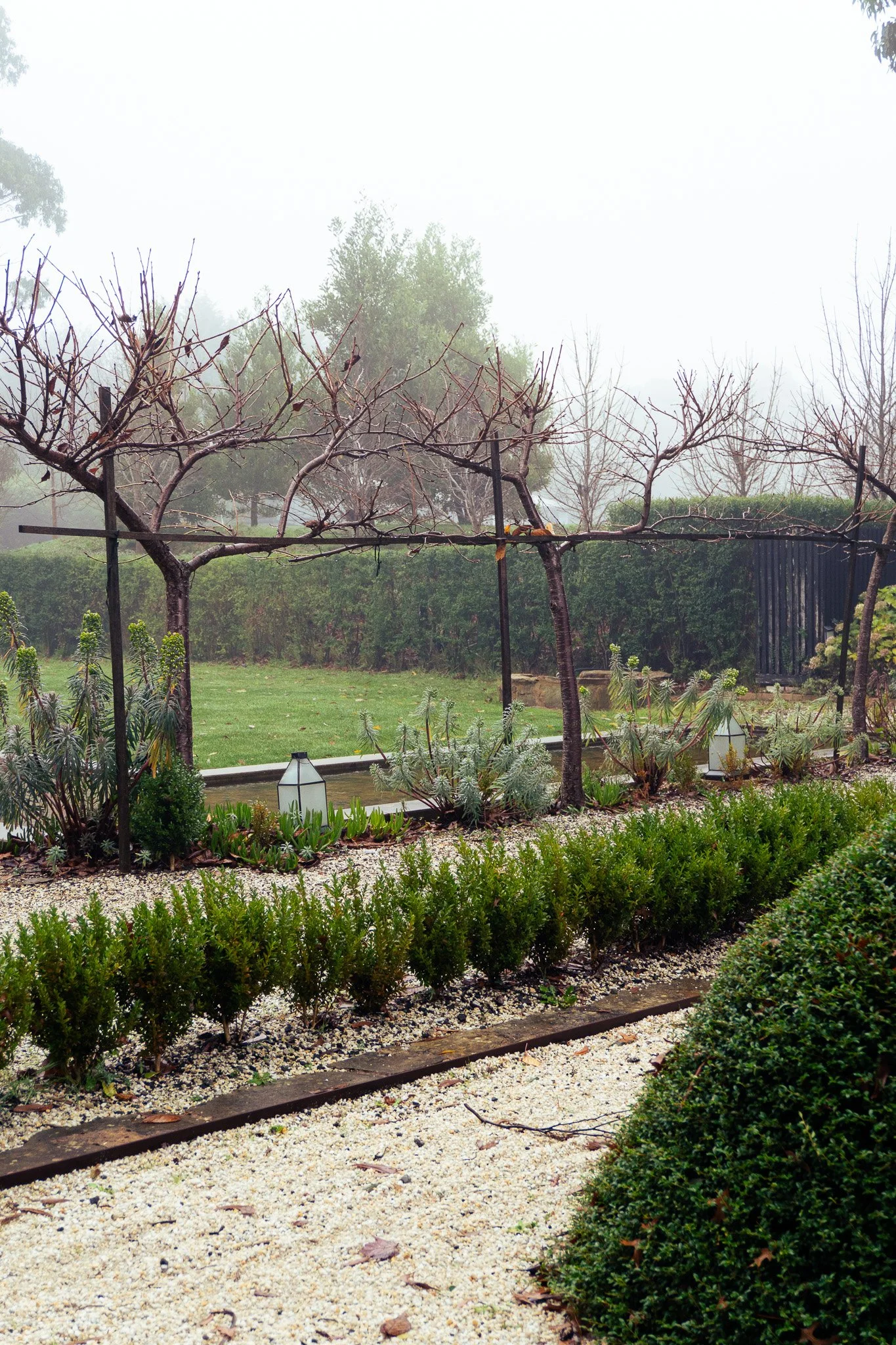
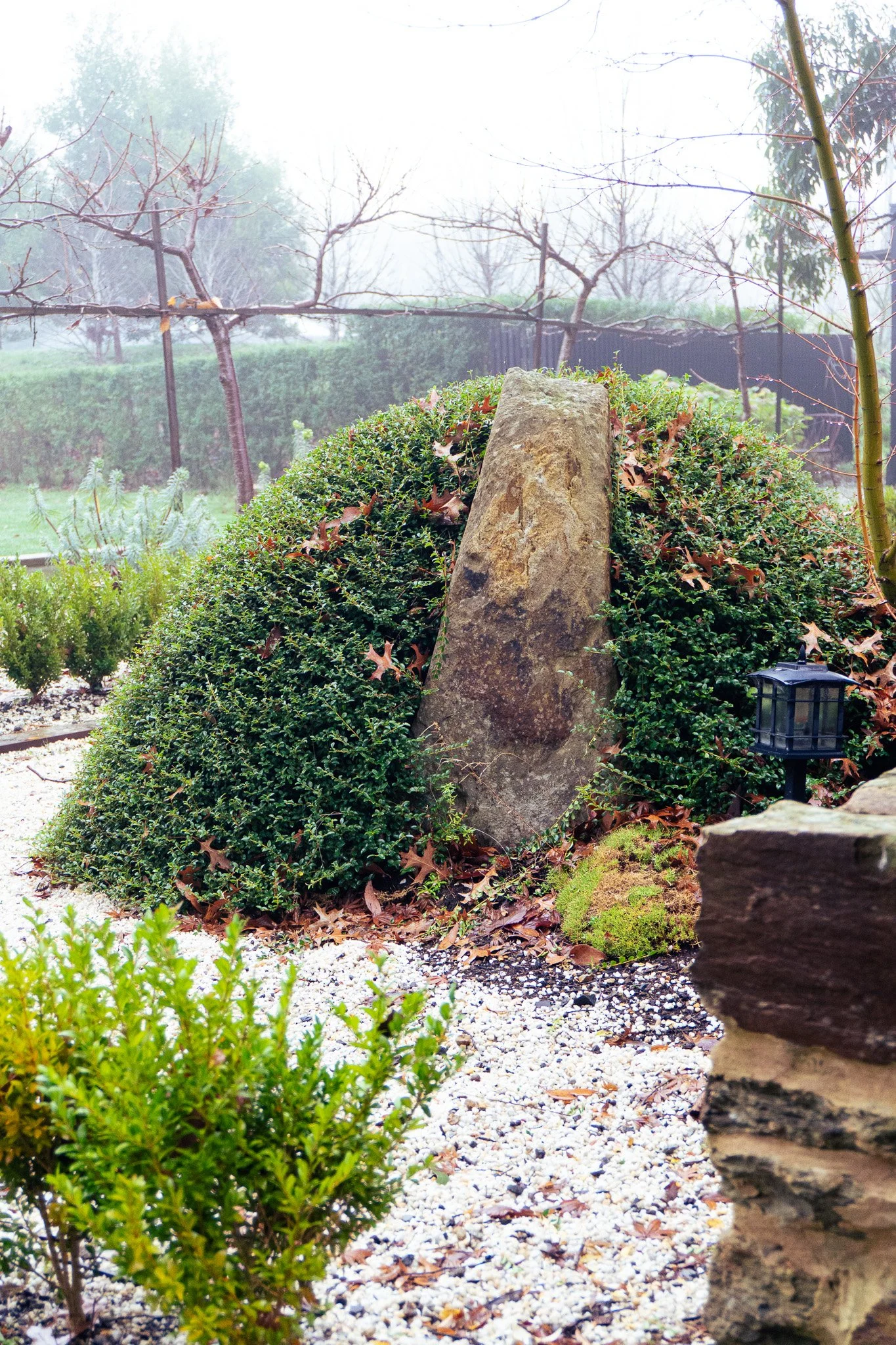
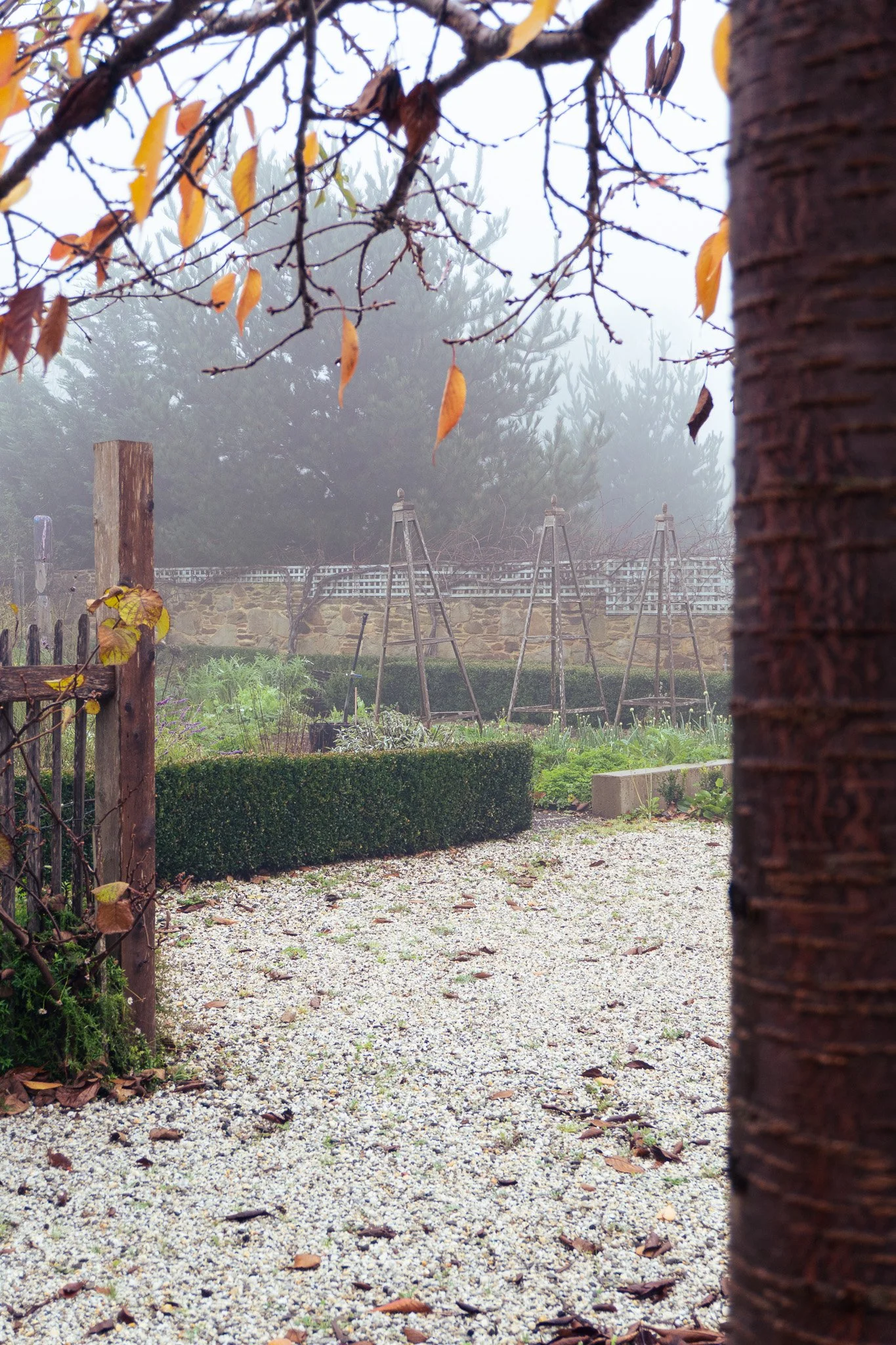
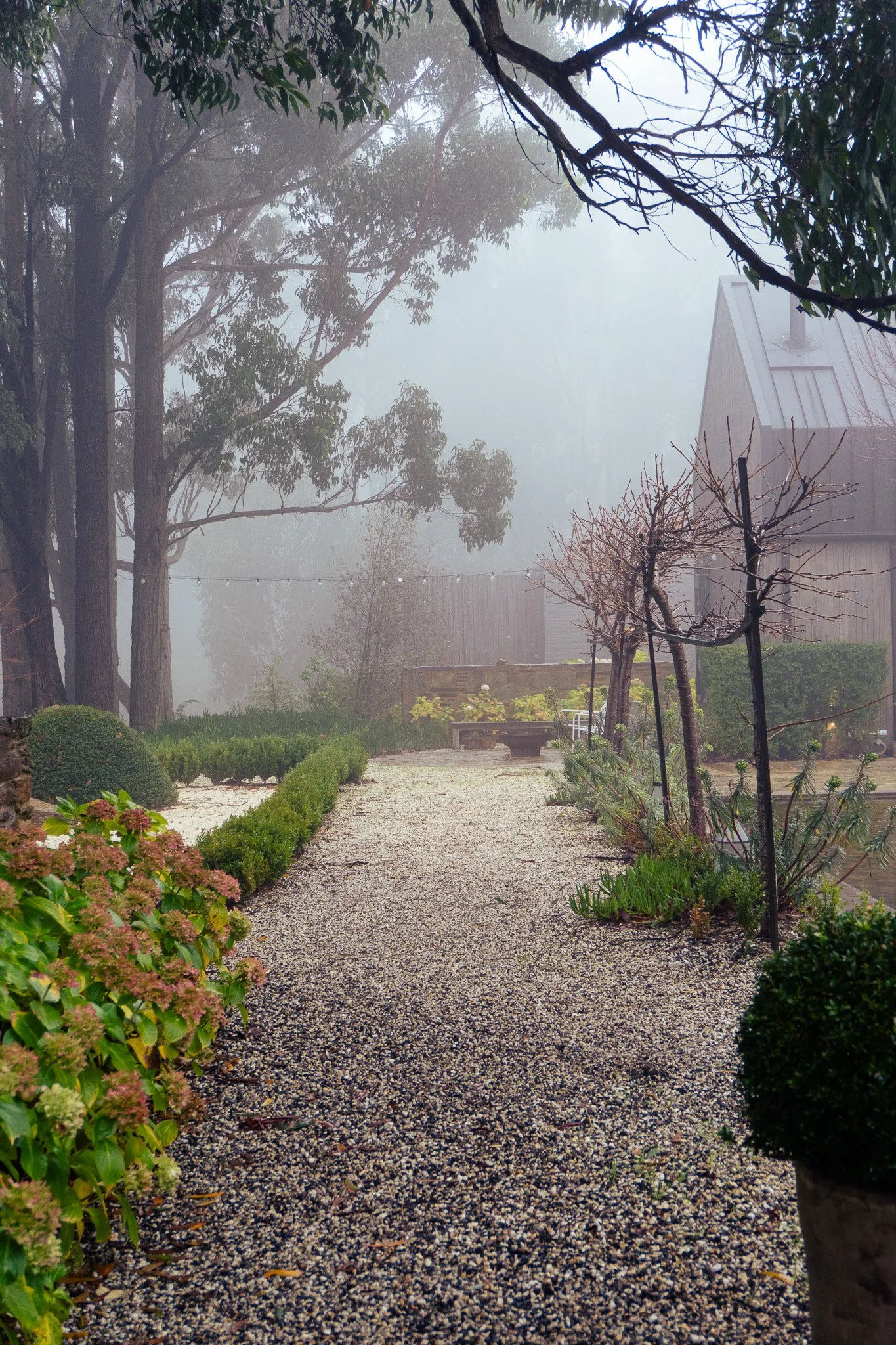
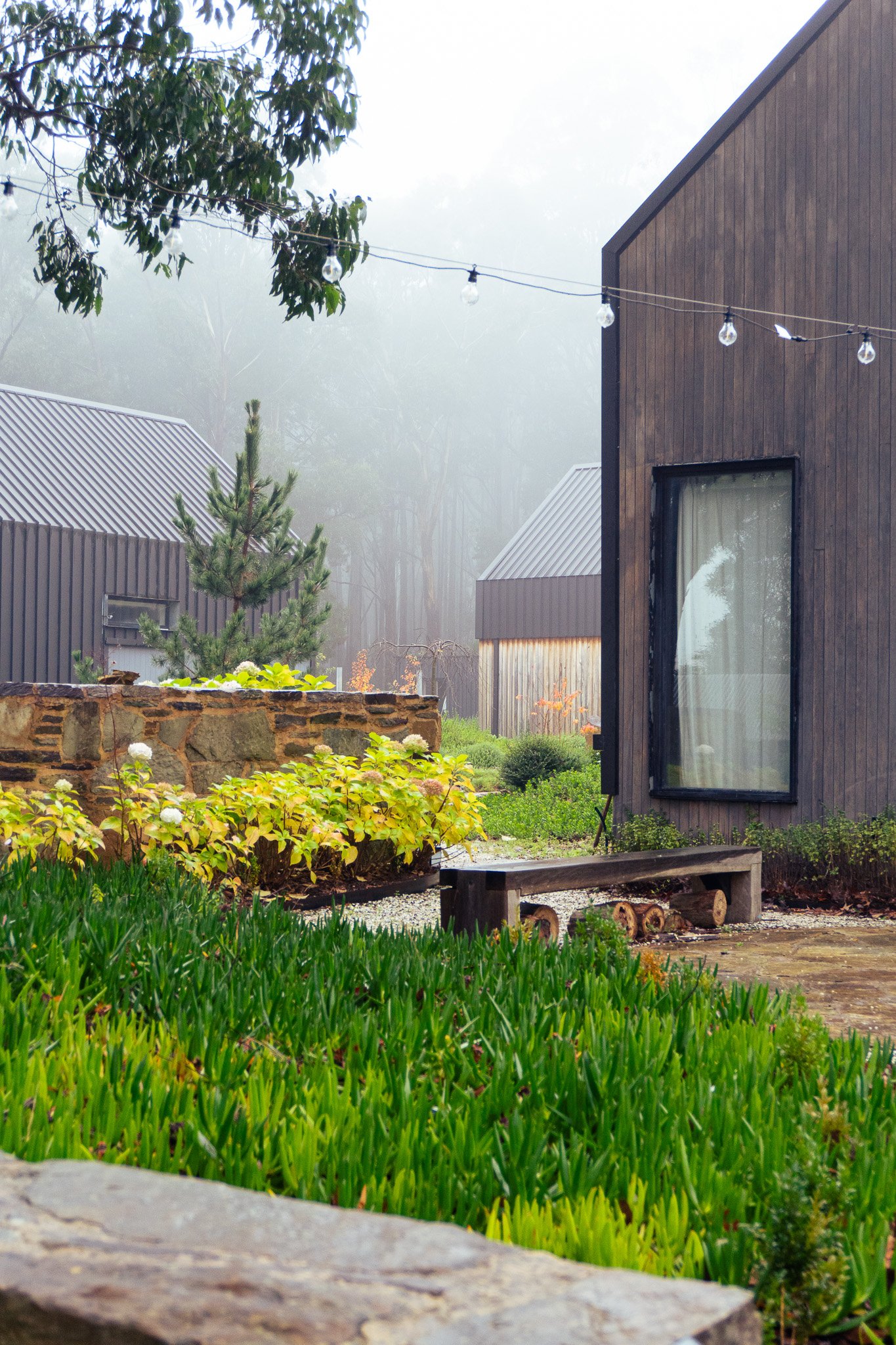
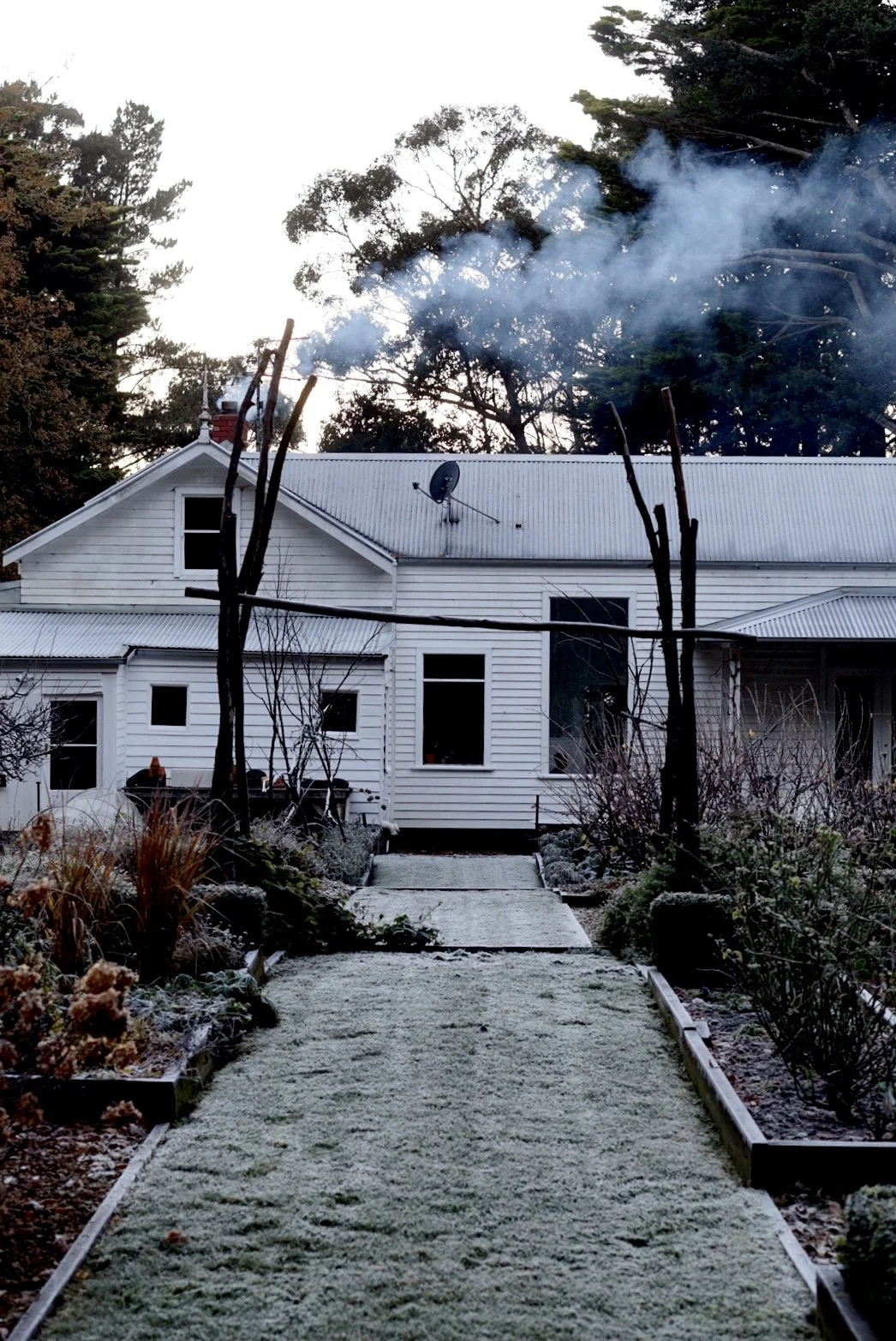
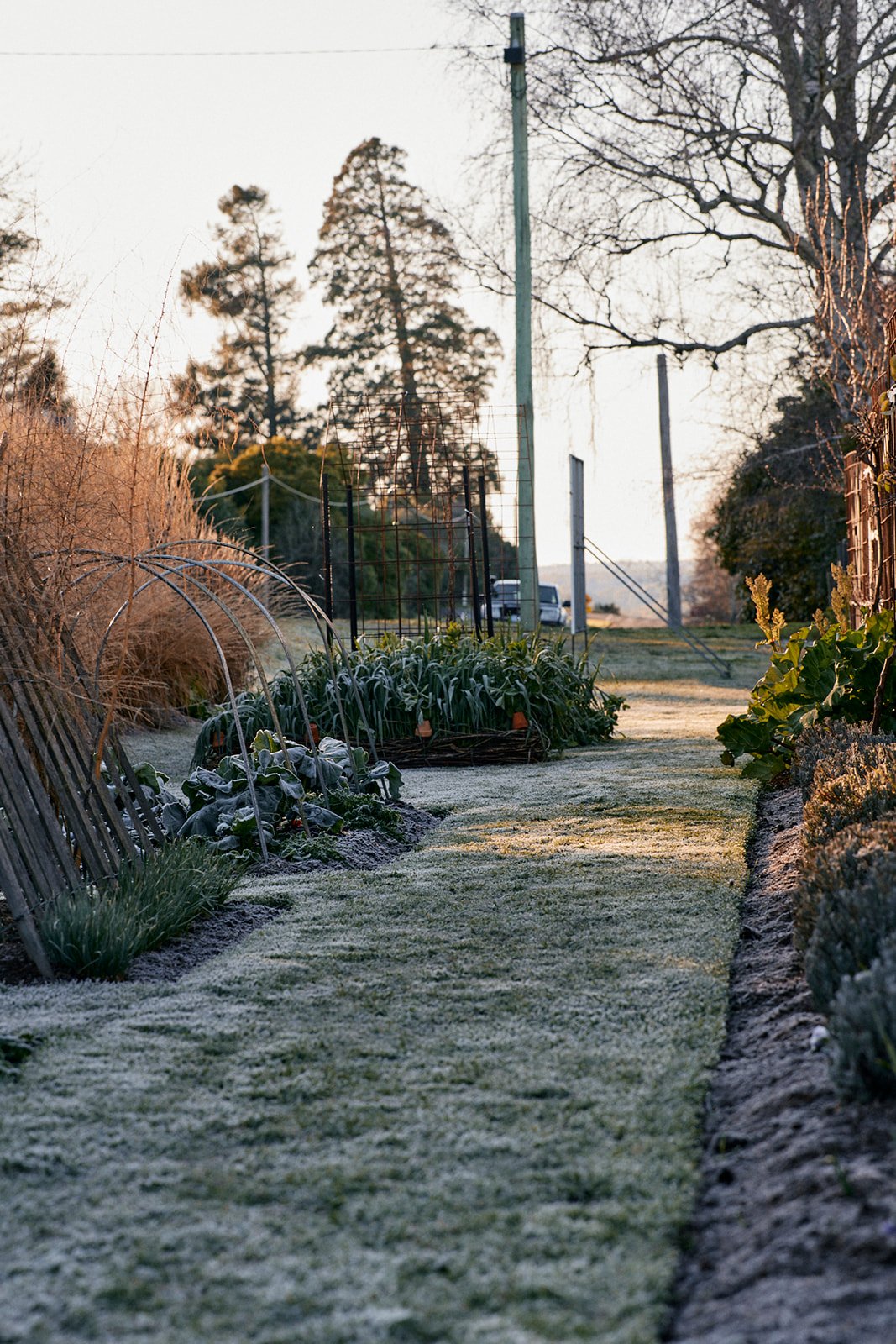
On the coldest mornings I take the same short walk around my garden before the day begins, and the lawn is the first thing I see. A crust of frost across the open grass, holding the low light, keeping the shape of every blade until the sun finds it. The garden at Little Cottage on a Hill is only five hundred and fifteen square metres, and on a morning like that it gives itself up to me completely. The grass reads as a kind of ground. The bare espalier along the fence becomes a drawn line. The trees are tone and mass and the spaces between them. Everything has been stripped of its colour, and in that stripping I can see, with almost embarrassing clarity, what holds the garden and what does not yet anchor it strongly enough.
Years ago, before my daughter was born, I spent Tuesday nights learning to paint in a studio in Clifton Hill — a converted stairmaker's factory that smelled of linseed oil and cigarettes and whiskey, where an esteemed old painter named Des set me the same task again and again. The underpainting. Before any colour, the old painters laid down a monochrome ground: the whole composition resolved first in greys, in light and dark, so they could see whether it held before a single true colour was allowed near the canvas. I did not understand, then, that I was being taught how to look at a garden. I understand it now, every July.
This is the thing I most want to say about winter, and I want to say it plainly, because it runs against the grain of how we are taught to feel about the season. Winter is not the garden at its emptiest. It is the garden at its most honest. You would be amazed how much a winter garden can teach you, if you let it. It takes away the froth of summer — the colour the eye runs to first, the abundance that papers over a weak structure — and leaves the bones exposed. It asks the one question every gardener tends to avoid and every designer should be asking: does this hold on its own terms, beneath everything I have laid on top of it?
I came to that question the long way round. I have been a gardener since I was a child, loving the plants themselves — their beauty, the small triumph of coaxing something difficult into growth — long before I knew anything about design. Design came later, through study and then through fifteen years of practice, learning to read space before planting: mass and void, the way one volume sits against the next. What took me far longer to see is that winter performs that reading for you, for free, once a year. When I was finishing my book, The Productive Garden Companion, and battling with the cover direction as most authors do, I’m told, artist and friend Andrew O'Brien stripped its cover to black and white, to test it — because colour is the most seductive thing in any image, and only with the colour gone is the eye forced onto whether the composition is genuinely well made or merely attractive. That is precisely what winter does to a garden.
I am in good company here. Piet Oudolf, whose plantings have done more than anyone's to rehabilitate the idea of a garden in winter, chooses a plant as much for how it dies as for how it blooms — the echinacea for the cone it leaves behind, the miscanthus for the plume that frost turns to a small sculpture. Dan Pearson writes about the moment in autumn when you finally take your hands off the reins and simply look. Arne Maynard says that only in winter, stripped of its summer froth, can the true layout of his garden be seen for what it is. None of them is mourning a gap. They are describing a season of revelation that the rest of the gardening world has somehow agreed to call empty.
It helps that I garden where I do. There is a particular gift in this volcanic country of the Victorian Central Highlands, and it only becomes fully visible in the cold. Deep fog and real frost most mornings, settling in the low places and silvering everything they touch. A low, raking light that comes in almost horizontally and finds the texture in everything it crosses. From my garden I can see the old trees on Wombat Hill standing against a pale sky, reading almost like a wall beyond the fence. Five minutes away at Musk, where it snows some winters, Andrew has spent years making Stonewalls — twenty-five acres of garden and bushland shaped through a painter's eye.
He comes to structure from the opposite direction to me, through paint, and he reads the gaps in a garden as the load-bearing parts: the space between two bare branches, the void between one plant and the next, the thing that gives a composition its tension. The black barn buildings he has set across the land do the same work as Des's monochrome ground. They hold the colour the way an underpainting holds the bloom.
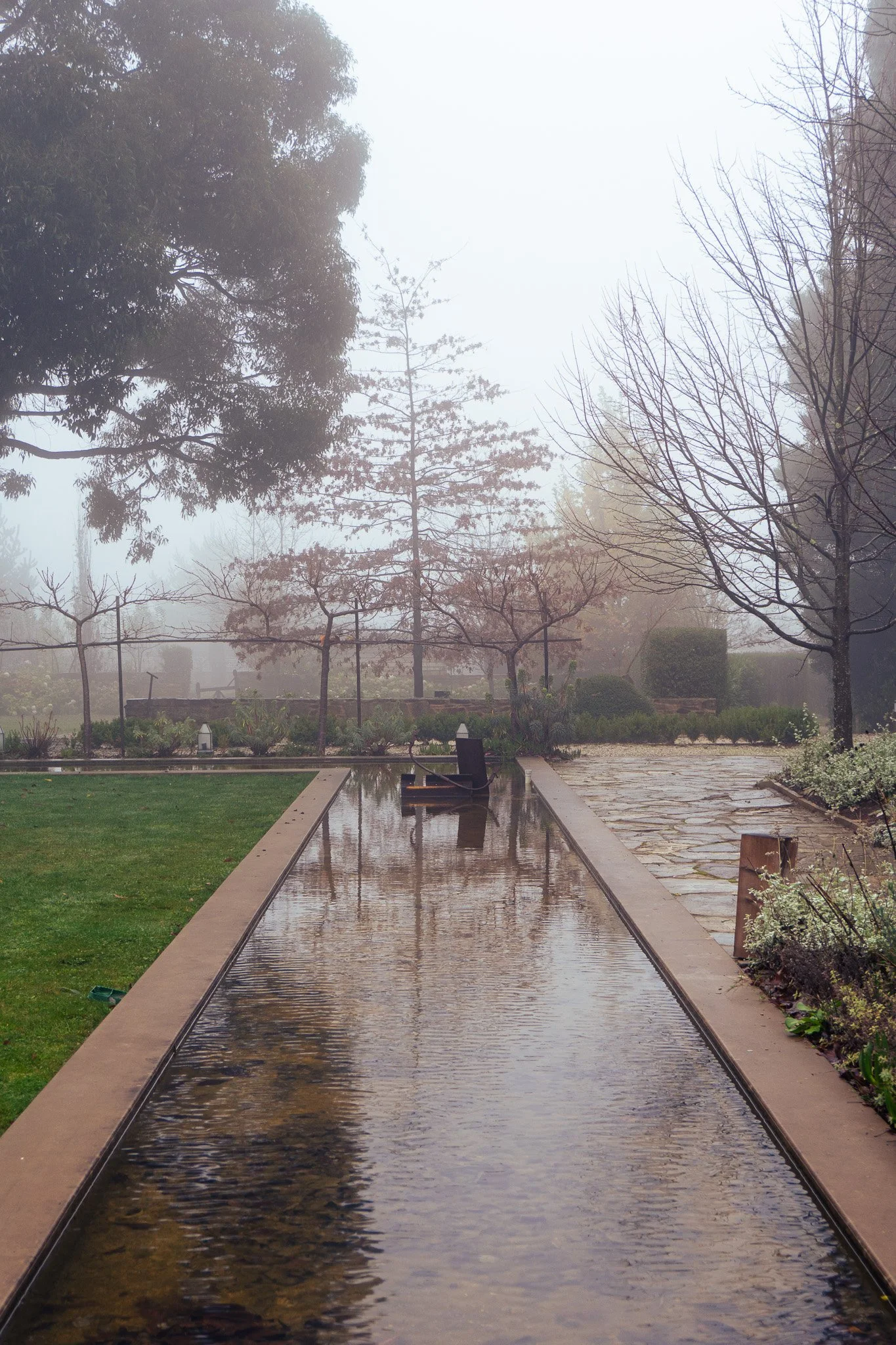
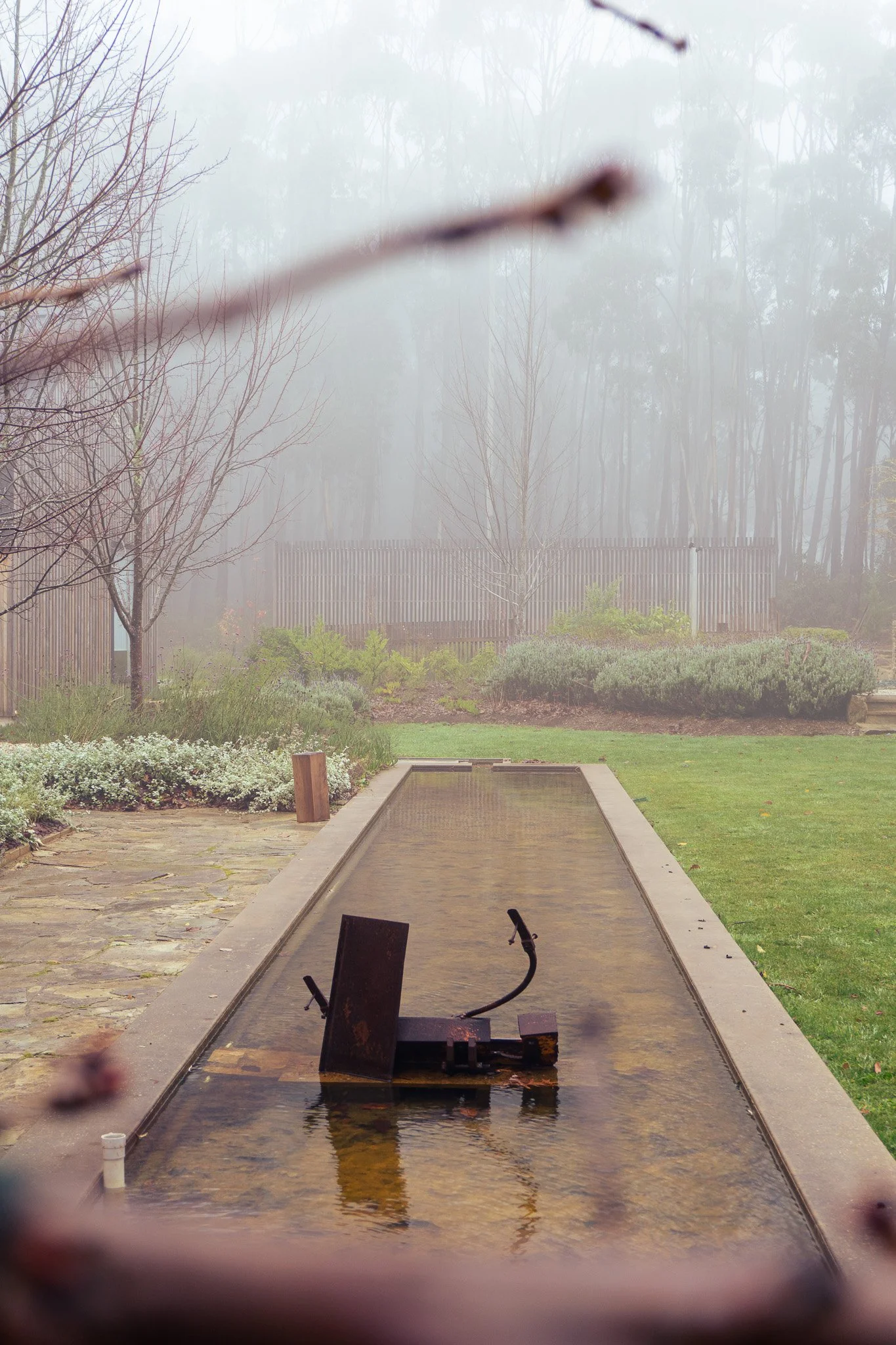
I have tested this at both ends of the scale. At Oak & Monkey Puzzle, my old five acres at Spargo Creek, the gesture that organised the whole garden was a long sweep of open lawn — a spine — and it was every winter, when the planting drew back, that I could see whether it still held the place together. The emptiest part was the most important part. The frost-crusted lawn at Little Cottage on a Hill now teaches me the same lesson in miniature, small enough to take in at a single glance.
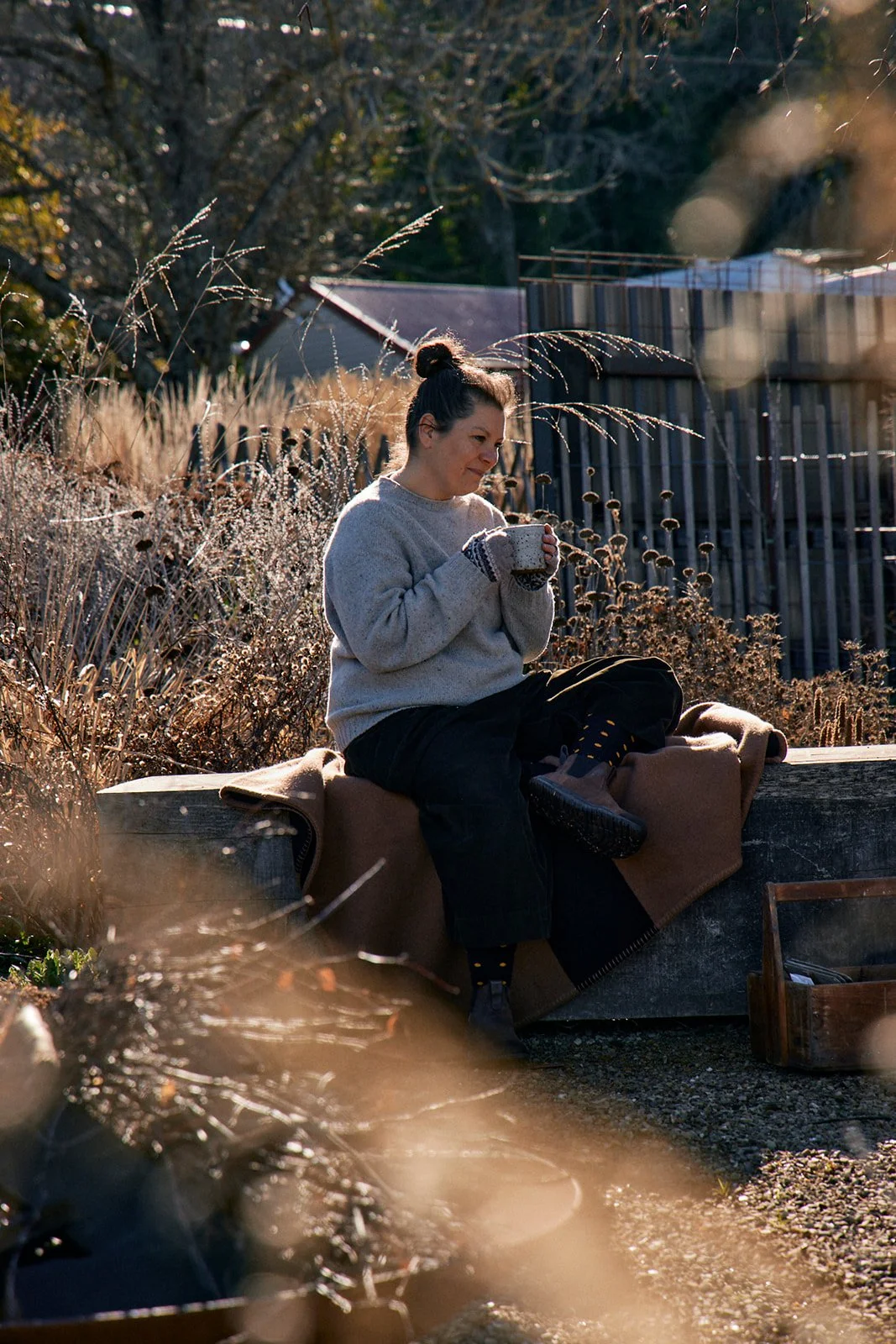
People think of winter as the end of the gardening year. Since leaving city life and learning to live with the land, I have never been able to feel it that way. For me it is the prelude — the season of greatest promise, the months I spend dreaming and planning before anything is asked to grow. I sit with a cup of tea and I look: where the frost settles, where the structure isn't yet holding. You lay the monochrome ground first, in the cold, and everything bright comes afterwards, and comes better, because of it. This is the thinking that runs underneath my book, The Productive Garden Companion — that you plan by observation rather than by dates, and that the quiet seasons are where the foundations are laid. It is also what Andrew and I are opening both our gardens for, on a single and rare Sunday in July: a day to put your hand on a cold wall and your eye to a stripped border, and feel the argument for yourself.
The sun reaches the lawn eventually. The frost lifts in the first hour, and by then the garden is already reorganising itself in my head — the greys turning into a map of what they will hold once the colour comes back over the top.
Winter Structure Masterclass — with Andrew O'Brien of Stonewalls and Natasha Morgan.
Sunday 12 July
10.30am–3pm
Little Cottage on a Hill, Daylesford & Stonewalls, Musk
Limited to 25 places
Continue your gardening journey with me
If you enjoy this kind of content, my workshops offer more detail and guidance on design, productivity and seasonal care.
If you are building your garden from home right now, my e-books on Wicking Bed Gardens, Introduction to Backyard Chicken Keeping and Compost for Beautiful Productive Gardens offer practical step by step guidance that pairs well with the workshops.
I share seasonal tips, behind the scenes at Little Cottage on a Hill, and new resources through my newsletter. Subscribe to receive my entire plant list from the garden as a personal thank you.
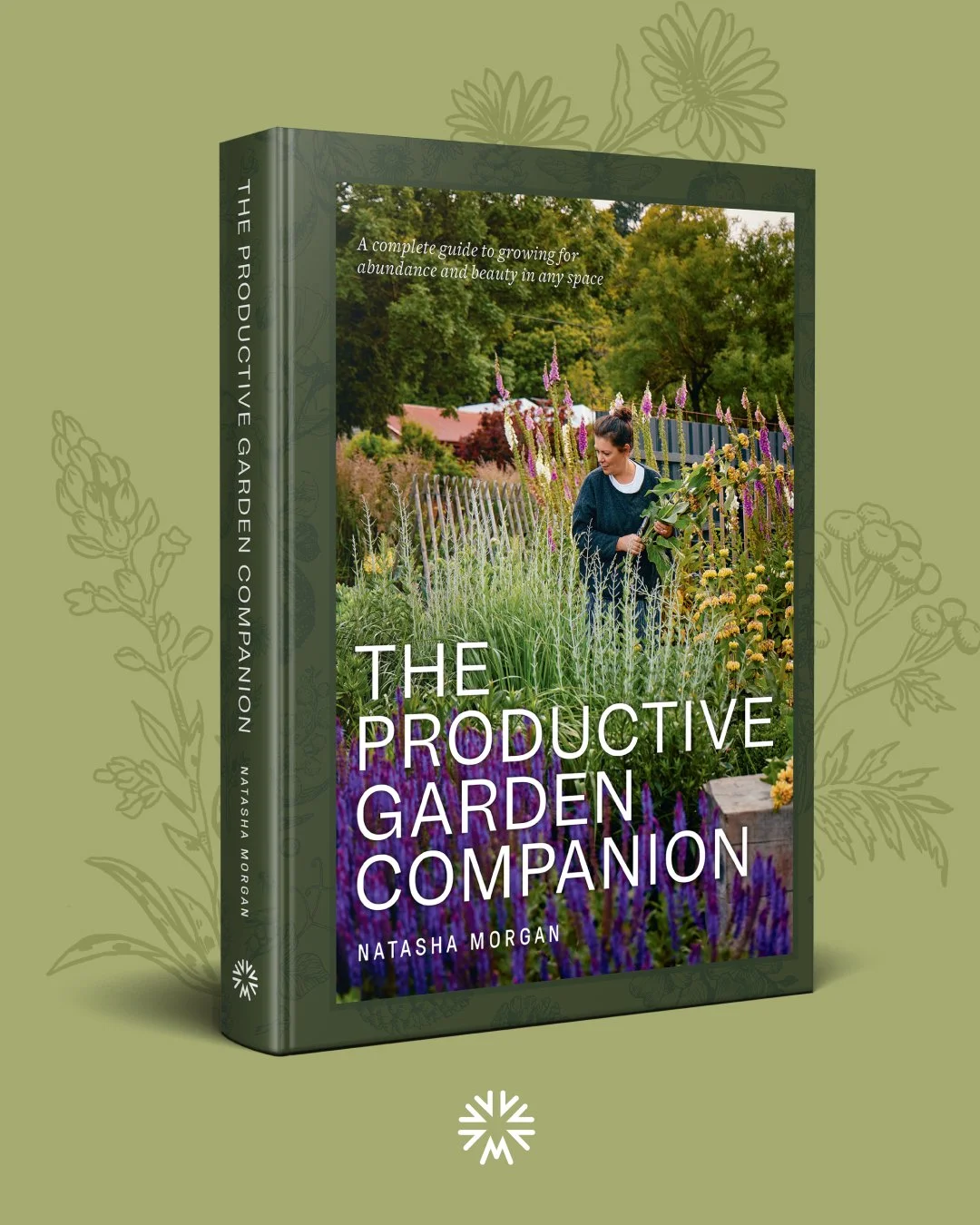
You can also pre-order my book The Productive Garden Companion, the book I have wanted to find my entire life. A complete guide to growing for abundance and beauty in any space. The Productive Garden Companion is a practical, reassuring and visually rich modern gardening book that meets gardeners wherever they are, from windowsill pots to generous acreage.
You may want to check out my related content below:
Looking Back - A Rare Glimpse Inside Oak and Monkey Puzzle
My top 5 plants - from Oak & Monkey Puzzle
Lessons in Abundance - Life at Little Cottage on a Hill
Stay connected for more seasonal inspiration:
Instagram | Facebook | Gardenstead | LinkedIn | Pinterest | YouTube | Website | Newsletter
Thanks so much for following along.
Natasha xx
Feijoas: the fruiting hedge that gives back
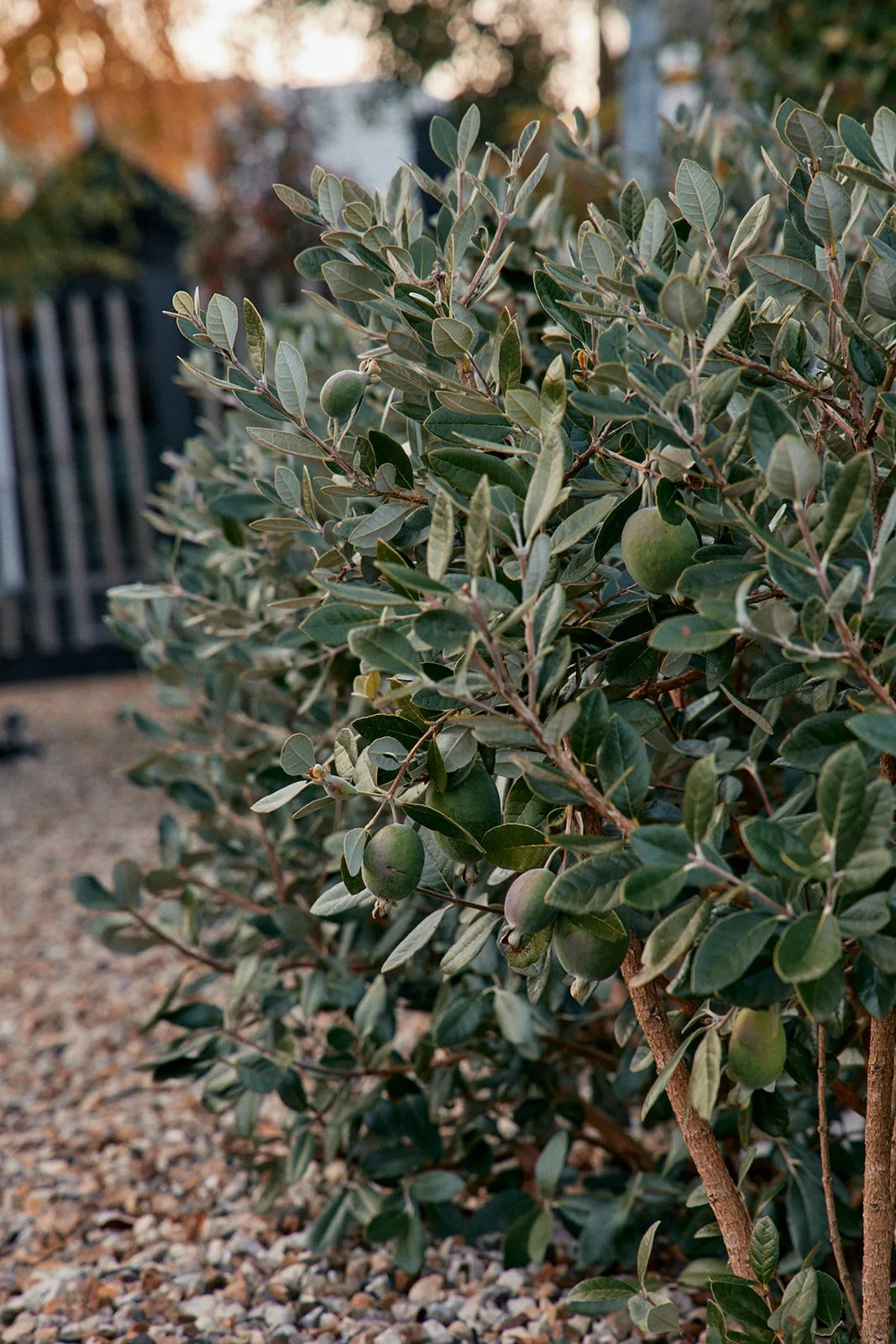
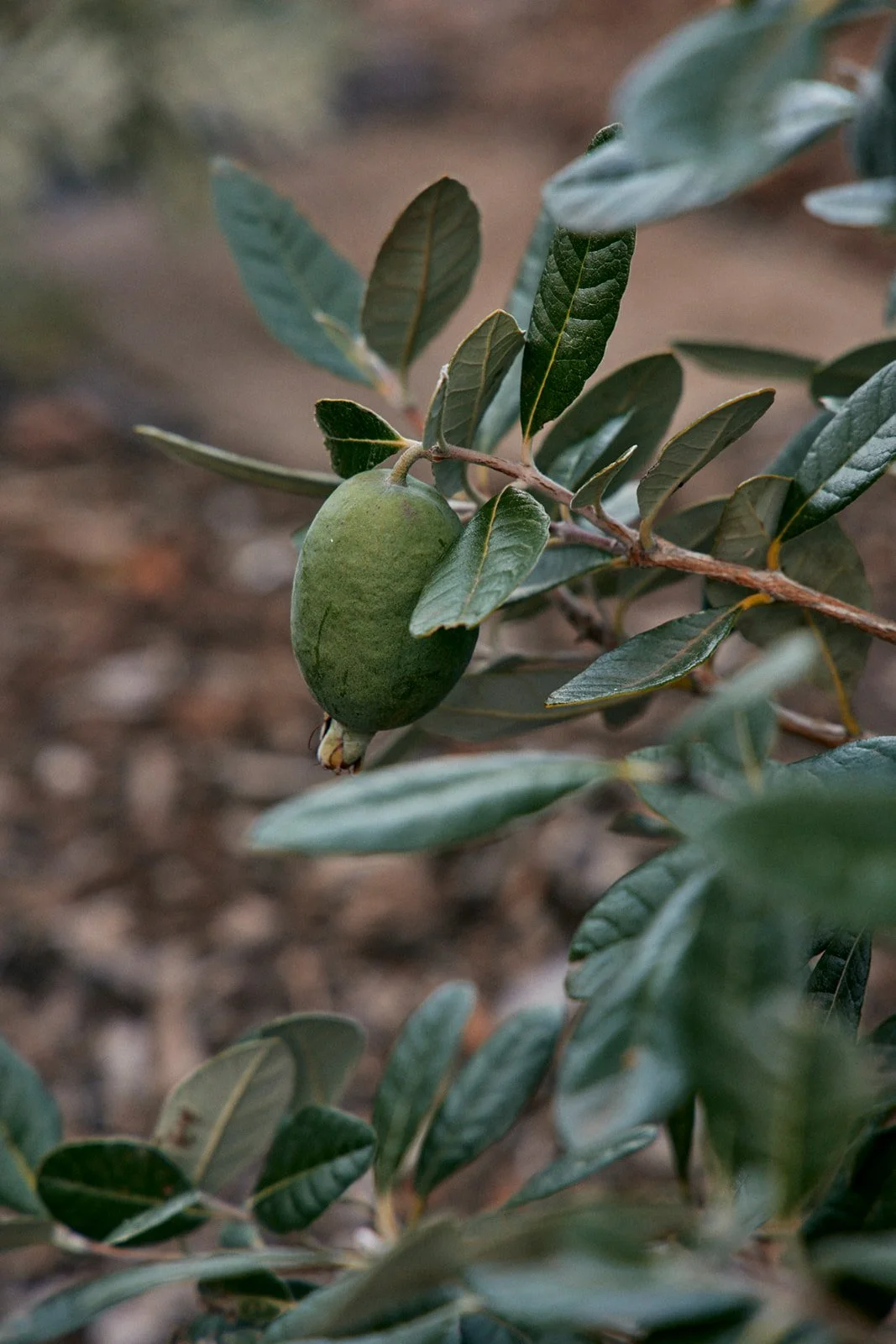
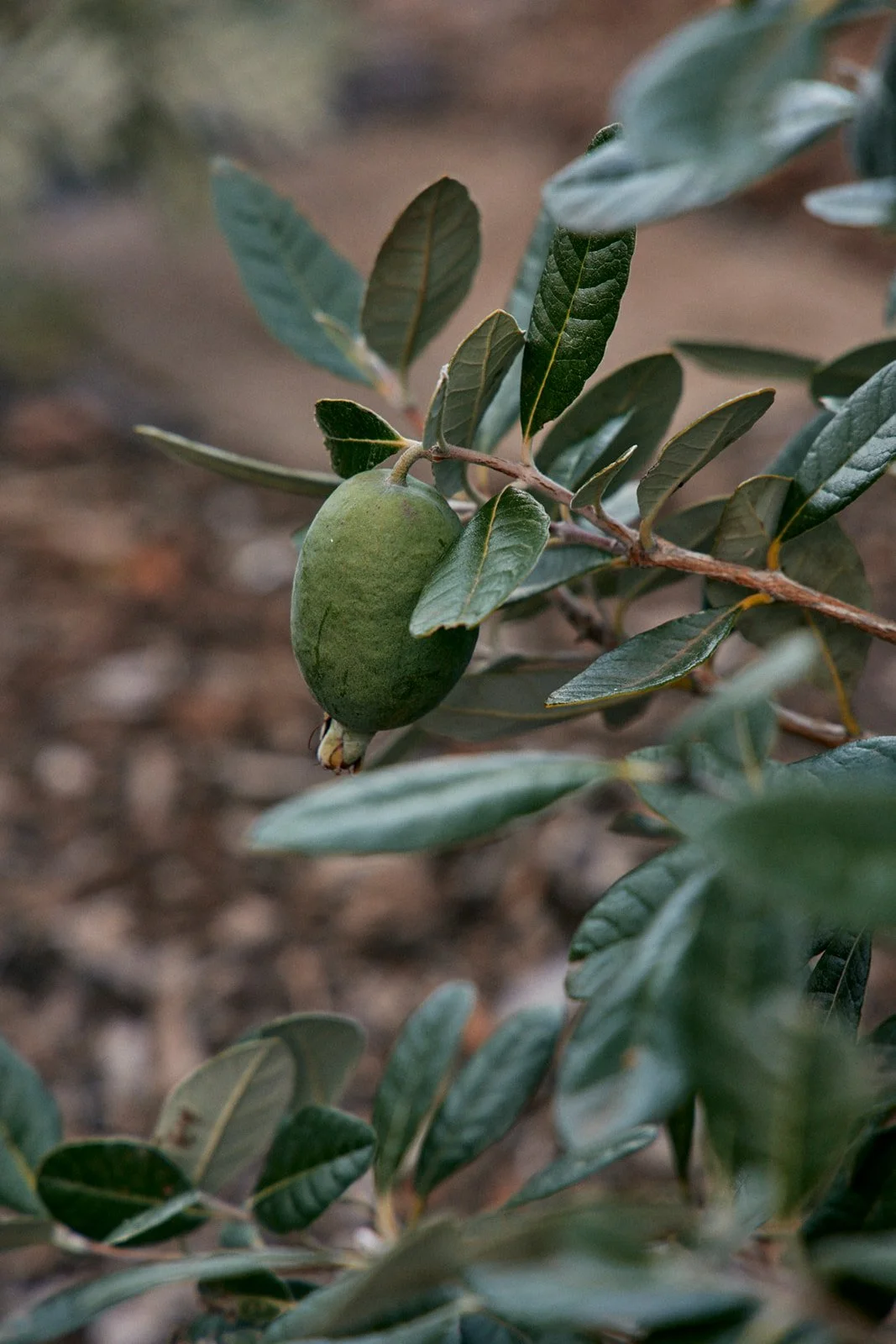
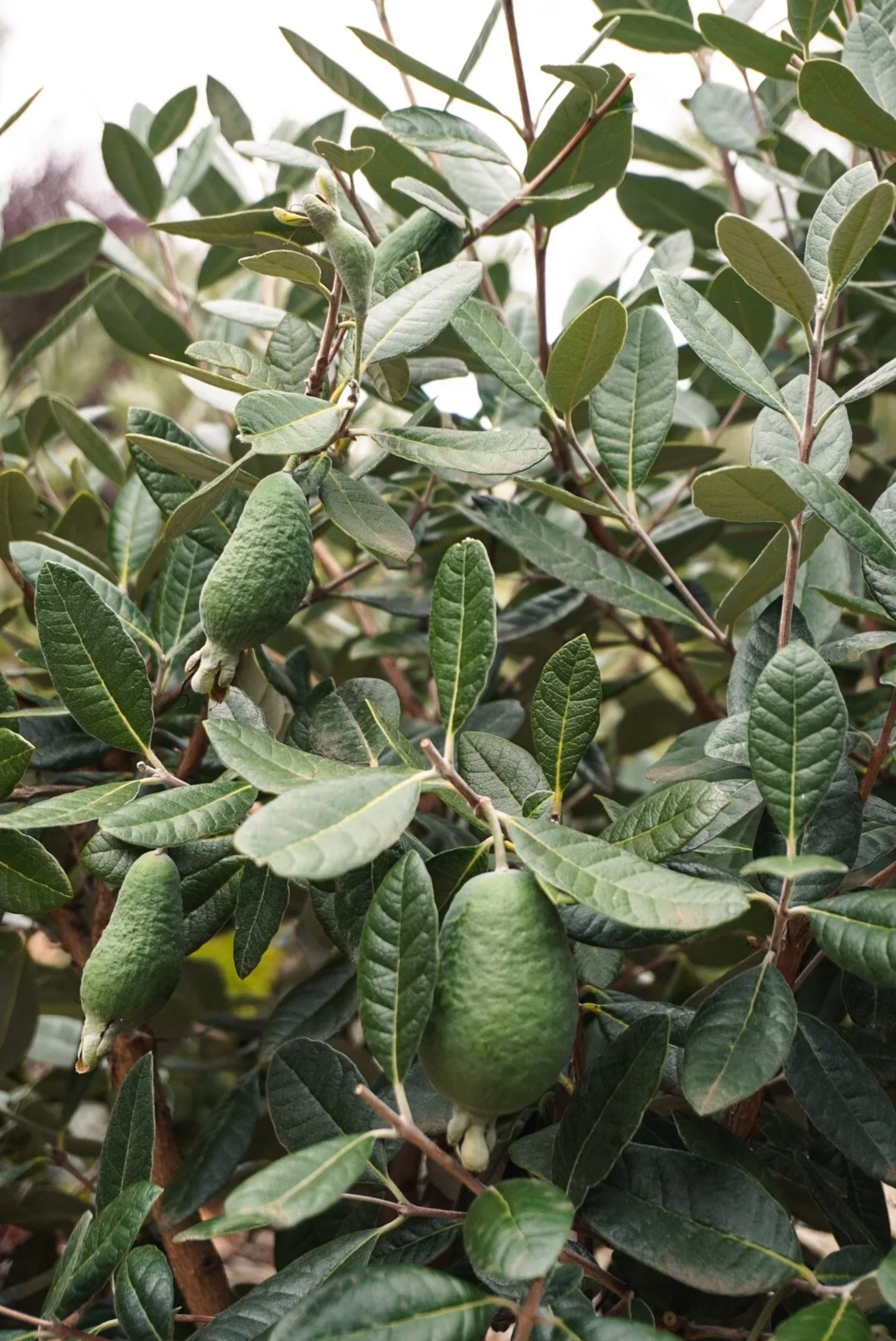
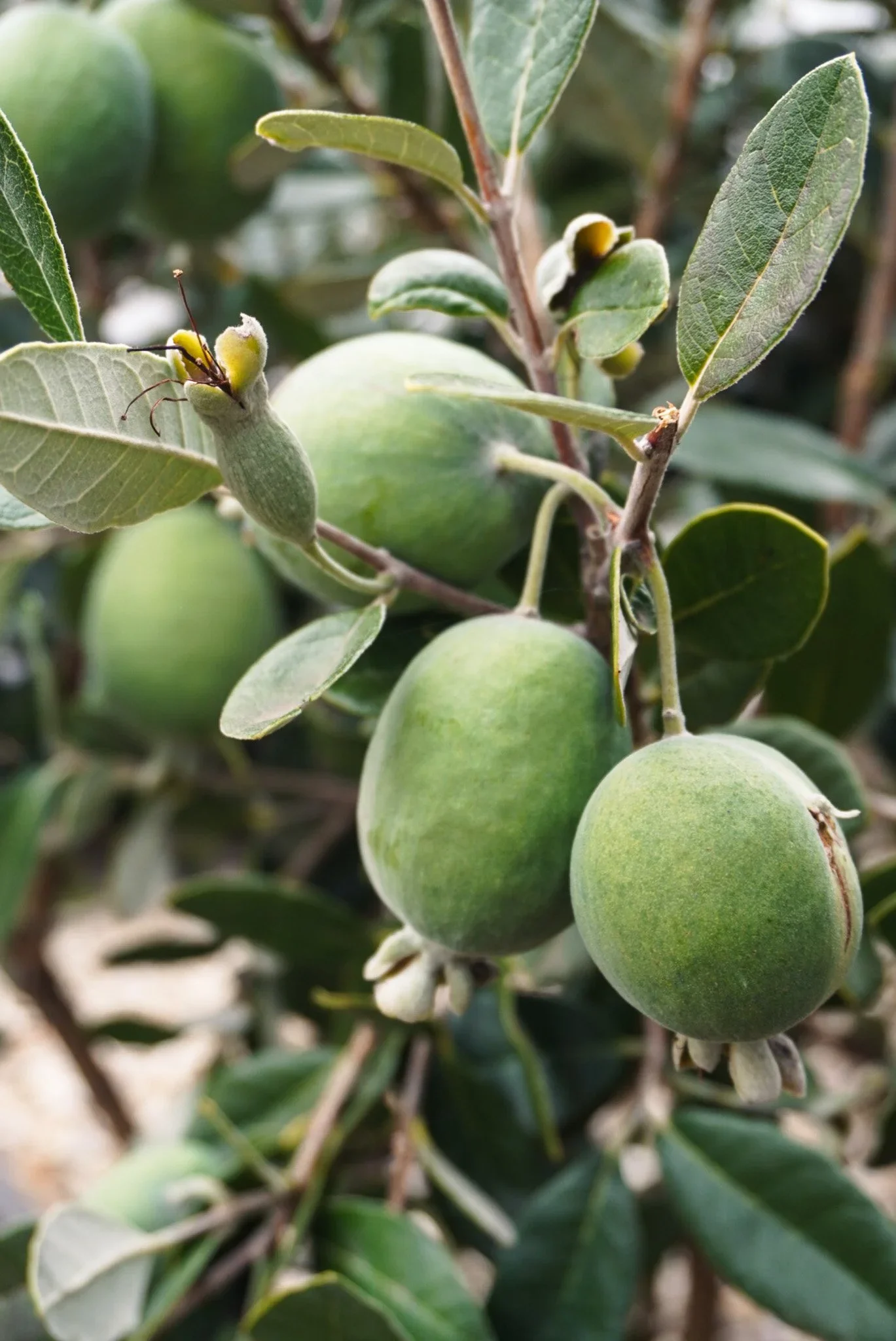
I smell them before I see them. I'll be walking the front of the garden on some errand that has nothing to do with fruit, and there it is — that perfume coming up off the gravel. Pineapple, guava, something floral underneath, a sherbet edge to it. I stop. I look down. And there, half-tucked under the foliage or sitting in the stones where they've fallen, are the feijoas. Plain green. Easy to miss entirely if your nose hadn't already told you they were there.
I still find it astonishing that a fruit so unremarkable to look at gives itself away by scent alone.
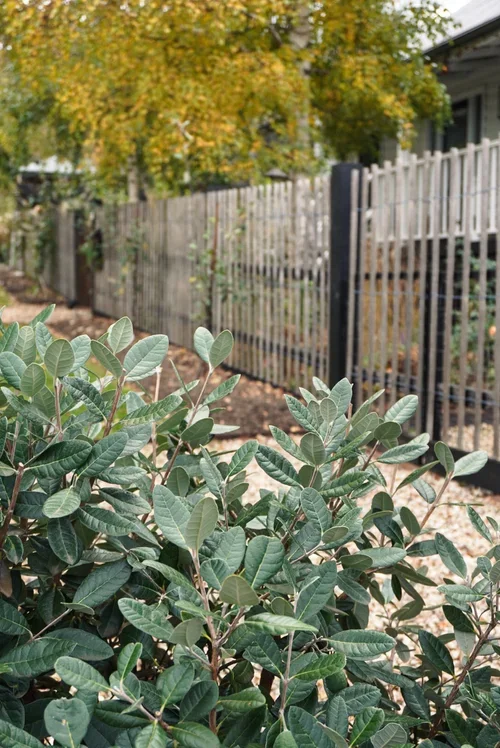
When I wrote about this hedge last year, the plants were barely a metre high and had only just begun to fruit. It was thrilling, and it was mostly promise. I'd put them in for fruit, yes, but also for structure, and for the privacy of a living screen that would, in time, soften the neighbouring rooftops that sit between me and the hills.
A year on, the rooftops are still there. Slightly less of them. The hedge hasn't reached its height — I didn't expect it to in a single year — and it hasn't yet done the screening job I planted it to do. But it has thickened and settled, and it has begun to behave like a part of the garden with something to do, rather than a row of new plants hoping to make it. And this year it has fruited properly.
That's where the satisfaction actually sits for me. Not in the finished picture — gardens rarely hand us that on our own timetable — but in the evidence that the thing is working. The roots have taken. The plants have read the place. A decision I made a couple of seasons ago has started to give something back.
Why a hedge, and why feijoas
At Little Cottage on a Hill, every plant has to earn its keep. That doesn't mean it has to be edible. It means it has to contribute. A plant might hold structure through winter, feed the bees, soften a fence, throw a little shade, carry scent, frame a view, or simply pull me out the back door in the morning. The ones I value most do several of those things at once.
Feijoas are exactly that kind of plant.
Pineapple guava, to use the other name — an evergreen shrub or small tree with thick, silver-green leaves, edible flowers, and that fragrant autumn fruit. You can grow a single specimen happily enough. For my block, a hedge made far more sense. I wanted a boundary that worked: something to hold the edge, screen the roofline over time, and still feed me. In a small garden I come back to this logic constantly. A hedge can also fruit. A windbreak can feed you. The plant that gives you privacy can also become part of what's happening in the kitchen.
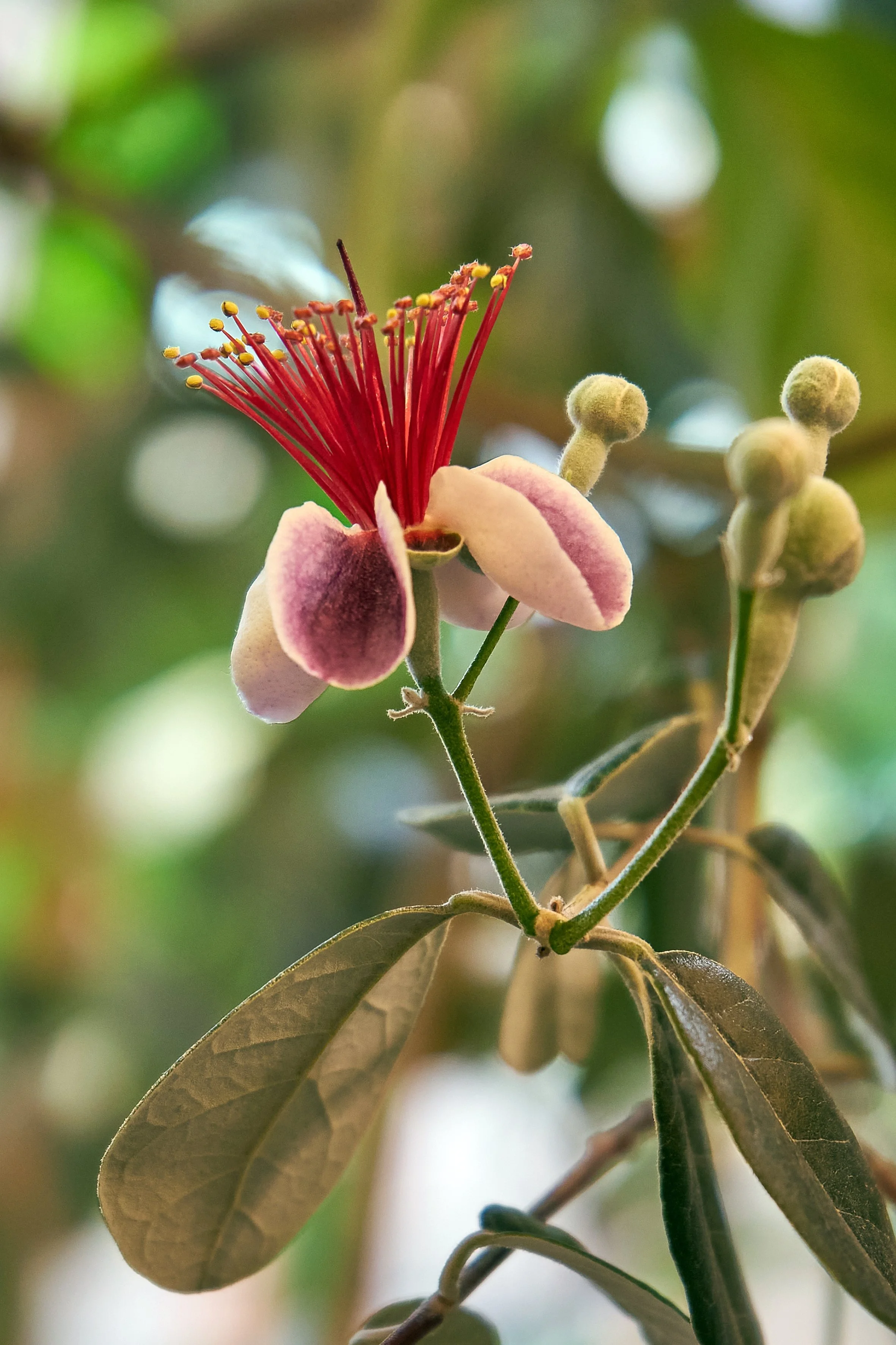
They aren't flashy. They ask very little. For most of the year they sit in the background holding their shape, and then in spring the flowers come — fleshy, sweet-petalled — and at the cold end of autumn, when much of the productive garden is winding down, the fruit begins to drop.
A fruit for the edge of winter
The timing is a large part of why I love them.
In a cool-climate garden, by the time feijoas ripen the berries are long gone, the stone fruit finished, the apples and pears winding down. The garden is moving into its quieter rhythm. And then the feijoas start to fall. They stretch the productive season out at exactly the point it can begin to feel as though the garden is closing in for the year. There's still fruit to gather. Still scent in the kitchen. Still something to scoop straight from the skin, or stew, or put away for later.
That last generous offering, right before the deeper work of winter begins, matters more than it might sound.
Feijoa blossoms.
A year on
This year the hedge has really started to give.
Not the way an old, established feijoa gives, where the fruit carpets the ground and you stand there wondering how you'll ever use it all. Mine is young. But against last year the shift is unmistakable — more fruit, more often, and more of those moments of bending down as I pass and coming up with a handful.
It still stops me. I think that's the part I love most about growing food at home — the way it punctuates a day. You're on your way to do something else, you glance down, and the garden has interrupted you. Gently. Asking you to notice.
The feijoas aren't doing everything I planted them for. The neighbours are still in view. The screen isn't there yet. But the fruit is the reminder that a garden doesn't have to be finished before it starts to give. We plant for a future we can't quite see, and we're fed along the way.
How to grow feijoas well
Feijoas get called easygoing, and they mostly are. Easygoing isn't the same as ignore-them-entirely, though. Like any fruiting plant, they reward thoughtful establishment, a bit of watching, and some seasonal care.
Plant more than one. Some varieties are self-fertile; many crop better with a partner for cross-pollination. In a home garden, more than one variety is the safer bet if it's fruit you're after rather than foliage. I planted mine as a row, which gives me the hedge and improves pollination at once. One plant can be useful. A repeated line of them becomes structure.
Give them light. Feijoas will tolerate some part shade, but they want sun, and for fruit I'd give them all the light the site allows. They want drainage too. They're tough, but they don't want wet feet. In heavier ground I plant them slightly proud of the surface and work in compost; on dry or exposed sites, mulch well and keep the water up while they establish. At Little Cottage the hedge sits where it can be both useful and seen — I don't like hiding the productive parts of a garden away.
Plant at the right time. For much of Australia, March to May is the window. Autumn planting lets the roots settle before the spring push, while there's still some warmth in the soil. In genuinely cold or frost-prone pockets I'd be more careful — young plants may want protection through their first winter, or you might wait for the soil to warm again in spring. Read your own site before anything else.
Water while they settle in. Established, they're resilient. Young, they still need you — deep watering through dry spells, especially as the fruit forms. I don't drown them and I don't forget them, and in a hedge that's worth saying twice, because closely planted shrubs end up competing with one another. A good mulch layer does an enormous amount of the work.
Prune with restraint. The temptation with a hedge is to shear it into a wall, but hard pruning costs you flowers and fruit, so I keep a light hand. I want density without stiffness — thickening and screening, but with light and movement still coming through. After fruiting I take out anything dead, crossing or awkward, and lightly shape where it's needed. In a cold area I'd hold off until the worst frosts have passed.
Let the fruit fall. This is one of the loveliest things about them. You don't tug, you don't guess. When they're ripe, they drop — that's the cue. I collect off the ground daily once they start. A ripe one has the strong perfume and a slight give: not squashy, just yielding. They bruise easily and they don't keep, so this isn't fruit to leave sitting in a bowl for a week.
Taste the flowers — gently. The petals are edible, sweet and soft, with that sherbet quality that's hard to resist while you're still waiting on the fruit. But no flowers, no fruit. So I taste a few and leave the rest to the bees. That's the constant negotiation in a productive garden: take what's offered, but not in a way that stops the next offering.
Making the most of the harvest
I still love them fresh — halved, scooped with a teaspoon, standing in the kitchen or out in the garden.
But roasting them changed how I think about the fruit entirely. The first time I had roasted feijoa was in a galette from Two Fold Bakehouse here in Daylesford, paired with apple and folded into sourdough pastry. Something shifted. The sharp, perfumed thing I knew turned soft and deep and almost spiced. I've been far more interested in cooking them ever since.
They stew beautifully, spooned over porridge or yoghurt or cake. They go into crumbles with apple. They make good jam, especially with ginger or fig or lemon. And they take well to preserving — bottled, fermented, folded into syrups and shrubs, where that floral perfume can be carried well past the short window it's actually here.
Because that's the thing with feijoas. The season is generous and brief. Once they begin to fall you have to keep up. Some get eaten where I stand, some go over the fence to neighbours, some sit scenting the kitchen for a day. But when the fruit really arrives, preserving stops being a romantic idea and becomes a practical rhythm — a way of carrying a short season forward into the cold months. A glut in May becoming syrup in July. That's the right kind of abundance, to my mind.
Would I do it again
Without hesitation. I'd probably plant more.
Every feijoa I find on the gravel reminds me why they went in: for the fruit, but also for the shape the garden is still growing into, for the privacy I'm waiting on, for the way a small block can hold so much more than seems possible when every plant is asked to pull its weight. One day I hope the hedge meets the horizon and the rooftops vanish behind the silver-green. For now, I'll take the fruit.
And if you're thinking about your own front garden, a boundary, or a verge, the feijoa is a good example of one plant doing several jobs at once — screening, flowering, fruiting, feeding pollinators, softening a street edge, and stretching the season into the start of winter.
Not every verge will suit one, mind. Council guidelines, sightlines, services, the path, car doors, the mature height of the plant — all of it matters. But where there's room and your local rules allow, productive screening is a clever and generous way to make a public edge work harder.
That's exactly the kind of thinking I get into in my newest free ebook, Nature Strip Gardens: Fundamentals for Beautiful, Compliant Verges — a practical guide to reading your site, working with your council's guidelines, building better verge soil, choosing plants with care, and making a strip of ground that's beautiful, safe, useful and generous to the street.
Download it, share it, and start with the ground you already have.
Thanks so much for following along.
Natasha xx
Continue your gardening journey with me
If you enjoy this kind of content, my workshops offer more detail and guidance on design, productivity and seasonal care.
If you are building your garden from home right now, my e-books on Wicking Bed Gardens, Introduction to Backyard Chicken Keeping and Compost for Beautiful Productive Gardens offer practical step by step guidance that pairs well with the workshops
I share seasonal tips, behind the scenes at Little Cottage on a Hill, and new resources through my newsletter. Subscribe to receive my entire plant list from the garden as a personal thank you.
You can also pre-order my book The Productive Garden Companion, the book I have wanted to find my entire life. A complete guide to growing for abundance and beauty in any space. The Productive Garden Companion is a practical, reassuring and visually rich modern gardening book that meets gardeners wherever they are, from windowsill pots to generous acreage.
You may want to check out my related content below:
June Garden Tasks - For Australian Climates
Landscape Lingo - The ‘Chelsea Chop’ and Ways to Have Plants Look Their Best
No Dig Gardening - Less Work, Healthier Soil
Stay connected for more seasonal inspiration:
Instagram | Facebook | Gardenstead | LinkedIn | Pinterest | YouTube | Website | Newsletter
Thanks so much for following along.
Natasha xx

A garden shaped by life – My full Q&A from The Garden Gadabout with Pip of The Garden at Moorfield5
I was recently invited to take part in The Garden Gadabout—a thoughtful and beautifully curated Substack series by Pip Steele-Wareham of The Garden at Moorfield. If you’ve read Pip’s writing, you’ll know how deeply she sees and how generously she reflects. So when she asked if I’d contribute a Q&A, I didn’t hesitate.
We spoke about scale and story, soil and sentiment. About letting go of five acres and building a life on just over 500 square metres. About design, daily rhythms, and how a garden can be both deeply personal and quietly shared.
The questions gave me pause in all the right ways. They asked not just what I do, but why—and what it’s all come to mean over time. I’m grateful to share the full Q&A here on the blog, for anyone who missed it in its original home.
Sometimes, through these kinds of conversations, you meet a kindred spirit. That’s how I’ve come to feel about Pip. And it’s an honour to be featured in her series alongside so many thoughtful gardeners and growers.
Read on below for the full Q&A. It’s a super deep dive that’s for sure!
Q&A with Natasha Morgan and Pip Steele-Warenham of The Garden at Moorfield
Have you always gardened, and what is your earliest garden memory?
I’ve always gardened, for as long as I can remember. My earliest memories are in the backyard of a dear family friend in inner Melbourne. She had a generous, established garden and let me dig, plant, and explore freely. I remember being small enough that I had to kneel down to get my hands into the soil—but that didn’t matter. I was hooked. I always left with a cutting or a handful of seeds.
That early experience planted something in me: a sense that a garden could be both a sanctuary and a place of possibility. That sense has never left me.
What brought you to making a life spent in gardens and in garden design/landscape architecture?
I was always drawn to design and creativity, and I found my way to architecture first, and then landscape architecture. But it was the living, breathing nature of gardens that pulled me in.
My mother was an immigrant from the former Yugoslavia, and like many women of her generation, she placed immense value on education, stability, and profession. Gardening—and even landscape architecture—were seen more as hobbies than viable careers. I was encouraged to pursue medicine, and for a while, I tried. But after several years of chronic illness in my late teens, and time spent navigating the medical system, I realised with deep clarity that medicine was not my path.
That moment of stepping away left me in an in-between space, unsure of what came next. I turned to career counselling, and architecture emerged as a natural fit—something that aligned with my creative instincts and spatial awareness. But three-quarters of the way through my architecture degree, I found myself increasingly drawn away from the drawing board and into the garden. I spent most of my spare time transforming the backyard of my rental into an abundant, productive space filled with herbs, vegetables, and fruit trees. Each year, I harvested the produce and turned it into preserves and handmade gifts—overflowing Christmas hampers for friends and family. It was joyful, purposeful work. Work that made sense.
The pull toward something more grounded became impossible to ignore. I enrolled in landscape architecture as a double degree, and for the first time, I felt like I was exactly where I was meant to be. Landscape architecture offered a beautiful intersection between design, ecology, and care. It wasn’t about building over land—it was about working with it.
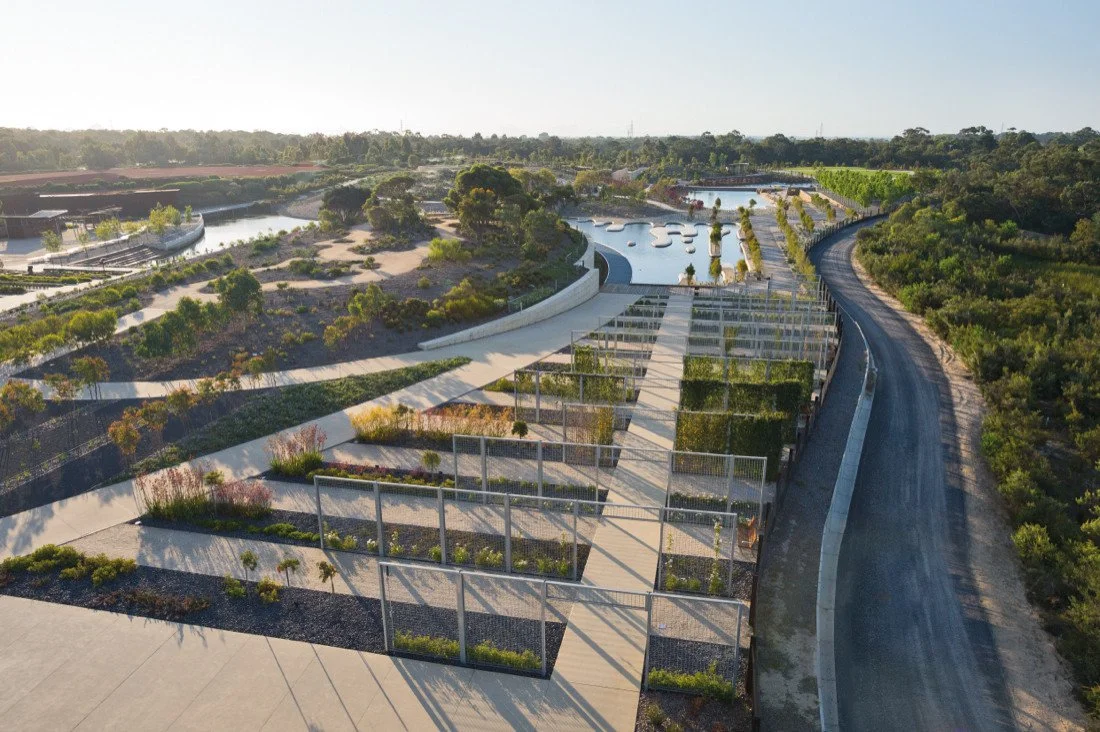
I spent over a decade lecturing in landscape architecture at RMIT and Melbourne Universities. Alongside that, I worked in high-level practice for 15 years, including managing the design and construction of The Australian Garden (Stage 2) at the Royal Botanic Gardens Cranbourne. That experience taught me that landscapes aren’t just spaces—they’re stories. And when shaped with care and intention, they influence how we live, how we connect, and how we feel.
After having children, something shifted. I was burnt out. I felt a strong pull to step back from large-scale work and begin to live the very things I had been designing and teaching for years. That desire became Oak & Monkey Puzzle—a 5-acre property in Spargo Creek that allowed me to bring together design, growing, teaching, and community in one living, evolving space. It marked the beginning of a slower, more intentional way of life—one grounded in the seasons, shaped by circumstance, and defined by a deep collaboration with the land.
That journey continues today at Little Cottage on a Hill, where I now explore how to distil all of those lessons into a much smaller space—and share them with others through writing, workshops, and teaching.
Does your property or garden have a name?
Yes, my current garden is called Little Cottage on a Hill. It’s just 515 square metres, but it’s a living prototype for everything I teach and share.
Before that, I spent nearly a decade at Oak & Monkey Puzzle—a 5-acre gold rush-era property in Spargo Creek. It was once the old post office, general store, and pub. That garden was my design laboratory, community hub, and sanctuary—and very much my foray into country living.
How would you describe your personal garden, and how long have you been creating it?
I began creating this garden in 2022, after we left Oak & Monkey Puzzle. It was a conscious decision—a deliberate downsizing. I wanted to see if I could distill everything I had learned on five acres into just over 500 square metres. What emerged is Little Cottage on a Hill—a small garden with big ambitions.
This garden is the next chapter in a life lived in close relationship with land and season. It’s small but mighty. A productive, seasonal, ever-evolving space that works hard to nourish my family and inspire others. The verge is planted; the driveway, a courtyard. The fences aren’t just boundaries—they’re frameworks for borrowed views and moments of respite. Here, beauty and utility are never mutually exclusive.
Even the smallest gesture—a path, a fence, a planting pocket—serves a purpose. It’s a space shaped by years of design thinking, scaled down but no less intentional. In many ways, this garden is a working prototype—one I share through my writing, workshops, and courses. It’s proof that you don’t need endless space to live abundantly. With careful planning, observation, and a relationship with the seasons, even the smallest plot can feed a life.
But Little Cottage on a Hill is more than just a garden. It’s a philosophy. It came to life in the wake of a personal reckoning during the pandemic. At the time, we were still living at Oak & Monkey Puzzle, and I’d spent nearly a decade transforming that place into a design laboratory and community hub. But when the world shut down, everything I had built suddenly felt hollow. The vibrant exchange that gave the property its energy was gone. And though I continued to share it through social media, it no longer felt meaningful in the same way.
And yet—something profound happened in that pause. When supermarket shelves were empty and uncertainty hung in the air, I realised that if I had access to soil, sky, water, and seed, I had everything I truly needed. That moment changed me. It made me reflect deeply on what matters, and how much is enough.
Letting go of Oak & Monkey Puzzle wasn’t easy. It had been my canvas, my gathering place, my refuge. But in stripping things back, I found something I hadn’t expected—clarity, calm, and a new kind of creativity. That shift in consciousness led me here, to a smaller space, a slower pace, and a deeper alignment with the life I wanted to live.
This garden carries the essence of everything that came before, but it’s also something entirely new. It’s grounded in simplicity, resilience, and beauty. It’s proof that a meaningful, abundant life doesn’t depend on scale.
My children have grown up alongside my gardens—first running barefoot through wide paddocks, now helping harvest from raised beds just steps from the kitchen. This space reflects not just who I am now, but who we are, together.
It’s the smallest garden I’ve ever had—but it’s where I feel the richest. It’s where I’m the happiest I’ve ever been.
Do you garden alone, or with the help of others?
For the most part, I garden alone. There’s a rhythm to it that I find deeply grounding—a kind of quiet companionship between myself and the plants, the soil, the shifting light. Those solo hours are when I observe, recalibrate, and plan—not just for the garden, but for life. It’s a moving meditation that keeps me tethered to the seasons and to myself.
That said, I’m no longer doing everything alone. After years—decades, really, of using my body so fully in both design and physical labour, I’ve begun to feel the quiet accumulation of effort. So now, every fortnight, Sage comes to lend a hand. They help with the larger jobs—edging, mulching, workshop prep, and the kinds of physical tasks that once came easily but now ask more of me.
But what began as a practical arrangement has grown into something more meaningful. I’m now mentoring Sage as they build the skills and confidence to start their own design consultancy, building on their already incredible gardening abilities. It’s a quiet, beautiful exchange: skills passed on, ideas explored, and the beginnings of a new chapter for someone else.
My children, now teenagers, will from time to time lend a hand, especially if there’s something to harvest. They’ve grown up in my gardens, from the sweeping terraces of Oak & Monkey Puzzle to the layered abundance of Little Cottage on a Hill. While they might not always leap at the chance to weed or plant, I know the garden has shaped them—gently, and profoundly.
The garden is a personal space, yes—but it’s also a communal one. There’s the wider circle: the people who visit during workshops, the conversations shared during garden walks, the questions asked and stories exchanged.
So while I often garden alone, I never feel alone in it. There’s connection in every task—in the soil, in the community, in the hands that help and the stories that grow alongside the plants.
What inspired you to plant the garden you have and how has it evolved from your initial ideas?
This garden began as an experiment. A question, really: How much beauty, abundance, and resilience can be created on a small footprint? After years of designing and tending five acres at Oak & Monkey Puzzle, I wanted to explore how those same principles—thoughtful spatial design, seasonal rhythms, productive planting—could be distilled into just over 500 square metres. What emerged was Little Cottage on a Hill.
It started with the intention of being a teaching garden. A way to show what’s possible when you work creatively with constraints. The verge is fully planted, the driveway doubles as a courtyard, vertical space is used for espaliers and climbers, and fences are positioned to frame views while offering privacy. It’s a garden full of small-space design strategies—but it’s also nuanced and layered. Practical and poetic. It had to work hard, but it also had to feel good.
Over time, it’s become less about showcasing and more about stewarding. Less of a model garden, and more of a living, evolving space that reflects both who I am and the life I want to lead. It changes constantly—responding to the climate, to the needs of my family, to ideas I’m exploring in my teaching or writing. I trial things all the time.
One of the best examples is the wicking beds—now one of my favourite ways to grow. They’re waterwise, eliminate the need for bending, and have proven outrageously productive. Since 9 January, I’ve harvested over 150kg of produce from just six 1x1m beds. It’s hard to overstate the impact that kind of abundance has in a small garden.
There’s also a quiet tension in the garden that I’ve come to appreciate. It’s both public and private. Parts of it are intentionally shared through workshops, photography, storytelling. And yet much of it remains just for us. It holds the dailiness of life: the moments before breakfast spent watering, the after-school harvests, the quiet pauses I take while walking the paths with a cup of tea in hand.
The original question still lingers, but it’s deepened over time: What do I want this space to offer? What can it hold? What does it ask of me in return? In that sense, this garden isn’t a finished project—it’s an ongoing conversation. And the longer I tend it, the more I understand that its purpose isn’t to be perfect, but to be alive.
What is your favourite way to spend time in your garden?
Early mornings and last light in the evenings are the times I value most. Before the day begins or as it winds down, I take a quiet walk through the garden—usually with a cup of tea in hand. I’m not there to do anything in particular. It’s more about observing. What’s thriving, what’s struggling, what might need doing in the days ahead.
It’s in these moments that I feel most grounded. The pace is slow, the garden is still, and I can take it all in without distraction. Sometimes I notice small things—a new leaf, a pest issue, a planting that’s doing better than expected. Other times it’s just the act of being in the space that brings clarity.
These quiet check-ins help me stay connected to the garden and to myself. They’re small but significant. They anchor the day—and often shape what comes next.
What has been the biggest adjustment to downsizing your garden?
Not being able to grow everything I once did—that was the biggest shift. At Oak & Monkey Puzzle, I had the space to experiment widely. There was room for everything: orchard zones, rambling perennials, indulgent trials. Downsizing meant letting go. Not just practically, but emotionally.
But with that came something unexpected: clarity. When space is tight, every decision matters. Every plant has to earn its place—whether for food, structure, habitat, or simply the joy it brings. Every corner must be considered, and that level of intentionality has brought a new kind of creativity.
Plants rarely get second chances here. If they’re finicky or not suited to the microclimate, they’re replaced. That’s not to say the garden is pared back to the point of compromise—it’s still full of character and incredibly special things. But I’m more pragmatic now. I no longer have the time or space to nurse plants along.
The focus is sharper. The palette is tighter. And yet, within those constraints, the garden still surprises me. Self-sown seedlings, natural shifts, moments of seasonal serendipity—those things still find their way in. I may guide it, but I’m never fully in control—and I wouldn’t want to be.
Do you have a favourite season in the garden and if so, why?
Autumn, always. The seedheads, the shifting tones, the softened light. It’s the season of gathering, preserving, and quiet reflection. The pace slows. The structure of the garden comes into focus. There’s a feeling of both abundance and closure that’s deeply satisfying.
But truthfully, I think every season becomes my favourite when I’m in it. They each bring something necessary. I’ve come to look forward to their return, knowing I won’t experience them again for at least another twelve months.
Even winter, which I initially found hard in this cool Central Highlands climate, now feels essential. A time for stillness, rest, and quiet planning. A time for taking stock.
This year, we’ve had an unusually long summer and autumn, and I’m curious to see what the rest of the year brings. The garden is never static. It’s always in conversation with the seasons, the weather, and the year’s unique temperament.
I’ve learned to welcome that movement. It reminds me that nothing stays the same—and that each season is fleeting, and full of its own kind of beauty.
What is one of the most important things you’d say you do in your garden’s maintenance?
Soil health. I believe in growing soil—tending to it, nourishing it, building it over time. It’s the foundation for everything else. Thriving plants, resilience in changing conditions, a rich and vibrant ecosystem… it all starts from the ground up.
I focus on building structure and supporting soil life. That means regular applications of homemade compost, organic matter, and mulch—things like pea straw, leaf litter, and seasonal trimmings. I rarely dig. I use no-dig or low-intervention methods that preserve the integrity of the soil and protect the microbial and fungal networks that support plant health.
This has been one of the areas I’ve learned the most about in recent years—thanks in no small part to the work of people like Matthew Evans and his book Soil, and Charles Dowding’s no-dig approach. Their insights reshaped how I think about soil as a living system, not a neutral medium.
Good soil is dynamic. And when you look after it, it looks after everything else. For me, that’s the most important part of garden maintenance, because when the soil is healthy, the rest tends to follow.
If you had to choose 3 plants to recommend to a new gardener, what would they be and why?
How do you stick to three? So here are five that I come back to again and again—both personally and in teaching others:
Hydrangea paniculata – A hardier hydrangea and a plant that earns its place in any garden. It offers months of interest: fresh summer blooms, autumn colour, and dried flower heads that carry its structure through winter. It’s generous, dependable, and incredibly rewarding for gardeners at any level.
Grasses—particularly Miscanthus and Calamagrostis – I often describe grasses as the framework of the garden. They offer movement, structure, softness, and seasonality. Calamagrostis ‘Karl Foerster’ and Miscanthus cultivars bring verticality and grace. They catch the light beautifully, especially in the cooler months, and offer year-round interest with very little fuss.
Garlic – It’s one of the most rewarding crops I grow. It doesn’t ask for much once it’s in the ground, but it does require patience and timing. It suits small spaces, works well in no-dig beds, and fits perfectly into my seasonal rhythms—planted in one season, harvested in another. When it’s pulled, dried, and stored, it keeps feeding us, friends and family for months to come.
Roses – I tend to grow old-fashioned, fragrant, repeat-flowering roses with big, expressive blooms. They thrive in tough conditions—and are still offering armfuls to bring indoors even after this long dry summer and autumn. I have a big vase next to my bed at the moment, and falling asleep to their scent is something I’ll never take for granted.
Echinacea – A plant I first grew at Oak & Monkey Puzzle, and one I’ve come to appreciate even more over time. I love it in all its stages: the upright blooms, the faded autumn tones, and the sculptural seedheads that persist through winter. It bridges ornamental, ecological, and medicinal value—beautiful to look at, vital for pollinators, and right at home in my collection of medicinal plants. It also has an inherent wildness that balances more structured plantings.
Each of these plants brings something different—structure, resilience, fragrance, generosity, or seasonality.
What plant has been high maintenance, but you feel is worth the effort?
These days, I’m pretty selective about what I bring into the garden. Space is limited, and I tend not to grow anything that asks too much of me. But some things still tempt me, especially when I visit the Friends of Wombat Hill Botanic Gardens Nursery.
The team of volunteers has such deep plant knowledge. I’m often encouraged to try something rare or unusual—and sometimes, despite my better judgement, I do. The enthusiasm is contagious, and the plants are often ones you won’t find elsewhere.
One plant I still have a soft spot for is the peony. Their flowering is fleeting—maybe three weeks if you’re lucky—but it’s utterly captivating. They ask for specific conditions: cool winters, alkaline soil, time to settle. They can be fussy. But when they bloom, they’re unforgettable.
In a small space, high-maintenance plants have to justify themselves. And every now and then, a peony does exactly that.
What plant do you dream of growing in your garden, that you’ve not yet acquired, or have struggled to grow?
Tree peonies. I’d love to grow them well again.
At Oak & Monkey Puzzle, I had a number of established plants—many of them gifted and transplanted from a much-loved older garden. Their flowering was always fleeting, but utterly exquisite.
Since moving, I’ve tried again. One didn’t make it. The other is still growing—ever so slowly, two years in, but holding on.
They’re definitely an exercise in patience. As the saying goes:
The first year they sleep, the second year they creep, the third year they leap.
I’m still waiting for the leap.
Do you have a favourite tree in the garden, and why?
In this garden, it’s the weeping birches (Betula pendula).
We were very lucky to inherit six with the property, and I absolutely love them. One in particular anchors the circular seating space in the front verge garden. Its form is soft and sculptural, its canopy dapples the light beautifully, and it brings a sense of maturity and grace to what is otherwise a relatively young and evolving garden.
One of the first things I did when we arrived was lift and shape its canopy through formative pruning. It had looked a little wild and heavy, slightly scrappy—but with a bit of attention, it’s become something of real beauty.
I’ve always been drawn to birches. They remind me of European gardens and the cool-climate landscapes I feel most at home in. I planted a forest of birches at Oak & Monkey Puzzle, so having them here feels like a quiet thread that’s carried from one chapter of my life to the next.
Do you have any sentimental plantings in the garden?
One planting that holds deep meaning for me is a clump of Lily of the Valley (Convallaria majalis), gifted to me by my children’s grandmother, Joscelyn.
It’s the same flower she brought to the hospital when my son Oliver was born—a delicately small and beautifully scented bunch. Ever since then, Lily of the Valley has been tied to his birthday in my mind. It flowers in spring, often right around that time.
Joscelyn passed away late last year, and having that planting in the garden now feels especially meaningful. It’s a connection not just to her, but to a moment in time, to my children’s family story, and to the kind of quiet legacy that gardens so often carry.
What has been the most inspiring book/books, podcasts or programs, for inspiring your own garden?
It’s hard to pinpoint a single favourite for this garden specifically. So much filters through as I design and imagine a space into being. Ideas, references, memories—they all seem to bubble up in layers.
These days, I work more intuitively. But a lifetime of learning continues to inform how I approach gardening, teaching, and design. Some influences are foundational, others ongoing.
Matthew Evans’ ‘Soil’ – This book changed the way I think about the ground beneath my feet. Evans brings soil to life as a living system—not just a growing medium, but the foundation of resilience, productivity, and environmental repair. It reaffirmed my belief that everything starts from the ground up.
Charles Dowding’s No-Dig Gardening – His approach to soil care through minimal disturbance aligns closely with how I garden. No-dig methods support soil biology, reduce weeding, and simplify seasonal rhythms. It’s a system that makes sense—and works.
James Corner’s work on landscape architecture – His writing on mapping and representation had a foundational impact on me during my studies and my years lecturing. He helped shift how I see and interpret space, not just as something to be measured, but as something to be read, inhabited, and worked with over time. I often share this in garden workshops, particularly when we talk about understanding a place before making design decisions. Design analysis isn’t just about recording—it’s about uncovering the invisible relationships that shape a site.
The Avante Gardeners Podcast – A brilliant and grounded podcast that brings together thoughtful conversation, practical advice, and a sense of community. It reflects the kind of real-world gardening dialogue I value.
The Futuresteading Podcast by Jade Miles – Jade’s work around seasonal living, food growing, and values-based choices echoes much of what I practice and teach. Her interviews often offer the kind of clarity and encouragement that reaffirm this way of life.
Monty Don – I’ve followed Monty’s work since my late teens. His honesty, depth of knowledge, and clear love for gardens has always resonated. But what’s influenced me most is his global lens. Through series like Around the World in 80 Gardens, he shows how gardens reflect culture, identity, and place. That changed how I saw gardening—not just as an activity or profession, but as a deeply human, expressive act tied to where we live and who we are.
Are there gardens or gardeners, other garden designers that inspire you?
So many—it’s hard to land on just a few.
Piet Oudolf – I admire his commitment to designing gardens that evolve across the seasons. He treats every stage of a plant’s life cycle as worthy of attention—bloom, seedhead, and decay alike. His use of form and repetition creates structure, but it’s the way he works with nature, the seasons, and cycles—rather than against them—that resonates most with me.
Fiona Brockhoff – A long-standing influence. Her gardens respond honestly to site, climate, and architecture. She uses local materials and native plants with confidence and clarity. Her work always feels grounded, distinctly Australian, without being nostalgic.
Tim Pilgrim – Tim’s planting style is naturalistic, layered, and expressive. There’s a softness and rhythm in his gardens that allows the landscape to speak for itself. He has a deep understanding of seasonality and restraint, and the balance he strikes between structure and ease is no small feat.
Alasdair Cameron (Cameron Gardens) – His gardens are generous and refined, always responding to the broader environment. He blends horticultural skill with a sensitivity to place, crafting spaces that are both practical and emotive. I particularly admire the way his plantings evolve with time—there’s movement and maturity in how they grow.
Stefano Marinaz – Stefano’s work with small gardens is especially compelling. His designs are layered, immersive, and clearly intended to be lived in, not just admired. Even in urban sites, he finds ways to invite in biodiversity and embed sustainability in subtle but meaningful ways. His South Kensington courtyards are a masterclass in compact generosity.
Lily Langham – A dear friend, local, and someone whose work I return to often. Her gardens are immersive, full of texture, detail, and a layered wildness that feels both curated and intuitive. She has an extraordinary eye for plants—rare and interesting selections that sit comfortably alongside the familiar. Her commitment to biodiversity is quiet but powerful. These are gardens you inhabit slowly. Beyond the planting, she’s also someone who thinks deeply about how gardens are lived in, not just how they look. I spend a lot of time in her garden, and it never ceases to teach and inspire.
Taylor Cullity Lethlean (T.C.L.) – Having worked with T.C.L. for a decade before my tree change, their approach remains one of the most formative influences on how I see and shape space. Their work places people at the centre of the landscape experience—integrating movement, memory, and narrative. Their commitment to placemaking, strong design principles, and poetic interpretation of site continues to inform my work. Projects like The Australian Garden at Cranbourne, which I had the privilege of contributing to, embody this layered, place-specific design philosophy.
What do you want to feel or others to feel when they visit your garden?
I want people to feel something shift. Even just slightly. A softening. A grounding. A reminder that there’s richness in the everyday, in the seasonal, in working with what you’ve got.
I hope they leave with a sense of possibility, not in a romantic or faraway sense, but the kind that lives right under your feet. That a garden, however small, can hold beauty, abundance, practicality, and meaning all at once. That you don’t need acres. You just need intention.
This garden is full of solutions—real, practical ones—for making a small space work hard. It’s thoughtful, layered, and honest about what’s possible when you apply design thinking to a limited footprint.
But it’s more than that. It’s a kind of living case study. A scaled-down, built-by-hand expression of everything I explored at Oak & Monkey Puzzle. It’s a testing ground. A prototype. A place to try, refine, observe, and try again.
It’s never been about perfection. It’s about being present. Being alive to the seasons. And understanding that gardens, like us, are always evolving.
And while the space is mine, I’ve always wanted it to feel shareable. When people walk through the gate, I want them to feel welcome. I want them to see the underlying structure, the systems, the generosity in the planting—but also the gentle reminder: you can do this too. On your own terms, in your own way. It doesn’t have to be magazine-perfect to be meaningful.
If people leave feeling calmer, more curious, more confident, or more connected to something they’d forgotten, then the garden has done its work.
What do you think makes a successful garden?
A successful garden for me is one that gives back. That supports life—human, plant, and animal. That feeds, shelters, and offers something in return to the place it belongs to.
It doesn’t need to be perfect. In fact, perfection is rarely the goal. A successful garden evolves with its gardener. It responds to climate, soil, capacity, and care. It adapts. It endures.
There’s a deep satisfaction in walking through a garden that’s both beautiful and useful. Where structure and softness sit side by side. Where there’s room for mess, for self-seeding, for seasonal change.
To me, success lives in the garden’s small, consistent contributions—feeding a household, supporting pollinators, holding space for rest and reflection.
If it nourishes, restores, and invites you to return again and again, it’s doing more than enough.
What impact has the garden, and being in the world of gardens, had on you?
Gardens have always been part of my life. So it’s hard to say whether they’ve changed me, or whether I’ve simply grown into who I already was, through them.
I don’t see myself as separate from the garden. I feel intrinsically bound to plants and soil. The garden isn’t something I step into and out of—it’s where my thinking happens, where my values play out, and where my way of life takes shape.
It’s also where I find my contentment. My validation doesn’t come from external approval—it comes from presence. From noticing the way light catches the seedheads of Miscanthus in the last hour of the day. From seeing sweet peas push through the soil with the quiet promise of fragrance to come.
It’s in those small, almost invisible moments that I feel most sure of this path, not just the one I’ve chosen, but the one I’ve been called to.
There’s magic in the simplicity of it all. The alchemy of placing a seed or a cutting in the soil and watching it take on shape, form, and life of its own. That quiet unfolding reminds me, every day, what matters. And what’s worth tending to.
What would you say is your most memorable or proud moment as a gardener/garden designer?
This one’s definitely a no-brainer—but it’s not just one moment.
The first would have to be seeing Oak & Monkey Puzzle come to life. It began as a derelict old homestead and tree stumps, and blackberries, and over time it became something far greater than I imagined—a home, a productive garden, and a place that brought people together. It became a hub for workshops, long-table events, and shared learning. What makes me most proud isn’t just what I created physically, but how it allowed others to feel nourished, inspired,and connected.
The second is what I’ve created here at Little Cottage on a Hill. Taking everything I learned on five acres and distilling it into just over 500 square metres was both a challenge and an exciting invitation. I wanted to prove that you don’t need scale to live well. This garden is as much about how I live as it is about what I grow. It’s a place where beauty and utility sit side by side—and being able to share that through writing, teaching, and everyday experience has been one of the most meaningful parts of my life.
And if I look ahead, I hope my next proudest moment will come with the release of my book in September 2026. It’s a big project—one that brings together decades of learning as a landscape architect, lifelong gardener, teacher, and mother. My hope is that it finds a place in every gardener’s library, no matter their level of experience.
A book that’s returned to—useful, generous, inspiring, and practical. Something equally at home on the potting bench or the bedside table. Something that not only inspires and shows what’s possible, but also how to begin. A book that helps people create gardens that are not only beautiful and abundant, but that truly support the way they want to live.
Want more like this?
If you enjoy this kind of reflection—woven with seasonal insight, practical tips, and personal storytelling—I share a monthly newsletter direct from Little Cottage on a Hill.
→ Share this blog with your friends and gardening allies to spread the love and knowledge.
→ Sign up for the newsletter to stay up-to-date on upcoming workshops, garden tips, and exclusive updates from Little Cottage on a Hill.
Thanks, as always, for being here…
Natasha xx
For glimpses into workshops, daily life, and my thoughts from Little Cottage on a Hill, you can find me on Instagram, Facebook, LinkedIn, and YouTube. And if you’d like a more personal update, subscribe to my Newsletter for a monthly note on what’s growing, what’s inspiring me, and what’s next.
Click the links below to stay connected—I’d love to have you along for the journey.
The Garden Remembers You
Sandy McKinley of Acre of Roses, has been part of my world for a long time now. She picked me a ute-load of roses from Acre of Roses for the very first floristry workshop I held at Oak and Monkey Puzzle in 2016. I’ll never forget it—my old red ute overflowing with those fragrant, full-petalled blooms, a gesture that said so much without needing to be said at all. That kind of generosity is just who she is.
Since then, we’ve woven in and out of each other’s lives in that easy way old friends do. We check in every few months—small business chats, big-picture questions, laughing at the chaos and complexity of it all. We’ve run workshops together, leaned on each other in the quieter seasons, and shared a belief in what the garden gives us when we’re paying attention.
Sandy’s writing, like her garden, holds a stillness that invites you in. There’s no instruction manual here—just an offering. A reminder that tending the land is also a way of tending yourself. Her words speak to something I think so many of us feel but struggle to name: the way a garden can hold us when the rest of the world asks too much.
I’m honoured to share her piece, The Garden Remembers You, here on the blog. Alongside it, you’ll find a series of photographs taken recently at Acre of Roses by Amber Gardener (@itsnaturalight). Amber and I met just a few weeks ago at Lean Timms’ photography workshop at Babbington Park, so it feels beautifully full-circle to bring her work into this space too.
The Garden Remembers You
By Sandy McKinley
There is a rhythm in the garden that doesn’t follow the clock.
It’s in the way dew clings to rose petals just after dawn, how birdsong echoes through the mist before the world is awake, and how time itself begins to soften when your hands are deep in rich, cool soil. It is in these moments—barefoot, breathing, becoming—that the garden becomes something far greater than a place to grow things. It becomes a sanctuary. A remembering. A way home to ourselves.
Acre of Roses was never simply a business. It was born from the ache of overextension, from years of striving, achieving, overcommitting—until my body, and my spirit, asked me to stop. Not slow down—stop. And in that stillness, I began again. I turned to the earth, and she turned toward me.
The first rituals were small: writing in a journal while surveying the garden in the early morning light. Sipping a warm tea brewed from the Apothecary Garden’s herbs. Lighting a beeswax candle at dusk as the day began to exhale. Gathering rose petals to infuse in a batch of water kefir—soft, floral, and gently effervescent, a tonic for body and soul. These weren’t grand gestures, but grounded, repetitive acts of care that tethered me to the moment, to place, and to myself.
And I wasn’t alone in this return. Rob Roy—my husband and partner in all things rooted and real—was beside me. Where I found healing in scent, soil, and stillness, he found his rhythm in building, restoring, and shaping beauty from the bones of old structures and salvaged materials. His hands laid the pathways through the rose rows, designed to gently store the heat of spring and coax early blooms. Together, we wove something living. Not just a garden, but a place for others to arrive and exhale.
I began to notice how my nervous system recalibrated with the scent of lemon balm, how May Chang lifted the heaviness in my chest, and how simply brushing against the Miscanthus in the wind felt like being sung to.
Gardens teach presence without preaching it. You cannot rush a rose into bloom, nor will a perennial flower on demand. And so we attune ourselves to their tempo. To the slow push of new shoots. To the decay and letting go of autumn. To the hush of winter, which is not death but restoration. Dormancy is survival. The garden knows.
To me, tending a garden is one of the most radical acts of self-restoration. It is sensual, in the truest sense of the word. Through scent, sound, texture, and temperature, we are drawn back into the body. Back into the breath. It offers us the precious invitation to feel without needing to fix.
At Acre of Roses, guests often arrive tightly wound. I see it in their shoulders, their hurried questions, their need to fill the quiet with plans. And then—something shifts. Sometimes it’s in the cedar hot tub under the stars. Sometimes in the quiet rhythm of swinging gently in cane chairs on the veranda, watching the bees and butterflies dance through shafts of light in the late afternoon garden. Often, it’s in the first truly deep breath taken while wandering through the rose farm at dusk. We call it the Trentham Shrug—that moment when the body remembers it can release.
In this way, the garden is both mirror and medicine. It reveals what’s ready to fall away and what might want to grow next. It reminds us that abundance does not mean more—it means enough. Enough light. Enough water. Enough stillness.
So let this book be your companion as you rediscover your own rituals. As you coax tomatoes from warm beds or tend a single lavender on your windowsill. As you press herbs between pages, or simply press pause.
You don’t have to do it all. The garden doesn’t ask for perfection. It asks for presence.
And in return, it offers us what the modern world so often withholds: silence without loneliness, work without rush, and a path back to wholeness.
A little note before you go
Sandy’s words aren’t just a guest post—they’ll also appear in my upcoming book, which I’m currently writing and will be released by Murdoch Books in September 2026.
I asked Sandy to contribute to the book because what she wrote here—about restoration, rhythm, the quiet rituals that shape a day—reflects so much of what I believe and value.
As I shift into a slower season of writing, I’ll be pausing in-person workshops for winter. But I’ll still be here—sharing garden notes, behind-the-scenes glimpses, small updates from the writing desk, and moments that don’t quite fit anywhere else.
Enjoyed this blog?
→ Share this blog with your friends and gardening allies to spread the love and knowledge.
→ Sign up for the newsletter to stay up-to-date on upcoming workshops, garden tips, and exclusive updates from Little Cottage on a Hill.
Thanks, as always, for being here…
Natasha xx
For glimpses into workshops, daily life, and my thoughts from Little Cottage on a Hill, you can find me on Instagram, Facebook, LinkedIn, and YouTube. And if you’d like a more personal update, subscribe to my Newsletter for a monthly note on what’s growing, what’s inspiring me, and what’s next.
Click the links below to stay connected—I’d love to have you along for the journey.
Feijoas: A Hedge That Earns Its Keep
I can’t tell you how thrilled I was when I saw the first feijoas on the ground this week. Just a few, nestled into the gravel under my hedge. But that’s how you know—they fall when they’re ready. No guesswork. No squeezing or poking. Just a gentle drop and the most incredible scent wafting up when you lean in close.
This hedge of mine was planted about a year and a half ago—still only around a metre high—but it’s already started producing. Here, everything in the garden has to work hard, even the hedges. So when one starts gifting much-anticipated fruit like this, it literally stops me in my tracks.
It’s not just a productive hedge either—it’s one of the many design devices at work in my small garden. Eventually, when it reaches around 2 metres tall, it will do what I planted it to do: screen out the neighbouring rooftops that currently interrupt my line of sight to Daylesford’s rolling hills. That’s the goal. A living screen that brings fruit, privacy, softness, and structure all at once.
Even though I live right in town on a small block, this hedge will eventually create the ‘illusion’ that I’m tucked away in the country. That moment—afternoons on the verandah, cuppa in hand, hills stretching out beyond, and little-to-no sight of neighbouring rooftops—feels just within reach now. It’s these layered, multifunctional elements that I think make a garden sing.
I’ve always loved feijoas, eaten fresh, cut in half with the pulp scooped out with a spoon, but the turning point was a galette from Two Fold Bakehouse. I’ll never forget it. Roasted feijoas, still in their skins, paired with apple and wrapped in Alison’s sourdough pastry. It absolutely blew me away. I hadn’t tasted feijoas like that before—soft, perfumed, almost spiced without anything added. I literally haven’t stopped thinking about it since.
What Makes a Feijoa Worth Growing?
Feijoas are one of those trees that quietly pull their weight. Evergreen, drought-tolerant once established, fire-retardant (which matters out here), and fruiting at the tail-end of the season—just when the apples are finishing and the garden starts to exhale.
I first came across the idea of a ‘fedge’—a feijoa hedge—through the team at Milkwood. It stuck with me. The practicality of it. A windbreak that feeds you. Shelter for a veggie patch or a chicken run. Pollination support if you plant a few different varieties close together. And that slow daily shuffle when the fruit starts dropping—bending down, collecting them one by one. It’s the sort of rhythm I love.
They’re slow to start, but once they do, they don’t muck around. As Milkwood puts it: “When feijoas fruit, they really, really fruit.” You’ll have more than enough for fresh eating, sharing, and preserving.
A Few Tips From the Patch
Planting: If you’ve got room, plant more than one. Some are self-pollinating, but many need a mate to produce well. I have 7 in a row.
Spacing: 1.5 metres apart is ideal for a fedge. I was impatient and planted thema little closer for faster ‘filling-out’.
Flowering: The petals are edible—sweet and sherbet-like. We always try a few at the very start of the season in anticipation of what’s to come, but go easy if you want a proper fruit set - no flowers, means no fruit!
Harvesting: Don’t tug them off the tree. If they’re ready, they’ll fall. That’s your cue.
And if you’re wondering what to do with a glut—don’t peel them. Trust me. And trust Milkwood. Roast or stew them skins-on, jam them with fig and ginger, or try your hand at a fermented soda, syrup or shrub.
For the Love of Feijoas
There’s something about them that feels old-world and underappreciated. I’m always amazed how many people don’t know what they are. Or worse—grow them for hedging and don’t pick the fruit. It’s a quiet sort of abundance. The sort that asks for a bit of observation. A bit of seasonal noticing. Which suits me just fine.
Would I plant a feijoa hedge again? Absolutely. It’s not just about the fruit—it’s the feeling of walking out into the garden, finding something unexpected, and being reminded why you planted it in the first place. And for me, it’s also the promise of those uninterrupted views—when the feijoas finally meet the horizon and I feel like it’s just me and the hills.
And if anyone reading this has a galette-worthy feijoa recipe—or another way to roast them whole—I’d love to hear it.
Local Love: Two Fold Bakehouse
The galette that made me fall in love with roasted feijoas came from Two Fold Bakehouse—a small home bakery here in Daylesford that quietly does extraordinary things.
Two Fold bakes naturally leavened, organic loaves using stoneground flours and works with the seasons, letting what’s growing locally shape what’s baked. But their bread is about far more than bread—it’s about relationships. Farmers in wheat fields, millers milling, bakers folding, and community gathering. Their commitment to regenerative agriculture and a local grain economy is felt in every bite. I feel fortunate that I can call the super humble sourdough baker extraordinaire, Allison, a dear friend.
You can buy their bread via:
Thursday Bread (weekly) – order online for pick-up in Daylesford, Yandoit or Kyneton
Daylesford Sunday Railway Market – every second Sunday
Hepburn Wholefoods Collective – fresh loaves every Thursday from 3pm
Join her mailing list – to find her latest news and wholewheat sourdough baking workshops
I love what she stands for—and I’m endlessly inspired by what Allison creates.
Further Reading
I highly recommend Milkwood’s guide to feijoas—practical, generous, and full of the good kind of seasonal wisdom.
You may want to check out my related content below:
From Fumigation to Flavour: What Happens to Imported Garlic Before It Reaches You – Explore the journey of garlic before it makes it to your kitchen in this insightful blog post.
Fermenting Garlic: A Recipe for Resilience – Learn how fermenting garlic can enhance its flavour and shelf life, while building resilience in your kitchen.
Enjoyed this blog?
→ Share this blog with your friends and gardening allies to spread the love and knowledge.
→ Sign up for the newsletter to stay up-to-date on upcoming workshops, garden tips, and exclusive updates from Little Cottage on a Hill.
Thanks so much for following along,
Natasha xx
For glimpses into workshops, daily life, and my thoughts from Little Cottage on a Hill, you can find me on Instagram, Facebook, LinkedIn, and YouTube. And if you’d like a more personal update, subscribe to my Newsletter for a monthly note on what’s growing, what’s inspiring me, and what’s next.
Click the links below to stay connected—I’d love to have you along for the journey.
Green Manure - The Soil-Building Secret Most Gardeners Overlook
Green manure is one of the quiet achievers in my garden — and one of the most effective tools in my artillery. I’ve returned to it time and again to restore structure in compacted beds, improve soil biology, and give tired ground a season to rest and recharge.
Sometimes called cover crops, living mulch, or catch crops, green manure refers to fast-growing plants sown not for harvest, but purely for the benefit of the soil. Once they’re established, you cut them down before flowering and either dig them in or let them break down naturally on the surface.
It’s a beautifully simple process — and one that has the potential to completely transform the productivity and resilience of your garden.
What Does Green Manure Actually Do?
Green manure works on many levels at once. It:
Improves soil structure by breaking up compacted or heavy soils
Feeds the soil by adding organic matter as it breaks down
Fixes nitrogen through legumes like vetch, field peas and clover
Suppresses weeds with dense ground cover
Protects against erosion by shielding bare soil
Holds moisture and supports soil microbes
Some crops, like mustard and marigold, even act as biofumigants — naturally suppressing nematodes and soil-borne diseases. It’s a gentle but powerful way to build healthier soil from the top down.
What to Grow (and When)
The best green manure crops for your garden will depend on your climate and the time of year. Here’s a quick guide I use in my own garden in cool-temperate Victoria:
Cool-season crops (autumn–early spring):
Field peas (Pisum sativum subsp. arvense) - also known as dun peas or forage peas
Broad beans (Vicia faba) - also known as fava beans or tick beans
Woolly pod vetch (Vicia villosa) - sometimes called hairy vetch or winter vetch
Mustard (Brassica juncea, Sinapis alba) - often sold as white or brown mustard, and used as a biofumigant
Grazing rye (Secale cereale) - also known as cereal rye or winter rye — not to be confused with ryegrass
Oats (Avena sativa) - sometimes referred to as forage oats or cover crop oats
Warm-season crops (spring–summer):
Buckwheat (Fagopyrum esculentum) - also known as Japanese buckwheat or summer cover crop
Cowpea (Vigna unguiculata) - sometimes called black-eyed pea or forage cowpea
Soybean (Glycine max) - also referred to as soya or summer legume green manure
Millet (Panicum miliaceum, Setaria italica) - includes Japanese millet, French white millet, and foxtail millet
Lablab (Lablab purpureus) - also called hyacinth bean or dolichos lablab
Marigold (Tagetes spp.) - including French marigold and African marigold; used as a natural pest deterrent
You can grow them as single species or in combination. I often mix oats for structure, legumes for nitrogen, and mustard to help manage pests — that balance seems to support the soil from all angles.
How to Grow Green Manure
It’s easy to incorporate green manure into your rotation — whether you’re preparing a new garden bed or resting an existing one.
Clear any weeds or spent crops
Broadcast your seeds thickly and evenly
Lightly rake or cover with a layer of compost
Water well and keep moist during germination
Cut back just before flowering (6–10 weeks, depending on crop)
At this point, you can either dig the plants into the soil or, as I do, cut them down and let them become a green mulch. Over time, the roots decompose in place, creating beautiful pathways for air, water and life below the surface.
Dig or No-Dig?
The traditional method is to slash the crop and dig it in. This speeds up decomposition and releases nutrients for the next planting.
In my garden, I do things a little differently. After a slow and thoughtful shift to no-dig practices, I now cut green manure crops at the base and leave the roots to decompose in place. The tops are laid as mulch, often with compost on top, and the bed is left to rest until the next planting. It’s a slower process, but I’ve found it strengthens the soil in the long term — especially in areas with compacted clay.
Things to Keep in Mind
Cut before flowering: If you leave them too long, they’ll go to seed and could become weedy.
Allow time: Depending on your method, it can take a few weeks before the bed is ready to plant again.
Monitor slugs: The lush growth can shelter them, especially in cooler months.
Choose manageable crops: Some, like rye, can be tough to slash and slow to break down.
Green manure might not be the most glamorous feature of a garden, but it quietly supports everything else. It’s a gentle investment in the long-term health of your soil — something I’ve come to deeply value in my own journey as both a grower and a designer.
Used thoughtfully, it can be one of the most regenerative things we do in the garden. One season’s cover crop can lay the foundation for years of thriving productivity.
Keen to learn more?
I’d love for you to join me at The Productive Garden Workshop, where I’ll walk you through the principles of productive garden design—green manure included! Together, we’ll explore how to nurture your soil, boost your garden’s resilience, and create something truly abundant. I can’t wait to share these practices with you and help you build a garden that thrives season after season.
If you’d like to experience life here and this incredible space first-hand, I’d love to welcome you to one of my upcoming workshops. Come and walk the garden, learn something new, and connect with others creating lives rich in beauty, practicality and purpose.
Explore my workshops:
~ The Productive Garden with Natasha Morgan – Learn how to grow abundantly, no matter your space.
~ Garden Design with Natasha Morgan – Craft a garden that balances structure, beauty, and functionality.
~ The Wicking Bed Garden with Natasha Morgan – Build a self-watering, water-wise garden for effortless growing.
~ Preserving The Seasons with Natasha Morgan – Capture seasonal flavours with time-honoured preserving techniques.
~ Introduction to Backyard Chicken Keeping with Saffron and Natasha – Learn how to raise happy, healthy chickens at home.
You may want to check out my related content below:
Soil Testing: Know Your Soil – Understand the importance of soil testing and how it can improve your garden’s productivity in my latest blog post.
Watering Deeply: The Key to Thriving, Resilient Plants – Watch my Instagram post for tips on how deep watering can help your plants thrive and become more resilient.
Explore both for a deeper understanding of garden care!
Thanks so much for reading and for sharing this garden journey with me.
Natasha xx
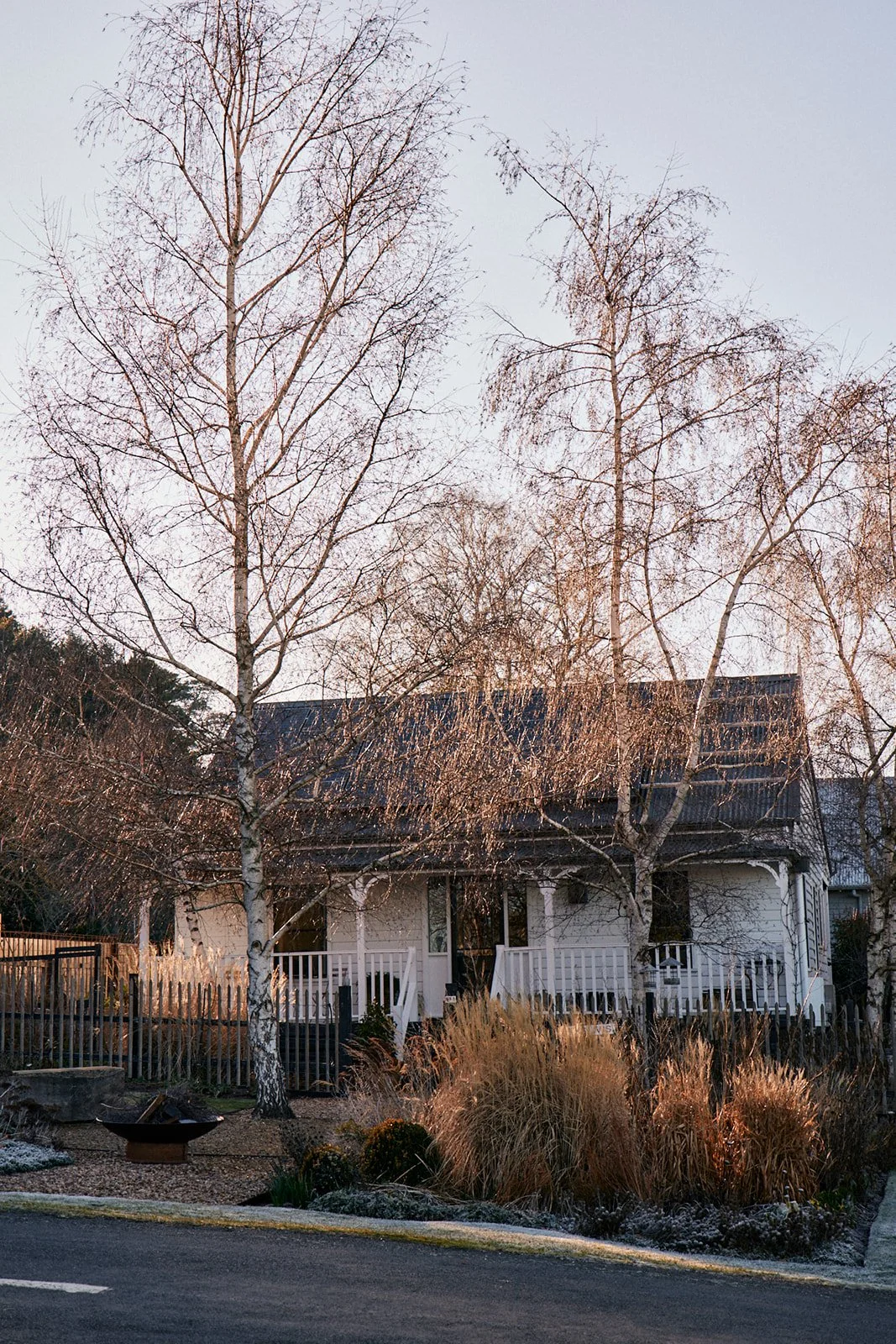
For glimpses into workshops, daily life, and my thoughts from Little Cottage on a Hill, you can find me on Instagram, Facebook, LinkedIn, and YouTube. And if you’d like a more personal update, subscribe to my Newsletter for a monthly note on what’s growing, what’s inspiring me, and what’s next.
Click the links below to stay connected—I’d love to have you along for the journey.
How to Plant Garlic in Australia: A Practical Guide for Every Climate
Garlic is one of the most satisfying crops to grow. It doesn’t take up much space, it stores well, and once you’ve had homegrown garlic, the supermarket version just doesn’t compare. It’s stronger in flavour, fresher, and you know exactly how it’s been grown.
This guide walks you through how to grow garlic at home in Australia—step by step—with practical, seasonal insights and the science behind those long-held planting traditions.
When Should You Plant Garlic in Australia?
There are two main planting windows people follow across the country:
1. March to May (autumn)
2. The winter solstice (around June 21)
Both can work well depending on your location, variety, and soil conditions.
In cool and mountain regions (like parts of Victoria, Tasmania, and the southern highlands), planting anytime from March to May gives your garlic time to establish roots before winter. Some gardeners prefer the tradition of planting on the shortest day of the year, allowing the bulbs to stay dormant through winter and take off once spring arrives.
In temperate and subtropical regions, earlier planting (from March) gives the garlic a head start before cooler days set in. The autumn equinox (around March 20–21) is often used as a reference point.
In tropical climates, garlic needs a bit more help—specifically cold treatment. You’ll need to vernalise your cloves by storing them in the fridge for 4–6 weeks before planting. Choose varieties suited to warmer conditions and be aware that bulb development can be less reliable in consistently warm climates.
Softneck vs Hardneck Garlic: What’s the Difference?
• Softneck garlic (e.g., Artichoke, Silverskin, and Subtropical): Stores well, ideal for warmer climates, produces more cloves per bulb.
• Hardneck garlic (e.g., Turban, Creole): Suited to colder climates, often easier to peel and more complex in flavour, but doesn’t store quite as long.
Ask your local grower or seed supplier what’s worked in your region—they’ll usually know what varieties are best suited to your conditions.
How to Plant Garlic: Step-by-Step
1. Prepare your soil
Garlic thrives in well-drained, fertile soil, ideally with a pH between 6.0 and 7.0. Dig through compost or well-aged manure and ensure good drainage—raised beds are great for this.
2. Break the bulbs into cloves
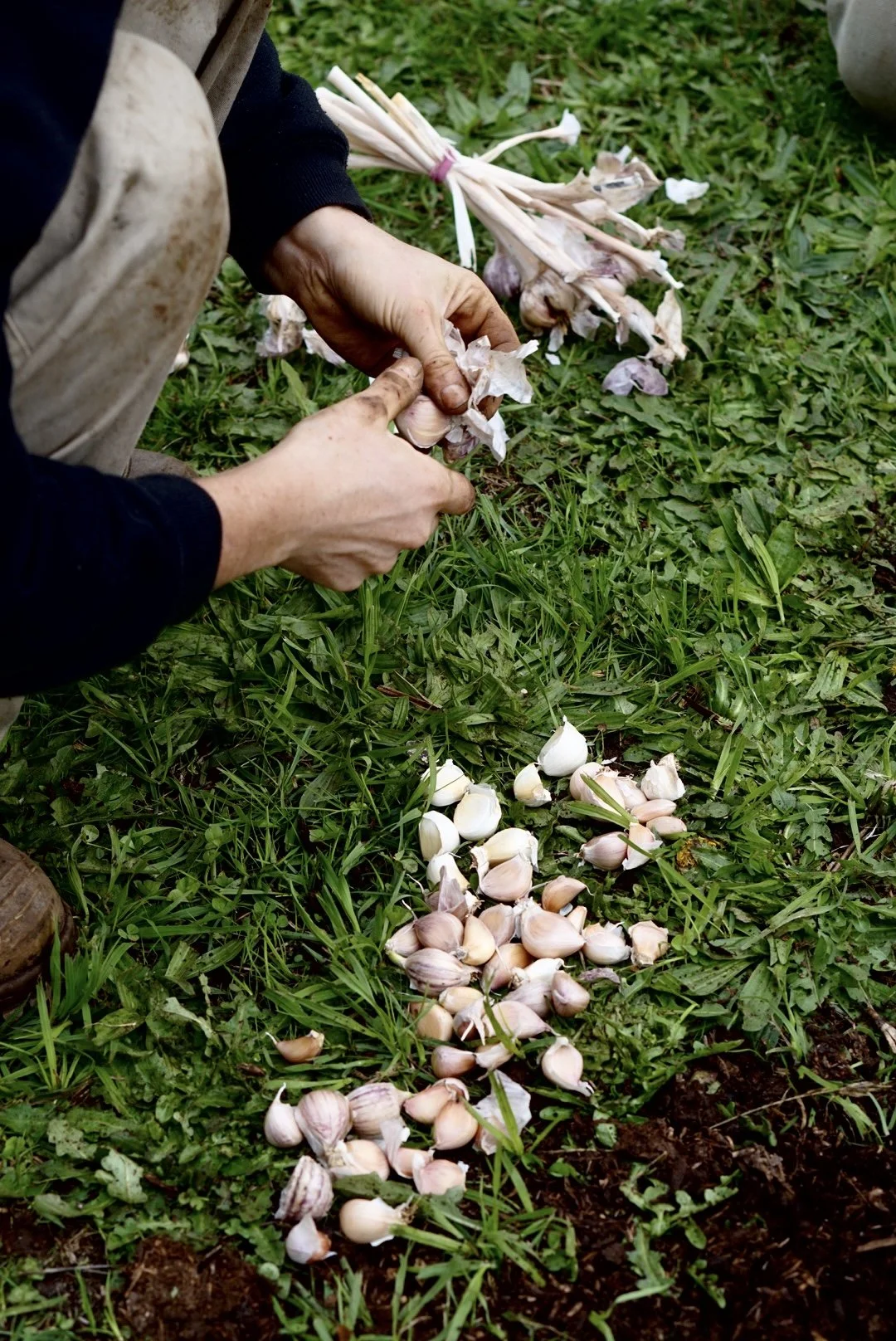
Use the largest, healthiest cloves. Leave the skin on and don’t peel them. Do this just before planting to prevent drying out.
3. Plant pointy end up
• Depth: 5 cm
• Spacing: 10–15 cm between cloves, 20–30 cm between rows
4. Water in well and mulch
Mulch with straw, sugarcane or lucerne to suppress weeds, retain moisture, and stabilise temperature.
Caring for Garlic as It Grows
• Water consistently during active growth, especially in spring. Ease off once the leaves start to yellow.
• Feed with diluted seaweed solution or compost tea every 4–6 weeks during the growing season.
• Weed regularly—garlic doesn’t like competition, and mulch will help reduce weed pressure.
Harvesting Garlic
Garlic is usually ready around 17–25 weeks after planting.
You’ll know it’s time to harvest when:
• The bottom leaves are yellow or brown
• The top few leaves are still green
Don’t wait until the whole plant dies back—you risk splitting or rotting in the ground.
To harvest:
• Gently loosen the soil with a fork
• Pull the bulbs carefully by the stem
• Shake off excess soil (don’t wash)
• Lay out in a shaded, well-ventilated area to dry
Curing and Storing Garlic
Cure your garlic for 2–3 weeks in a dry, airy place out of direct sun—this helps it store well.
Once cured:
• Trim the roots
• Cut stems to your preferred length, or braid if softneck
• Store in mesh bags or baskets in a cool, dry place—never in the fridge (unless you’re vernalising for next season)
Where to Buy Garlic for Planting in Australia
Avoid supermarket garlic—it’s often imported, fumigated, and treated to stop sprouting.
Here are trusted Australian sources for quality planting garlic:
1. The Diggers Club
Heirloom, seasonal garlic varieties for different climates.
2. Green Harvest
Certified organic garlic, with growing tips and regional suitability.
3. The Seed Garlic Shop
Specialises in diverse, locally adapted garlic varieties.
4. Garlic Kingdom Australia
Over 50 regeneratively grown garlic varieties.
5. Tooley Garlic (VIC)
Disease-free planting garlic with limited national shipping.
6. Local Farmers’ Markets
A fantastic place to find garlic suited to your specific region. Many stallholders will sell garlic for planting and happily offer tips. Ask about variety, harvest time, and whether the garlic is untreated. It’s also a great way to connect with your local food community.
🌱 Pro tip: The best time to buy seed garlic is late summer to early autumn, before the season’s planting stock sells out.
Side Note: Can You Plant Garlic Under Tomatoes?
If you’re tight on space, or working with a productive kitchen garden, you might be wondering whether garlic can be planted under your tomato plants toward the end of the season.
The answer is yes—and it’s actually a smart move.
If your tomatoes are starting to wind down with the first frosts approaching, planting garlic underneath them now makes excellent use of timing and space. Tomatoes will soon be finished, and their mature root systems won’t interfere much with the young garlic cloves. Once you remove the tomato plants—either by lifting them or cutting them off at the base—you’ll have your garlic already in place and growing steadily.
Tip: Cutting tomato plants at the base and hanging them upside down is an old-school way to allow the last fruit to ripen off the vine—without disturbing the garlic you’ve just planted underneath.
This kind of succession planting is ideal in smaller gardens. It keeps your beds working efficiently while also allowing you to stagger harvests. And if you’re resting other beds with a green manure crop, like I often do, this balance between productivity and renewal is what keeps the garden thriving year-round.
Why I Grow My Own Garlic
There’s nothing quite like growing your own garlic—from selecting the cloves to harvesting and hanging your crop to cure. Once you’ve experienced the flavour, freshness and satisfaction of growing it yourself, you won’t go back.
You know exactly what’s gone into it (and what hasn’t). It becomes part of your pantry, your garden rhythm, and your seasonal calendar. It’s a small act of self-reliance that makes a real difference.
And if you’d like to explore more ways to grow for abundance—without chemicals, overwhelm, or waste—I cover all of this and more in The Productive Garden workshop.
If you’d like to experience life here and this incredible space first-hand, I’d love to welcome you to one of my upcoming workshops. Come and walk the garden, learn something new, and connect with others creating lives rich in beauty, practicality and purpose.
Explore my workshops:
~ The Productive Garden with Natasha Morgan – Learn how to grow abundantly, no matter your space.
~ Garden Design with Natasha Morgan – Craft a garden that balances structure, beauty, and functionality.
~ The Wicking Bed Garden with Natasha Morgan – Build a self-watering, water-wise garden for effortless growing.
~ Preserving The Seasons with Natasha Morgan – Capture seasonal flavours with time-honoured preserving techniques.
~ Introduction to Backyard Chicken Keeping with Saffron and Natasha – Learn how to raise happy, healthy chickens at home.
You may want to check out my related content below:
From Fumigation to Flavour: What Happens to Imported Garlic Before It Reaches You – Explore the journey of garlic before it makes it to your kitchen in this insightful blog post.
Fermenting Garlic: A Recipe for Resilience – Learn how fermenting garlic can enhance its flavour and shelf life, while building resilience in your kitchen.
Dive into both for more garlic-related insights!
Thanks so much for following along.
Natasha xx,
For glimpses into workshops, daily life, and my thoughts from Little Cottage on a Hill, you can find me on Instagram, Facebook, LinkedIn, and YouTube. And if you’d like a more personal update, subscribe to my Newsletter for a monthly note on what’s growing, what’s inspiring me, and what’s next.
Click the links below to stay connected—I’d love to have you along for the journey.
Lessons in Abundance: Life at Little Cottage on a Hill
As featured in LOST Magazine | Story by Mahmood Fazal | Photography by Chris Turner
I’m so pleased to share a recent feature in LOST Magazine that offers a glimpse into life here at Little Cottage on a Hill — a place that continues to grow as a compact, abundant experiment in sustainable living, growing, sharing, and meaningful connection.
This article isn’t just a look at my garden — it’s a reflection on how I’ve carried the lessons from Oak & Monkey Puzzle into a much smaller space, and how the values of self-sufficiency, generosity, and seasonal living continue to shape the way I live and work today.
I’ve long admired Chris Turner’s photography, so it was a genuine joy to meet him in person through this shoot. What started as a morning of photos turned into a beautiful three-hour conversation about purpose, meaning and the work that lights us up. Chris has an uncanny way of seeing the person behind the face — and somehow capturing that with such ease and clarity. I’m truly grateful for the way he told this story through his lens.
I also feel incredibly fortunate to have been interviewed by Mahmood Fazal. His background in journalism spans some of Australia’s most respected publications, and while his work often explores big social issues, he approached this story with real generosity and care. Our conversation dug into the quieter motivations — why I live the way I do, and what I hope to offer through my garden, workshops, and everyday rhythms. It was a privilege to be in conversation with someone who brings such thoughtfulness to storytelling.
A Note from Me
When I started thinking about moving from Oak & Monkey Puzzle to Little Cottage on a Hill, it wasn’t just about relocating. It was a complete reimagining of how I live, work, and connect with the world around me.
Like many, the pandemic brought everything into sharper focus. Workshops stopped. The day-to-day ways I connected with people paused. And I was left asking: what do I actually need to live well?
Downsizing from five acres to 515 square metres felt, at first, like a risk — but it quickly became an opportunity. Could I continue to live a life grounded in beauty, abundance, and contribution on a much smaller footprint?
What I’ve discovered is that small doesn’t mean less — it can actually mean more. More intention. More creativity. More connection. In a single summer season, I’ve harvested well over 150 kilograms of produce from this garden. But just as valuable are the little moments — neighbours stopping by with cuttings, notes left at the gate, conversations that spark over the garden fence.
This garden has become my working lab — for growing, preserving, teaching, and quietly pushing back against the idea that we need more to live meaningfully. It’s a place where I share not just skills, but a way of life.
If you’d like to experience life here and this incredible space first-hand, I’d love to welcome you to one of my upcoming workshops. Come and walk the garden, learn something new, and connect with others creating lives rich in beauty, practicality and purpose.
Explore my workshops:
~ The Productive Garden with Natasha Morgan – Learn how to grow abundantly, no matter your space.
~ Garden Design with Natasha Morgan – Craft a garden that balances structure, beauty, and functionality.
~ The Wicking Bed Garden with Natasha Morgan – Build a self-watering, water-wise garden for effortless growing.
~ Preserving The Seasons with Natasha Morgan – Capture seasonal flavours with time-honoured preserving techniques.
~ Introduction to Backyard Chicken Keeping with Saffron and Natasha – Learn how to raise happy, healthy chickens at home.
You can also read the full article from LOST Magazine below — including Chris Turner’s stunning images, and Mahmood Fazal’s generous storytelling.
LOST Magazine Feature
Written by Mahmood Fazal | Photography by Chris Turner
Reproduced here with permission
“When Natasha Morgan moved from Oak & Monkey Puzzle to Little Cottage on a Hill in 2022, it was more than just a change of scenery. It marked a shift in the way she thought about the world.”
“During COVID, I couldn’t run workshops anymore, which was predominantly my way of connecting with the world, and so I kind of had a bit of an existential crisis,” Natasha recalls. “But at the same time, it was a bit of an epiphany. The world can be going to shit, the supermarket shelves can be bare, and as long as I have soil, sky, fresh air, and water, I actually have everything I need.”
Thanks so much for following along,
Natasha xx

For glimpses into workshops, daily life, and my thoughts from Little Cottage on a Hill, you can find me on Instagram, Facebook, LinkedIn, and YouTube. And if you’d like a more personal update, subscribe to my Newsletter for a monthly note on what’s growing, what’s inspiring me, and what’s next.
Click the links below to stay connected—I’d love to have you along for the journey.
The Wicking Bed Garden: How I Harvested 100kg of Produce in 50 Days—And How You Can Too
Since January, my wicking beds have produced over 100kg (220lbs) of fresh, organic produce in just 50 days. That’s tomatoes, zucchinis, cucumbers, herbs, and leafy greens—all thriving with minimal watering and effort. If you’ve been following along, you’ll know that wicking beds have been a game-changer in my garden.
These self-watering beds keep the soil consistently moist, reduce water use, and create the ideal conditions for strong, healthy plants. They take the guesswork out of watering and, once set up, are incredibly low-maintenance. Whether you’re growing in a backyard, courtyard, or even on a balcony, wicking beds are one of the most efficient and productive ways to grow food.
I’ve been inundated with questions about how to set up and maintain wicking beds, so I’ve put everything I’ve learned into a new Wicking Bed Garden e-book. It’s a complete guide to designing, building, and growing in wicking beds—so you can create your own self-sustaining, water-wise garden at home.
What is a Wicking Bed?
A wicking bed is a self-watering garden system that draws moisture upwards from a water reservoir at the base. Imagine a sponge soaking up water—your plants take exactly what they need when they need it.
Originally designed for arid climates, wicking beds are perfect for:
✔️ Reducing water use by up to 50%
✔️ Keeping plants consistently hydrated
✔️ Preventing soil from drying out and cracking
✔️ Growing nutrient-dense, organic produce with minimal maintenance
✔️ Making gardening more accessible and achievable for busy people
Once set up, wicking beds can go for days—even weeks—without needing extra watering, making them ideal for Australia’s unpredictable climate.
How My Wicking Beds Changed Everything
I first set up my wicking beds because I wanted to grow more food with less effort. I knew they were efficient, but I didn’t expect just how abundant they would be. In 50 days, they produced over 100kg (220lbs) of food—without me constantly watering, adjusting, or worrying about plant stress in the heat.
That’s the beauty of this system. The plants thrive because their roots always have access to water, and I don’t have to intervene as much. It’s as close to a self-sustaining vegetable garden as you can get.
If you’ve been watching my journey and wondering how to get started, my new Wicking Bed Garden e-book will show you exactly how to build and maintain your own—so you can experience these results too.
What’s Inside the Wicking Bed Garden E-Book?
This e-book is packed with everything you need to create a thriving, self-watering garden, no matter your space or experience level.
Inside, you’ll learn:
✔️ How wicking beds work and why they’re so effective
✔️ Step-by-step instructions for building different types of wicking beds (including IBC conversions)
✔️ The best plants to grow for maximum productivity
✔️ A no-dig approach to maintaining soil health
✔️ Tips for troubleshooting and customising your wicking bed to suit your space
Get your copy here: Click to download the e-book.
Prefer Hands-On Learning? Join My Wicking Bed Garden Workshop
If you love to learn by doing, I also run a Wicking Bed Garden Workshop where I guide you through building and maintaining your own wicking bed. Whether you’re starting fresh or refining an existing setup, this workshop is all about practical learning, confidence-building, and getting your hands in the soil.
Book your spot here: www.natashamorgan.com.au/shop/wicking-bed-garden-workshop-with-natasha-morgan
I’d love to know—have you tried a wicking bed before? What are you growing at the moment? Let’s chat in the comments.
Instagram Reel: Wicking Bed Garden Walkthrough – Take a virtual tour through my wicking bed garden and see how it works in action.
Let's dive into the conversation and share our gardening experiences!
Or if you’d like to dive deeper into sustainable gardening practices, join me for a workshop on Wicking Bed Garden
Explore my workshops:
~ Garden Design with Natasha Morgan – Craft a garden that balances structure, beauty, and functionality.
~ The Productive Garden with Natasha Morgan – Learn how to grow abundantly, no matter your space.
~ The Wicking Bed Garden with Natasha Morgan – Build a self-watering, water-wise garden for effortless growing.
~ Preserving The Seasons with Natasha Morgan – Capture seasonal flavours with time-honoured preserving techniques.
~ Introduction to Backyard Chicken Keeping with Saffron and Natasha – Learn how to raise happy, healthy chickens at home.
Natasha xx
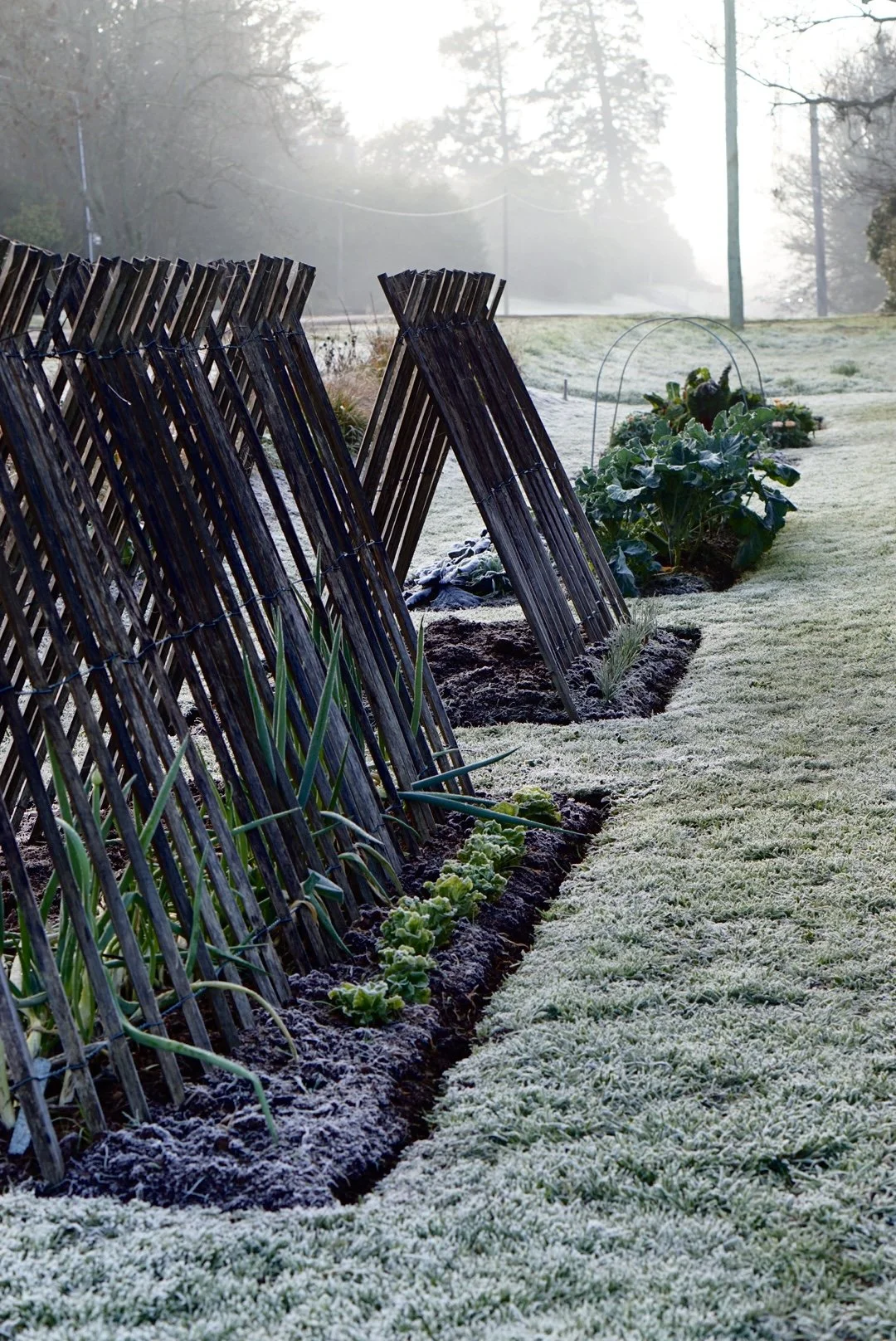
For glimpses into workshops, daily life, and my thoughts from Little Cottage on a Hill, you can find me on Instagram, Facebook, LinkedIn, and YouTube. And if you’d like a more personal update, subscribe to my Newsletter for a monthly note on what’s growing, what’s inspiring me, and what’s next.
Click the links below to stay connected—I’d love to have you along for the journey.
Autumn Gardening Jobs: A Gentle Approach for a Bountiful Season
Autumn in Daylesford and across Australia is a season of change—a time to give your garden a final flush before winter while preparing for a winter bounty. As you plan new plantings, harvest the last of summer’s produce, and tidy up your outdoor spaces, consider a gentle approach that respects your garden’s soil structure while boosting its vitality. Drawing on insights from Gardening Australia, Paul West, Milkwood Permaculture, and Deep Green Permaculture, here’s a guide to autumn gardening jobs that boost your garden’s final flush while setting the stage for a winter bounty—all with a light touch.
General Autumn Jobs for a Bountiful Garden
These practices help you enhance your garden’s productivity as autumn unfolds, with methods that minimise disturbance and encourage soil health:
1. Light Clean-Up and Top Dressing
Begin by gently clearing away fallen leaves and plant debris with a gentle rake—no heavy tilling needed. Spread a 5 cm (2‑inch) layer of well‑rotted compost and organic mulch over your beds. This not only retains moisture and regulates temperature but also gradually enriches the soil without disrupting its structure.
2. Direct Sowing of Cool Season Crops
Use your prepared beds to directly sow vegetables such as carrots, lettuce, radishes, and silverbeet. These cool season crops benefit from the nutrient rich top layer and thrive in the mild autumn temperatures.
3. Boosting Brassicas for a Winter Bounty
It’s the perfect time to start brassicas like broccoli, cauliflower, and kale. Begin seedlings in your garden and protect young plants with netting to ward off cabbage moths.
4. Refreshing Your Herb Garden
Rejuvenate your herb garden by planting herbs like parsley, coriander and dill. These herbs enjoy the cooler weather, adding fresh, aromatic flavours to your winter dishes.
5. Tool and Irrigation Check
Take a moment to clean, sharpen, and oil your garden tools, and review your irrigation systems. Efficient water delivery is so important as the season shifts, ensuring your garden receives just the right amount of moisture.
6. Sowing a Green Manure Crop
Consider sowing a green manure crop—such as clover or vetch—in your autumn beds. These cover crops naturally fix nitrogen, suppress weeds, and improve soil structure over winter, boosting soil fertility without heavy cultivation. This is a technique I’ve used on poor soils in the past with incredible soil structure building and nourishing effects.
Tasks by Australian Climate Region
Autumn gardening practices can vary across Australia. Below are some tasks for each climate region to help you maximise your garden’s potential while preparing for the winter ahead.
1. Cool Temperate Regions
(e.g. Daylesford, Victoria; Tasmania; parts of NSW)
1. Final Summer Flush Boost
Top dress your beds with compost and mulch to encourage any lingering summer produce—tomatoes, capsicums, and beans—to offer one last burst of flavour before the chill sets in.
2. Brassica Beginnings
Sow brassicas such as broccoli, cauliflower, and kale now. Use protective netting over seedlings to prevent cabbage moth damage, ensuring your winter crops develop well.
3. Winter Greens and Root Crops
Direct sow hardy winter greens like spinach and silverbeet alongside root vegetables such as carrots and beetroots. These crops thrive in a nutrient-rich, lightly disturbed soil.
4. Herb and Edible Flower Planting
Refresh your herb garden with parsley, coriander, and dill. Adding edible flowers—like violas or cornflowers—not only attracts beneficial insects but also brightens up your winter salads.
5. Gentle Pruning and Bed Tidy-Up
Trim back overgrown summer perennials and tidy up garden edges. This light maintenance improves airflow and helps plants throw on another flush of foliage and often flowers.
2. Subtropical Regions
(e.g. Coastal Queensland; Northern NSW)
1. Mulching for Moisture Retention
In humid, subtropical climates, mulching will assist to stabilise soil, suppress weeds, and support soil structure after heavy rains. (Thoughts are with our Queensland friends who are batting down their hatches. Let’s hope there’s some gardens left after the deluge!)
2. Sowing Cool-Season Vegetables
Direct sow vegetables like beetroot, lettuce, and radish in your garden beds. These crops adapt well to the milder autumn conditions typical of subtropical regions.
3. Brassicas with a Protective Shield
Start your brassicas for a winter bounty, and cover young seedlings with netting to keep pests at bay.
4. Refreshing Container and Raised Beds
For those working in containers or raised beds, top dress with compost to renew soil fertility while keeping disturbance to a minimum.
5. Herbs and Edible Ornamentals
Enhance your garden with herbs such as basil and coriander, alongside edible ornamentals like calendula, which attract pollinators and beneficial insects.
3. Arid/Mediterranean Regions
(e.g. Parts of South Australia, Western Australia; Inland NSW)
1. Moisture Conservation with Mulch
As the heat lingers but daylight shortens, apply a generous layer of organic mulch (such as straw, pea straw, or lucerne) to regulate soil temperature, reduce evaporation, and suppress weeds. Autumn rains may help settle mulch in, improving soil structure.
2. Planting for the Season
Now is the time to direct sow or transplant hardy cool-season vegetables like carrots, turnips, brassicas (broccoli, cabbage, kale), beets, and onions. Protect brassicas with netting to deter cabbage moths and ensure strong early growth.
3. Weed Management Before the Rains
Take advantage of any pre-autumn rain by weeding before seeds germinate. A thick layer of mulch will further suppress unwanted growth, conserving soil moisture as temperatures fluctuate.
4. Water-Wise Pruning & Maintenance
Lightly prune heat-stressed perennials and remove dead growth to reduce water loss and allow autumn growth to establish. Hold off on major pruning of frost-sensitive plants until after winter.
5. Microclimates for Resilience
With autumn planting underway, use shade cloth or windbreaks to shelter young greens and protect against drying winds or late-season heatwaves. This ensures strong root establishment before winter.
Overall, these region‑specific tasks are in line with established guidelines and reflect the best practices for boosting your garden’s final flush before winter while preparing for a winter bounty. As always, it’s wise to consider local microclimate variations and specific garden conditions when applying these tasks
As the leaves begin their gentle descent and the air turns crisper, autumn offers a unique opportunity to work with your garden rather than against it. By applying a light touch—minimising disturbance while nurturing growth—you set the stage for a resilient garden and a nourishing winter bounty. Enjoy the process, celebrate the small victories, and savour the seasonal transformation of your outdoor space.
You may want to check out my related content below:
Watering Deeply: The Key to Thriving, Resilient Plants – Watch my Instagram reel for tips on how deep watering helps your plants grow stronger with deeper roots.
Growing Soil: The Foundation to Vibrant Gardens and Nutrient-Dense Plants – Dive into my blog post where I explore how healthy soil is essential for supporting vibrant, thriving plants.
Explore both for a complete guide to creating a garden that flourishes!
Or if you’d like to dive deeper into sustainable gardening practices, join me for a workshop on productive gardening.
Explore my workshops:
~ Garden Design with Natasha Morgan – Craft a garden that balances structure, beauty, and functionality.
~ The Productive Garden with Natasha Morgan – Learn how to grow abundantly, no matter your space.
~ The Wicking Bed Garden with Natasha Morgan – Build a self-watering, water-wise garden for effortless growing.
~ Preserving The Seasons with Natasha Morgan – Capture seasonal flavours with time-honoured preserving techniques.
~ Introduction to Backyard Chicken Keeping with Saffron and Natasha – Learn how to raise happy, healthy chickens at home.
Natasha xx
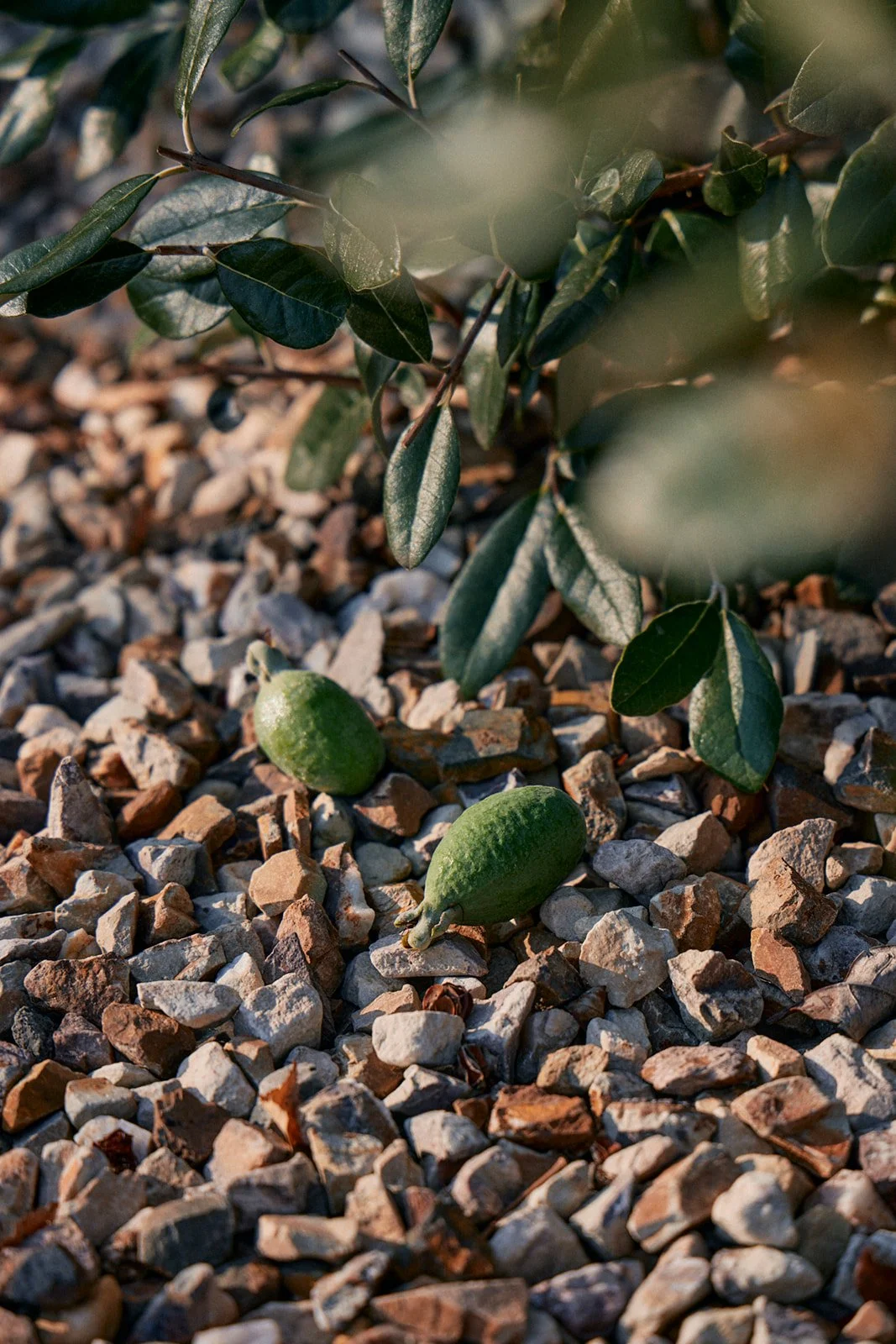
For glimpses into workshops, daily life, and my thoughts from Little Cottage on a Hill, you can find me on Instagram, Facebook, LinkedIn, and YouTube. And if you’d like a more personal update, subscribe to my Newsletter for a monthly note on what’s growing, what’s inspiring me, and what’s next.
Click the links below to stay connected—I’d love to have you along for the journey.
Soil Testing: Know Your Soil
Understanding the composition and health of your soil is fundamental to cultivating a thriving, productive garden. In regions like Daylesford, Victoria, with its rich history rooted in the gold rush era, soil testing is something to consider due to potential contamination from past mining activities and modern environmental factors.
The Importance of Soil Testing
Soil serves as the foundation for all plant life, influencing nutrient availability, water retention, and overall plant health. However, soils can harbour contaminants such as heavy metals—lead, arsenic, cadmium—stemming from historical industrial activities, mining operations, and contemporary sources like road runoff. These pollutants can adversely affect plant growth and pose health risks to humans, especially when growing edible plants.
Historical Context: Daylesford's Gold Rush Legacy
Daylesford's vibrant history as a gold rush town in the 19th century has left an indelible mark on the landscape. During that period, gold extraction processes often employed toxic substances, including mercury and cyanide, which could have led to soil contamination. Additionally, the infrastructure developed to support mining, such as roads and settlements, introduced other pollutants into the environment. Over time, these contaminants may have persisted in the soil, underscoring the need for regular testing, particularly for those cultivating fruits and vegetables.
Modern Environmental Concerns
Beyond historical pollutants, contemporary factors contribute to soil contamination. Road runoff, for instance, can introduce heavy metals and hydrocarbons from vehicle emissions and tyre wear into adjacent soils. Urban and suburban gardens might also be affected by residues from past use of lead-based paints or pesticides.
Understanding these potential sources is vital for maintaining a healthy garden ecosystem.
Soil Contaminants and Their Impact on Nutrient Density
Contaminated soils can significantly impact the nutrient density of the produce grown within them. Heavy metals can interfere with plant nutrient uptake, leading to deficiencies that affect both plant health and the nutritional value of the harvest. Moreover, certain plants may accumulate these harmful elements, posing direct risks to consumers. For a deeper exploration of soil health and its influence on plant vitality, refer to our previous post on "Growing Soils."
VegeSafe: Ensuring Safe Gardening Practices
Recognising the importance of soil safety, the Victorian government supports initiatives like VegeSafe, a community science program operated by Macquarie University. VegeSafe offers free soil testing services to residents, analysing samples for metal contaminants and providing guidance on safe gardening practices.
Participants receive detailed reports on their soil's composition, empowering them to make informed decisions about cultivating edible plants. This initiative is invaluable for urban gardeners and those in historically industrial areas, ensuring that the produce they grow is safe for consumption. (More information on VegeSafe)
Taking Action
Ensuring the safety and productivity of your garden starts with understanding your soil's composition. Here's how you can take proactive steps:
Test Your Soil: Utilise programs like VegeSafe or private laboratories to assess your soil for potential contaminants.
Educate Yourself: Explore our comprehensive guide on "Growing Soils" to gain insights into building and maintaining healthy soil ecosystems.
Enhance Your Skills: Attend our upcoming productive garden workshop, where we'll delve deeper into soil health, sustainable practices, and techniques to maximise your garden's potential.
By taking these steps, you can create a safer, more productive growing space while protecting your health and the environment. Join us at our next workshop to learn more!
Ready to uncover your soil's secrets? At Little Cottage on a Hill, we blend expert insights with practical, hands‐on learning. Secure your trusted VegeSafe soil test and join our workshop to master sustainable techniques for a thriving garden retreat.
Looking for a bit of extra inspiration? Check out:
• What I’m Planting in My Garden This Week on Pinterest
• Growing Philosophies: Permaculture for Beginners on the blog
• What to Do in the Garden This Month on Instagram
I can’t wait to chat—reserve your spot today.
For glimpses into workshops, daily life, and my thoughts from Little Cottage on a Hill, you can find me on Instagram, Facebook, LinkedIn, and YouTube. And if you’d like a more personal update, subscribe to my Newsletter for a monthly note on what’s growing, what’s inspiring me, and what’s next.
Click the links below to stay connected—I’d love to have you along for the journey.
I’m Writing a Book – And I Want You to Come on the Journey With Me
For years, people have asked me: When are you going to write a book?
The truth is, I always knew I would – but I also knew it had to be at the right time, for the right reasons, and with the right people. That time is now.
I’m thrilled to share that I’ve signed a publishing deal with Murdoch Books, working with the brilliant Jane Willson, to bring this book to life. It’s a project that draws on everything I’ve learned—from my years in landscape architecture, to creating Oak & Monkey Puzzle, to embracing the deeply personal and intentional life I now live at Little Cottage On A Hill.
It will be a book about gardens, but not just any gardens. It will explore the intersection of beauty and abundance, of design and productivity. It’s a culmination of my expertise as a landscape architect and lifelong gardener, bringing together the art and science of making a garden that works hard, nourishes deeply, and feels like an experience.
What Can You Expect?
I’ll be sharing glimpses behind the scenes—from the creative process to the unexpected challenges, the triumphs, the slow revelations, and the deeply personal moments that will shape the book. There will be conversations, reflections, and invitations to be part of this in ways I haven’t done before.
I have until August to write the book, and it will be released around September 2026 (books take time!). But this isn’t something I want to do in isolation—I want it to feel like something we’re creating together.
So, let’s begin. I’d love to hear from you—what would you want to see in a book from me? What are the questions you’d love answered? Share your thoughts in the comments, via email, or over on Instagram.
This is just the beginning, and I can’t wait to take you along for the ride.
As I step into writing this book, you might enjoy these stories—whether to get to know me better or to spark ideas on what you'd love to see in my writing:
Living Well Spotlight: My Bucket List – A glimpse into the experiences that shape how I live and create.
Connecting with Nature for Creative Self-Care – How the garden and landscape feed my creativity and sense of purpose.
Discover the Story Behind the Natasha Morgan Brand – The journey that brought me here and the values that guide my work.
Or, if you're looking for something more hands-on, you might love our newest e-book: Introduction to Backyard Chicken Keeping—a practical guide to starting your own flock.
And if you’d rather learn alongside me, you can explore my upcoming workshops here: https://www.natashamorgan.com.au/shop
I’d love to hear what resonates with you—let’s continue the conversation!
Natasha xx
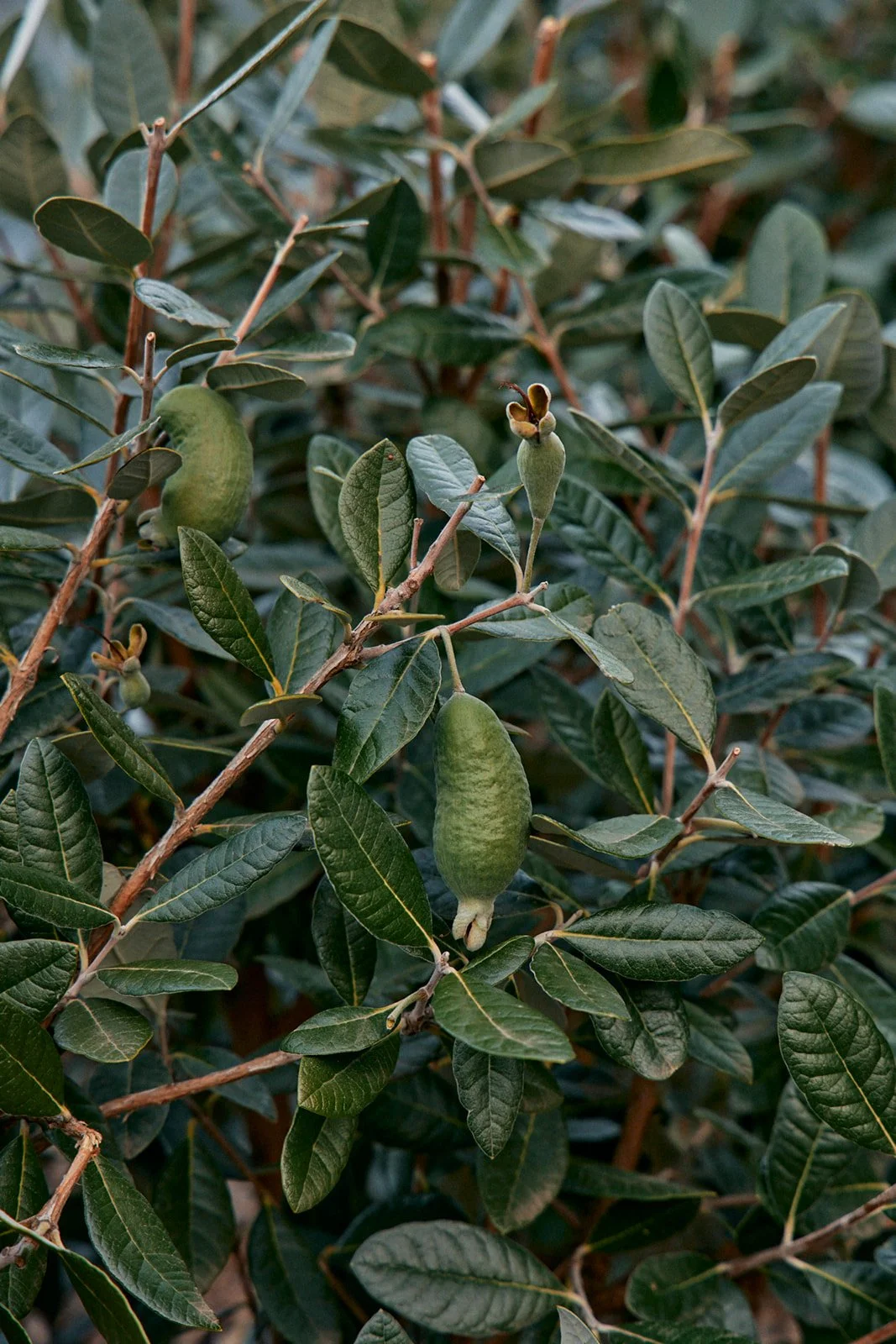
For glimpses into workshops, daily life, and my thoughts from Little Cottage on a Hill, you can find me on Instagram, Facebook, LinkedIn, and YouTube. And if you’d like a more personal update, subscribe to my Newsletter for a monthly note on what’s growing, what’s inspiring me, and what’s next.
Click the links below to stay connected—I’d love to have you along for the journey.
Gardens, Growth, and Community: My Story
Welcome to My Little Corner of the World
Hello, I’m Natasha Morgan – a landscape architect by profession, but above all, a lifelong gardener and maker. I’ve noticed so many new faces joining my little community recently, so I wanted to take a moment to reintroduce myself and share a bit about my journey. It’s so lovely to have you here!
The Dream of Oak and Monkey Puzzle
In 2014, after years of working as a Senior Landscape Architect and lecturing in landscape architecture, I made a life-changing decision. My family and I left Melbourne to embrace a long-held dream – a tree change to a 5-acre property in Spargo Creek, just outside Daylesford.
We named the property ‘Oak and Monkey Puzzle’ after its grand old namesake colonial trees, and it was nothing short of transformative. It wasn’t just a garden; it became a hub for growing, gathering, and creating. The property offered a rich canvas to combine my professional expertise with my passions for design, gardening, preserving and community building.
Workshops and events at Oak and Monkey Puzzle brought together artisans, creatives, and like-minded individuals. It was a place where flowers bloomed, vegetables thrived, and friendships flourished alongside the plants. It was also deeply personal – a space where I found a new rhythm, working with the seasons and living more intentionally with the land.
Closing One Chapter, Opening Another
After nine wonderful years, in 2022, it was time to close the chapter on Oak and Monkey Puzzle. Those years taught me invaluable lessons about community, resilience, and the beauty of combining creativity with sustainability.
From Spargo Creek, my family and I downsized to 515m² in Daylesford and began a new adventure: Little Cottage on a Hill.
Little Cottage on a Hill: A New Experiment
Little Cottage on a Hill is proof that you don’t need vast acres to create abundance. On this compact block, I’ve embraced the challenge of designing a garden that is both productive and beautiful. The property includes verge gardens overflowing with seasonal produce, espaliered fruit trees lining the fences, and a small kitchen garden designed with wicking beds for maximum yield with minimal space and water.
This project has become an experiment in sustainable living. It’s about creating multifunctional spaces, working within constraints, and showing what’s possible – even on a small scale.
Sharing My Passion
While the scale of my garden has changed, my passion for teaching, growing, and creating hasn’t. Today, I host workshops, collaborate with other artisans, and share tips to help others design gardens that are productive, sustainable, and uniquely theirs – no matter the size of the space they’re working with.
If you’ve been following me since the Oak and Monkey Puzzle days, thank you for your continued support. If you’re new here, welcome! I’m so glad to have you along for this next chapter.
Living Well with the Land
Whether it’s a sprawling 5 acres or a modest 515m², I’ve come to realise that living well is about finding beauty and abundance in what you have. My journey has been one of discovery – of the land, the seasons, and my own creativity.
I hope to inspire you to explore your connection to the land and create something meaningful in your own corner of the world. Here’s to small spaces, big ideas, and living well with the land.
Rooted in Reflection, Growing with Intention
As the calendar turns to a new year, I always find myself reflecting on this shared moment of pause and possibility. For me, the year feels like it truly begins in spring, as the world awakens and the garden offers its first green shoots of promise. However, this time of year—when the days are long and the air is warm—offers an opportunity to reflect on the months that have passed and to consider the path ahead.
This past spring, I made a commitment to share more of myself—my tips, tricks, expertise, and knowledge gained from years of gardening, design, and living closely with the land. It was a promise rooted in the values that have shaped my work: generosity, community, collaboration, and creativity. What I didn’t anticipate was how deeply this act of sharing would give back to me. The connections we’ve built, the stories you’ve shared, and the inspiration we’ve exchanged have filled my year with a richness I couldn’t have envisaged.
Over the past twelve months, there have been countless moments to cherish. From the small victories in the garden to the conversations, workshops, and collaborations that have inspired me, this year has been about growth—not only in the soil but in the connections we’ve cultivated together.
Rather than setting resolutions or chasing rigid goals, I believe in beginning with intention. It’s about aligning our actions with what truly matters, grounding ourselves in purpose, and allowing the unfolding seasons to guide us. Intention gives us space to grow naturally, just as a garden does, adapting to what each day brings.
As we step into 2025, I am staying rooted in these values. I’m excited to continue sharing my journey with you—offering practical knowledge, insights, and inspiration for creating spaces that are both beautiful and productive. Together, we’ll explore what it means to live well, to design with care, and to build connections with nature, the land, and each other.
As you join me in a collection of snapshots from the past year, I hope you’ll see the stories of shared learning, community, and creativity that have defined this chapter. Whether it’s been through workshops, your visits to Little Cottage on a Hill, or simply a kind word online, I am so grateful for the role you’ve played in this journey.
In the year ahead, I invite you to join me in starting with intention. Let’s nurture what sustains us, embrace the beauty in the unexpected, and continue to create spaces where life flourishes.
Here’s to the seasons yet to come and the small but meaningful steps we take together.
With love,
Natasha xx
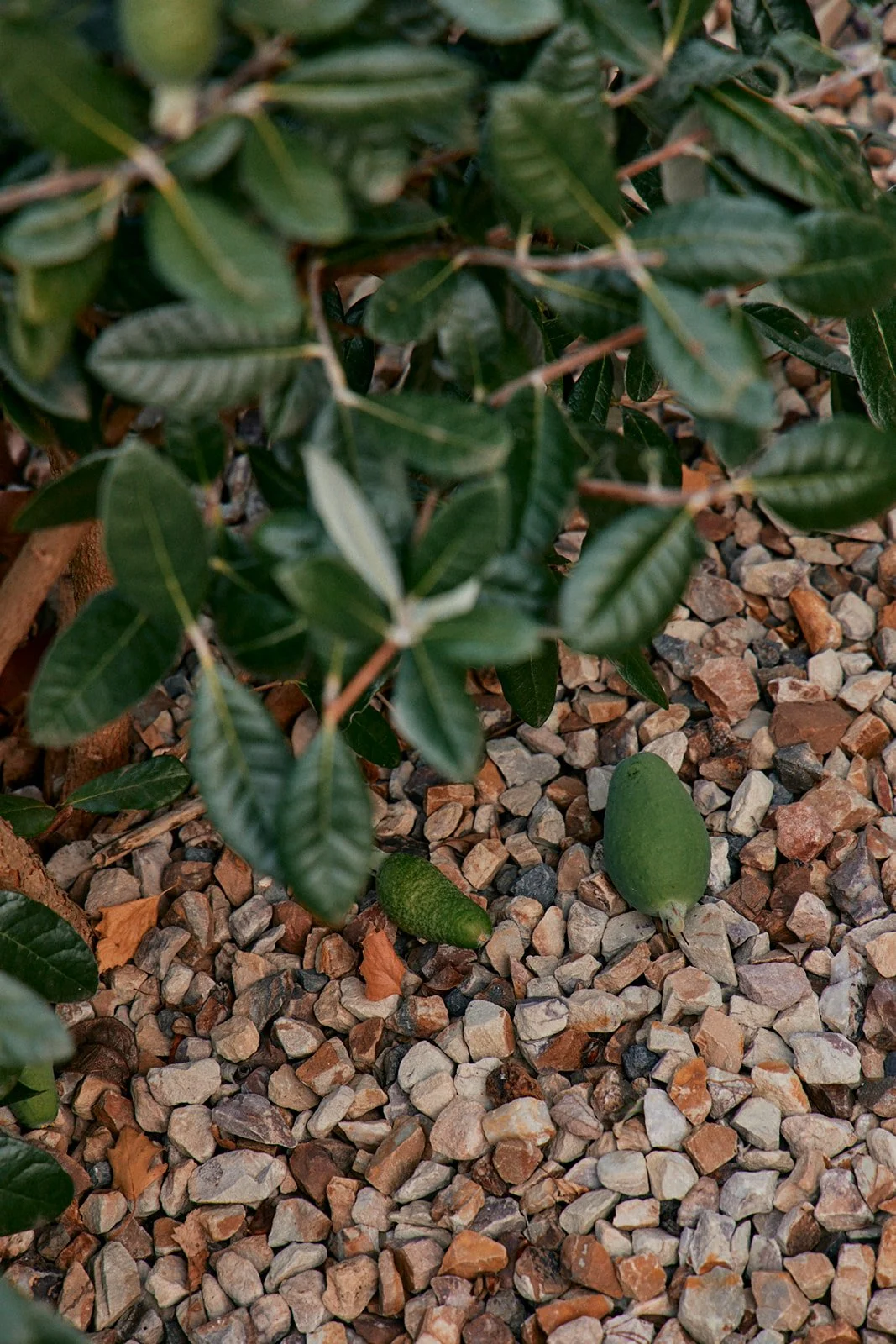
Living Well Spotlight: My Bucket List
Living with Purpose: A Bucket List for Balance and Beauty
As I sit here in the garden of Little Cottage on a Hill, thinking about another ‘calendar’ year soon coming to an end, surrounded by the call of cockatoos and the buzz of busy bees, I reflect on what it means to live well—and my ‘bucket list’.
Living well, to me, is about balance. It’s about finding joy in the simple moments—a freshly harvested tomato still warm from the sun, the comforting ritual of making preserves, or the laughter shared around a table. It’s about creating spaces that nurture not only the land but also the people who connect with it, fostering community, and living with purpose and creativity. For me, living well isn’t about grand gestures or perfection—it’s about being present, noticing the beauty in everyday life, and giving back to the world around me.
My bucket list isn’t a list of lofty ambitions but rather a collection of dreams and intentions that align with these values. It’s a way of planting seeds for the future while savouring the process of nurturing them into being. Here are some of the ideas that inspire me as I think about the year ahead and beyond.
1. Create a Community Garden at Little Cottage on a Hill
At the heart of my vision for Little Cottage on a Hill is the dream of transforming it into a vibrant community garden. A space where people from all walks of life can come together to learn, share, and grow, this productive garden would be a celebration of sustainable practices and the joy of collaboration. I imagine neighbours, families, and visitors gathering to cultivate the land, exchanging ideas, skills, and stories.
It would be a place to foster connection—with each other and the landscape we all share. The good news is that this bucket list item is already well on its way to being achieved! Come join me for a workshop!
2. Spotting a Blue-Banded Bee
One dream I’m holding close is to spot a blue-banded bee in my garden. This tiny yet remarkable pollinator would be a wonderful marker of the growing biodiversity that’s been nurtured by creating a verge garden here at Little Cottage on a Hill. The verge garden has been a labour of love—designed to invite native wildlife, support pollinators, and contribute to the ecological health of the area.
As part of this journey, I’ve begun documenting all the new birds and insects I see for the first time in the garden. It’s a mindful practice that helps me notice and appreciate each visitor, from vibrant parrots to delicate native bees. Capturing these moments in photos feels like a visual diary, a quiet celebration of the life that’s flourishing here. Seeing a blue-banded bee in one of these snapshots would feel like a milestone—a sign that the garden is thriving, and that these small, intentional efforts are making a real difference.
A while back I spotted a Cloak and Dagger bee in Lily Langham’s garden and gosh it was something!
3. Considering Writing My First Book
I’ve been toying with the idea of writing a book for some time now, and it’s becoming something I’m seriously considering. The focus would be on productive gardening, sharing practical advice, design principles, and thoughtful reflections on creating beautiful, sustainable spaces that provide nourishment and joy. It’s still very much in the ideas phase, but I envision it as a guide that inspires others to embrace the concept of living well through their own gardens. For now, I’m letting the idea take root and grow, much like a seed planted in rich soil.
4. Host a Seasonal Preserving Workshop Series
One of the dreams I’m bringing to life is hosting a seasonal preserving workshop series right here at Little Cottage on a Hill. Preserving the seasons is something I’m deeply passionate about—it’s a way of capturing the abundance of the garden and turning it into something beautiful and lasting.
These workshops will celebrate the rhythm of the year, teaching participants how to create their own pantry filled with seasonal preserves. From the bright tang of citrus marmalade in winter to the rich warmth of tomato passata in summer, each session will reflect the unique produce of the season.
It’s more than a workshop—it’s an opportunity to connect with others, share skills, and honour the joy of growing and preserving food. If this sounds like something you’d love to experience, visit Preserving the Seasons with Natasha Morgan for details and bookings. I can’t wait to tick this bucket list item off my list, welcome you to Little Cottage on a Hill, and share this timeless craft with you!
Planting Seeds for the Future
My bucket list is less about achieving and more about intention. It’s about planting seeds—not just in the soil but in the heart. It’s about nurturing these dreams with care, savouring the process of their growth, and embracing the beauty of the everyday along the way.
Here’s to the dreams we hold, the seeds we plant, and the joy we find in living well.
Oak & Monkey Puzzle: A Hub of Creativity, Community, and Connection
In 2014, I embarked on a life-changing journey that brought me to Spargo Creek, a small hamlet nestled within the Central Victorian Highlands. This tree change wasn’t just a move to the country; it was a deeply rooted desire to reconnect with nature and live a life that merged creativity, collaboration, and sustainability. Oak & Monkey Puzzle, the five-acre property we purchased, became the canvas for my vision—a vision that blended my expertise in landscape architecture, horticulture, and my passion for flowers, produce, preserving and creating spaces where people could gather, learn, and be inspired.
The property’s name was inspired by the grand colonial trees that graced the landscape, including towering Oaks and a majestic Monkey Puzzle tree. Their presence was a reminder of the property’s rich Gold Rush era history as the old Spargo Creek Post Office, O’Connells’s General Store, and recreation reserve. This place had long been a hub for community and exchange, and I felt drawn to that legacy. It was here that I could see all my passions—design, nature, productive gardening and teaching—coming together in one place. Oak & Monkey Puzzle became the canvas for a new way of life, a life and business created from a hybrid of passions, deeply connected to the land and a yearning for a simpler yet richer way of living.
Aspirations and Inspirations
Oak & Monkey Puzzle was more than just a property; it was a living, breathing manifestation of my aspirations. I wanted to create a place that would bring people together—a space where artisans, designers, and gardeners could collaborate and share their knowledge. My inspiration for this venture stemmed from years of working on large-scale public projects, most notably The Australian Garden (Stage 2) at the Royal Botanic Gardens Cranbourne. After spending years in the public realm design world, I longed for a more personal, intimate connection with the land, one that would allow me to explore my creative passions while building a sense of community.
The property’s almost derelict state was no deterrent; I only saw its endless potential. With the Wombat State Forest as a backdrop, the land was rich with opportunity, waiting to be transformed into productive gardens, cut flower terraces, and orchard spaces. I envisioned Oak & Monkey Puzzle as a place where people could come to experience the beauty of nature, the joys of growing their own food, and the fulfilment that comes from creative expression.
The Design and Construction Process
The creation of Oak & Monkey Puzzle was a labour of love and a testament to the power of clever and considered design and a bucketload of drive, elbow grease and passion. My approach was deeply influenced by the landscape architecture design principles I had honed and taught a generation of university students throughout my career. The first step was to experience the space and truly get to know it—to understand its aspect (sunny and shaded spaces and orientation to the sun), climate, geology, topography, soil conditions and more. This was crucial in determining how the garden would take shape, ensuring that every element worked harmoniously with the land and the seasons.
From there, I focused on creating spaces that would evolve with the workshop and bespoke event offerings and natural rhythms of the seasons. The garden became a place of discovery, shaped by multi-functional spaces that expanded and contracted depending on how it was inhabited, offering new experiences throughout the year. Every area was thoughtfully planned, from the productive gardens that provided fresh produce to the outdoor rooms that extended the living space beyond the house. The lawn axis, connecting the gardens to the forest, served as a central feature, grounding the entire property in its natural surroundings.
Building a Community
Oak & Monkey Puzzle wasn’t just about creating a beautiful garden—it was about fostering a deep sense of self, and community. From the very beginning, I envisioned this space as a reflection of my greatest sources of personal joy and contentment, as well as a hub for collaboration, learning, and connection. I hosted workshops on garden design, floristry, styling, drystone walling and more, inviting local artisans and craftspeople to share their skills and life-long passions. These workshops became more than just educational experiences—they were opportunities for people to gather, exchange ideas, and form lasting connections.
The community that grew around Oak & Monkey Puzzle mirrored the values I hold close—creativity, sustainability, and collaboration. It became a place where conversations flowed as naturally as the changing seasons in the garden, and where an ethos of generosity was at the heart of every interaction. The property evolved into a destination for those seeking inspiration, knowledge, and a deeper connection to nature.
A Place of Transformation
Over the years, Oak & Monkey Puzzle transformed from a near-derelict property into a thriving, productive landscape that embodied my vision of ‘living well’. It was a place where we grew our own food, preserved the harvest, and shared the bounty with the local community. The property’s history as a post office and general store added to its charm, and I felt privileged to breathe new life into it. The gardens evolved with the seasons, offering something new with each passing year. It was a space that was constantly in motion, much like the creative process itself.
Legacy and Moving Forward
After nearly a decade at Oak & Monkey Puzzle, my family and I made the decision to move on. The lessons I learned during those years—the importance of living in tune with the land, the power of community, and the beauty of sustainable design—continue to guide me in my new chapter at Little Cottage on a Hill. Oak & Monkey Puzzle will always hold a special place in my heart as the foundation of my journey into sustainable living and community collaboration, as well as creating a life that's aligned with my truest self.
Today, as I keep exploring what it means to live a life that truly makes my heart sing, and as I continue to share my knowledge through workshops and writing (oh and online courses… stay tuned!), the spirit of Oak & Monkey Puzzle lives on. It was a place of transformation, creativity, and connection, and its legacy continues to inspire everything I do.