What a productive garden means to me
You had to move the rug, lift the lid, and climb down.
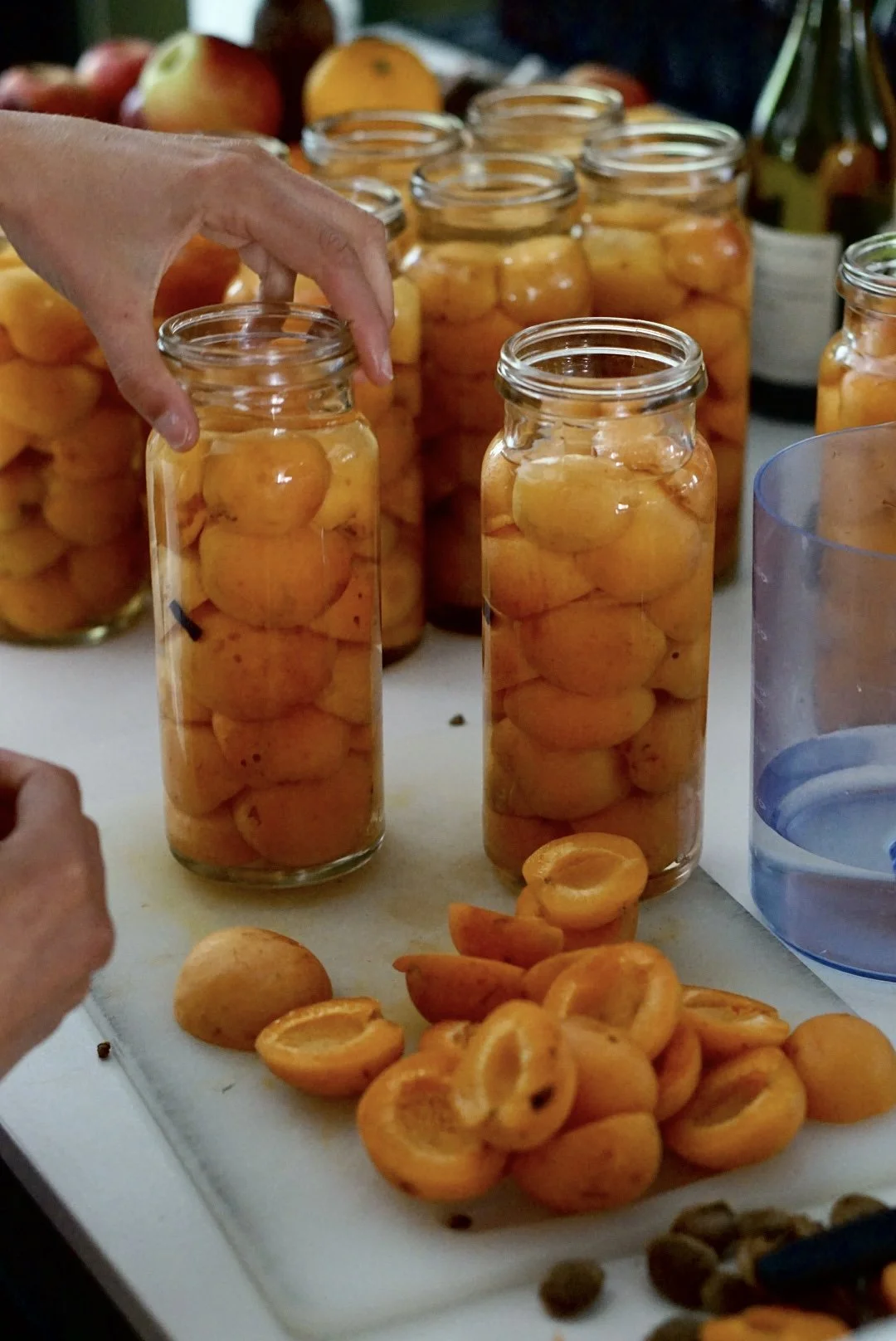
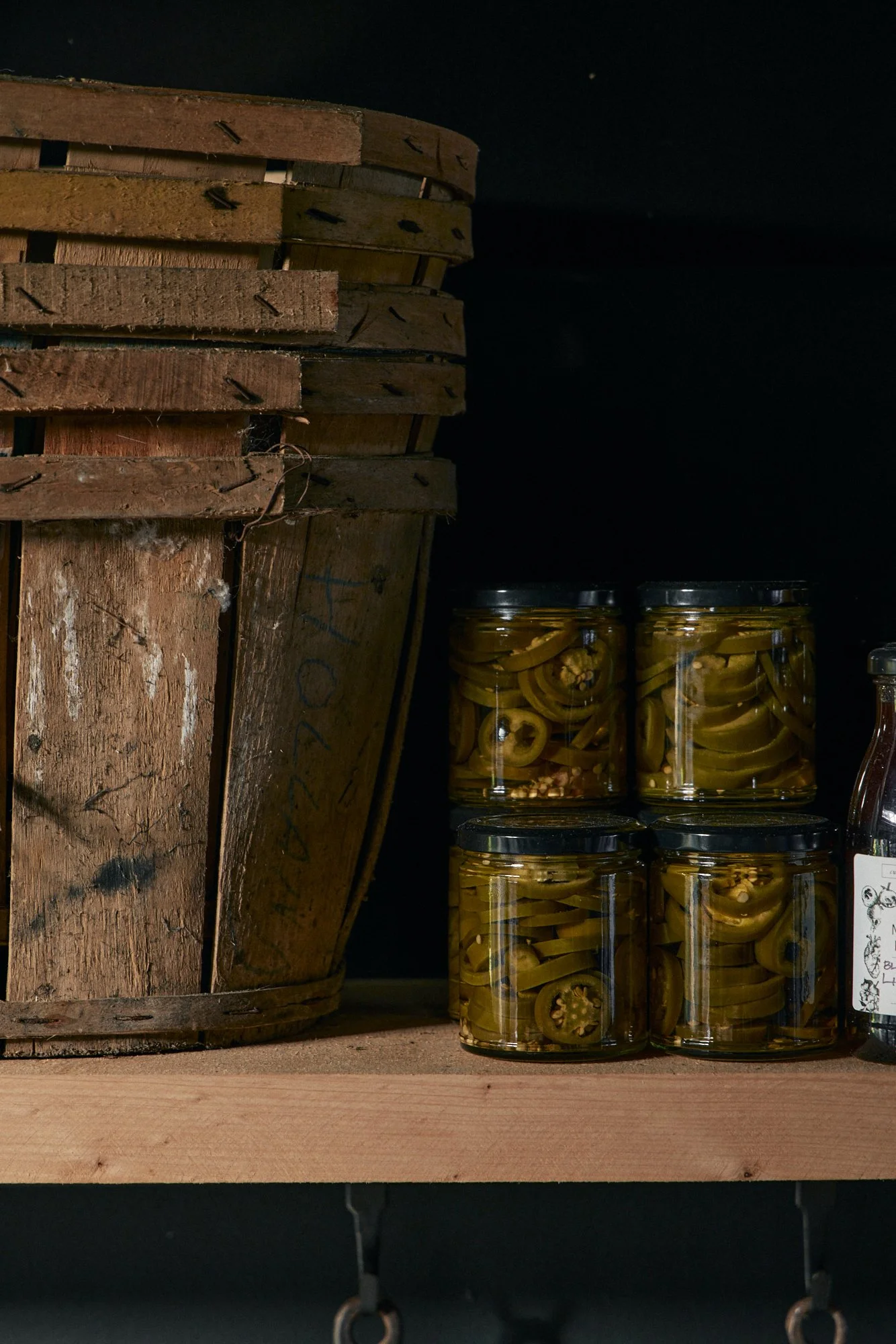
My baka's cellar was under her kitchen floor. Cool, dim, slightly damp, with shelves around you and Fowlers Vacola jars lined up. The smell of rubber seals and metal that stays with you. A smell of work and something held for later.
Baka is Serbian for grandmother, and her cellar was one of my first encounters with productivity, although I would not have used the word for years. In the world I grew up in, productive meant useful and industrious. My mother built a legal practice from a migration story, and her version of productivity carried survival inside it; my baka's cellar carried the same instinct in jars and rubber seals. Both held real love and real survival inside them. By the time I was old enough to feel the weight of the word, productive had become almost indistinguishable from identity. What I did seemed to stand in for who I was.

For a long time, I felt conflicted by finding beauty central to a garden. The garden books on coffee tables when I was small were affluent and clipped. Gardens too composed to inhabit. Seemingly devoid of people or the inhabitation of human life in any of the pictures. Beauty was the indulgence — the thing you added once the sensible work was done. I certainly don’t subscribe to that. Beauty helps us care. The borage lit gold at the back of the kitchen garden. The black hollyhock catching the last of the evening light. The intoxicating scent of wintersweet (Chimonanthus praecox - below) that pulls you closer in the cold. The line of a clipped box ball holding a winter garden together when everything else has slumped into sleep. Echinacea seedheads left standing because the birds might need them, and because I might need them too, in some way I can feel before I explain.
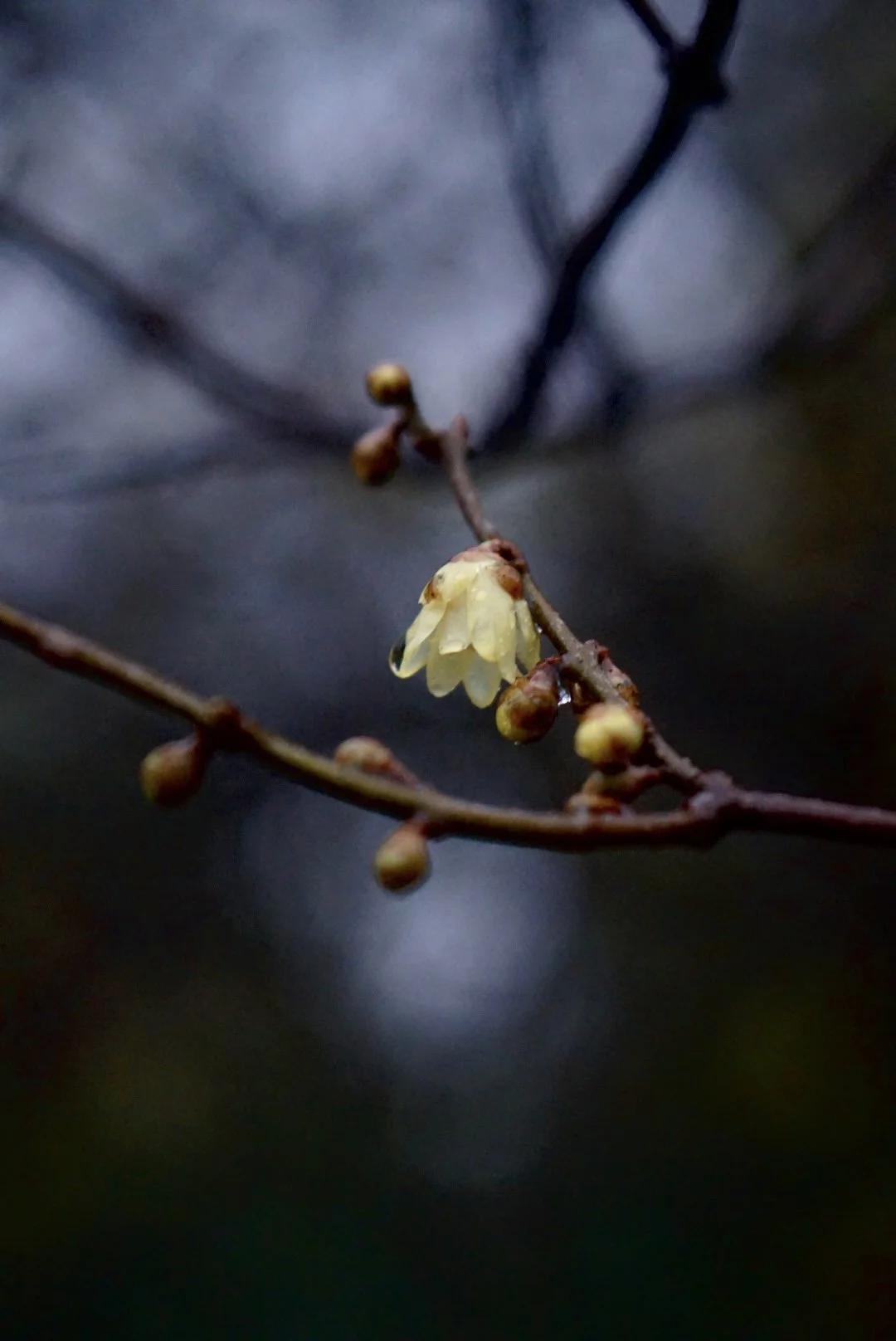
Wintersweet (Chimonanthus praecox)
Friend and landscape architect, Simone Bliss, has helped me name that more clearly in my book. Her landscapes are full of care without being sentimental. She understands the human brief and the land brief together — a seat with a protected back paired to a view of the horizon, an enclosed corner sized for someone to sit in safely. She understands that healing and productivity are the same conversation. A garden can produce the conditions for someone to stay in their own body a little longer.
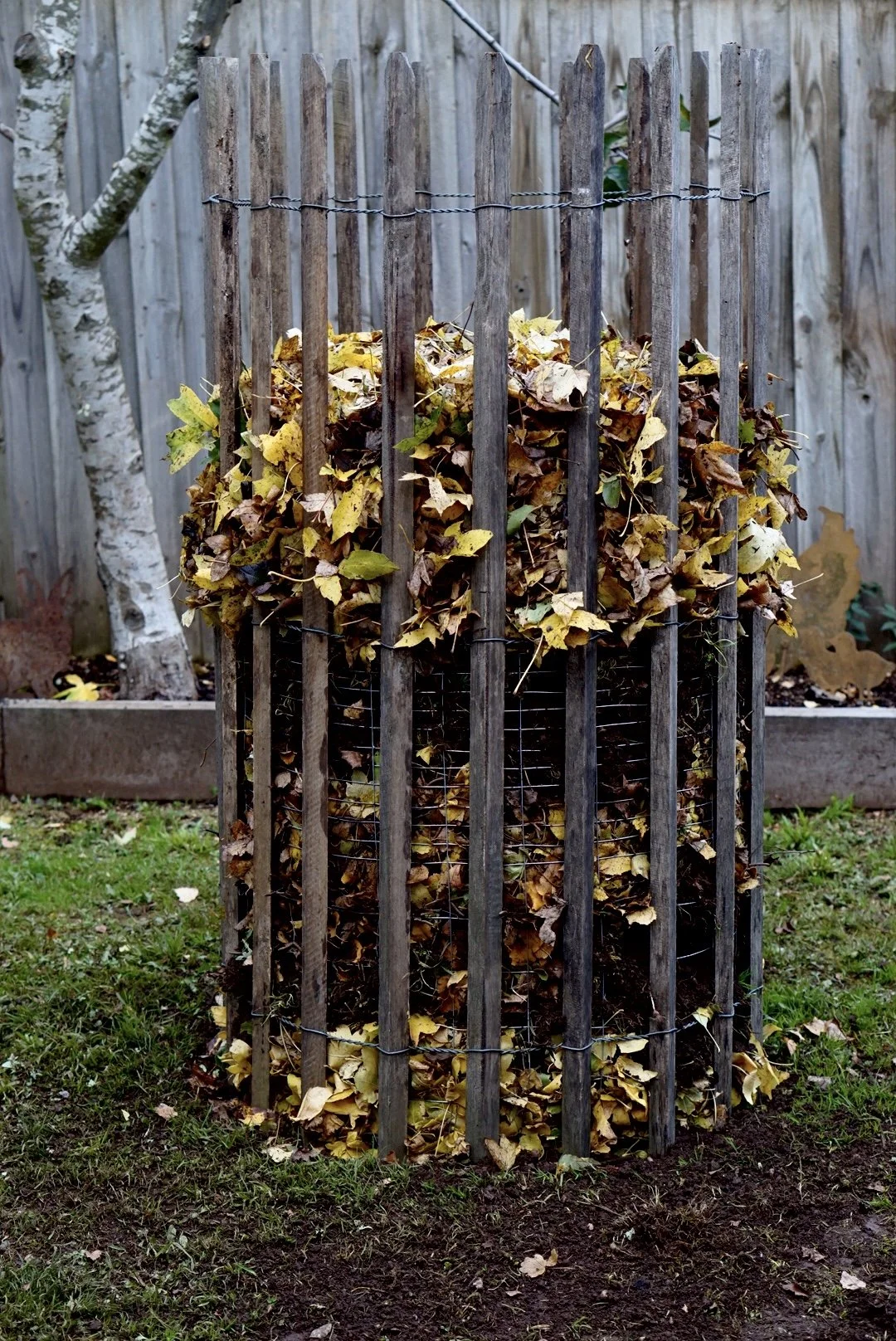
When I left Oak & Monkey Puzzle in Spargo Creek — five acres in a forest clearing where the kitchen garden, the orchard, the chickens, the workshops and the long lunches all found a home — I thought I was downsizing. I was wrong. I was distilling. Five acres became 515 square metres, plus the verge, on a corner block opposite the Wombat Hill Botanic Gardens in Daylesford — my Little Cottage on a Hill. Inherited neat categories became useless almost immediately. The 27-metre northern fence could no longer remain a fence; I had no room for an orchard, so it became a double-layered espalier of stepover Huonville crabapples below, pears and quinces above. A driveway could not be only a driveway. Compost bays became towers, sometimes layered with potatoes because why not let the compost feed you twice. The kitchen garden moved across thresholds — some out on the verge for passers-by to pick, the rest in wicking beds pulled close to the house after a $900 water bill made the old way feel absurd.
Scale is not the measure of abundance. Attention is. Design is. Care is.
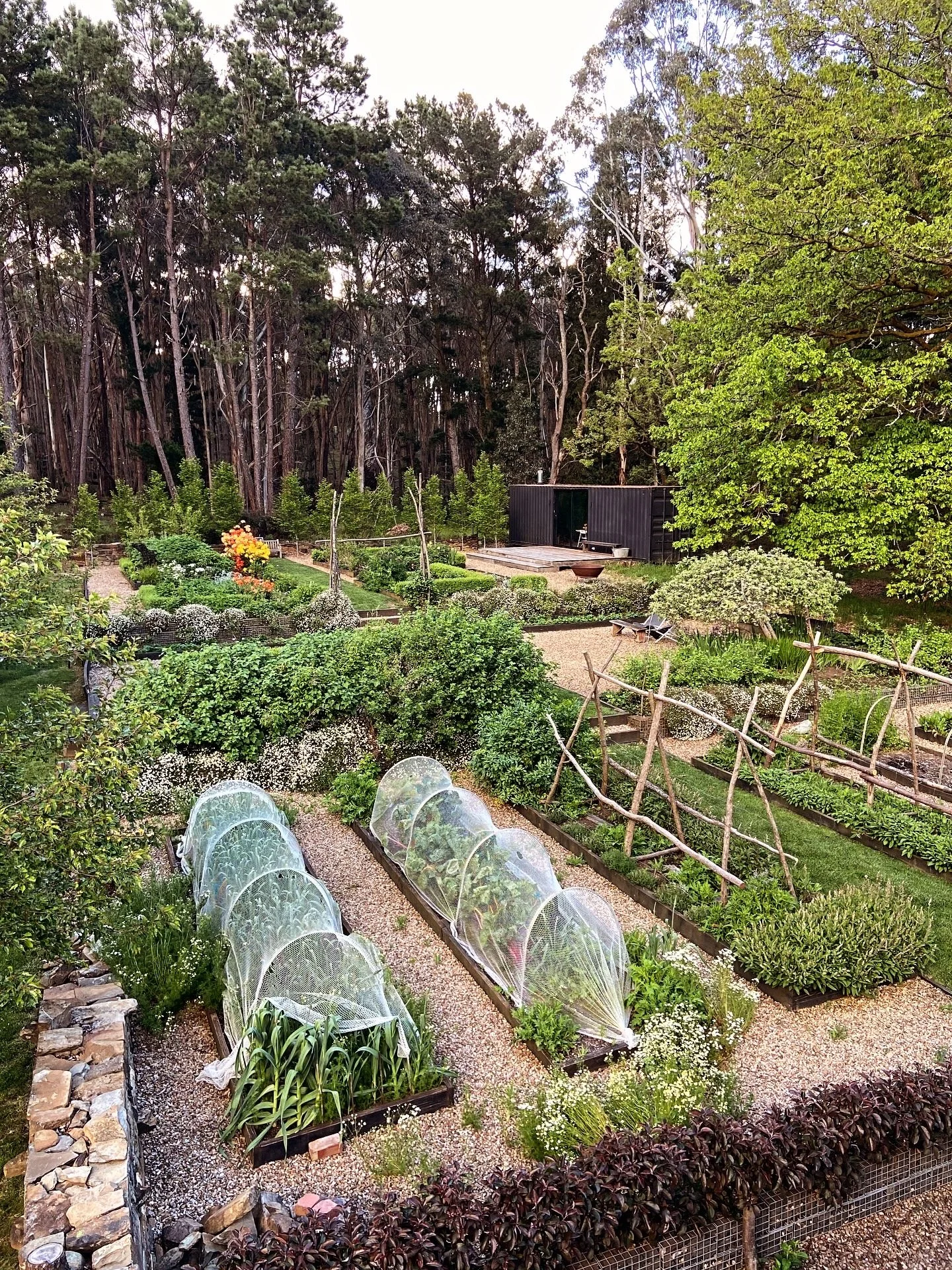
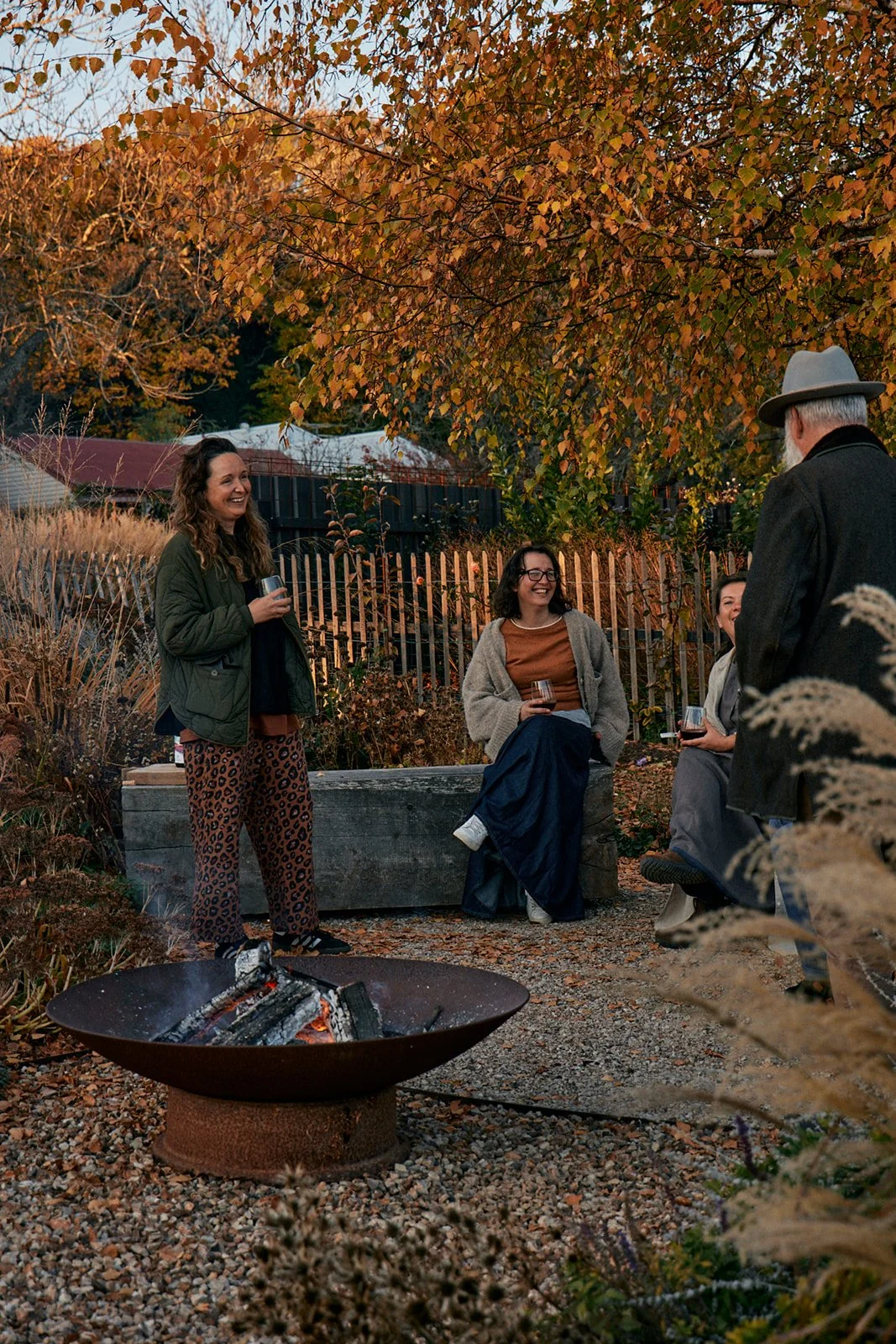
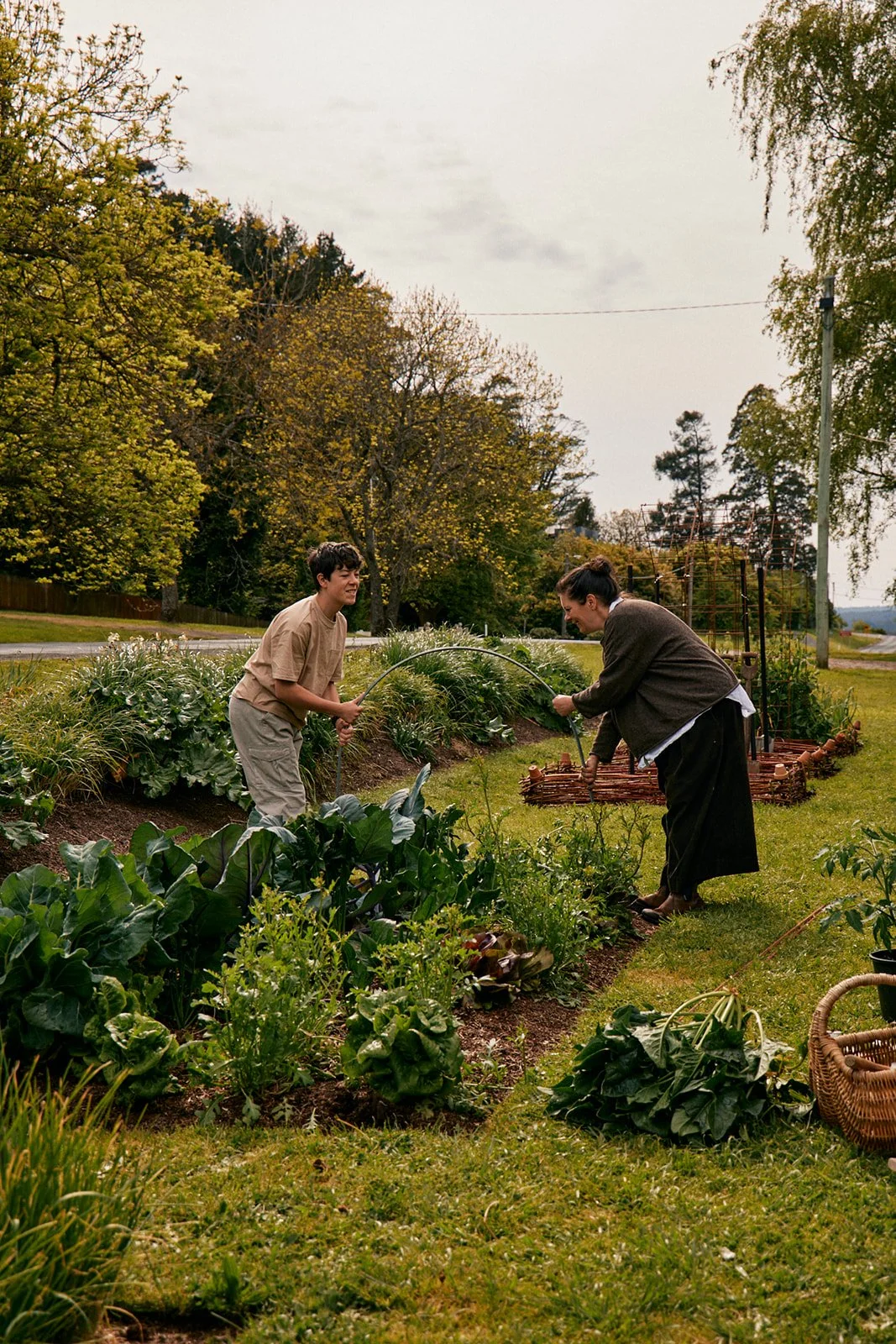
Mary Reynolds, book contributor and ‘reformed landscape architect’ whose ARK work asks what happens when we begin returning pieces of land to the more-than-human world, expanded the word again. A productive garden is habitat — a field station, a record of which species you are willing to live with and which you are willing to make space for. The verge along the western edge of Little Cottage has surprised me most. People stop their cars. A council compliance officer once came because someone thought I must be doing something illegal making a garden on public land. He looked at it and said: ‘Keep going. I love it.’
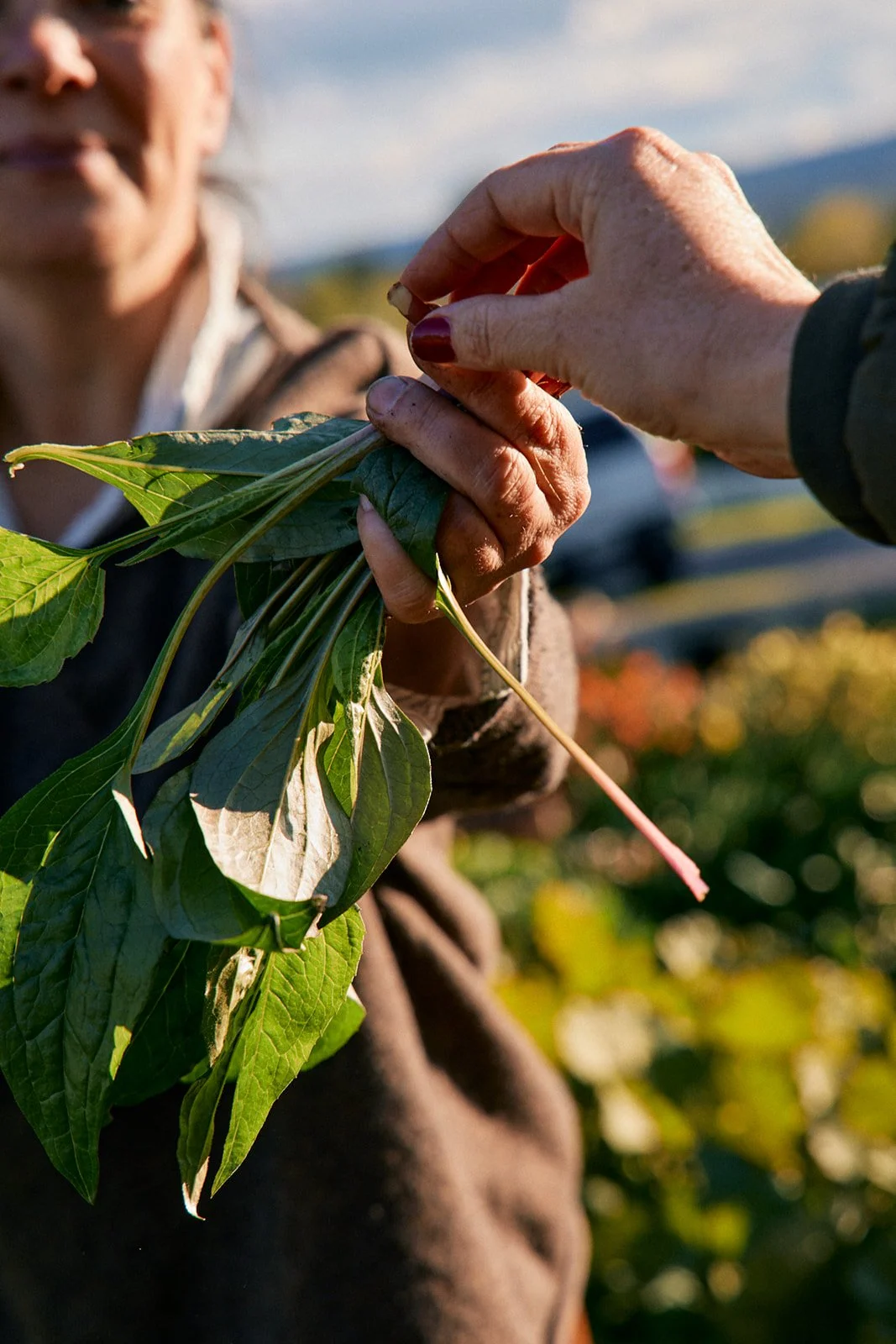
And there is Alla Olkhovska in Kharkiv. She tends a family garden where apple trees planted by her great-grandfather still blossom, where peonies from her great-grandmother carry memory through living roots. During the war her seed catalogue became livelihood. She cleans and dries seeds by candlelight through blackouts and sends them out into the world in small paper envelopes. A seed leaving Kharkiv and arriving in someone else's garden is botanical, yes, but also human. After Alla, no easy definition of productive will hold.
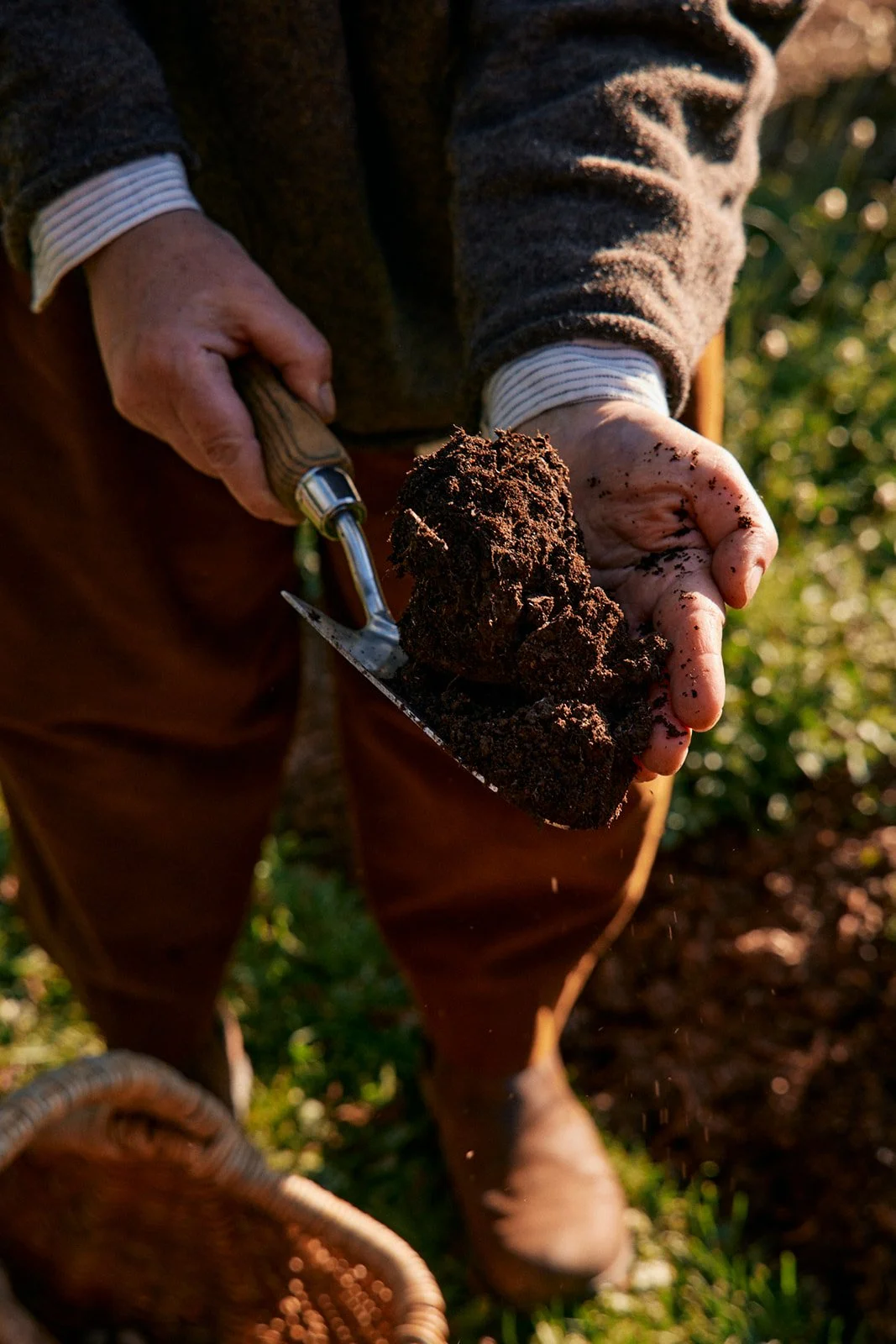
This is why so many people are reaching for gardens, or growing — and I say growing deliberately, because you do not need a garden. A windowsill grows something. A balcony grows something. A borrowed strip of land grows something. The world feels uncertain in ways that do not need to be itemised to be felt, and many people are looking for something real to do inside the reach of their own life. Agency in the garden is the feeling that I can make one decision that tends life. I can feed the soil in one bed. I can plant parsley exactly where I will use it. I can give a bunch of flowers to someone who has no words for their grief. I can make one corner more generous than it was yesterday.
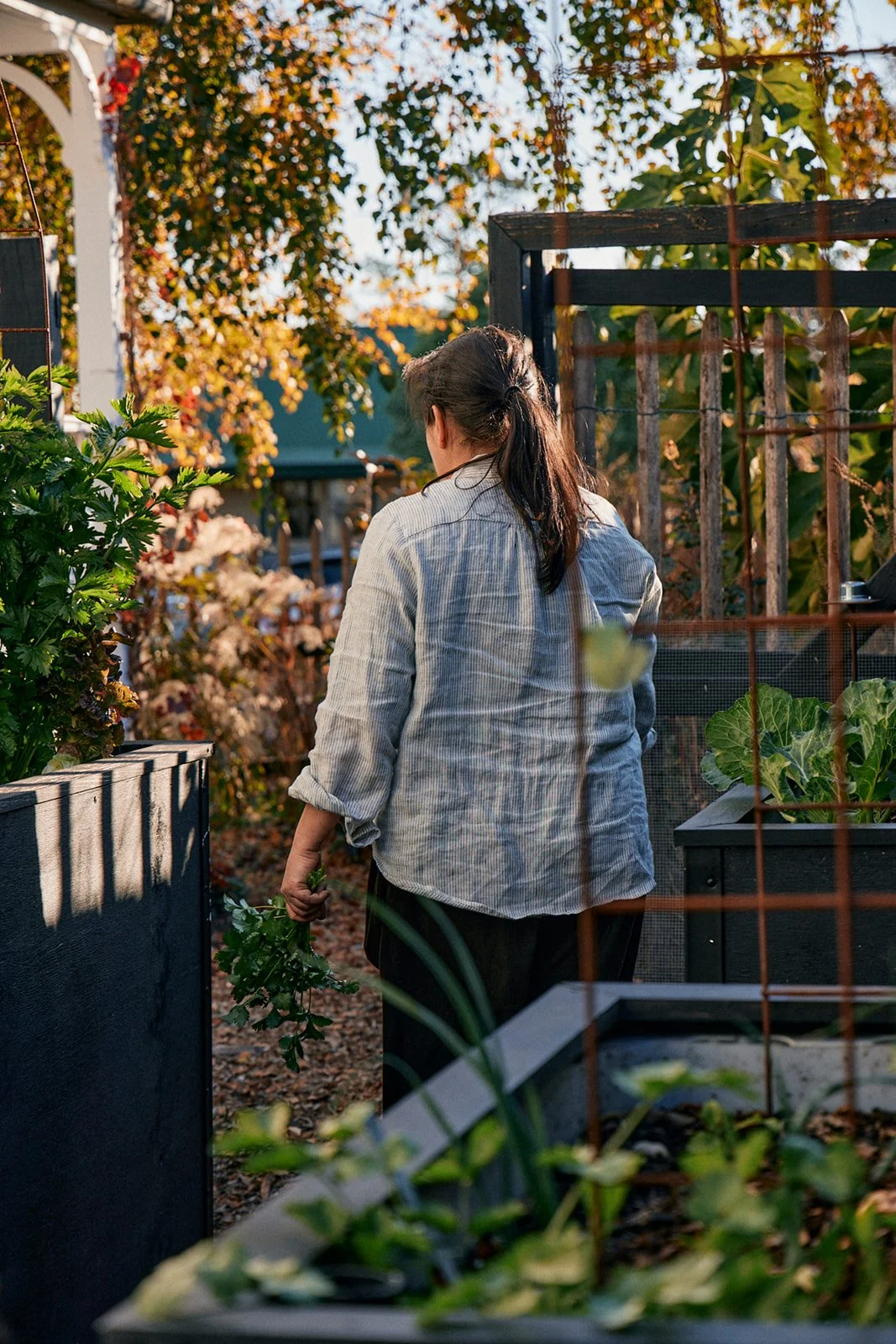
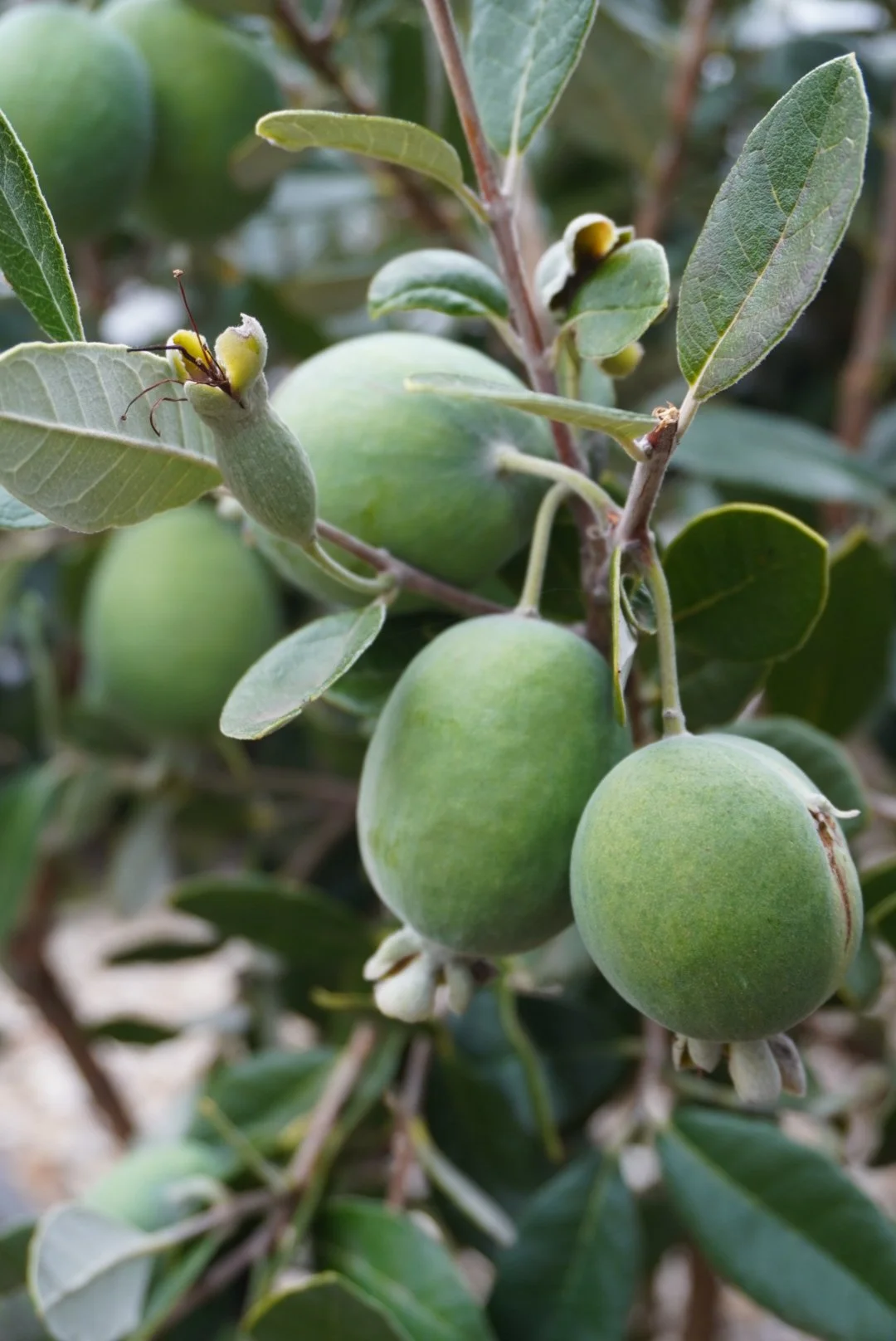
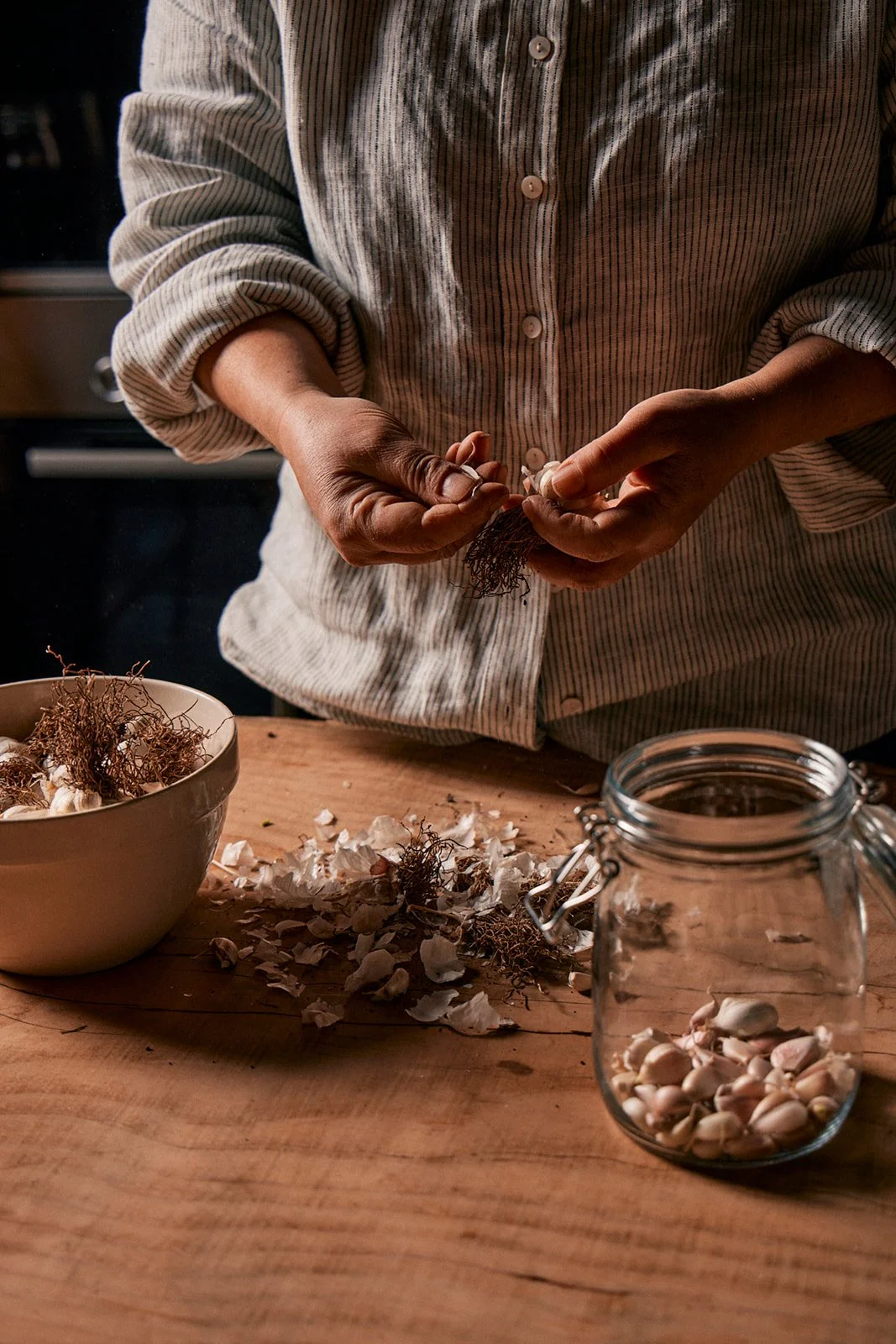
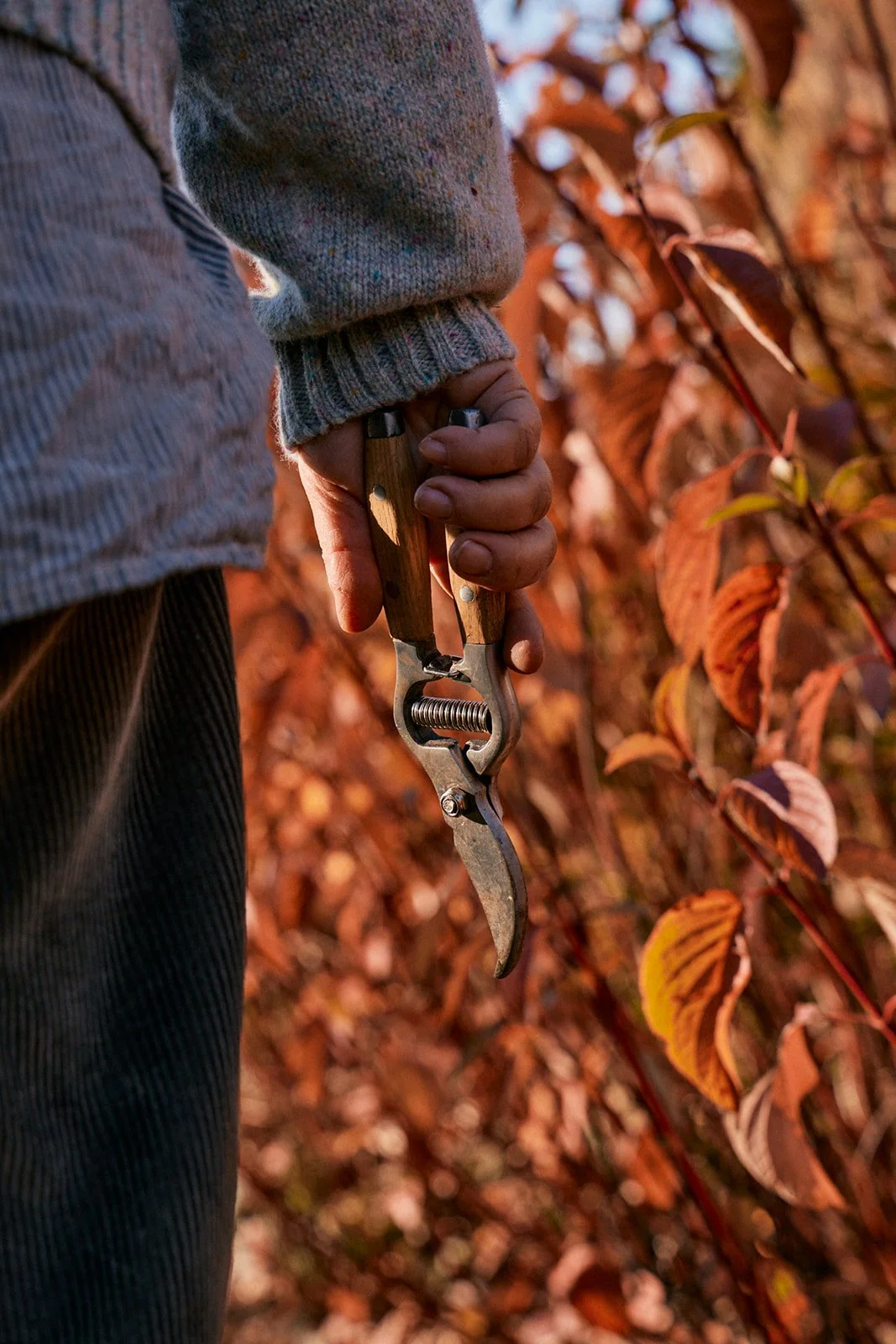
I think back to my baka's cellar — the dimness, the jars, the smell of rubber and metal. Food held underground because one day someone might need it. And then I think of myself now, standing at the gate at Little Cottage on a Hill with secateurs in one hand and a feijoa near my feet, watching someone slow down beside the verge. The garden is feeding insects. It is feeding us. It is building soil. It is producing fruit along the fence line, warmth in a wicking bed, flowers for a table, seeds for next season, questions from children, limes left by strangers, and conversations I could never have planned.
A productive garden is not measured only by what it produces. It is measured by what it makes possible.
I’m sure my definition will keep shifting and evolving. Just as a garden does. It’s unlikely to stop growing.
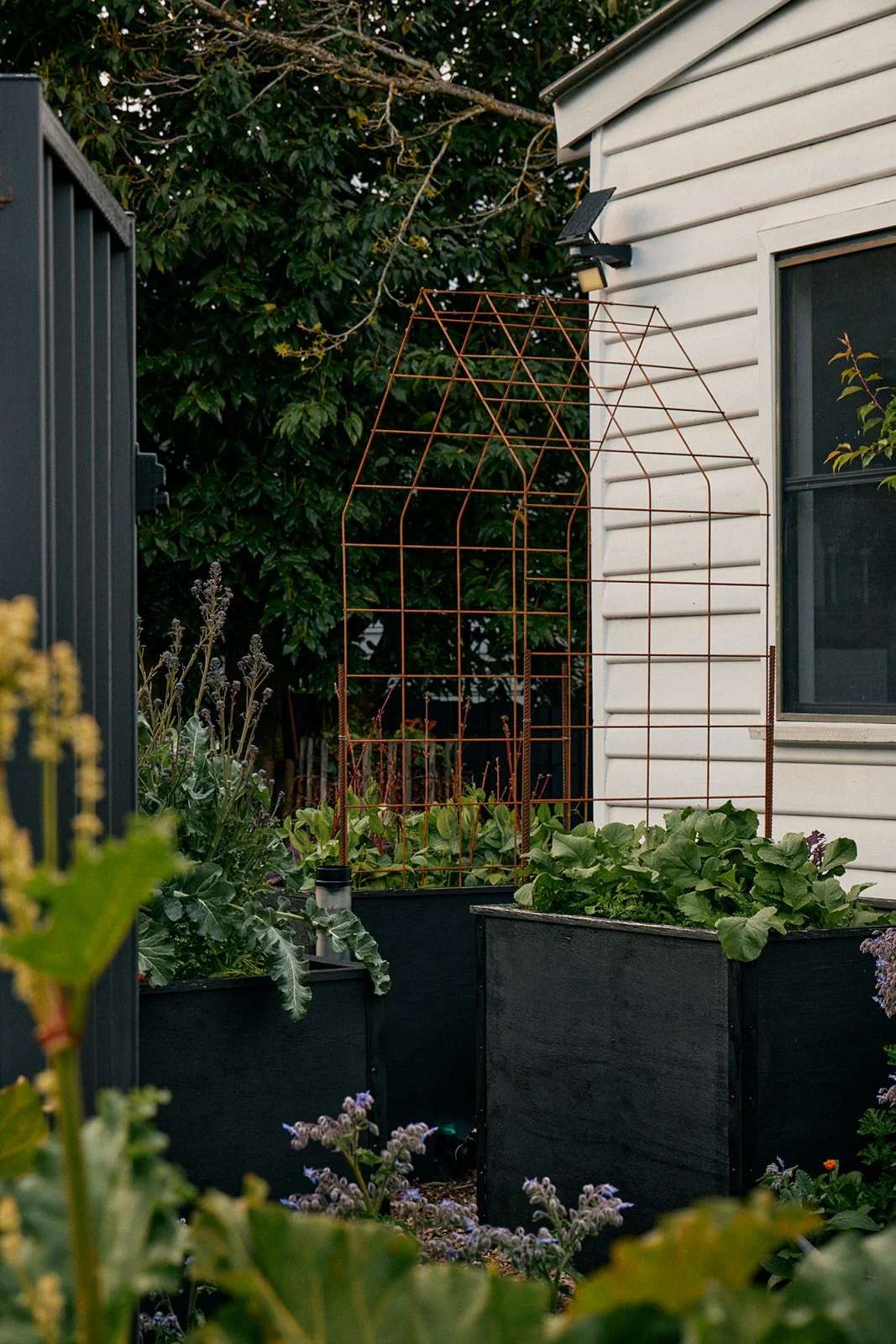
Join The Productive Garden Workshop with Natasha Morgan
Growing abundance at any scale. We focus on the foundations of creating a truly productive garden, spatial thinking for small and larger gardens, vertical growing, soil and worm systems, espaliers, along with the simple seasonal tasks that keep things moving. Discover the inspiration behind my productive gardens, the tools and techniques to make places of beauty and abundance, grounded in sustainable and innovative practises. This is where beauty meets purpose through food, flowers, medicinals and ornamentals.
We begin with context so the garden in front of you makes sense. At Little Cottage on a Hill we walk and notice and talk through how things operate in real time. In The Productive Garden I also draw on my years at Oak and Monkey Puzzle to show how principles translate across scale.
Each workshop has its own rhythm, and the backbone is the same. Clarity, practice, and time together in the garden. The Productive Garden keeps design present but light, focussing on soil, systems, structures and seasonal work.
People often tell me they leave feeling welcomed, inspired and confident to begin. Small groups make this generous, rich and rewarding. There is time for questions. We break for tea and cake. We learn together. The energy comes from the room as much as from the garden, and everyone goes home with more than they arrived with.
Continue your gardening journey with me
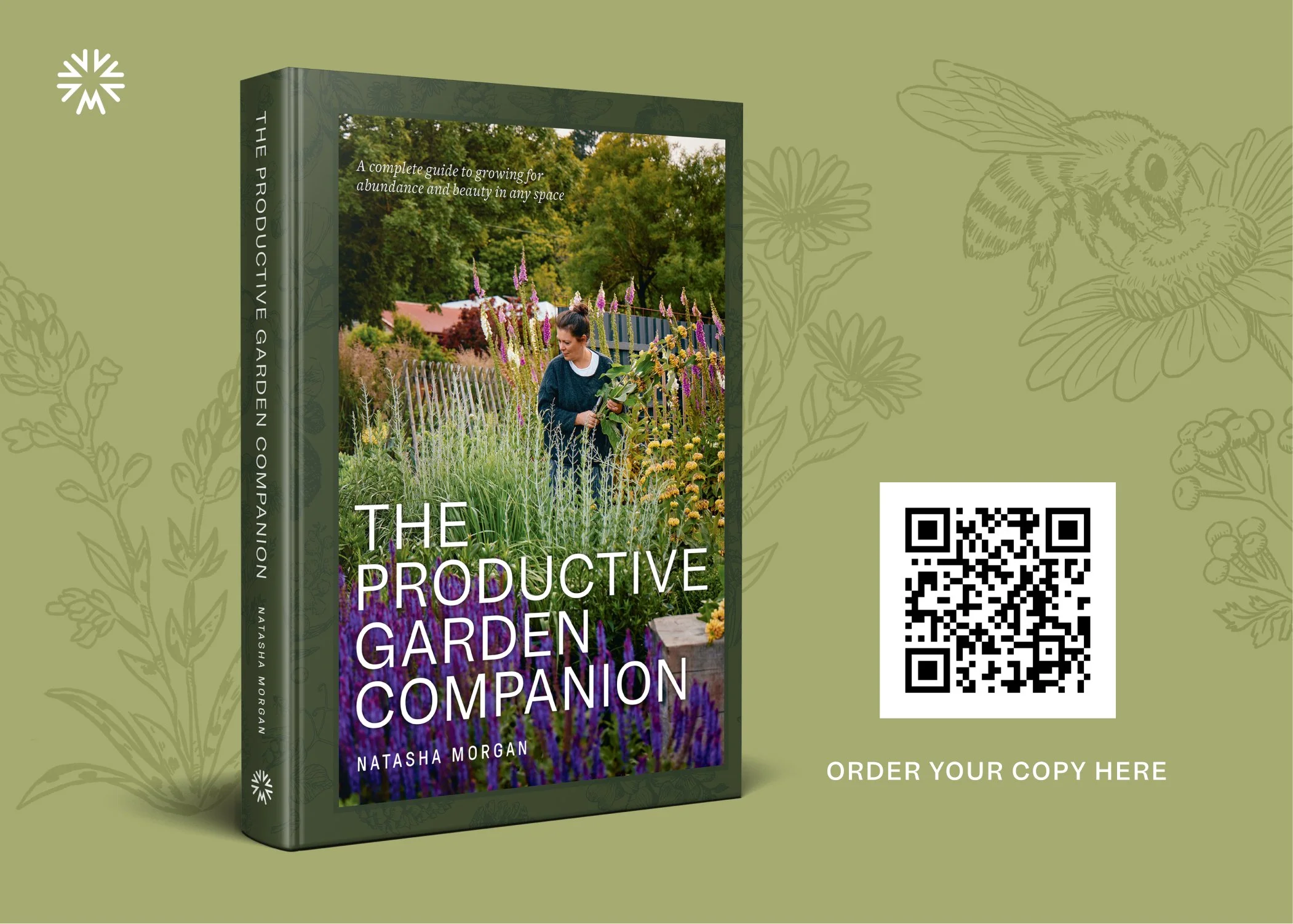
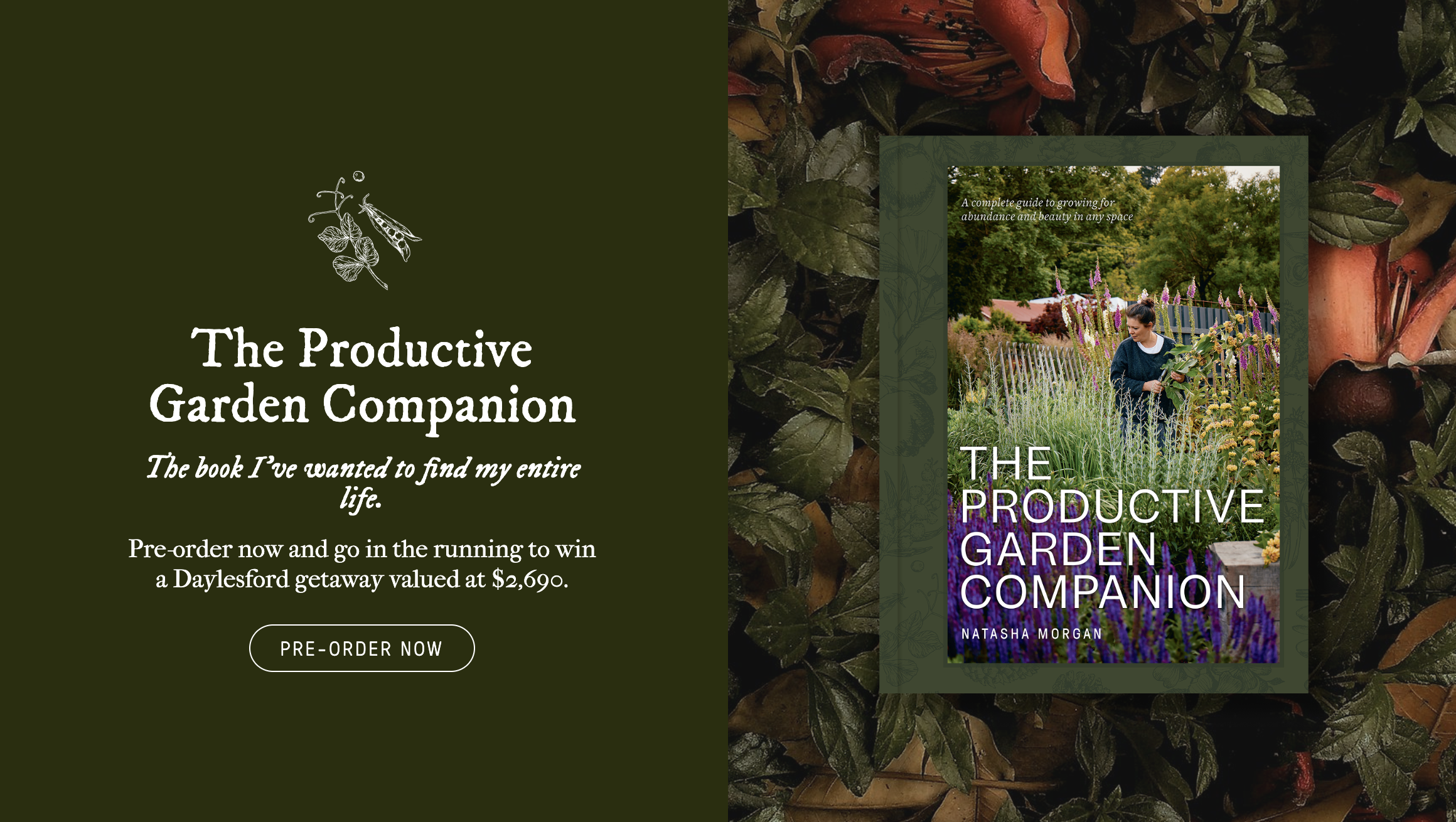
If you enjoy this kind of content, my workshops offer more detail and guidance on design, productivity and seasonal care. May is also a great month to sign up to my newsletter if you do not already subscribe, where you can find out more about an exciting giveaway I am running for those who pre-order a copy of my book The Productive Garden Companion.
Explore current workshops in the shop.
This season’s offerings include:
If you are building your garden from home right now, my ebooks on Wicking Bed Gardens and Introduction to Backyard Chicken Keeping offer practical step by step guidance that pairs well with the workshops.
You may want to check out my related content below:
Win a bespoke Daylesford getaway - inspired by The Productive Garden Companion
May Garden Tasks for Australian Climates - May brings a quieter kind of momentum to the garden.
When the world feels uncertain - grow one thing
Stay connected for more seasonal inspiration:
Instagram | Facebook | Gardenstead | LinkedIn | Pinterest | YouTube | Website | Newsletter
Thanks so much for following along.
Natasha xx