• About
  • Shop
  • Preserve
  • Blog
  • Contact
  • The Book
  • Cultivate
  • Forage
  • Menu

Natasha Morgan

  • About
  • Shop
  • Preserve
  • Blog
  • Contact
  • The Book
  • Cultivate
  • Forage

Growing Zucchini: Space-Saving and Pollination Tips for an Abundant Harvest

October 06, 2026

Zucchini are a staple of my summer garden. They will give you more food per plant than almost anything else you grow, and they will take over a bed if you let them. I have grown them since childhood veggie patches, through the five acres at Oak and Monkey Puzzle, and now in the wicking beds here at Little Cottage on a Hill in Daylesford, where last summer they were a big part of a hundred kilos of food in fifty days. This is what I have learnt about growing them well in a small space, and about the one problem almost everyone writes to me about.

One note before the method. Everything here is what I do, in my garden, on volcanic soil in the Central Victorian Highlands. My usual cutoff for planting anything frost-tender is Melbourne Cup weekend, though this season is running warm and I have planted some out early on the strength of watching the garden closely. Your date will be different. Observe your own garden before you follow mine.
Natasha Morgan-EWeaving-Feb2025-166A2051.jpg Natasha Morgan-EWeaving-Feb2025-166A4472.jpg Natasha Morgan-EWeaving-Feb2025-166A4488.jpg

Why zucchini

I have grown zucchini for as long as I have grown anything. Childhood veggie patches, then the five acres at Oak and Monkey Puzzle in Spargo Creek, and now here. They are the plant I point people to when they want to grow one thing and don't know where to start. A zucchini in a patch of borrowed dirt will feed you. It will also teach you more about how a plant works, and what it does when something is missing, than almost anything else in the garden.

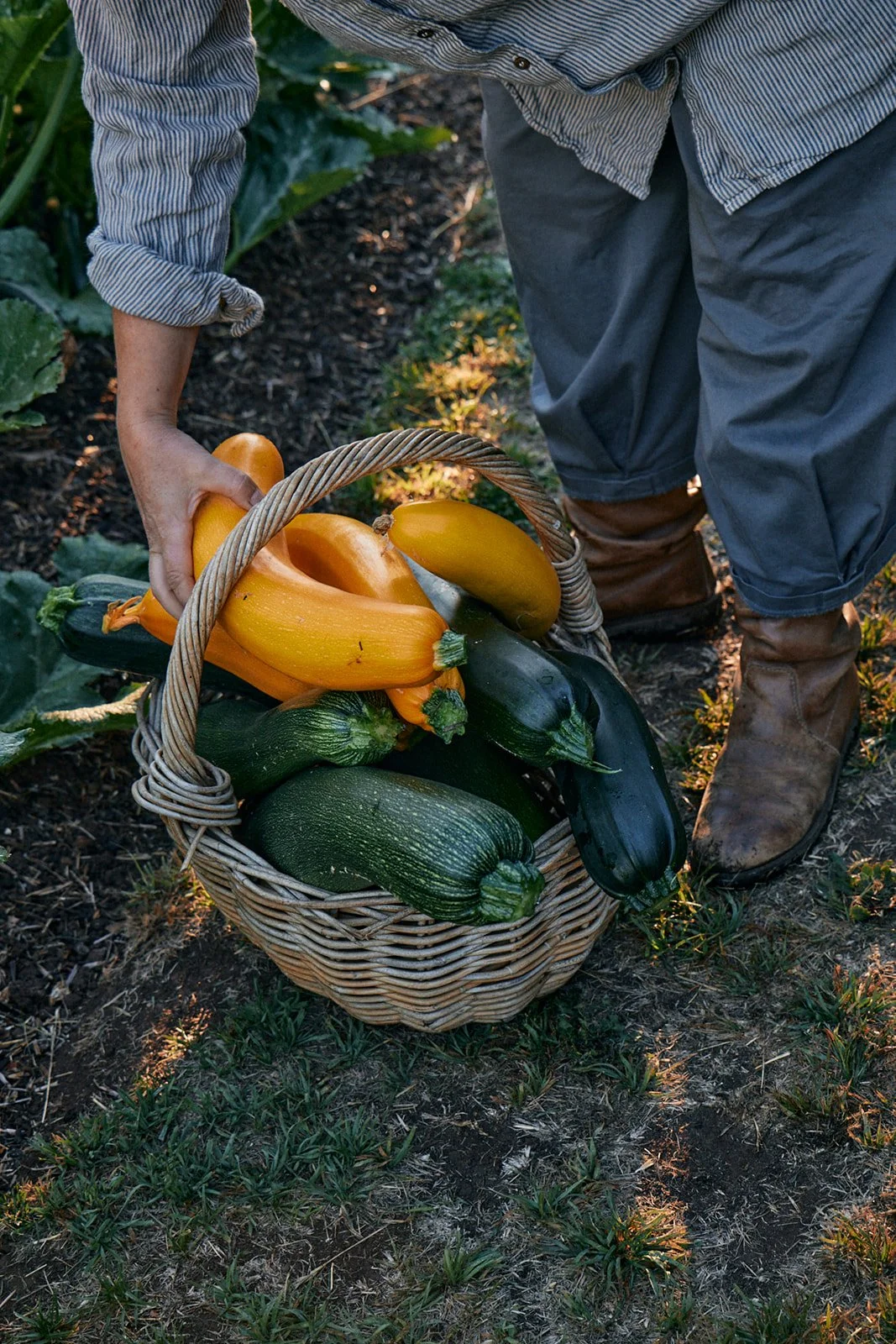
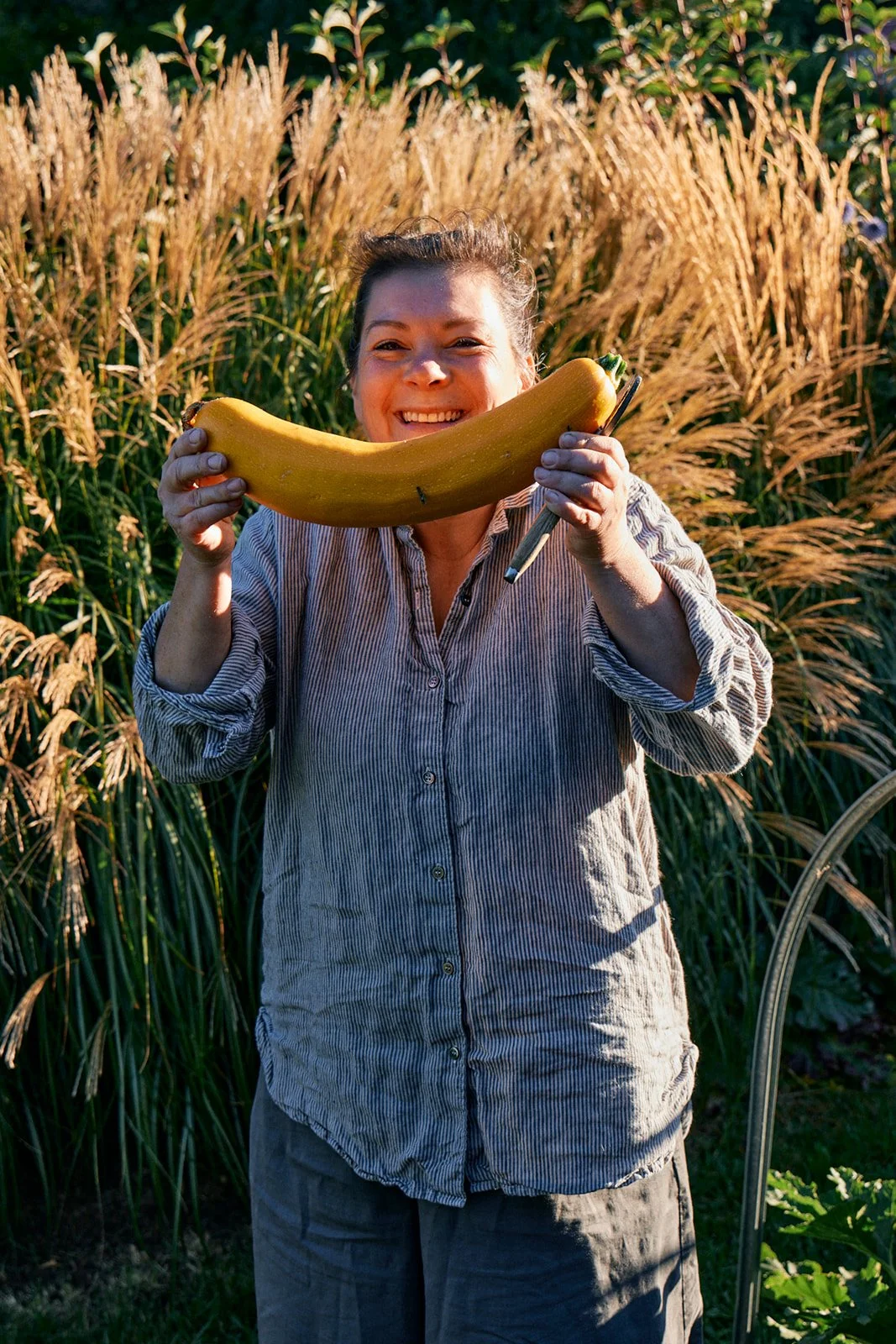
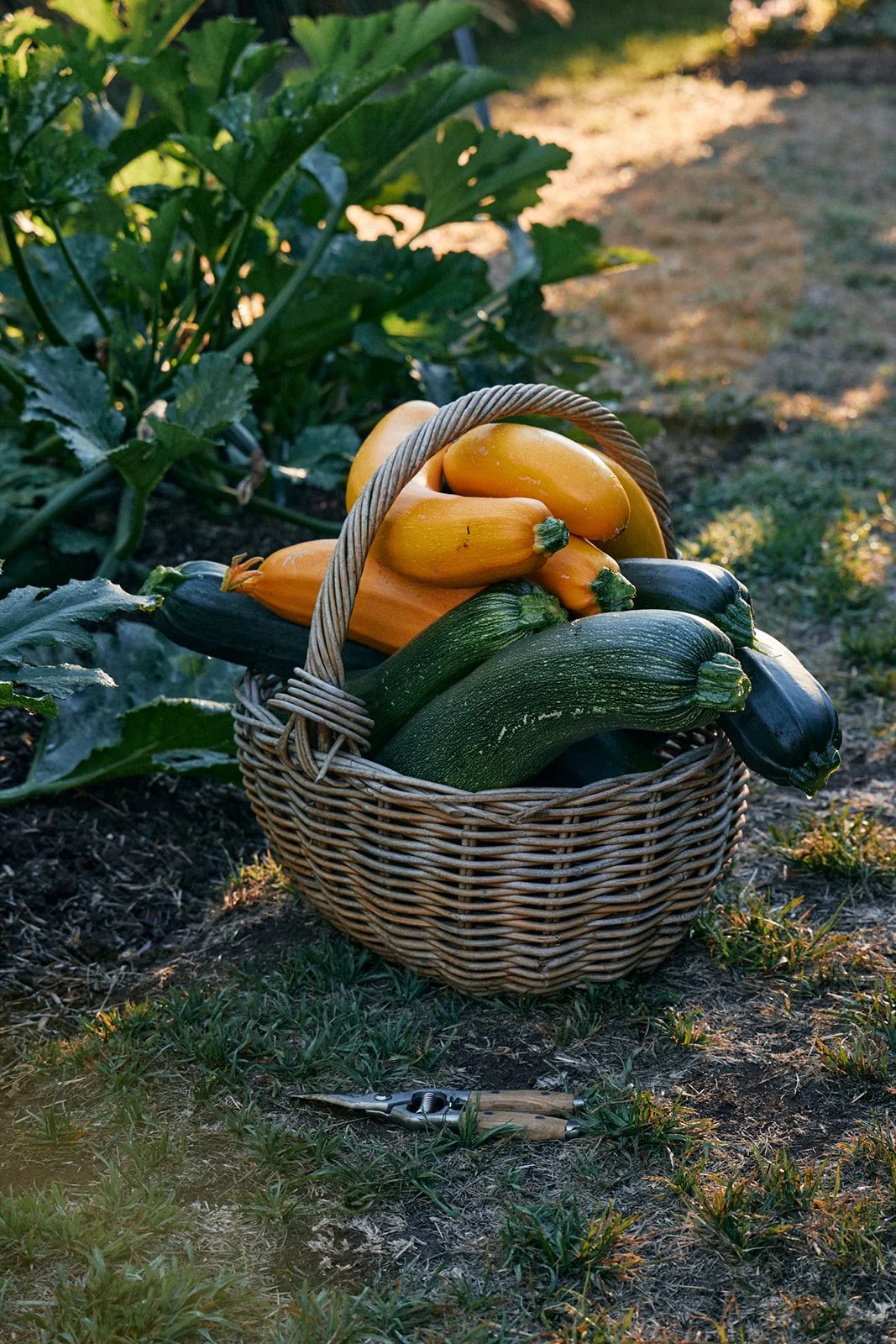
Last January I came in from the wicking beds one morning with an armful of 'Nitro' and 'Goldy', green and yellow, grown from Lambley Nursery seed, and sat down and wrote the first version of this piece. That summer the wicking beds gave me over a hundred kilos of food in fifty days. Tomatoes, cucumbers, herbs, greens, and a great many zucchini. A good portion of that came off plants I had trained to grow up rather than out, which is the part most people don't expect.
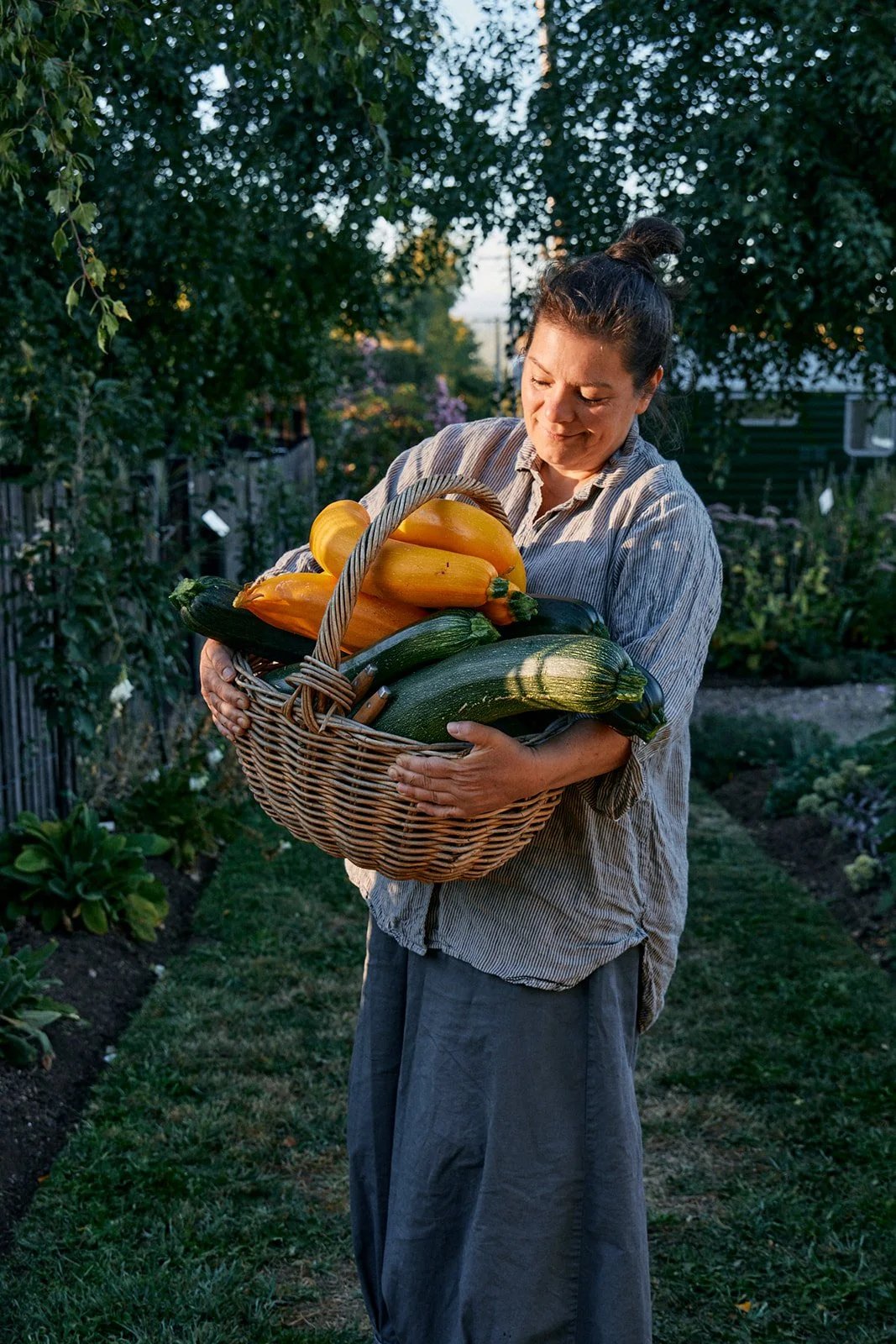
1. Prepare the soil, and wait for warmth

Zucchini are heavy feeders. Give them a sunny spot and rich, free-draining soil, with plenty of compost and aged manure worked in before planting. The soil has to be warm; pushed into cold ground they sit and sulk and the slugs find them first. In my cool temperate climate the planting window runs from late spring through to January. If you are growing them traditionally, allow about a metre per plant.

In crop rotation, zucchini sit with the fruiting crops alongside tomato, capsicum, eggplant and cucumber. They follow the leafy greens in the bed sequence, and the cucurbit family stays out of the same bed for three to four years.
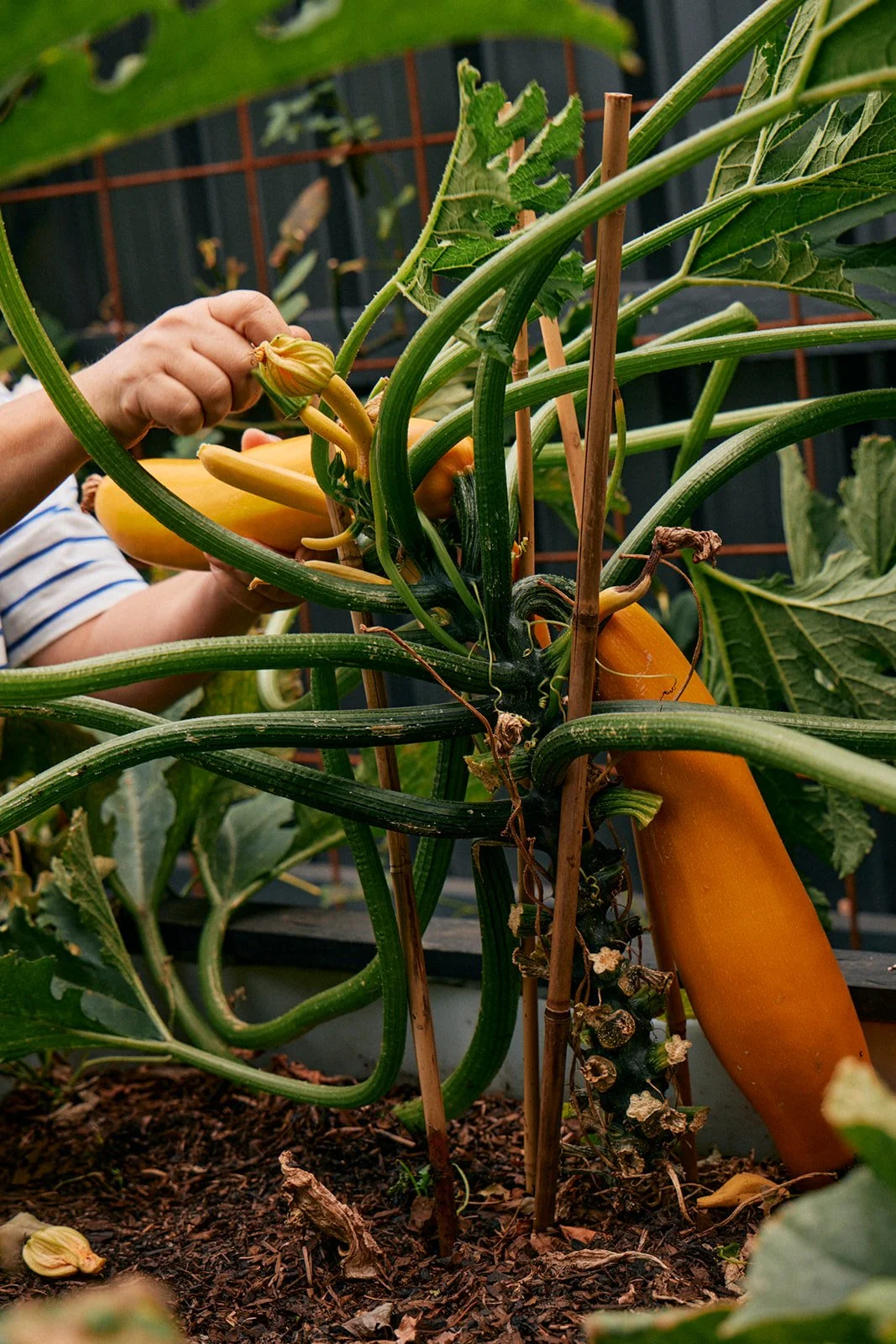
2. Save space by growing them up

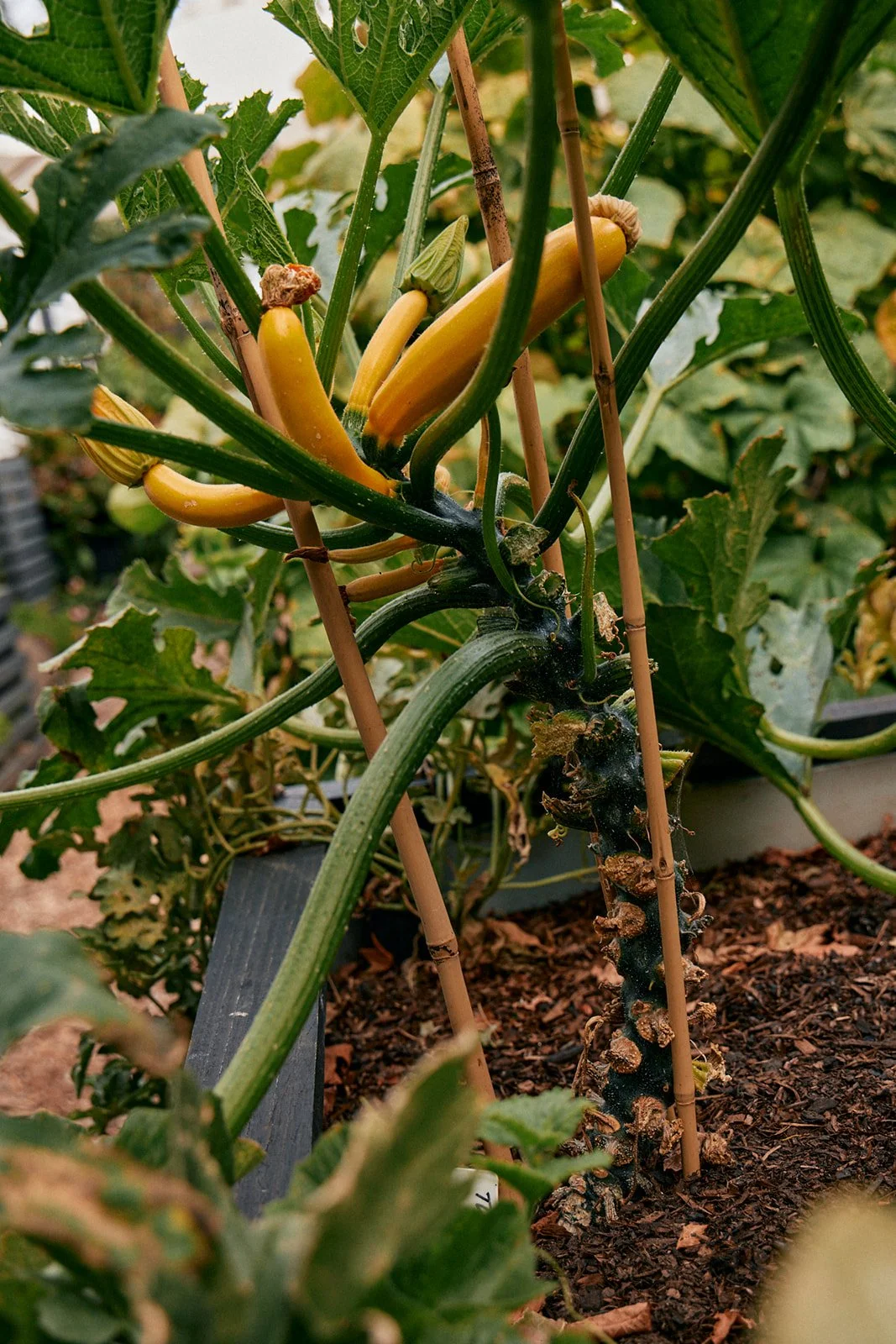
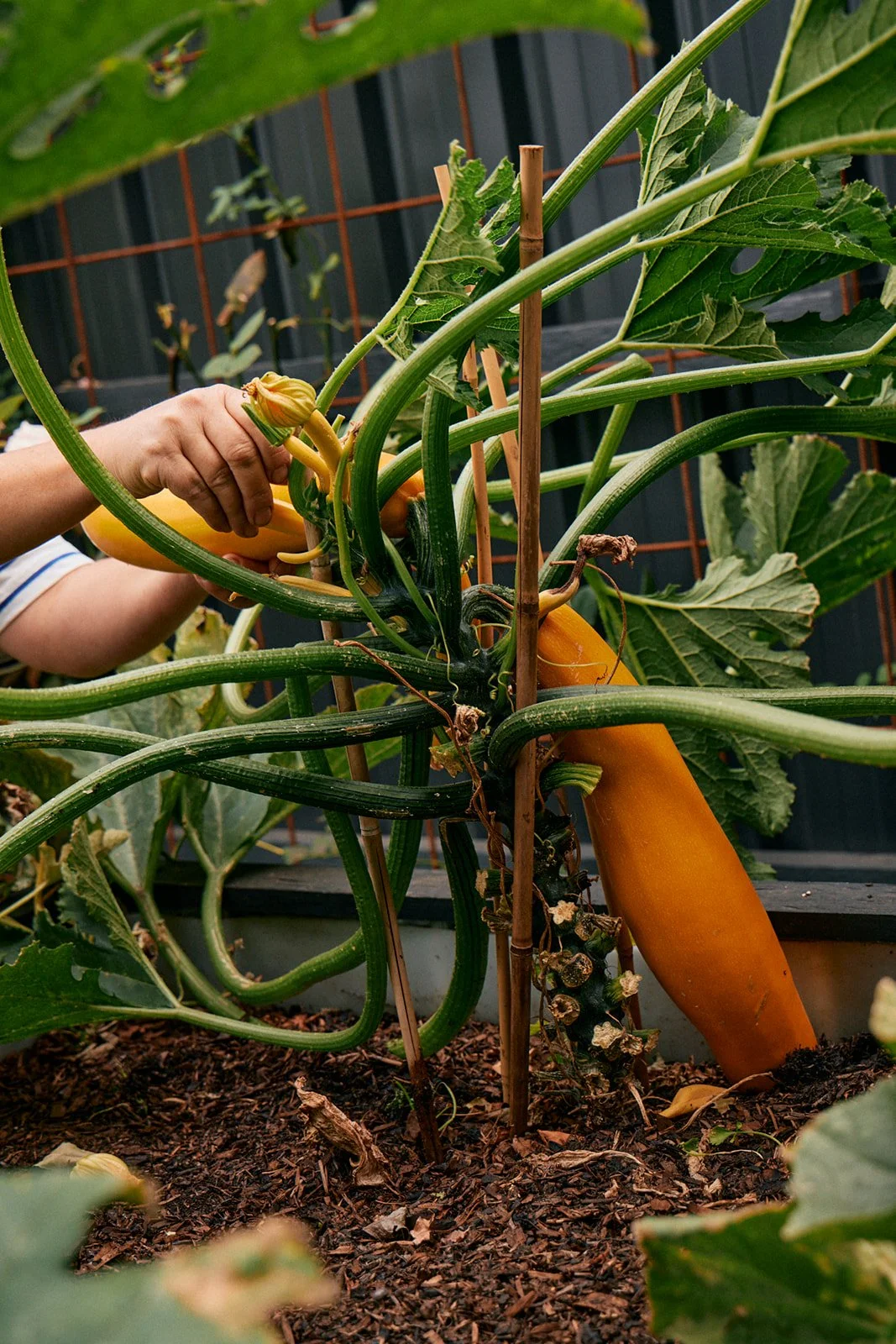
One of the most useful things I have learnt is to grow zucchini as a single stem up a stake. Put a sturdy bamboo or hardwood stake in at planting, before the roots spread, and tie the stem in loosely with soft elastic ties every twenty or thirty centimetres as it climbs. The ribbed Italian types such as 'Costata Romanesco' suit this best, though bush varieties will do it with more tying in.

The footprint drops to a fraction of what it was. The airflow around the leaves improves, which matters enormously for powdery mildew in a warm, humid summer. And the fruit stops hiding under the leaves. Later in the season you can remove the lower leaves once the fruit below them is picked, which opens the base of the plant to air and light.

In the wicking beds I plant at the edge so the plant can go up a frame or trail down over the timber cladding. The outside face of a raised bed is growing space most gardens never use.
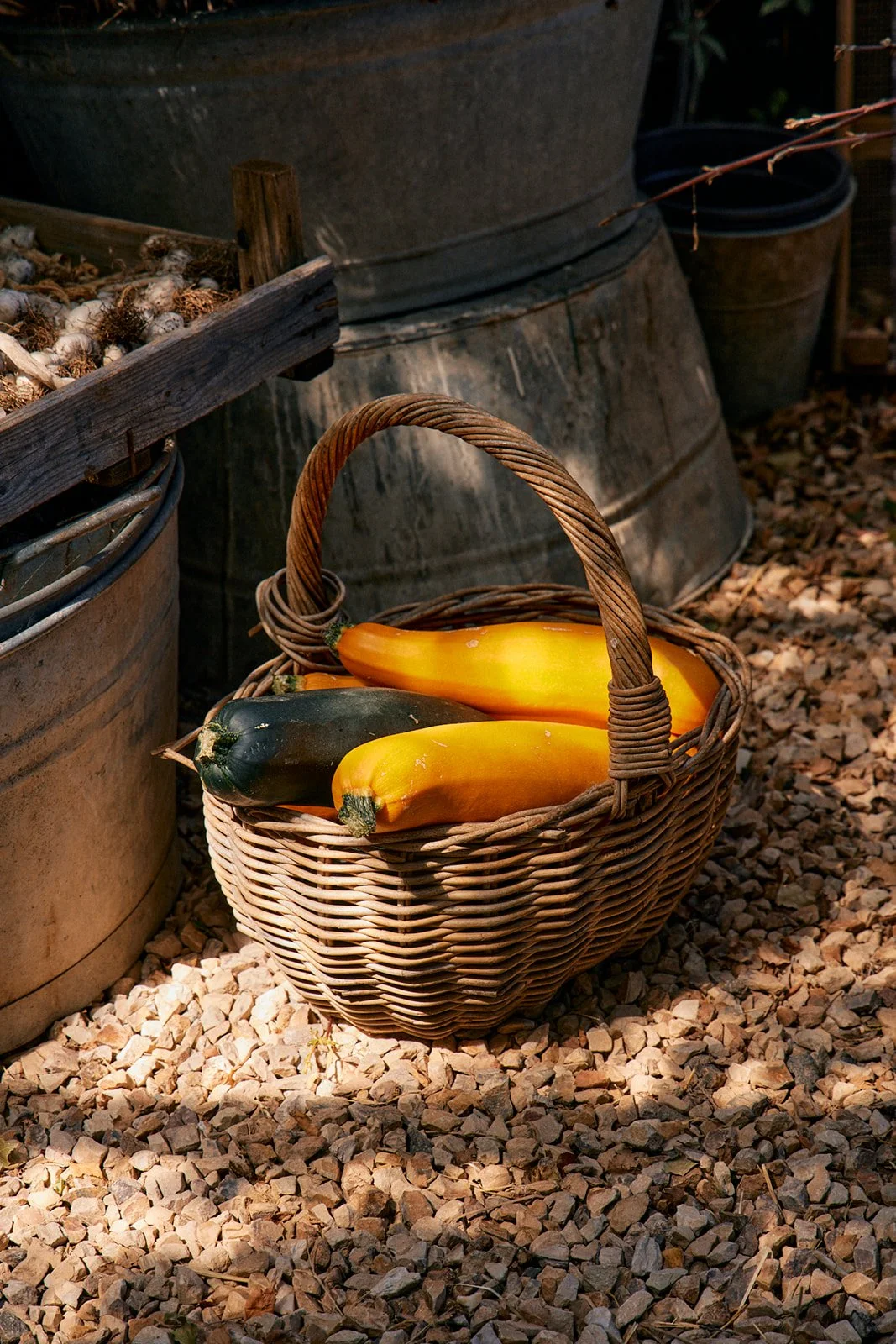
3. Harvest regularly for continuous yields

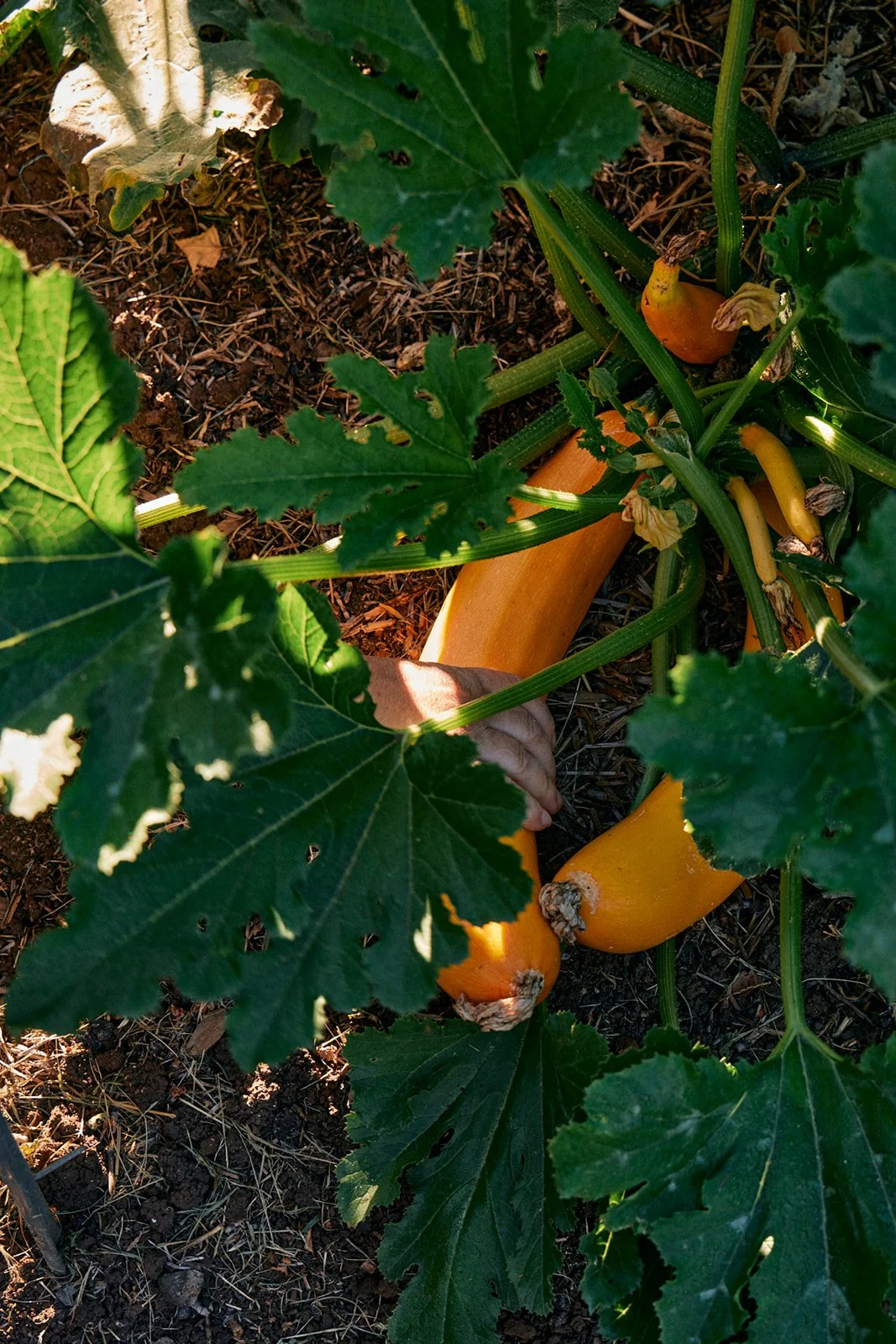
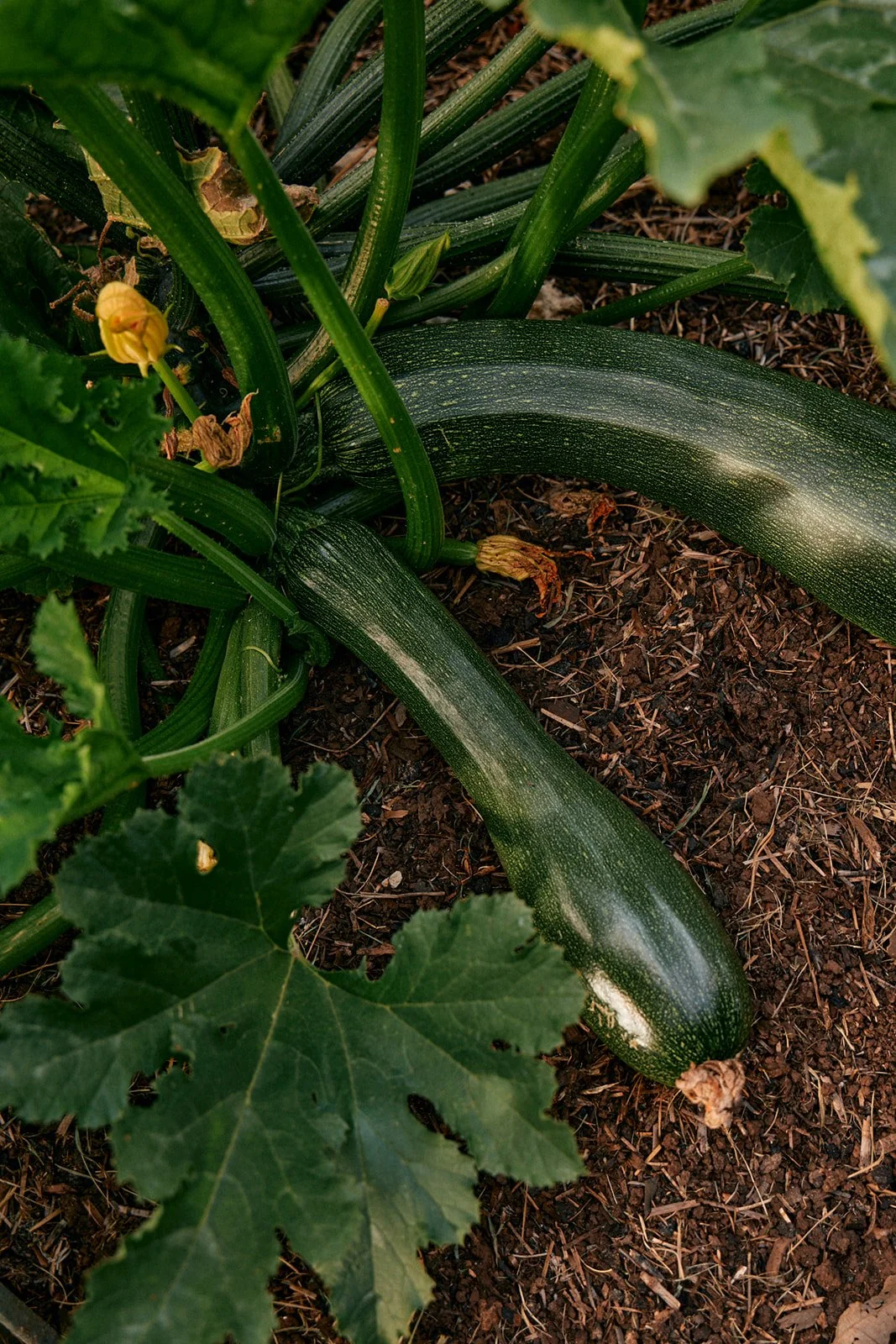
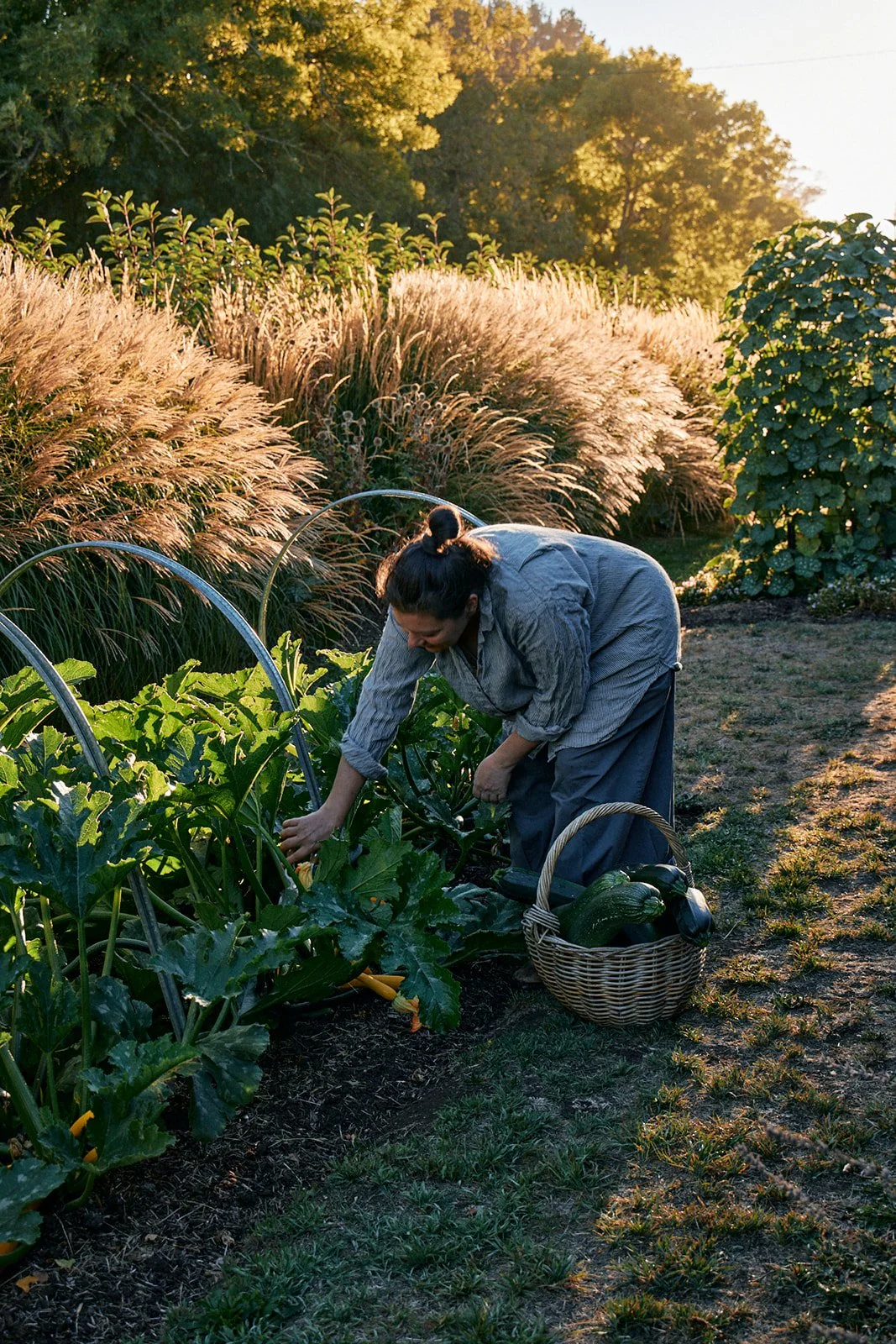
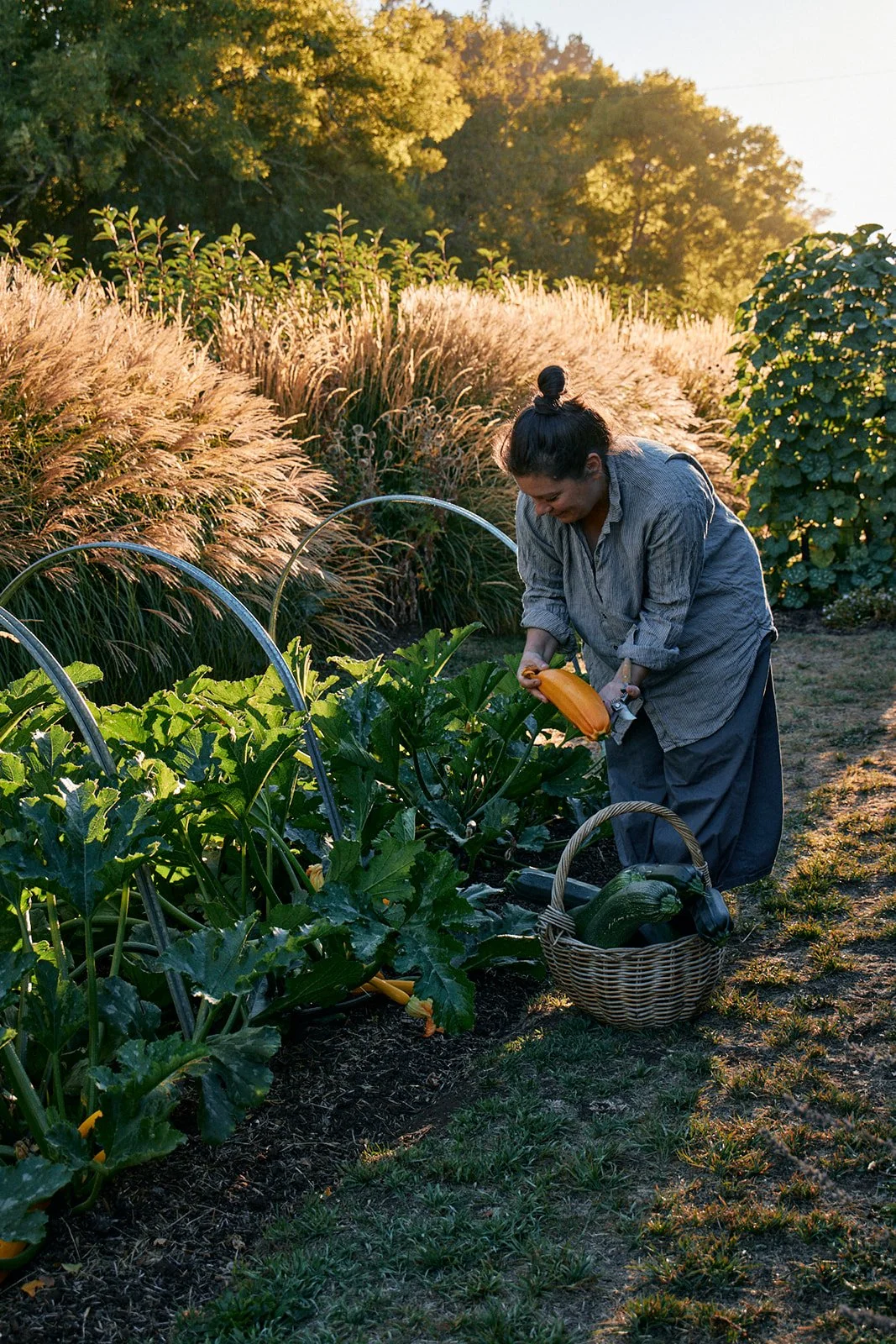
Zucchini are best picked small, fifteen to twenty centimetres, when the skin is still glossy. Regular picking keeps the plant flowering and fruiting. Leave a fruit on too long and the plant decides its work is done and puts everything into one marrow. In peak season I check the plants every second day. It is incredible how fast they move.
Natasha Morgan-EWeaving-Feb2025-166A4479.jpg Natasha Morgan-EWeaving-Feb2025-166A2118.jpg Natasha Morgan-EWeaving-Feb2025-166A4483.jpg Natasha Morgan-EWeaving-Feb2025-166A4486.jpg Natasha Morgan-EWeaving-Feb2025-166A4765.jpg Natasha Morgan-EWeaving-Feb2025-166A4514.jpg

4. Water wisely

Consistent, deep watering is the key. Water at the base of the plant, early in the morning, and keep the leaves dry, because wet leaves make mildew worse. Mulch around the base to hold moisture in and keep weeds down. Shallow daily watering keeps roots at the surface, which is exactly where you don't want them in February.

In a wicking bed the reservoir does this for you. The soil stays evenly moist from below, the leaves never get wet, and the plant never goes through the wet-dry-wet cycle that stresses it into dropping fruit. For a heavy feeder, keep a gap of fifty to seventy-five millimetres between mulch and stem, and top up with compost through the season.
5. Address pollination problems

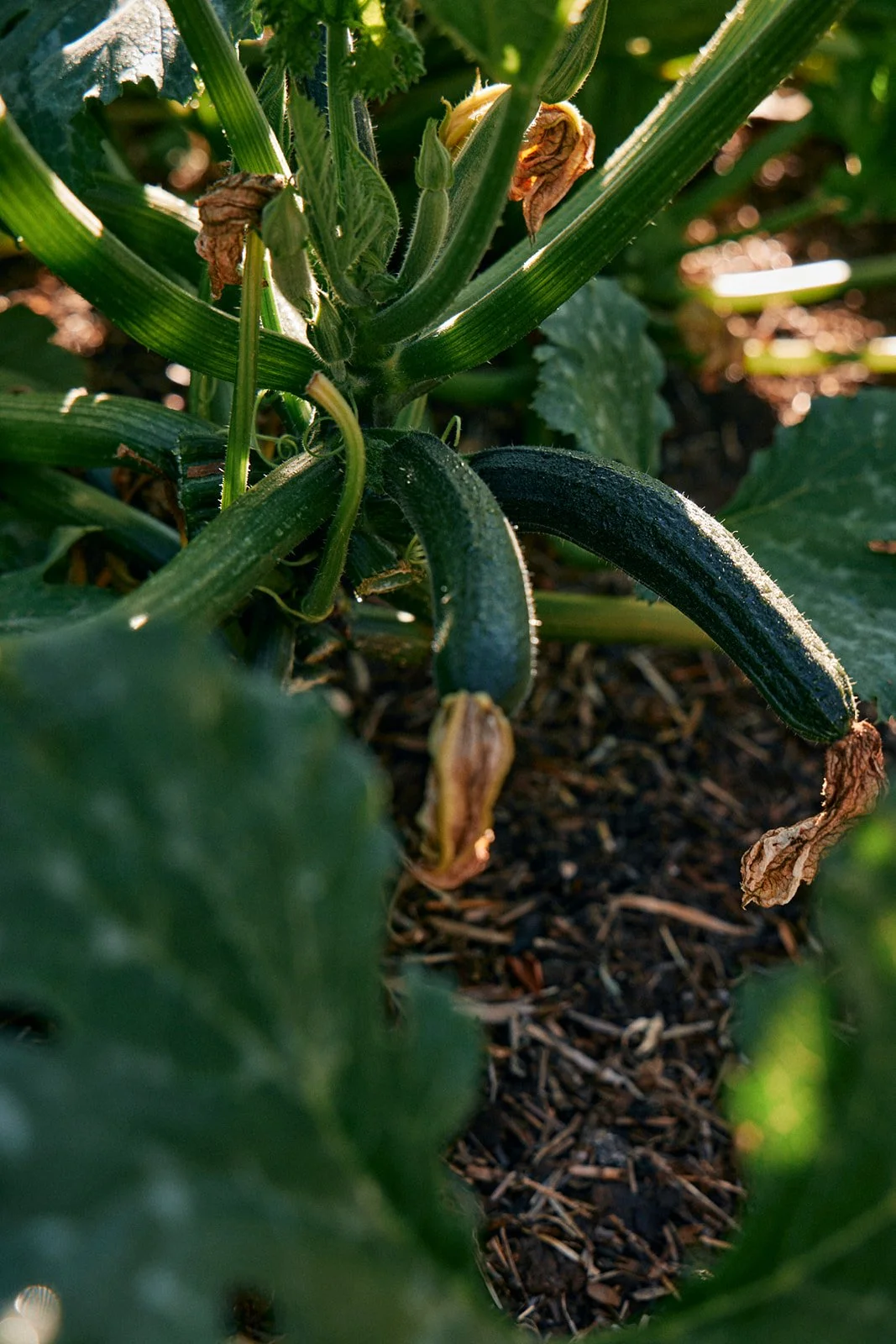
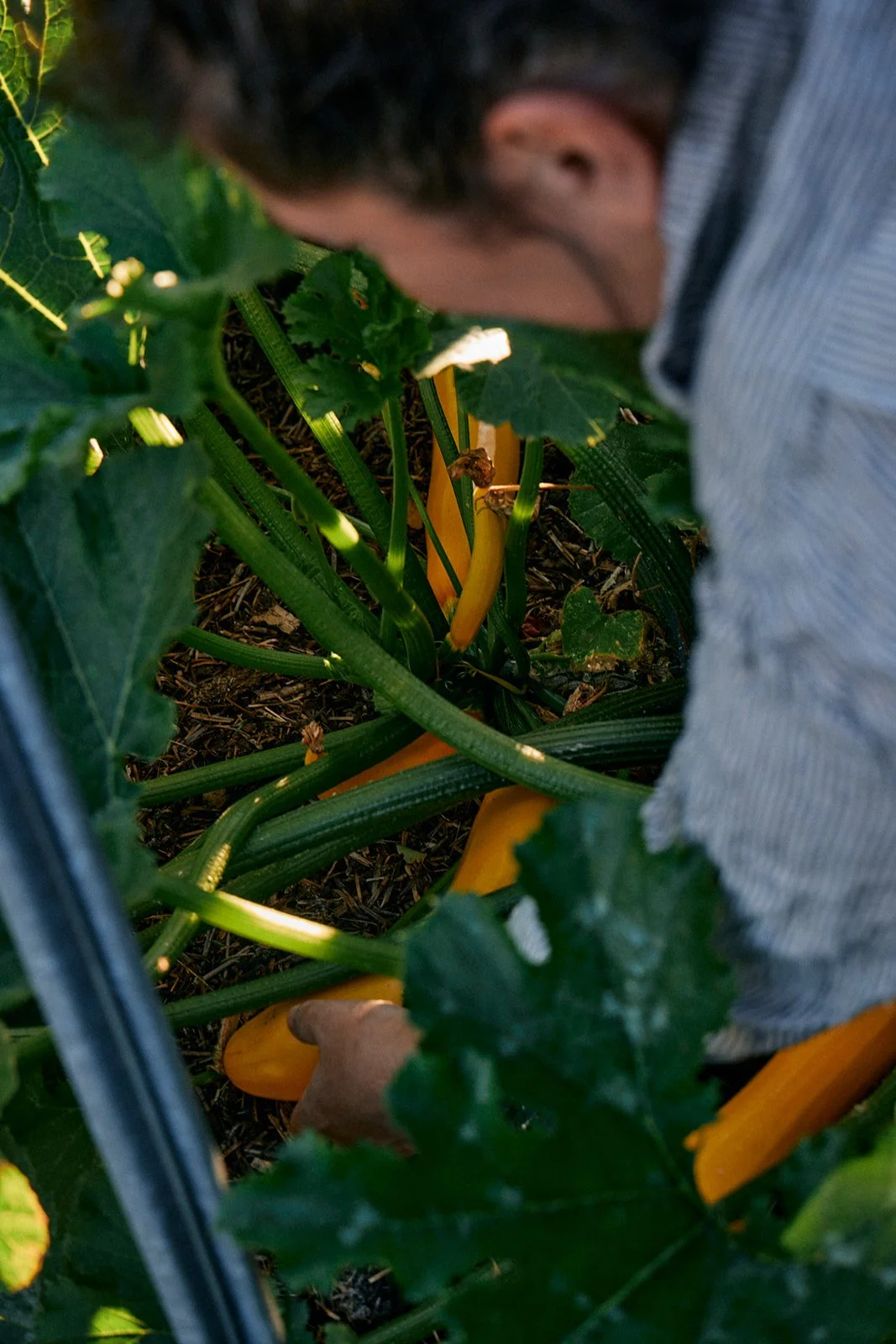
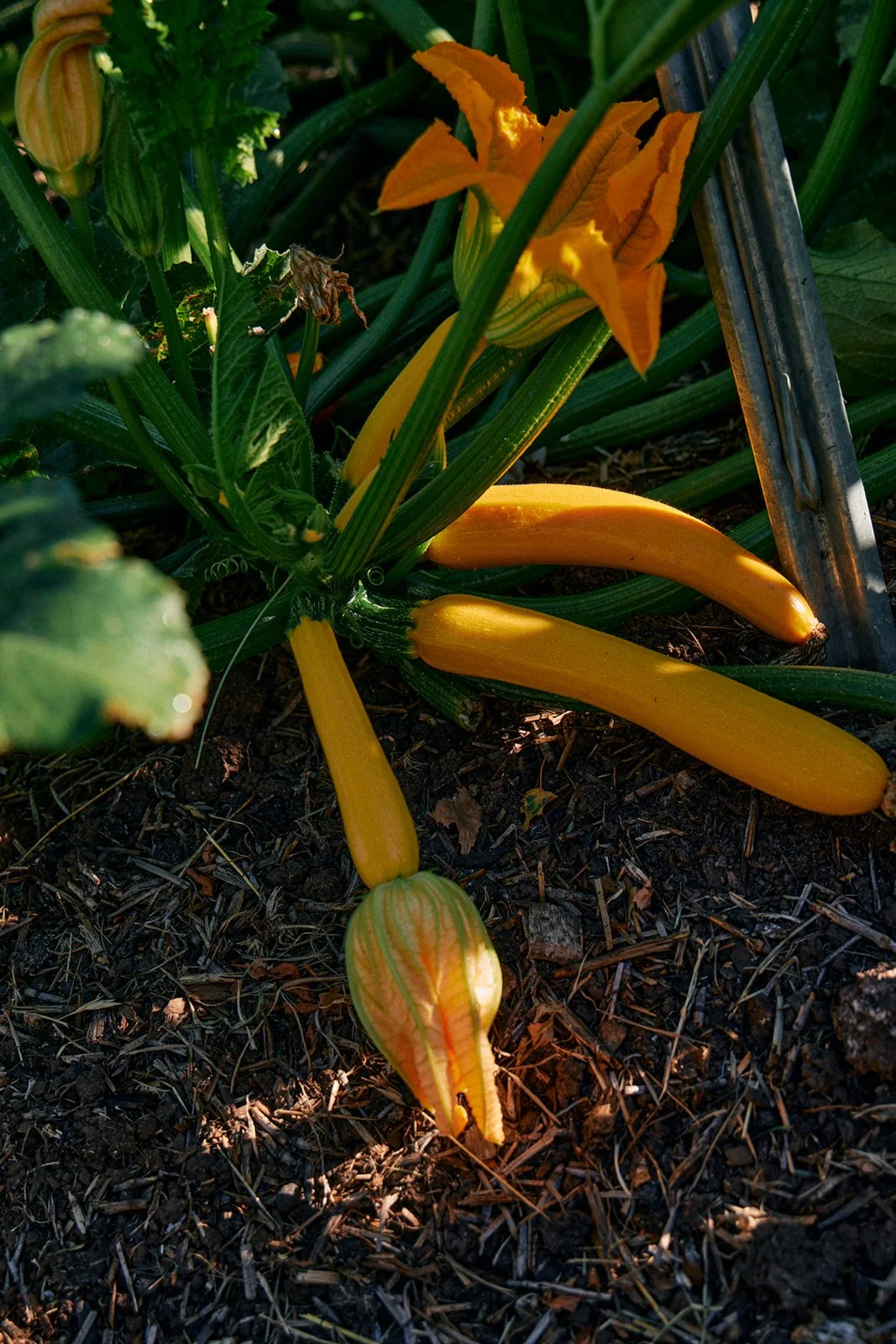
If small zucchini are yellowing and shrivelling from the tip before they mature, the cause is almost always poor pollination, not disease and not your soil. Zucchini carry separate male and female flowers. The male sits on a long, thin, straight stem. The female has a tiny fruit already formed at its base. If pollen does not make it from one to the other, the plant lets the fruit go.

Early in the season the plant often produces only male flowers for a week or two. That is normal. On cold mornings the bees are slow, so the window can pass without a visit. If you are not seeing bees, hand pollinate. Early in the morning, pick a male flower, peel back the petals, and brush the pollen gently onto the centre of a female flower. One male will do two or three females. It takes a minute and it makes all the difference to your harvest.

If the problem is a sunken, leathery, dark patch at the blossom end of a bigger fruit, that is blossom end rot, which comes from uneven watering. A different problem, with a different fix, and one the wicking bed largely solves.
What's your experience with growing zucchini?

Zucchini are a reminder of why I garden in the first place, fresh seasonal food straight from the soil and into the pan. The full piece, with more of the story, the wicking bed set-up, what I do in a heat spike and how to save seed that comes true, is on Substack.

Read the full piece on Substack: Here

Wicking Bed Garden workshop, Sunday 1 November, Little Cottage on a Hill, Daylesford. [Book here.]

The Wicking Bed Garden e-book, the design and the build, step by step. [It's here.]

The Productive Garden Companion, which includes the wicking bed guide. [Australia] | [Everywhere else]

Newsletter, for first word on new dates. [Subscribe]


Natasha xx

Continue your gardening journey with me

If this way of working with the seasons speaks to how you are thinking about your own garden, my workshops and book share the fuller version of it, with more detail and guidance on garden design, productive growing, soil care and seasonal practice.

The Productive Garden Companion is now available in Australia, the UK and the United States. Thank you to everyone who has bought it, shared it, sent me a photo of it, or come out to an event. More book events are being confirmed, and they are all listed in my newsletter.

The best way to hear about new dates before they go anywhere else is to be on the newsletter list. You can subscribe here. Newsletter subscribers get the first look at every new event, alongside seasonal notes from the garden, workshop updates, and practical ideas for growing beauty and abundance wherever you are.

If you are building your garden at home right now, my eBooks on Wicking Bed Gardens, Introduction to Backyard Chicken Keeping and Compost for Beautiful Productive Gardens offer practical guidance that pairs well with this seasonal work.

You may want to check out my related content below:

October Garden Tasks for All Climates

Hydrangea Paniculata: A Year-Round Beauty in the Garden

The Root: Shoot Ratio – Why Bigger Isn’t Always Better

Stay connected for more seasonal inspiration:

Instagram | Facebook | Substack | Gardenstead | LinkedIn | Pinterest | YouTube | Website  | Newsletter

Thanks so much for following along.

Natasha xx
Tags: seasonal gardening, garden planning, seasonal tasks, garden workshops, seasonal workshops, autumn gardening, April gardening, winter colour, productive garden, the productive garden companion
Prev / Next
Newsletter Block
This newsletter signup form needs a storage option. Edit the block and enter a storage location via the Storage tab.

Subscribe

Sign up with your email address to receive news and updates.

We respect your privacy.

Thank you!
Zucchini will take over a bed if you let them. I grow mine up a stake. This is how, and why your fruit keeps shrivelling.⁠
⁠
This week I planted out some of my frost-tender plants early, on the strength of watching this unusually warm spring closely.
Zucchini will take over a bed if you let them. I grow mine up a stake. This is how, and why your fruit keeps shrivelling.⁠ ⁠ This week I planted out some of my frost-tender plants early, on the strength of watching this unusually warm spring closely. My usual cutoff is Melbourne Cup weekend. Your date will be different. Observe your own garden before you follow mine.⁠ ⁠ Zucchini are heavy feeders. Sunny spot, rich free-draining soil, plenty of compost and aged manure before planting, and the soil has to be warm.⁠ ⁠ Grown flat, one plant wants a metre of space. I grow them as a single stem up a sturdy bamboo or hardwood stake, put in at planting and tied in loosely with soft elastic ties as it climbs. The ribbed Italian types like 'Costata Romanesco' suit this best. The footprint drops, the airflow improves (most of the fight against powdery mildew), and the fruit stops hiding under the leaves.⁠ ⁠ Pick small, fifteen to twenty centimetres, every second day in peak season. Two days is the difference between dinner and a doorstop.⁠ ⁠ Water deeply and less often, at the base, early in the morning, leaves dry. In a wicking bed the reservoir does this for you.⁠ ⁠ The one everyone asks me about. If small fruit are yellowing and shrivelling from the tip, that is an unpollinated fruit, not disease and not your soil. Male flowers sit on a thin straight stem. Females have a tiny zucchini at the base. Early in the season there are often only males for a week or two, and on cold mornings the bees are slow. So hand pollinate. Early morning, pick a male, peel back the petals, brush the pollen onto the centre of a female. One male does two or three females. A minute's work.⁠ ⁠ These are my wicking beds. I'm building one with a small group at Little Cottage on a Hill on Sunday 1 November. Can't make Daylesford? The Wicking Bed Garden e-book is in the shop too. Both at natashamorgan.com.au/shop⁠ ⁠ The full piece, with the story behind why I grow them this way and how to save seed that comes true, is on Substack: natashamorgangardens.substack.com⁠ ⁠ Natasha xx 🌿⁠ ⁠ #TheProductiveGardenCompanion #NatashaMorgan #WickingBeds #GrowingZucchini #ProductiveGarden⁠ ⁠
My wicking beds exist because of a $900 water bill. The first one I'd had to pay in over 10 years.⁠
⁠
Ten years at Oak & Monkey Puzzle on tank and bore water, and I'd never once seen one. Then we moved into town, to Little Cottage on a Hill, and
My wicking beds exist because of a $900 water bill. The first one I'd had to pay in over 10 years.⁠ ⁠ Ten years at Oak & Monkey Puzzle on tank and bore water, and I'd never once seen one. Then we moved into town, to Little Cottage on a Hill, and suddenly I was paying for every drop. I had to ask myself whether what I was doing out there was sustainable at all.⁠ ⁠ So I cut the tops off IBCs (those big 1,000 litre containers you see on farms), clad them in timber, painted them black for winter warmth and lined them up along the house side of the northern fence at hip height. Each one holds around 300 litres in a reservoir at the base, and the soil above drinks it up from below. At the height of summer I can go a week between waterings. And gardening standing up is a true gift, my back will tell you.⁠ ⁠ Then the harvest. From 6 of those 1x1m beds I picked over 160 kg of produce in just 8 weeks (yes I measured and weighed it all for my book ‘The Productive Garden Companion’). I've gardened my whole life, and still I was utterly blown away. Every crop you can imagine has thrived in my wicking beds and still does. Right now there’s cabbage, celery, purple sprouting broccoli, sugar snap peas, salad greens, cauliflowers, onions, carrots, edible flowers and so much more, all from a tiny space. (I don’t even have my summer crops in!) Coming from a property of 5 acres, that's the part that still astonishes me. Wicking beds are one of my greatest life hacks for creating water-wise beauty and abundance, for a truly productive garden. ⁠ ⁠ I'm opening the garden for a hands-on morning sharing everything you need to know. We'll walk through my garden, the wicking beds, talk soil, water, worm tunnels, what to plant and how to make it work in any garden, from a courtyard to acreage. Of course there will also be cake just out of the oven and a pot of tea.⁠ ⁠ 📅 Date: Sunday 1 November 2026⁠ 🕙️ Time: 10am to 12.30pm⁠ 📍 Location: Little Cottage on a Hill, Daylesford⁠ ⁠ Workshops are kept small, so tickets are strictly limited to 8. Book your place via the link in my bio 🌿⁠ ⁠ #NatashaMorgan #LittleCottageOnAHill #WickingBeds #WaterwiseGarden #TheProductiveGardenCompanion⁠
A perfect day for ducks, gumboots and gardeners! 🦆🥾🌱 Show us your love and join us at @bolobekgardenfair this weekend at The Garden Plot Bolobek is full to the brim with garden goodness, deliciousness and some mighty fine folk. What a happy team we make @thecottageherbalist @billypress_ @natasha_morgan_ 💛💛💛 #natashamorgan #Thecottageherbalist #billy #gardenfair #gardenevent
October is the month I stop being in charge of the garden. My job now is keeping up with it rather than starting it.⁠
⁠
The asparagus popped up overnight. The crab apple is in blossom and the last of the tulips are blooming underneath while the alliu
October is the month I stop being in charge of the garden. My job now is keeping up with it rather than starting it.⁠ ⁠ The asparagus popped up overnight. The crab apple is in blossom and the last of the tulips are blooming underneath while the alliums come up to meet them. The peas I sowed in September are climbing without being asked. The grass has gone from something I cut once in August to something that needs doing every ten days, if not more.⁠ ⁠ And the tomatoes are not going in. They are potted on, hardened off, sitting in the sun on the north side of the potting shed, and they will stay there until after Cup weekend. Every year someone asks me why mine are not in yet. Every year in the third week of October the frost reminds me why I wait until after the first week of November.⁠ ⁠ My October Garden Tasks blog is now up on the website, and on Substack. Tasks for all climates, what to sow and plant for each climate, both southern and northern hemisphere.⁠ ⁠ Thank you to everyone who has sent me a photo of The Productive Garden Companion turning up at your place. I look at every single one, and each one makes me smile, makes my day. ⁠ ⁠ If you are near the Macedon Ranges, I am hosting a stall at the @bolobekgardenfair this Saturday 3 and Sunday 4 October, with Phoebe Hartley from @billypress_ and Caroline, @thecottageherbalist. Bolobek opens their garden once a year and it’s spectacular. Come and find us there, please say hi!⁠ ⁠ Link in bio for the blog.⁠ ⁠ #productivegarden #GrowOneThing #TheProductiveGardenCompanion #NatashaMorgan #SpringGarden⁠
I had absolutely no intention of putting my face on video today. In fact, I was out on the verge picking rhubarb to make rhubarb, rose and vanilla bean syrup when the postie arrived. But when the postie brings you a book like this from @mydarlinglemonthyme , well… you sort of have to share it! And the timing couldn’t be more perfect, because this beautiful book is going straight into my bag and coming with me to @booksforcooksau tonight, where I’m heading along to one of Emma’s book launch events. What you might not know is that Emma is also one of the contributors to my book, The Productive Garden Companion. She is one of those truly lovely, down-to-earth, authentic, generous people who moves so naturally between cooking, growing and gardening. I’ve known Emma’s work through her cookbooks and her beautiful blog for years, but this book feels like an invitation to step right into her world — into her garden, her growing and her cooking — and it is extraordinarily beautiful and generous. It also feels like such a lovely synergy with where I am right now with The Productive Garden Companion. Congratulations, Emma. This really is something special. And I’m a pretty tough critic when it comes to books. This one is one of the good ones. xx #cookbooks #growyourown #EmmaGalloway #livingwell
Well. This just arrived in the mail, and to say I’m excited is putting it very, very lightly. Ten pages. I literally counted them like a kid. 1, 2, 3, 4, 5, 6, 7, 8, 9, 10 pages in the November issue of @bhgaus Better Homes and Gardens, and I am so incredibly chuffed. I had the most beautiful chat with Jenny Dillon. She asked whether I think of myself as a landscape architect or a gardener first, and I still don’t have a tidy answer for any of it. She asked whether I control my garden or my garden controls me. I told her about my sometimes unforgiving relationship with the garden (yes I pulled out the magnificent plume poppies when they got too unruly and that’s kind of how I roll!). There’s a suit of incredible photography of my ‘natural habitat’ at Little Cottage on a Hill and Oak & Monkey Puzzle (thank you @weaving and @caitlinmillsphotography ), and an extract from my just released and already best seller book, The Productive Garden Companion, on trace-layer mapping and planning by noticing rather than by calendar. If you’ve been to a workshop with me you’ll recognise all of it. I’m in some pretty fine company in this issue too, alongside @rewildingsuburbia @gardening.with.ingrid which is the icing on the cake, so get your copy, have a read, and I would love to know what you think. It’s a jam packed issue. Oh, and one last thing. My book has gone a little bit nuts over the last week and a half, and that is because of ALL of YOU. Last week in its very first week it hit No. 41 across all book sales in Australia. Every category, every price point. I might have had a little cry over the weekend. And that’s because none of that happens without you. So thank you, literally from the bottom of my heart. xx @murdochbooks #TheProductiveGardenCompanion #BetterHomesAndGardens #MurdochBooks #NatashaMorgan #GardenDesign
Transform Your Garden This Spring: 3 Simple Jobs to Kickstart the Season⁠
⁠
As spring announces its arrival, I’ve been busy back in the garden. Now is the perfect time to refresh your garden and prepare it for the vibrant season ahead. Here&rsq
Transform Your Garden This Spring: 3 Simple Jobs to Kickstart the Season⁠ ⁠ As spring announces its arrival, I’ve been busy back in the garden. Now is the perfect time to refresh your garden and prepare it for the vibrant season ahead. Here’s three essential tasks I’m doing to ensure I’m nurturing a garden that thrives:⁠ ⁠ Winter Garden Cutback: I’ve recently cleared away the old spent winter seedheads, dried umber grasses and any foliage that has died back to welcome the new, allowing my spring plants to flourish. If you haven’t started there is still time!⁠ ⁠ Fertilise: Enriching and nurturing the soil with organic, certified fertilisers or the best locally available manures and composts provides the nutrients your garden needs to thrive. Healthy, vibrant soils mean healthy, vibrant plants. Soil is the foundation of any good garden.⁠ ⁠ Check Irrigation: Take a moment to ensure your irrigation system is ready to support your garden’s growth as the days grow warmer. I’m flushing out drip irrigation from the end caps to remove any debris.⁠ ⁠ By tending to these tasks now, you’ll set the stage for a season filled with growth, beauty, and abundance. New growth is already starting to push through the ground, so it’s definitely time.⁠ ⁠ Join my workshops: If you feel inspired to learn more about how you can set your garden up for success, why not join me at an upcoming workshop where I’ll share the joy of a garden that thrives? ⁠ ⁠ With the onset of spring, I’m shaking things up a bit around here, and I look forward to sharing more tips, tricks, and things happening in my garden at Little Cottage On A Hill. Here’s to a flourishing spring!⁠ ⁠ #TheProductiveGardenCompanion #NatashaMorgan #springgardentasks #springgarden #growonething⁠
The Productive Garden Companion is out in the USA. So I thought I’d celebrate by introducing you to one of the book’s North American contributors @christian_douglas_design. Christian Douglas is a British-born Californian landscape architect and garden designer. His practice, Christian Douglas Design, creates ecologically informed, food-productive landscapes. He has spent more than 30 years making gardens across England, Jordan and the United States. His projects have been covered by Architectural Digest, The Wall Street Journal, The Financial Times and many many more. And his design philosophy lives in his own beautiful book, The Food Forward Garden (definitely worth a read!) Christian, his studio and his backyard-farming crew at @thebackyardfarmco spent twelve years designing and farming side by side, and what they learned is simple: “When you grow food close to the house, people garden more, they learn quicker, they eat healthier.” Follow that idea through our conversation and you arrive here, at his hope for where garden design goes next: “My hope and dreams is that we actually remove the term edible, and they’re just called landscapes.” This clip is just a tiny snippet of the generous conversation Christian shared with me. The full conversation is available via the book’s QR-linked pages, along with conversations with 24 contributors from all over the world. The Productive Garden Companion is out now in Australia, the UK and the USA. Order wherever you are in the world via the link in my bio. If Christian’s words resonate, please share them with a gardening friend on your side of the world. Check out his work and book and let’s keep these conversations and important work going. Thanks so much Christian! It’s such a privilege to have your thoughts and words so generously shared find a way into my book. #Gardening #GardenDesign #KitchenGarden #GrowYourOwn #TheProductiveGardenCompanion @murdochbooks @murdochbooks_uk
I usually dread the big spring chop, but not this year! And well, that's because everything from the garden cutback was going to be transformed into something incredible. But more of that tomorrow…⁠ ⁠ Spring is a little later here in my Daylesford cold temperate garden. Over the years I've come to understand spring not as a date on a calendar but as an unfolding of small events. Each small observation compounds in my mental notebook through my morning garden lap until my brain shouts out to me - 'it's happening! Spring is nearly here!'⁠ ⁠ That moment hit last week. The little glimmer of fresh green shoots about to pop beckoned that it's time to shed the garden's winter layers! This big chop is a task I leave as long as I possibly can. The filigree of winter seed heads and umber grasses provide visual interest and structure across the colder months, but also, most importantly, they provide harbour and sustenance for insects and birds. The lorikeets go mad for the echinacea seedheads, and insects find homes inside hollow stems.⁠ ⁠ I believe a garden should be designed for interest all year round, and so with the 1000 fragrant jonquils and daffodils I planted as an understorey to winter, now pushing through the earth and many already flowering, it's time to let the spring bulbs sing whilst the rest of the garden wakes up.⁠ Here's a little video of the big chop. Now's the time to get inspired to refresh your own garden.⁠ ⁠ And tomorrow I'll show you where every armful of it ended up. It's not what you'd expect.⁠ ⁠ #springgarden #gardenmaintenance #wildlifegarden #TheProductiveGardenComoanion #NatashaMorgan⁠
They used to call Charles Dowding @charles_dowding the lazy gardener. He told me this from his extraordinary experimental no-dog market garden and international flagship, Homeacres in Somerset, UK, me at the kitchen table in Daylesford, Australia, in a conversation I recorded for The Productive Garden Companion. Somewhere along the way hard work became the point of gardening, and Charles has spent 40 years asking whether it has to be. Feed the soil and let the biology do the rest. It’s the same thing I’ve been trying to say about a whole garden: make one that gives more than it takes, do it thoughtfully and then consider if there’s ways you can ‘get out of its way’ to reap the rewards. That’s why the book holds whole conversations. Scan the QR code on the no-dig pages and you’re listening to Charles, unscripted, in real conversation generously and authentically shared. There are QR codes like this all through the book. Two years of work, and these are the part I’m probably proudest of - the part that takes the book beyond its pages and continues to expand with time. Books generally are capsules fixed in time. My hope is that this one shares, gives and evolves, but most importantly that it continues to walk beside you as your own garden journey grows. Charles has walked alongside me in my own growing journey over the years, providing hard won insight and inspiration. His conversation with me is an invitation for him to walk beside you too! I’m so honoured to announce that The Productive Garden Companion is out now in the UK (Murdoch Books) wherever you buy books, or via the link in my bio. Thank you so much Charles for finding your way into its pages. @murdochbooks_uk @murdochbooks #nodig #charlesdowding #theproductivegardencompanion #NatashaMorgan #ukgardening