• About
  • Shop
  • Preserve
  • Blog
  • Contact
  • The Book
  • Cultivate
  • Forage
  • Menu

Natasha Morgan

  • About
  • Shop
  • Preserve
  • Blog
  • Contact
  • The Book
  • Cultivate
  • Forage

Growing Zucchini: Space-Saving and Pollination Tips for an Abundant Harvest

October 06, 2026

Zucchini are a staple of my summer garden. They will give you more food per plant than almost anything else you grow, and they will take over a bed if you let them. I have grown them since childhood veggie patches, through the five acres at Oak and Monkey Puzzle, and now in the wicking beds here at Little Cottage on a Hill in Daylesford, where last summer they were a big part of a hundred kilos of food in fifty days. This is what I have learnt about growing them well in a small space, and about the one problem almost everyone writes to me about.

One note before the method. Everything here is what I do, in my garden, on volcanic soil in the Central Victorian Highlands. My usual cutoff for planting anything frost-tender is Melbourne Cup weekend, though this season is running warm and I have planted some out early on the strength of watching the garden closely. Your date will be different. Observe your own garden before you follow mine.
Natasha Morgan-EWeaving-Feb2025-166A2051.jpg Natasha Morgan-EWeaving-Feb2025-166A4472.jpg Natasha Morgan-EWeaving-Feb2025-166A4488.jpg

Why zucchini

I have grown zucchini for as long as I have grown anything. Childhood veggie patches, then the five acres at Oak and Monkey Puzzle in Spargo Creek, and now here. They are the plant I point people to when they want to grow one thing and don't know where to start. A zucchini in a patch of borrowed dirt will feed you. It will also teach you more about how a plant works, and what it does when something is missing, than almost anything else in the garden.

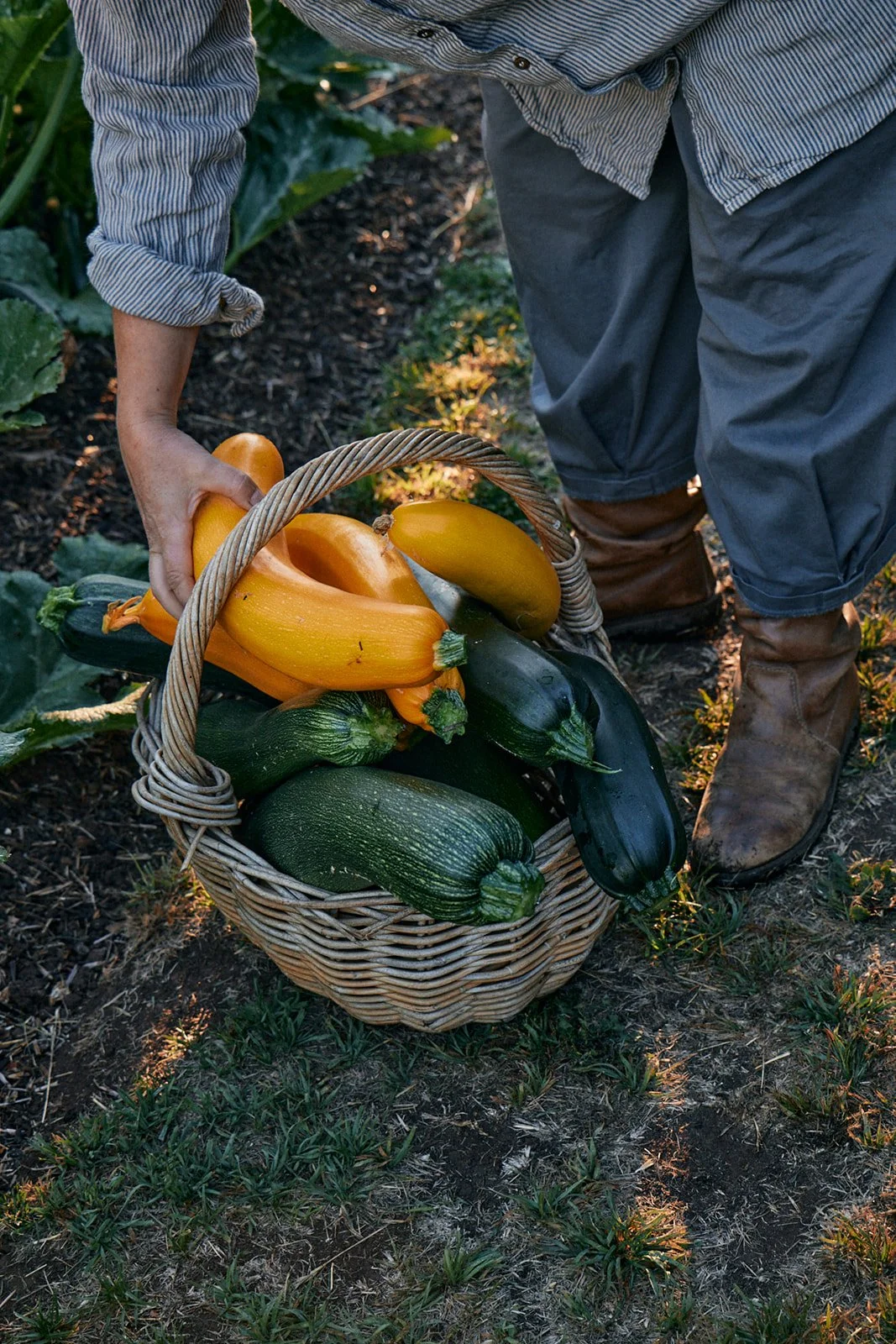
Last January I came in from the wicking beds one morning with an armful of 'Nitro' and 'Goldy', green and yellow, grown from Lambley Nursery seed, and sat down and wrote the first version of this piece. That summer the wicking beds gave me over a hundred kilos of food in fifty days. Tomatoes, cucumbers, herbs, greens, and a great many zucchini. A good portion of that came off plants I had trained to grow up rather than out, which is the part most people don't expect.
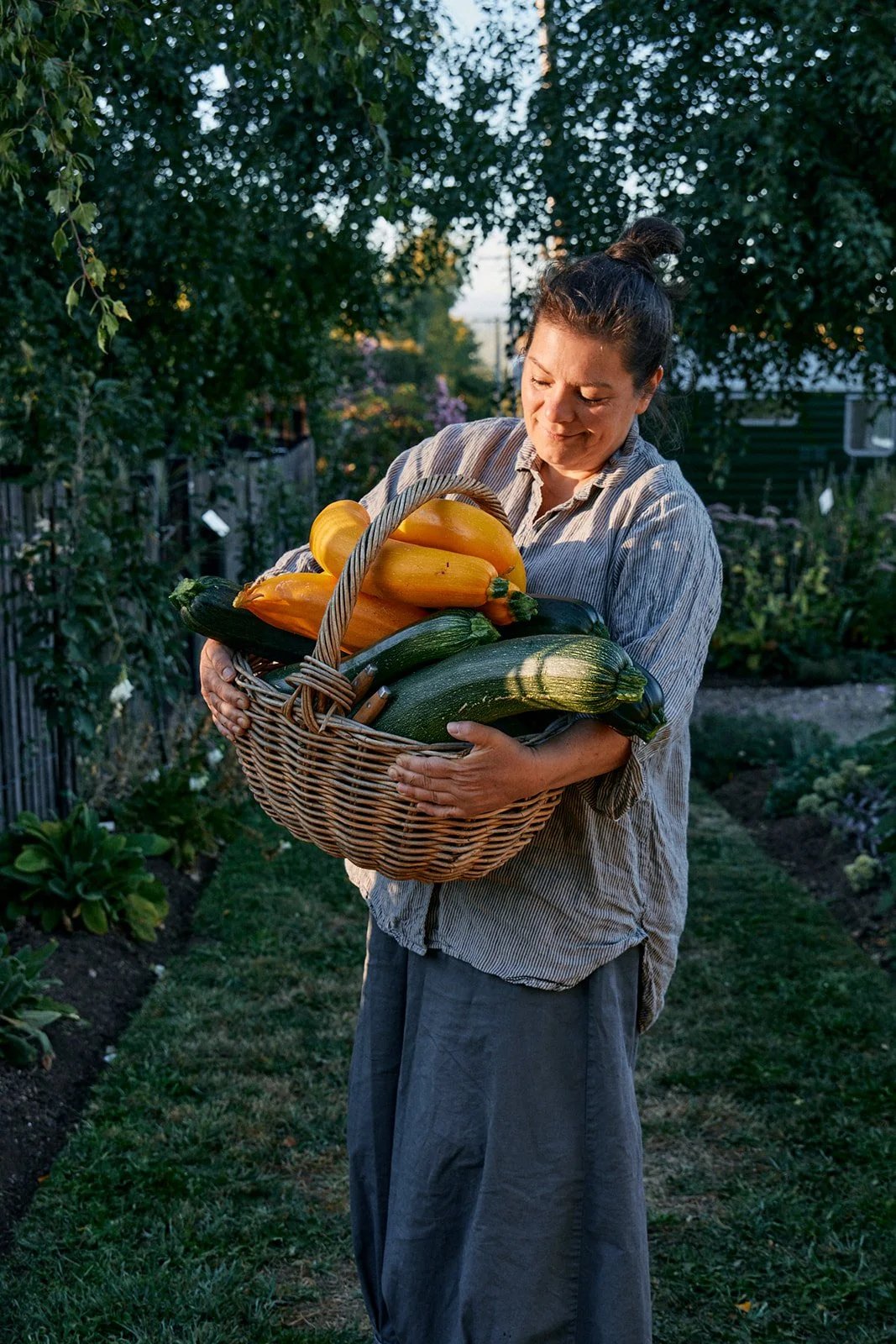
1. Prepare the soil, and wait for warmth

Zucchini are heavy feeders. Give them a sunny spot and rich, free-draining soil, with plenty of compost and aged manure worked in before planting. The soil has to be warm; pushed into cold ground they sit and sulk and the slugs find them first. In my cool temperate climate the planting window runs from late spring through to January. If you are growing them traditionally, allow about a metre per plant.

In crop rotation, zucchini sit with the fruiting crops alongside tomato, capsicum, eggplant and cucumber. They follow the leafy greens in the bed sequence, and the cucurbit family stays out of the same bed for three to four years.
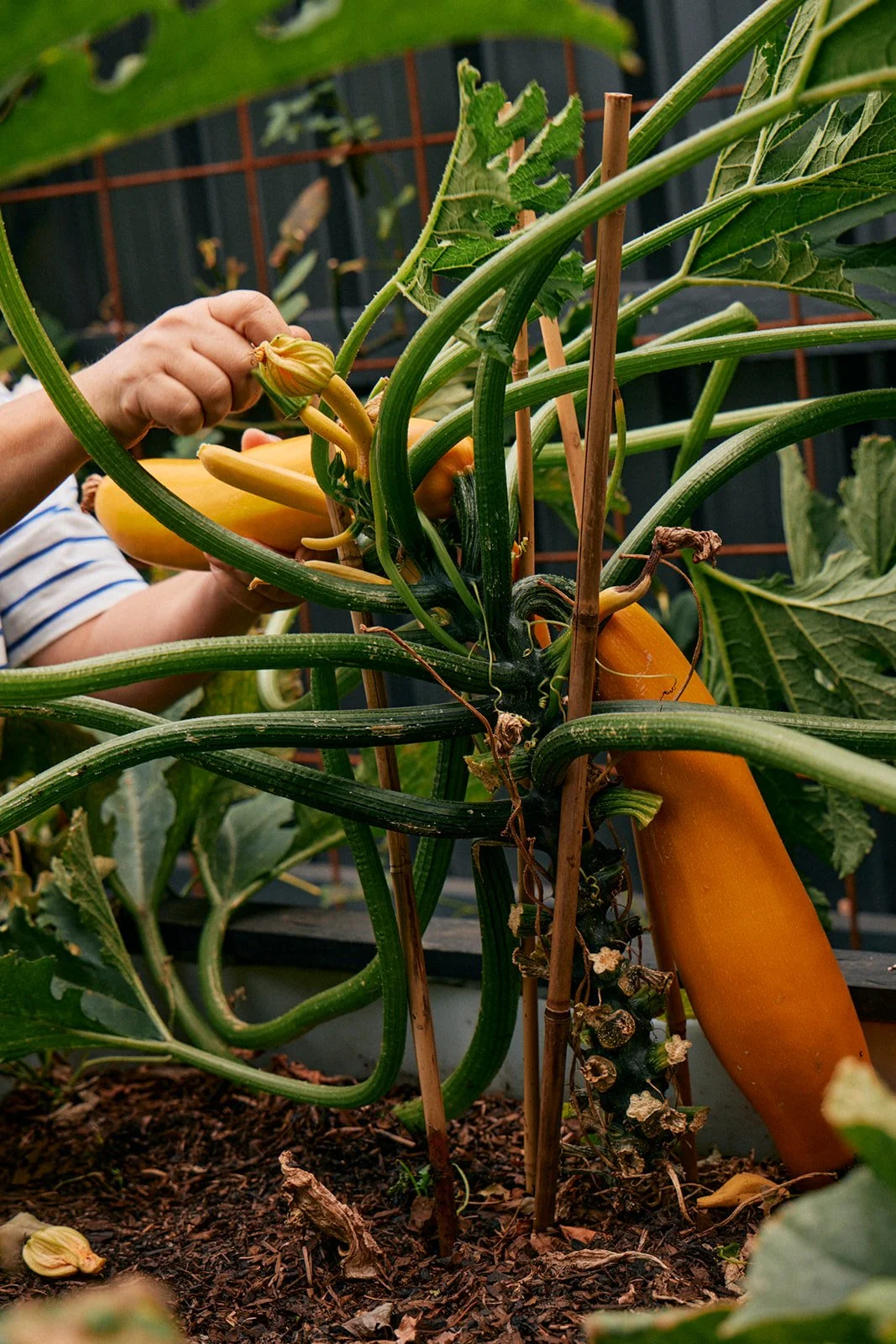
2. Save space by growing them up

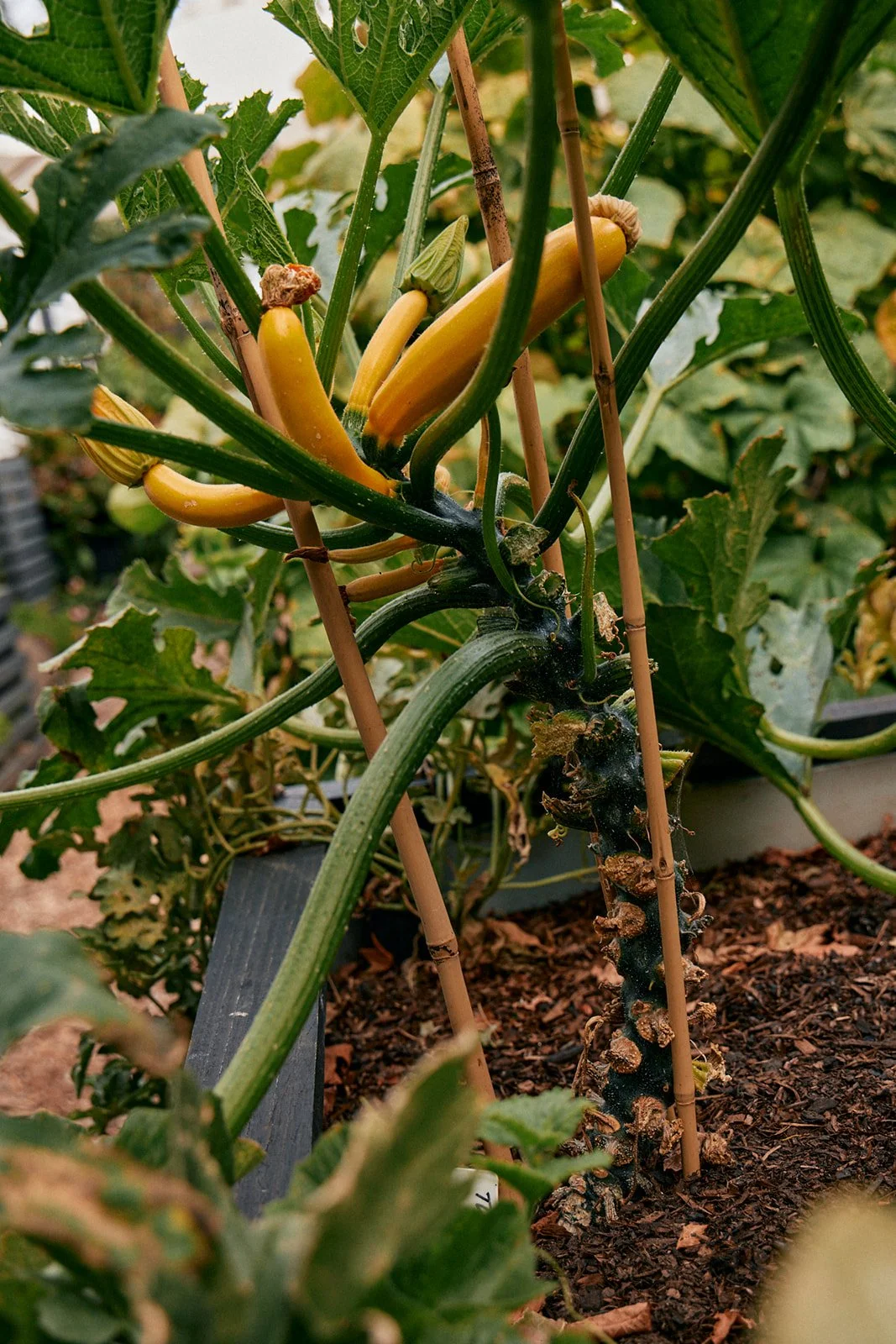
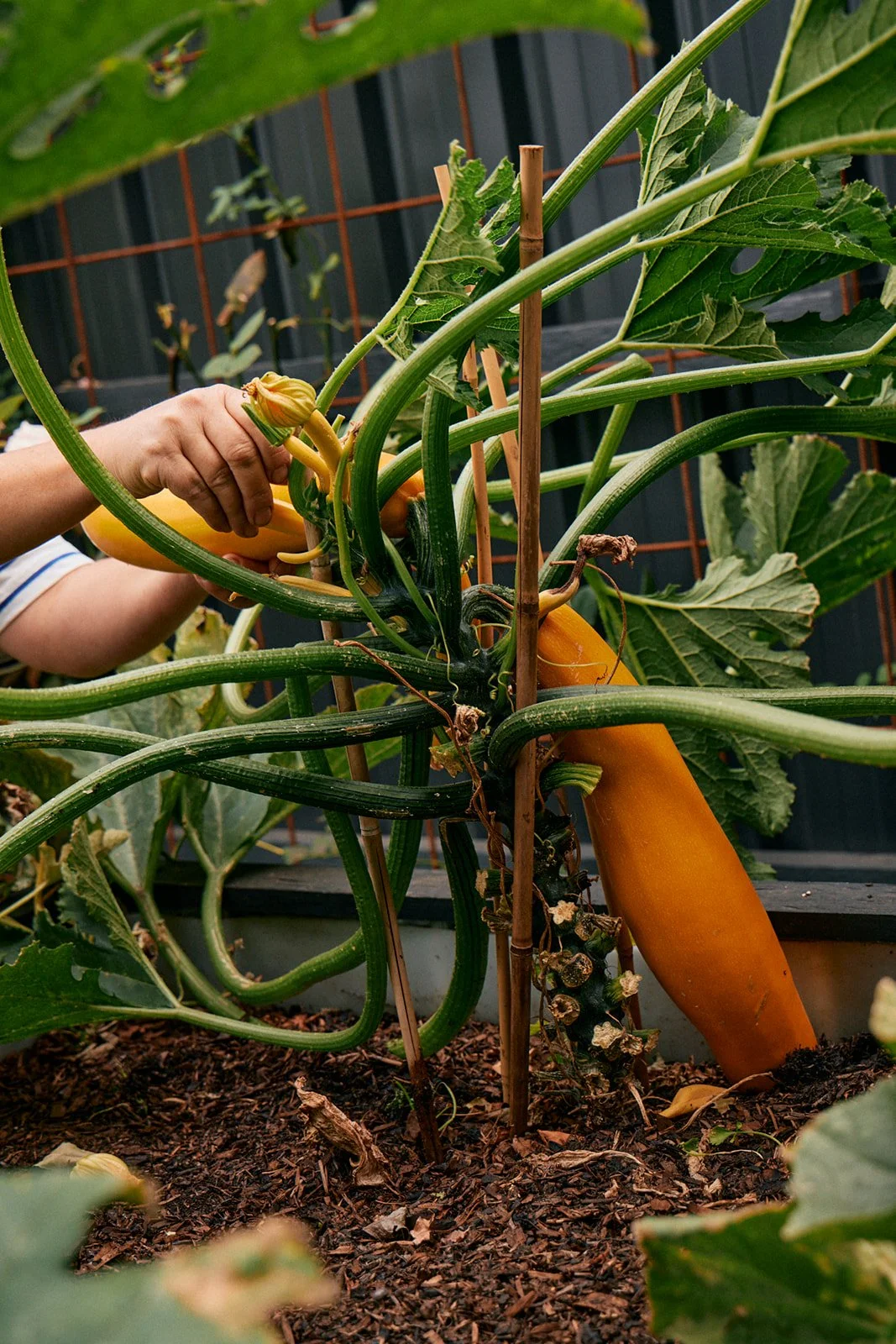
One of the most useful things I have learnt is to grow zucchini as a single stem up a stake. Put a sturdy bamboo or hardwood stake in at planting, before the roots spread, and tie the stem in loosely with soft elastic ties every twenty or thirty centimetres as it climbs. The ribbed Italian types such as 'Costata Romanesco' suit this best, though bush varieties will do it with more tying in.

The footprint drops to a fraction of what it was. The airflow around the leaves improves, which matters enormously for powdery mildew in a warm, humid summer. And the fruit stops hiding under the leaves. Later in the season you can remove the lower leaves once the fruit below them is picked, which opens the base of the plant to air and light.

In the wicking beds I plant at the edge so the plant can go up a frame or trail down over the timber cladding. The outside face of a raised bed is growing space most gardens never use.
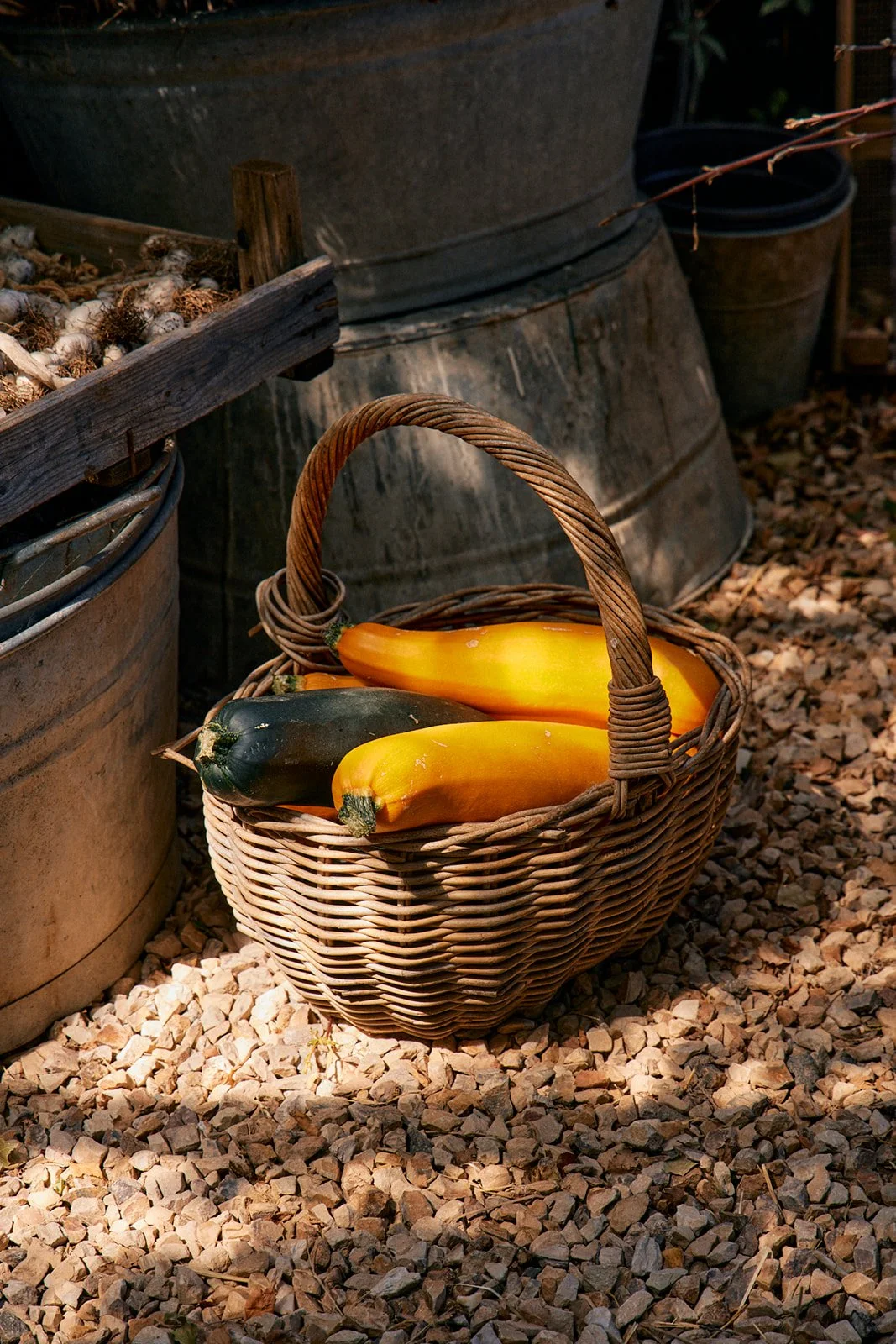
3. Harvest regularly for continuous yields

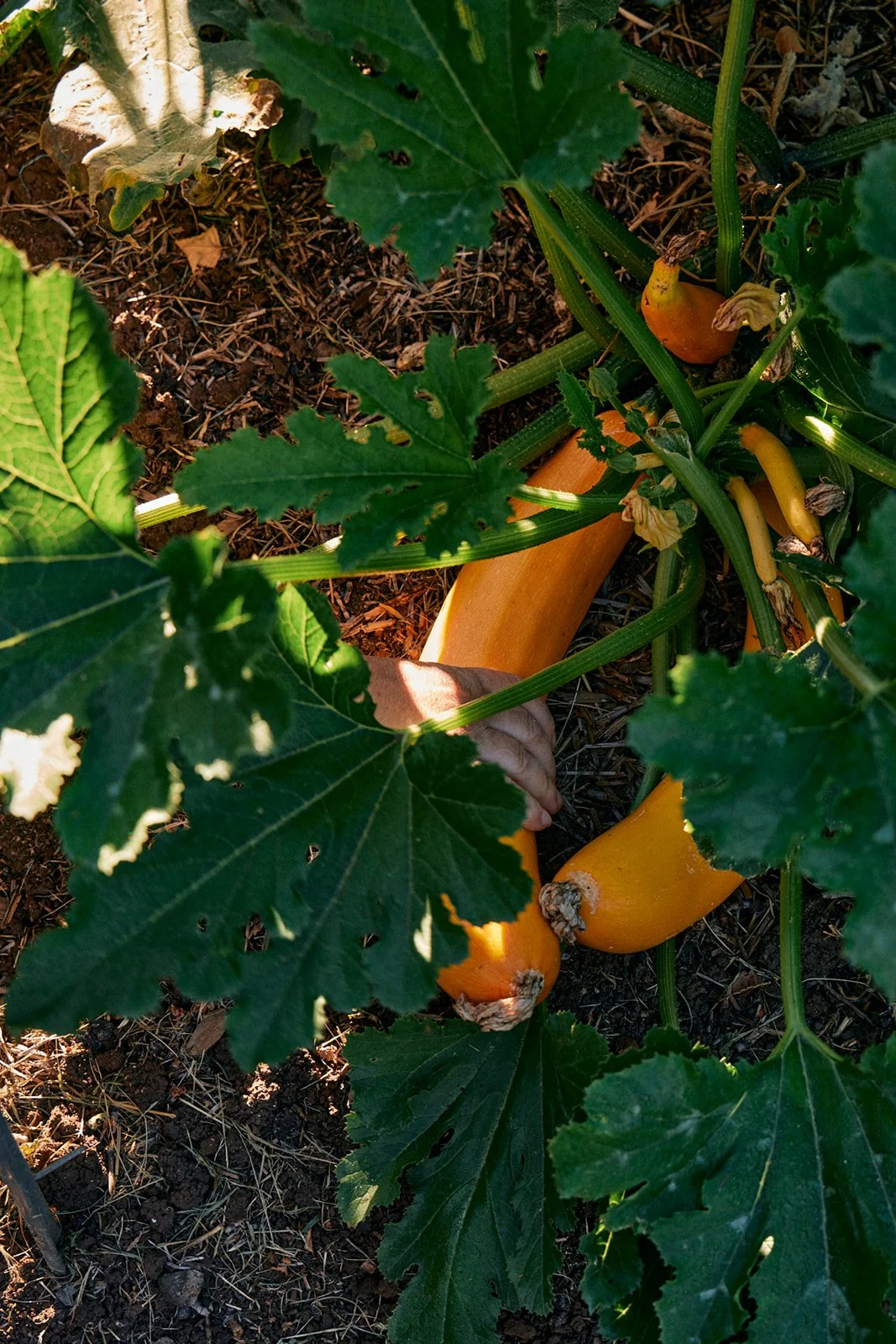
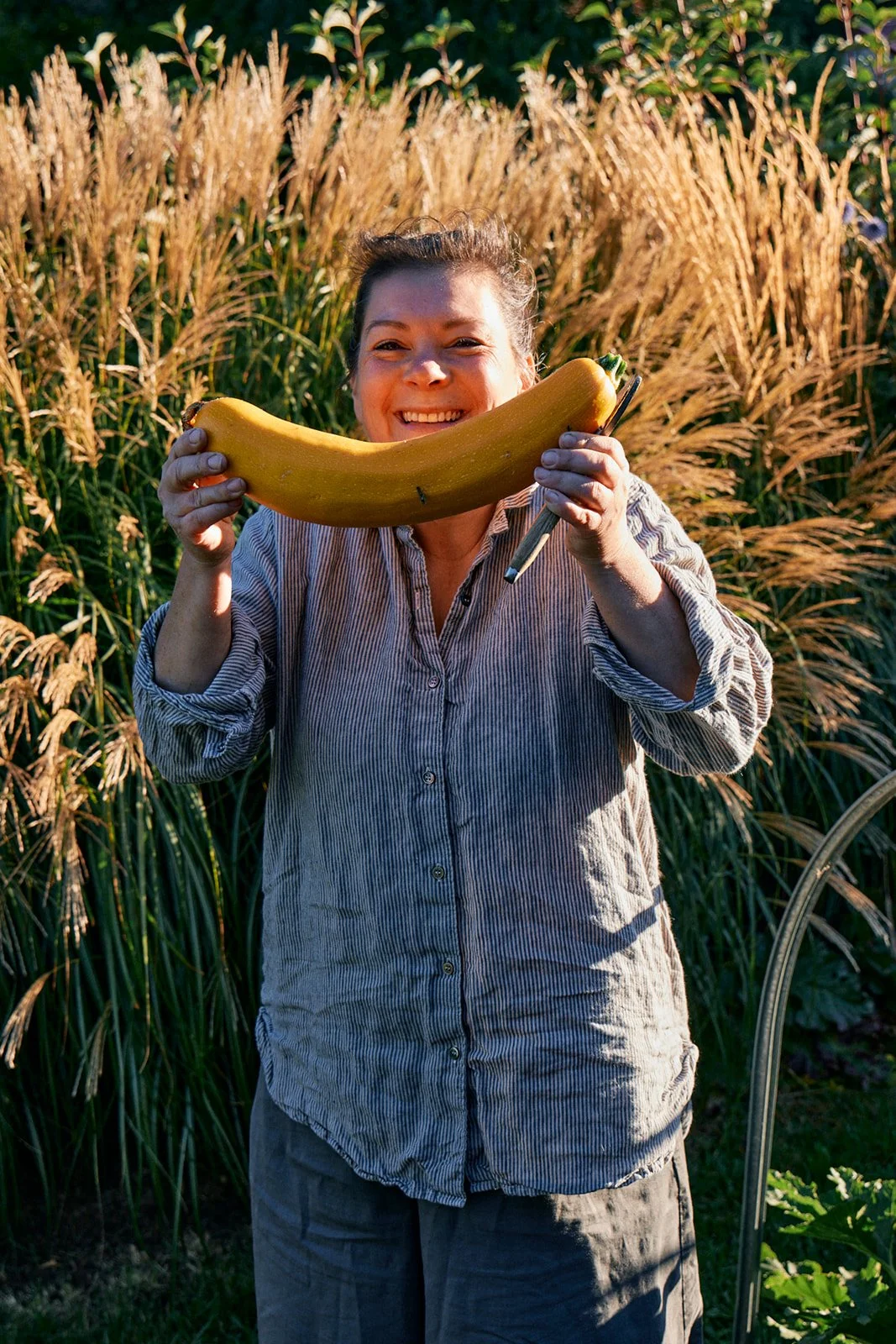
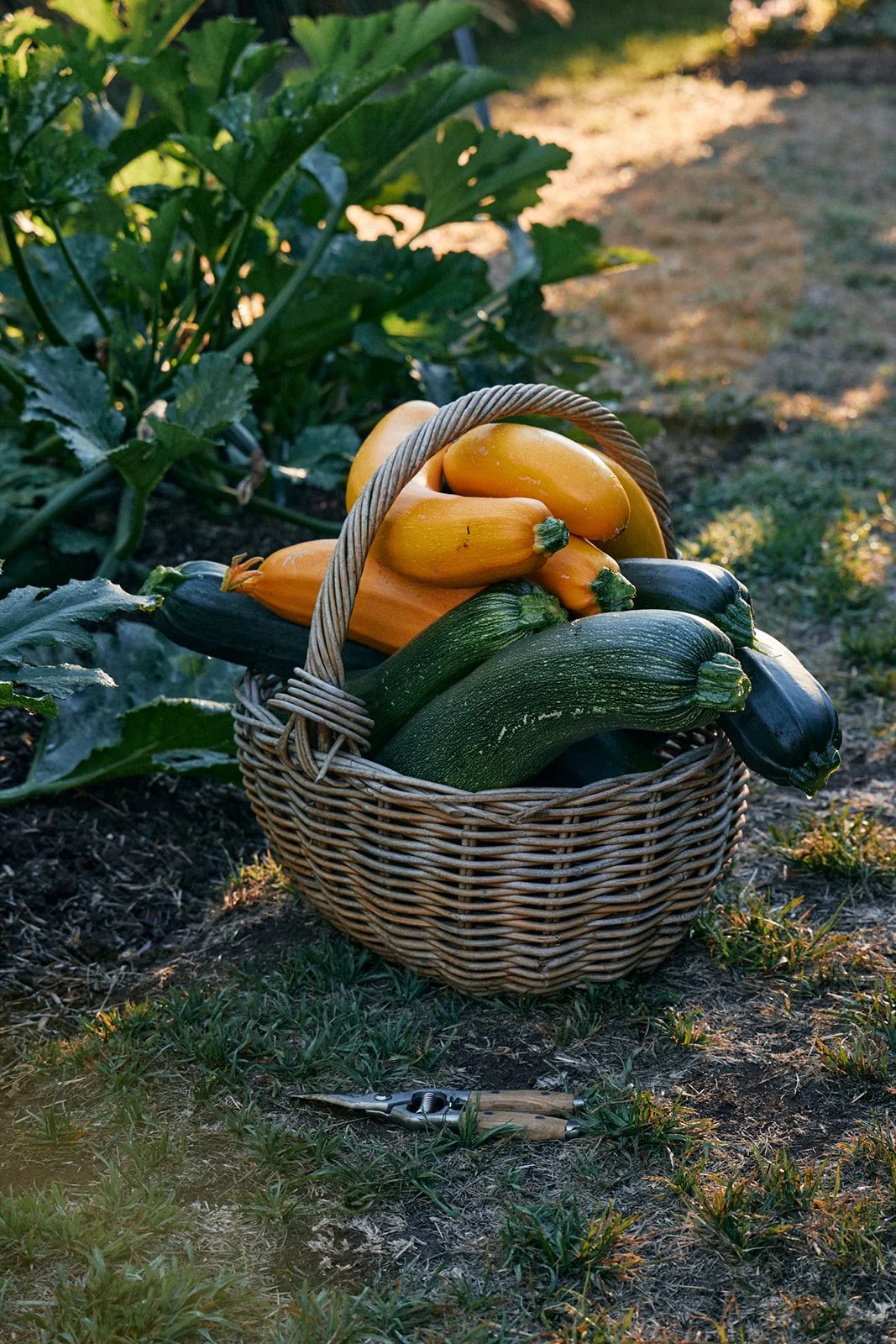
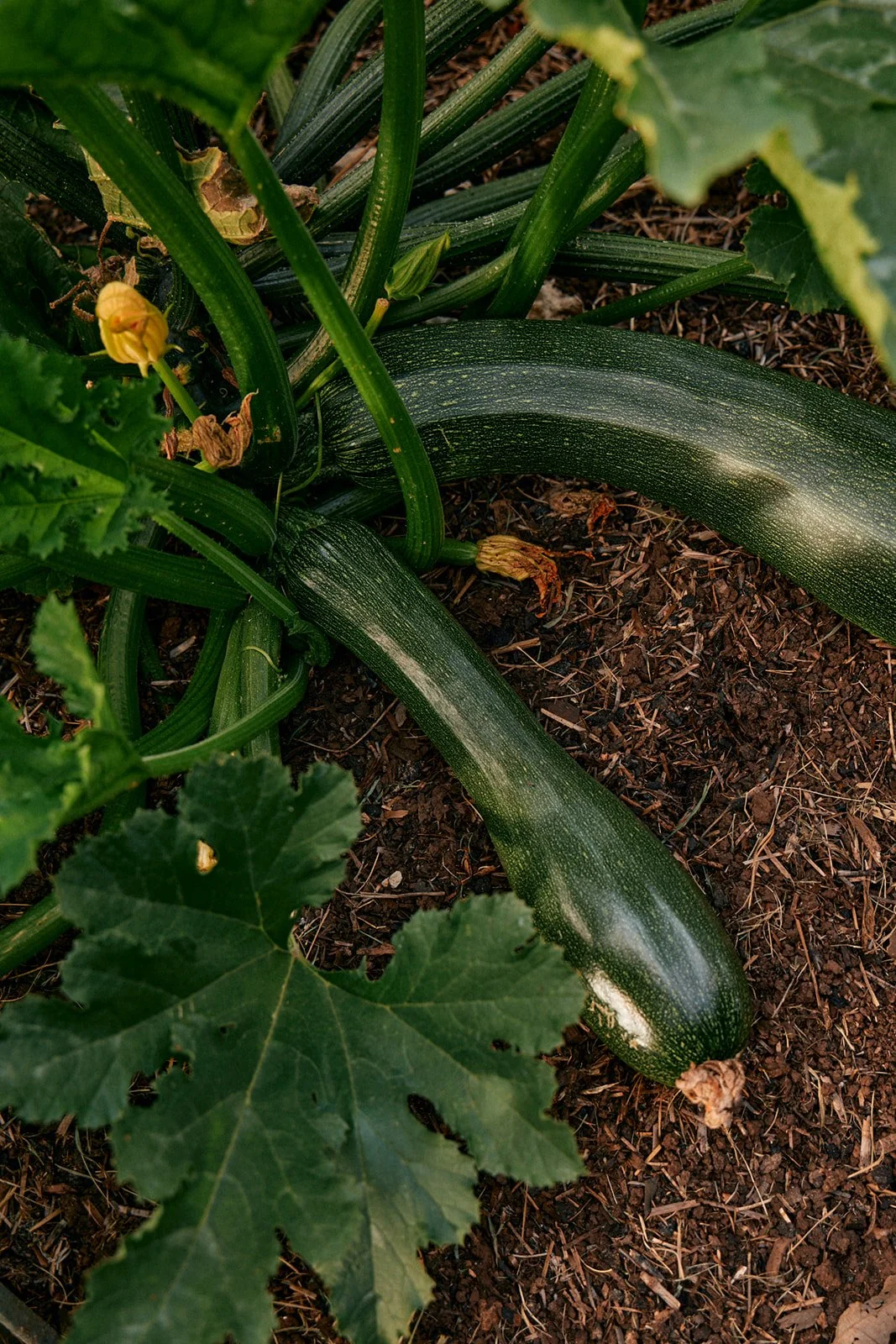
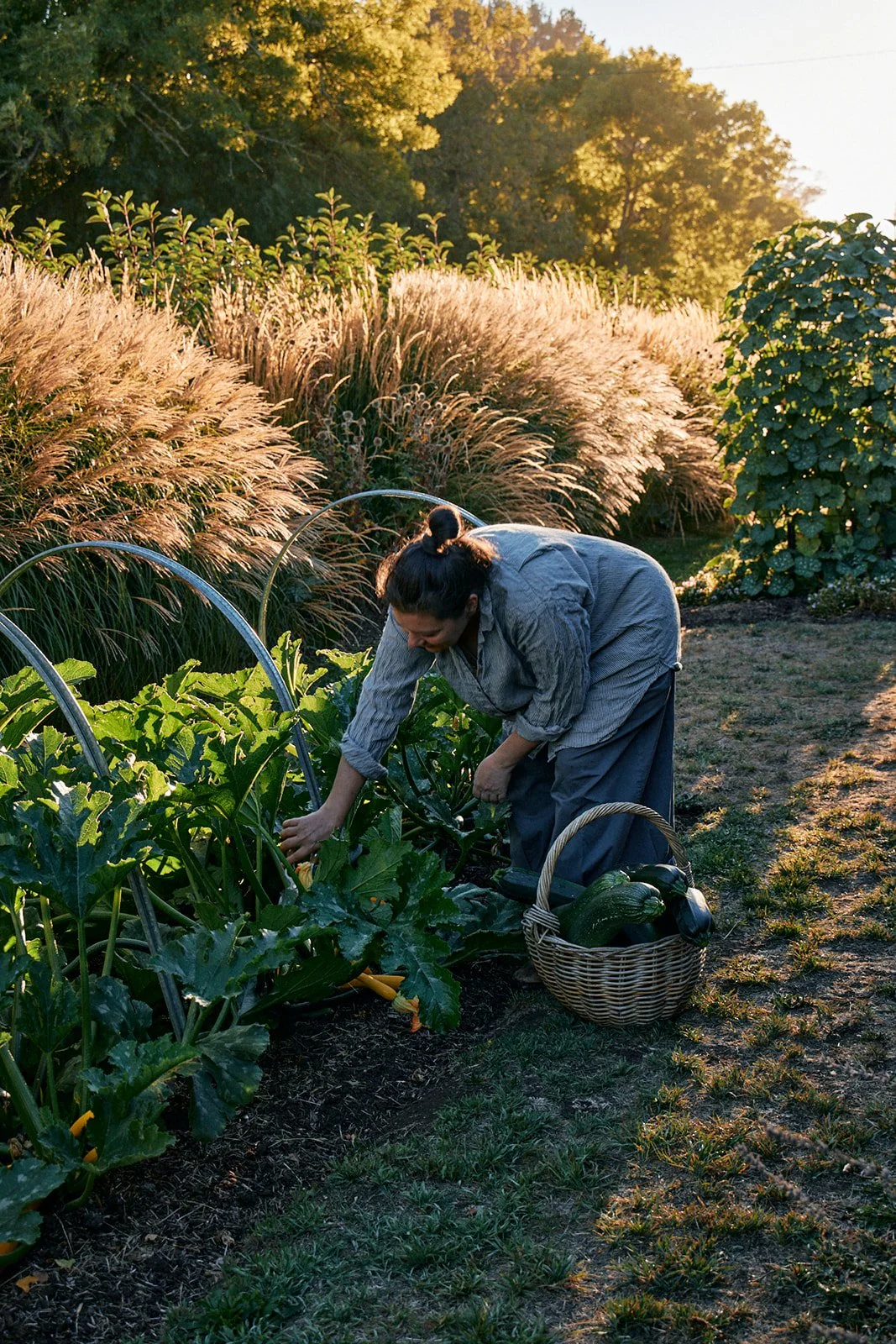
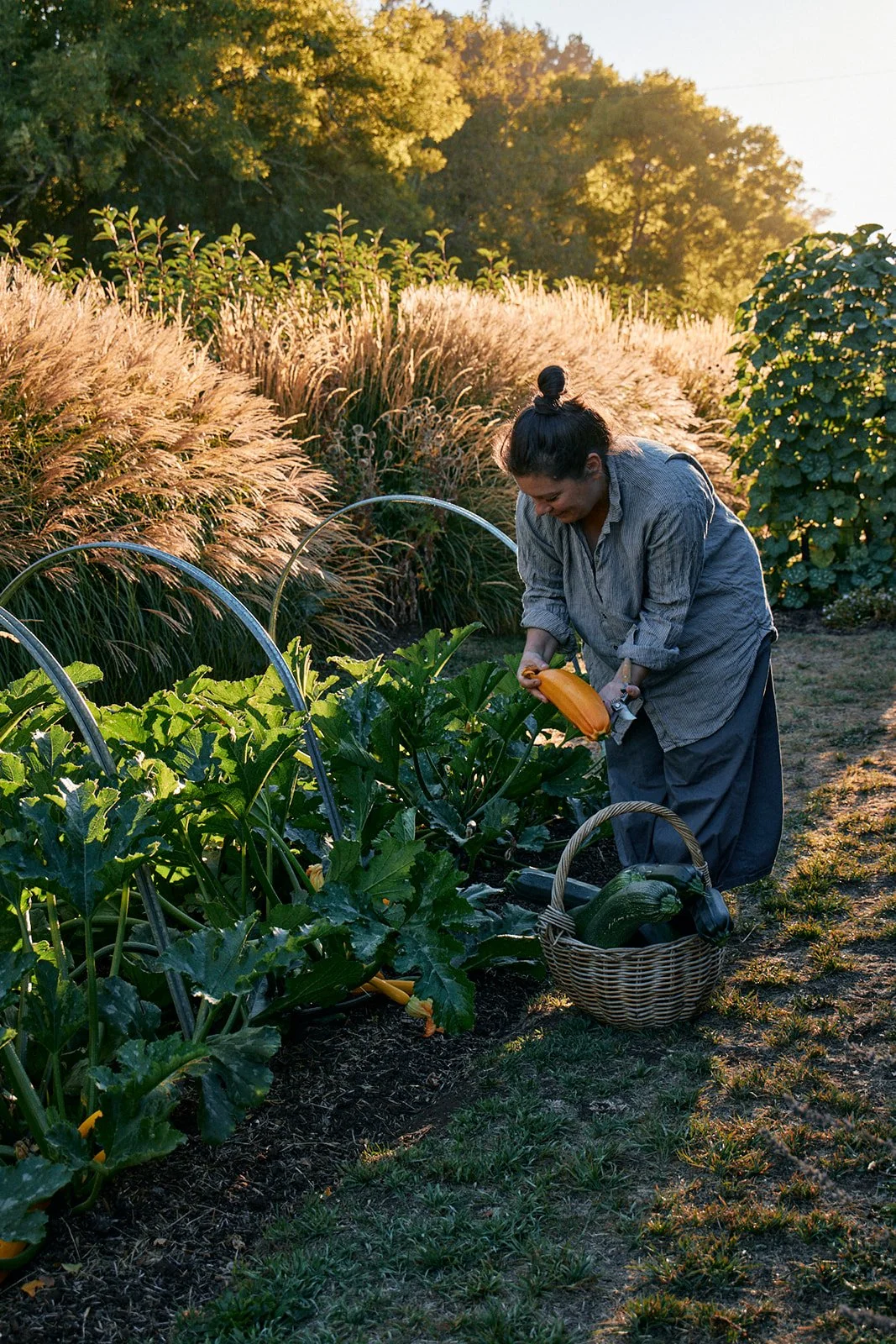
Zucchini are best picked small, fifteen to twenty centimetres, when the skin is still glossy. Regular picking keeps the plant flowering and fruiting. Leave a fruit on too long and the plant decides its work is done and puts everything into one marrow. In peak season I check the plants every second day. It is incredible how fast they move.
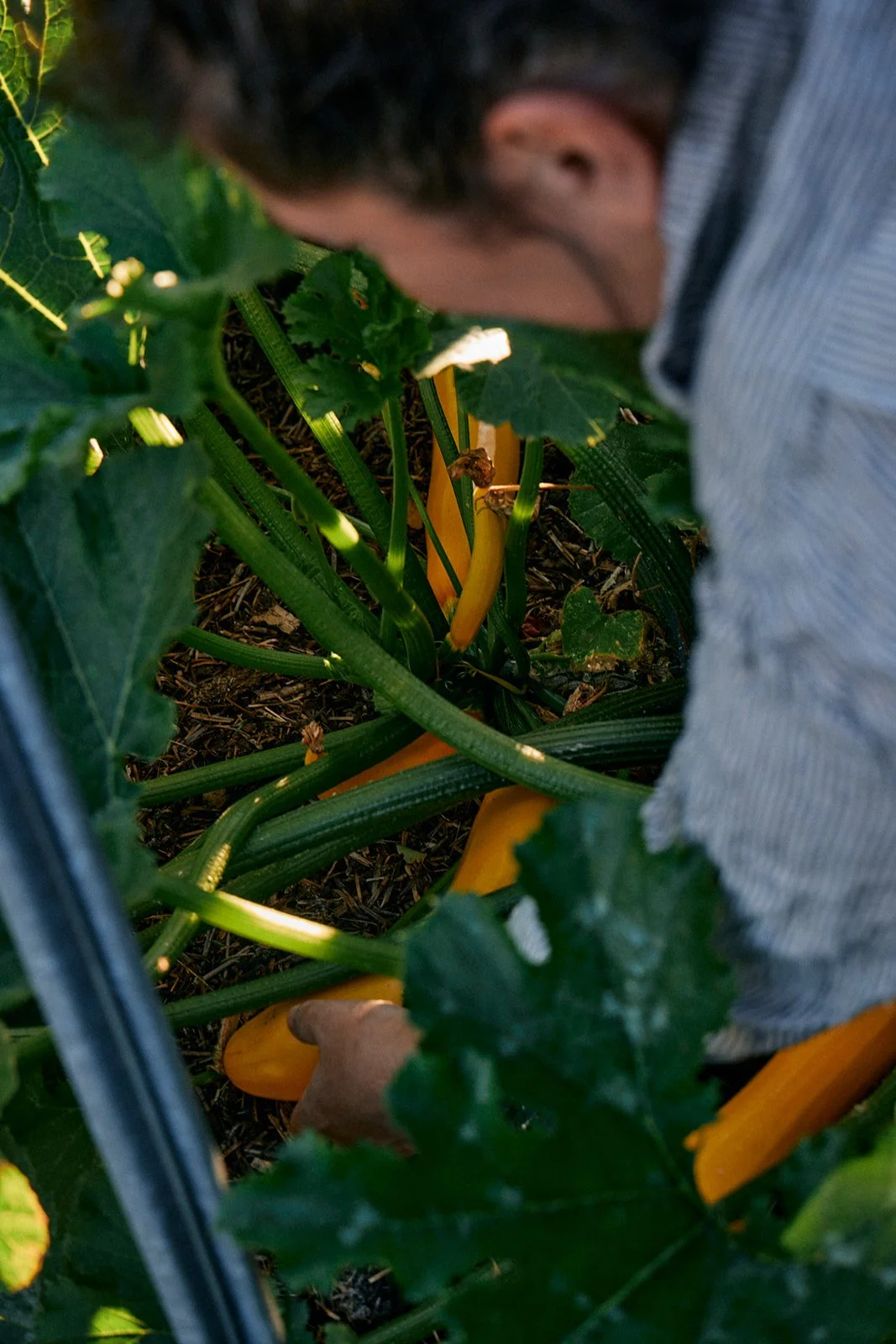
Natasha Morgan-EWeaving-Feb2025-166A4479.jpg Natasha Morgan-EWeaving-Feb2025-166A2118.jpg Natasha Morgan-EWeaving-Feb2025-166A4483.jpg Natasha Morgan-EWeaving-Feb2025-166A4486.jpg Natasha Morgan-EWeaving-Feb2025-166A4765.jpg Natasha Morgan-EWeaving-Feb2025-166A4514.jpg

4. Water wisely

Consistent, deep watering is the key. Water at the base of the plant, early in the morning, and keep the leaves dry, because wet leaves make mildew worse. Mulch around the base to hold moisture in and keep weeds down. Shallow daily watering keeps roots at the surface, which is exactly where you don't want them in February.

In a wicking bed the reservoir does this for you. The soil stays evenly moist from below, the leaves never get wet, and the plant never goes through the wet-dry-wet cycle that stresses it into dropping fruit. For a heavy feeder, keep a gap of fifty to seventy-five millimetres between mulch and stem, and top up with compost through the season.
5. Address pollination problems

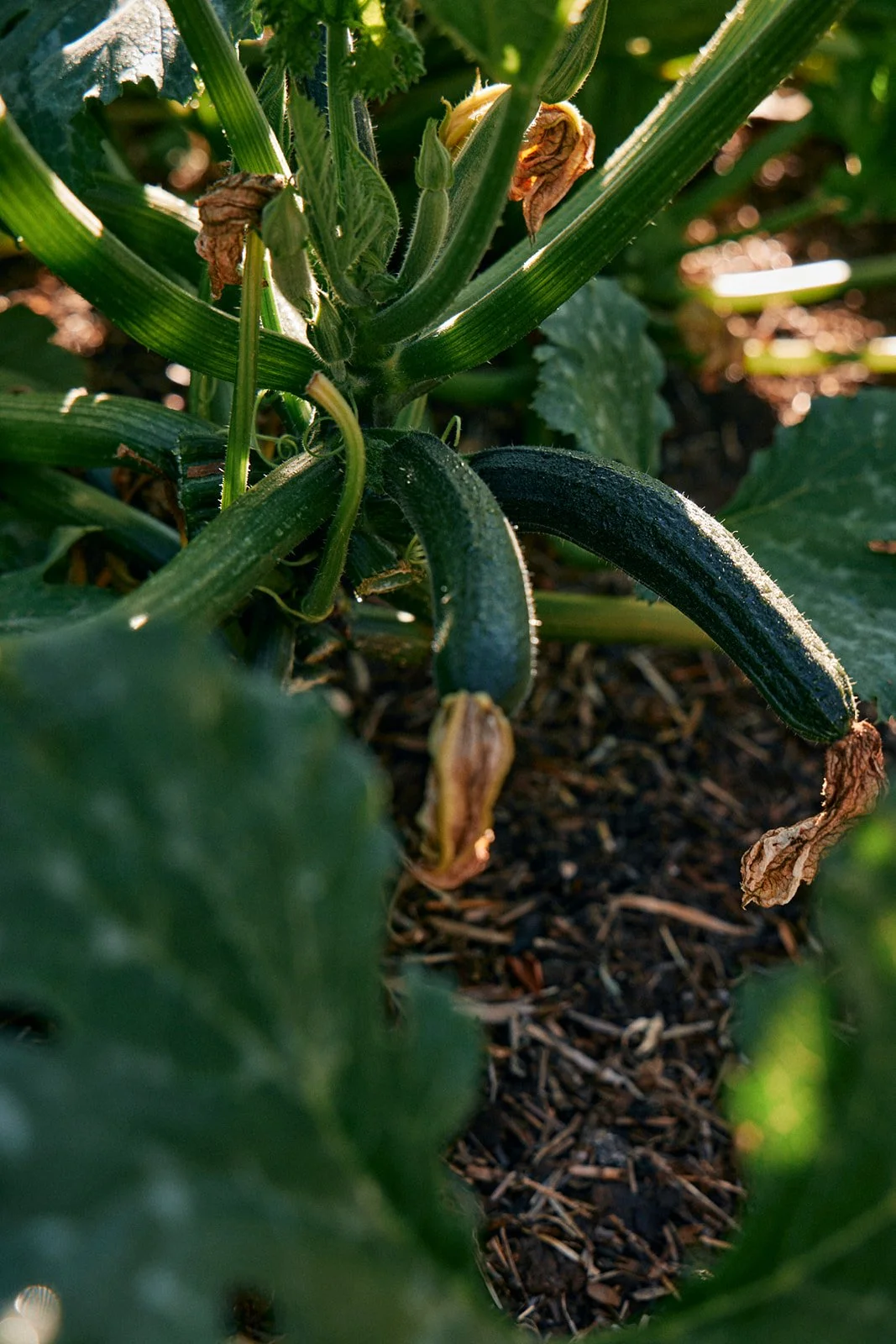
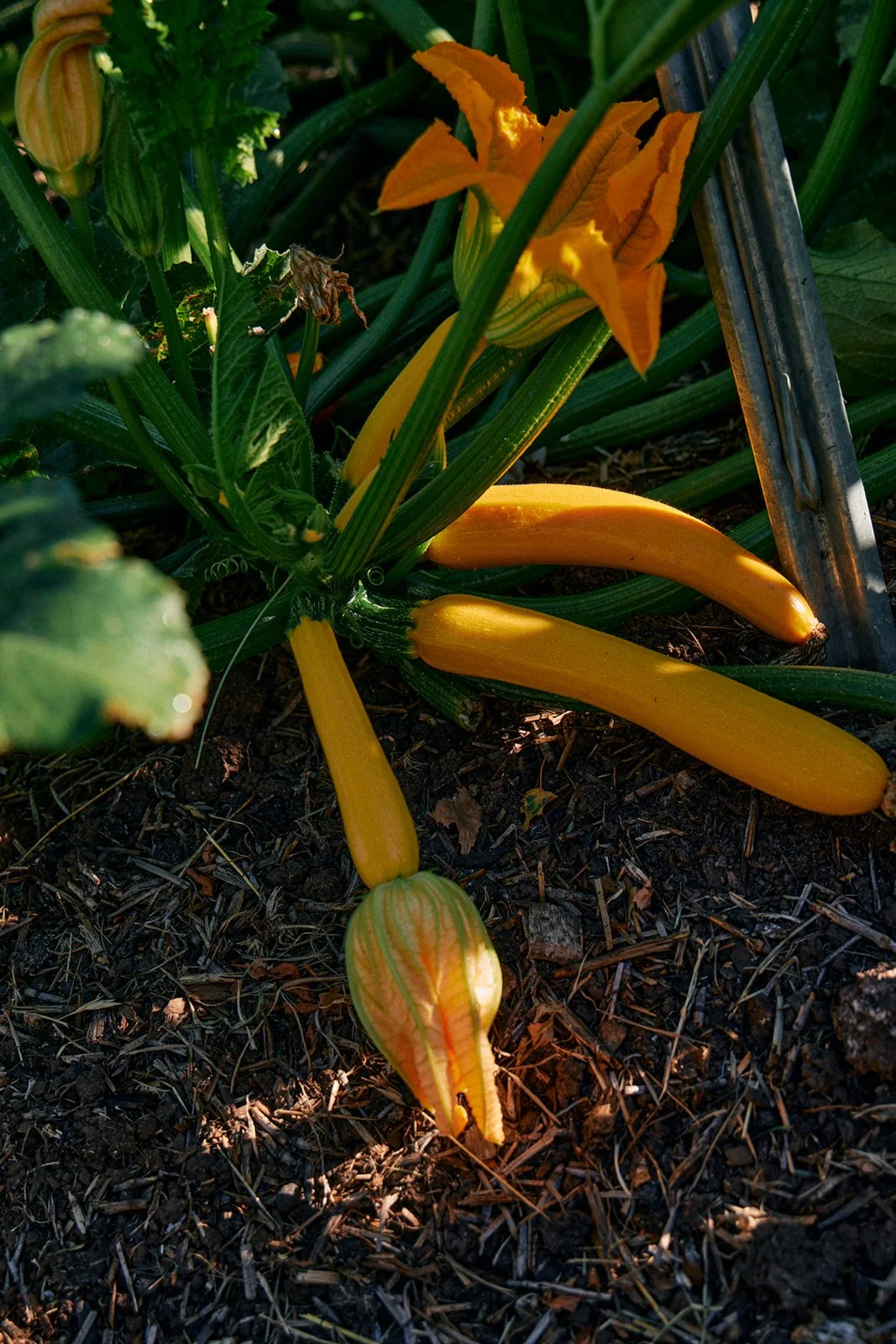
If small zucchini are yellowing and shrivelling from the tip before they mature, the cause is almost always poor pollination, not disease and not your soil. Zucchini carry separate male and female flowers. The male sits on a long, thin, straight stem. The female has a tiny fruit already formed at its base. If pollen does not make it from one to the other, the plant lets the fruit go.

Early in the season the plant often produces only male flowers for a week or two. That is normal. On cold mornings the bees are slow, so the window can pass without a visit. If you are not seeing bees, hand pollinate. Early in the morning, pick a male flower, peel back the petals, and brush the pollen gently onto the centre of a female flower. One male will do two or three females. It takes a minute and it makes all the difference to your harvest.

If the problem is a sunken, leathery, dark patch at the blossom end of a bigger fruit, that is blossom end rot, which comes from uneven watering. A different problem, with a different fix, and one the wicking bed largely solves.
What's your experience with growing zucchini?

Zucchini are a reminder of why I garden in the first place, fresh seasonal food straight from the soil and into the pan. The full piece, with more of the story, the wicking bed set-up, what I do in a heat spike and how to save seed that comes true, is on Substack.

Read the full piece on Substack: Here

Wicking Bed Garden workshop, Sunday 1 November, Little Cottage on a Hill, Daylesford. [Book here.]

The Wicking Bed Garden e-book, the design and the build, step by step. [It's here.]

The Productive Garden Companion, which includes the wicking bed guide. [Australia] | [Everywhere else]

Newsletter, for first word on new dates. [Subscribe]


Natasha xx

Continue your gardening journey with me

If this way of working with the seasons speaks to how you are thinking about your own garden, my workshops and book share the fuller version of it, with more detail and guidance on garden design, productive growing, soil care and seasonal practice.

The Productive Garden Companion is now available in Australia, the UK and the United States. Thank you to everyone who has bought it, shared it, sent me a photo of it, or come out to an event. More book events are being confirmed, and they are all listed in my newsletter.

The best way to hear about new dates before they go anywhere else is to be on the newsletter list. You can subscribe here. Newsletter subscribers get the first look at every new event, alongside seasonal notes from the garden, workshop updates, and practical ideas for growing beauty and abundance wherever you are.

If you are building your garden at home right now, my eBooks on Wicking Bed Gardens, Introduction to Backyard Chicken Keeping and Compost for Beautiful Productive Gardens offer practical guidance that pairs well with this seasonal work.

You may want to check out my related content below:

October Garden Tasks for All Climates

Hydrangea Paniculata: A Year-Round Beauty in the Garden

The Root: Shoot Ratio – Why Bigger Isn’t Always Better

Stay connected for more seasonal inspiration:

Instagram | Facebook | Substack | Gardenstead | LinkedIn | Pinterest | YouTube | Website  | Newsletter

Thanks so much for following along.

Natasha xx
Tags: seasonal gardening, garden planning, seasonal tasks, garden workshops, seasonal workshops, autumn gardening, April gardening, winter colour, productive garden, the productive garden companion
Prev / Next
Newsletter Block
This newsletter signup form needs a storage option. Edit the block and enter a storage location via the Storage tab.

Subscribe

Sign up with your email address to receive news and updates.

We respect your privacy.

Thank you!
Authors pay for their own book tours. Most people don’t realise that. It comes out of our own bat. Every kilometre, every bed, every coffee on the road. So when Hannah of The Little Drift @thelittledrift offered me a place to stay as part of my Gippsland tour for The Productive Garden Companion, it meant more than you can possibly imagine. And then I arrived. The Little Drift is two architect-designed tiny homes on the edge of the coastal bush at Sailors Grave Brewing @sailorsgravebrewing in Marlo, East Gippsland. Each one sleeps two. Off-grid, solar powered, tucked into old banksia forest, a stone’s throw from the beach. As curated and considered as anywhere I have ever stayed, it really is your home away from home. You not only don’t want to leave, you want to share as much love as you possibly can. Not only was the location perfect, everything about it was perfect. And then there is Sailors Grave itself. Gab and Chris Moore started brewing in the old Orbost butter factory ten years ago, and in 2024 they came home to Gab’s family farm and built @sailors_grave_dunetown , their farmhouse brewery between Marlo and Cape Conran, near where the Snowy River meets the sea. Beer brewed of this place, with foraged and native ingredients, a seasonal menu built on local produce. The name comes from a small cove at Cape Conran where Gab spent her childhood summers. My dear friends, and the most extraordinary brewing company. It is so rare, so, so rare, that I, as a solo parent, ever get a night away. If you are looking for that getaway, if you’re looking for a place to visit, if you’re looking for the perfect place to be as the weather warms up, I really would like you to consider The Little Drift at Sailors Grave Brewing. There are very few places where you can disconnect, switch off and remove yourself from the hustle and bustle of the world. If you’re looking for it, this is that place. Tell Hannah I sent you. It would mean the world to me. Thank you, Hannah. Thank you, Gab and Chris xx The Little Drift at Sailors Grave Brewing, 85 Marlo Plains Road, Marlo VIC, East Gippsland
Four gardens. Four completely different events. And I cannot wait.

@thediggersclub have invited me into every one of their gardens to celebrate The Productive Garden Companion, and what we have crafted together is so much more than a book tour.

Eve
Four gardens. Four completely different events. And I cannot wait. @thediggersclub have invited me into every one of their gardens to celebrate The Productive Garden Companion, and what we have crafted together is so much more than a book tour. Every event is different. A different garden, a different panel, a different theme, a different table. Diggers have teamed up with local winemakers, distillers (even a restaurant!), and the drinks are being mixed with my botanical syrups. Every ticket includes the garden. These are unlike events offered before. HERONSWOOD, Dromana. Sat 17 Oct, 4 to 6pm How Gardeners Grow, with Diggers CEO Fiona Forbes and Head of Gardens Julian Blackhirst. Drinks by @rhinotigerbear and @bassandflinders CLOUDEHILL, Olinda. Sat 24 Oct, 11.30am to 1.30pm Creating Gardens That Nourish Us, with Chloe Thomson @beantheredugthat Editor of @organicgardenermag and Fiona Forbes. A two-course lunch at @seasons.restaurant, then a walk through the garden with founder Jeremy Francis. @alkimiwines and @littlebear.sgn gin THE GARDEN OF ST ERTH, Blackwood. Sun 25 Oct, 4 to 6pm What Gardens Mean to Us, with Caroline Parker, @thecottageherbalist author of The Medicinal Garden, and Fiona Forbes. Food from the garden and @hepburndistillery. ADELAIDE BOTANIC GARDEN. Sat 14 Nov, 4 to 6pm Resilience and thriving in a challenging climate, with food writer and author Cherie Hausler @cherie_hausler and Sara Mitchell from the Diggers Adelaide team. We have been working on these for a long time, and I just can’t wait to be there. Diggers have been so generous in having me in their gardens and supporting me in the most warm, collaborative way. It is very rare to come across an organisation that so wholeheartedly champions authors and people in the gardening world. Please share some love with them. I want these rooms full, generous and bursting at the seams. If you know someone near one of these gardens, please reach out and let them know. Come to one. Come to all of them. You will get something different from each. Diggers members attend at the member rate. And I will be bringing along some very special things. Tickets via the link in my bio.
It’s hard to put into words what waking up here felt like so I think I’ll let it speak for itself. This was my morning lap today and it left me feeling at little like the rabbit at the end of this little moment in time. Watch to the end to see the moment of pure joy. Thank you so much @littlelusciousfarm for welcoming me into your slice of paradise so generously xxx
This morning’s lap was a bit of dash, split in half by a meeting, in fact. Phone in one hand, tea in the other, working out what’s in the wicking beds for the kids request of fried rice tonight.

The full garden lap is up on Substack now.
This morning’s lap was a bit of dash, split in half by a meeting, in fact. Phone in one hand, tea in the other, working out what’s in the wicking beds for the kids request of fried rice tonight. The full garden lap is up on Substack now. Eight minutes, unedited, yes cars going past, me getting sidetracked by the first Lily of the Valley. It’s real, but hopefully equally generous. That’s the plan from here. Little snippets of my garden lap in stories here most mornings, and the full lap over on Substack, because Substack lets me share longer videos and share more of my world with you. I’d like to think it becomes the space where you can gather with me as your garden friend. It has become a wonderful place for me to share more of myself and more of what I do, and I’d love you to join me there. The lap is the thing I do every single day before anything else gets a look in. It’s how I’ve learnt this garden. And I’ve realised it’s one of the rare things most gardeners do, whether you’ve got two pots on a balcony or an acre. There is something so immeasurably powerful, yet simple, about a garden lap. So come and wander with me. And if you do your own lap, I’d truly love to know what you found this morning. Link to Substack in bio. Happy Thursday xx #MorningGardenLap #TheProductiveGardenCompanion #NatashaMorgan #ProductiveGarden #GardenersOfInstagram
Bleary-eyed this morning, cup of tea in one hand, phone in the other, and a few things on my mind. The first is the book. The messages landing in my DMs, the emails from people partway through the pages of The Productive Garden Companion. I don’t quite have the words for what they are doing to me. I got a bit teary filming this, which I did not expect at seven in the morning. If you have read even a few pages, you will know this was never just about writing a book. The second is the garden lap. I do it every day, first thing, tea in hand, before anything else. It is probably the thing that has grounded me most. Every single day something has shifted in this glorious Daylesford garden, and that lap is how I have learnt what the seasons actually mean here, on this hill, in this soil. So much of gardening and design is just observation. Being in it. So I’m starting a small ritual. You will be seeing a lot more of this face first thing in the morning (not sure how I feel about that yet) because I’m taking you on my garden lap with me. A little snippet in my stories each morning. The longer version, where I have the room to talk with you properly, lives on Substack. Maybe it gets you wondering whether you have one minute, two minutes, three, on the way to the letterbox or between the front door and the car, to go and see what’s happening in your own patch. I promise you will learn more about your garden, and possibly even more about yourself, than you had imagined. And lastly, workshops. There are a few spots left in this round before Christmas: the Wicking Bed Garden, the Productive Garden and Garden Design. I keep the numbers tiny on purpose, so you can truly get a sense of how I work and glean everything you possibly can from me. I’m an open book in a workshop. Always have been. Join me on Substack for the full garden lap. All the links are in my bio. And if you’re in Australia and would like a signed copy of the book, head to my website. I would happily sign one and personalise it just for you, or for that special person in your life. Much love xx #TheProductiveGardenCompanion #MorningGardenLap #DaylesfordGarden #ProductiveGarden #GardenWorksh
Zucchini will take over a bed if you let them. I grow mine up a stake. This is how, and why your fruit keeps shrivelling.⁠
⁠
This week I planted out some of my frost-tender plants early, on the strength of watching this unusually warm spring closely.
Zucchini will take over a bed if you let them. I grow mine up a stake. This is how, and why your fruit keeps shrivelling.⁠ ⁠ This week I planted out some of my frost-tender plants early, on the strength of watching this unusually warm spring closely. My usual cutoff is Melbourne Cup weekend. Your date will be different. Observe your own garden before you follow mine.⁠ ⁠ Zucchini are heavy feeders. Sunny spot, rich free-draining soil, plenty of compost and aged manure before planting, and the soil has to be warm.⁠ ⁠ Grown flat, one plant wants a metre of space. I grow them as a single stem up a sturdy bamboo or hardwood stake, put in at planting and tied in loosely with soft elastic ties as it climbs. The ribbed Italian types like 'Costata Romanesco' suit this best. The footprint drops, the airflow improves (most of the fight against powdery mildew), and the fruit stops hiding under the leaves.⁠ ⁠ Pick small, fifteen to twenty centimetres, every second day in peak season. Two days is the difference between dinner and a doorstop.⁠ ⁠ Water deeply and less often, at the base, early in the morning, leaves dry. In a wicking bed the reservoir does this for you.⁠ ⁠ The one everyone asks me about. If small fruit are yellowing and shrivelling from the tip, that is an unpollinated fruit, not disease and not your soil. Male flowers sit on a thin straight stem. Females have a tiny zucchini at the base. Early in the season there are often only males for a week or two, and on cold mornings the bees are slow. So hand pollinate. Early morning, pick a male, peel back the petals, brush the pollen onto the centre of a female. One male does two or three females. A minute's work.⁠ ⁠ These are my wicking beds. I'm building one with a small group at Little Cottage on a Hill on Sunday 1 November. Can't make Daylesford? The Wicking Bed Garden e-book is in the shop too. Both at natashamorgan.com.au/shop⁠ ⁠ The full piece, with the story behind why I grow them this way and how to save seed that comes true, is on Substack: natashamorgangardens.substack.com⁠ ⁠ Natasha xx 🌿⁠ ⁠ #TheProductiveGardenCompanion #NatashaMorgan #WickingBeds #GrowingZucchini #ProductiveGarden⁠ ⁠
My wicking beds exist because of a $900 water bill. The first one I'd had to pay in over 10 years.⁠
⁠
Ten years at Oak & Monkey Puzzle on tank and bore water, and I'd never once seen one. Then we moved into town, to Little Cottage on a Hill, and
My wicking beds exist because of a $900 water bill. The first one I'd had to pay in over 10 years.⁠ ⁠ Ten years at Oak & Monkey Puzzle on tank and bore water, and I'd never once seen one. Then we moved into town, to Little Cottage on a Hill, and suddenly I was paying for every drop. I had to ask myself whether what I was doing out there was sustainable at all.⁠ ⁠ So I cut the tops off IBCs (those big 1,000 litre containers you see on farms), clad them in timber, painted them black for winter warmth and lined them up along the house side of the northern fence at hip height. Each one holds around 300 litres in a reservoir at the base, and the soil above drinks it up from below. At the height of summer I can go a week between waterings. And gardening standing up is a true gift, my back will tell you.⁠ ⁠ Then the harvest. From 6 of those 1x1m beds I picked over 160 kg of produce in just 8 weeks (yes I measured and weighed it all for my book ‘The Productive Garden Companion’). I've gardened my whole life, and still I was utterly blown away. Every crop you can imagine has thrived in my wicking beds and still does. Right now there’s cabbage, celery, purple sprouting broccoli, sugar snap peas, salad greens, cauliflowers, onions, carrots, edible flowers and so much more, all from a tiny space. (I don’t even have my summer crops in!) Coming from a property of 5 acres, that's the part that still astonishes me. Wicking beds are one of my greatest life hacks for creating water-wise beauty and abundance, for a truly productive garden. ⁠ ⁠ I'm opening the garden for a hands-on morning sharing everything you need to know. We'll walk through my garden, the wicking beds, talk soil, water, worm tunnels, what to plant and how to make it work in any garden, from a courtyard to acreage. Of course there will also be cake just out of the oven and a pot of tea.⁠ ⁠ 📅 Date: Sunday 1 November 2026⁠ 🕙️ Time: 10am to 12.30pm⁠ 📍 Location: Little Cottage on a Hill, Daylesford⁠ ⁠ Workshops are kept small, so tickets are strictly limited to 8. Book your place via the link in my bio 🌿⁠ ⁠ #NatashaMorgan #LittleCottageOnAHill #WickingBeds #WaterwiseGarden #TheProductiveGardenCompanion⁠
A perfect day for ducks, gumboots and gardeners! 🦆🥾🌱 Show us your love and join us at @bolobekgardenfair this weekend at The Garden Plot Bolobek is full to the brim with garden goodness, deliciousness and some mighty fine folk. What a happy team we make @thecottageherbalist @billypress_ @natasha_morgan_ 💛💛💛 #natashamorgan #Thecottageherbalist #billy #gardenfair #gardenevent
October is the month I stop being in charge of the garden. My job now is keeping up with it rather than starting it.⁠
⁠
The asparagus popped up overnight. The crab apple is in blossom and the last of the tulips are blooming underneath while the alliu
October is the month I stop being in charge of the garden. My job now is keeping up with it rather than starting it.⁠ ⁠ The asparagus popped up overnight. The crab apple is in blossom and the last of the tulips are blooming underneath while the alliums come up to meet them. The peas I sowed in September are climbing without being asked. The grass has gone from something I cut once in August to something that needs doing every ten days, if not more.⁠ ⁠ And the tomatoes are not going in. They are potted on, hardened off, sitting in the sun on the north side of the potting shed, and they will stay there until after Cup weekend. Every year someone asks me why mine are not in yet. Every year in the third week of October the frost reminds me why I wait until after the first week of November.⁠ ⁠ My October Garden Tasks blog is now up on the website, and on Substack. Tasks for all climates, what to sow and plant for each climate, both southern and northern hemisphere.⁠ ⁠ Thank you to everyone who has sent me a photo of The Productive Garden Companion turning up at your place. I look at every single one, and each one makes me smile, makes my day. ⁠ ⁠ If you are near the Macedon Ranges, I am hosting a stall at the @bolobekgardenfair this Saturday 3 and Sunday 4 October, with Phoebe Hartley from @billypress_ and Caroline, @thecottageherbalist. Bolobek opens their garden once a year and it’s spectacular. Come and find us there, please say hi!⁠ ⁠ Link in bio for the blog.⁠ ⁠ #productivegarden #GrowOneThing #TheProductiveGardenCompanion #NatashaMorgan #SpringGarden⁠
I had absolutely no intention of putting my face on video today. In fact, I was out on the verge picking rhubarb to make rhubarb, rose and vanilla bean syrup when the postie arrived. But when the postie brings you a book like this from @mydarlinglemonthyme , well… you sort of have to share it! And the timing couldn’t be more perfect, because this beautiful book is going straight into my bag and coming with me to @booksforcooksau tonight, where I’m heading along to one of Emma’s book launch events. What you might not know is that Emma is also one of the contributors to my book, The Productive Garden Companion. She is one of those truly lovely, down-to-earth, authentic, generous people who moves so naturally between cooking, growing and gardening. I’ve known Emma’s work through her cookbooks and her beautiful blog for years, but this book feels like an invitation to step right into her world — into her garden, her growing and her cooking — and it is extraordinarily beautiful and generous. It also feels like such a lovely synergy with where I am right now with The Productive Garden Companion. Congratulations, Emma. This really is something special. And I’m a pretty tough critic when it comes to books. This one is one of the good ones. xx #cookbooks #growyourown #EmmaGalloway #livingwell