The story behind my syrups, and how to bring a box of them home for Christmas.
Before I lock in a batch of syrup, I taste it from a small spoon, then in hot water, then with a splash of mineral water, and occasionally with a dash of whisky. If it only works one way, it isn't finished. I believe a syrup has to hold up in all of them to earn its place in the pantry, and I've held mine to that for years.
Many of you know me from the garden, or from The Productive Garden Companion. Fewer know there's another side to my work, happening at the stove in Daylesford, that ends up on the shelves of shops, cafés and places to stay from Collingwood to Tasmania. With Christmas coming, it feels like the right moment to introduce you properly.
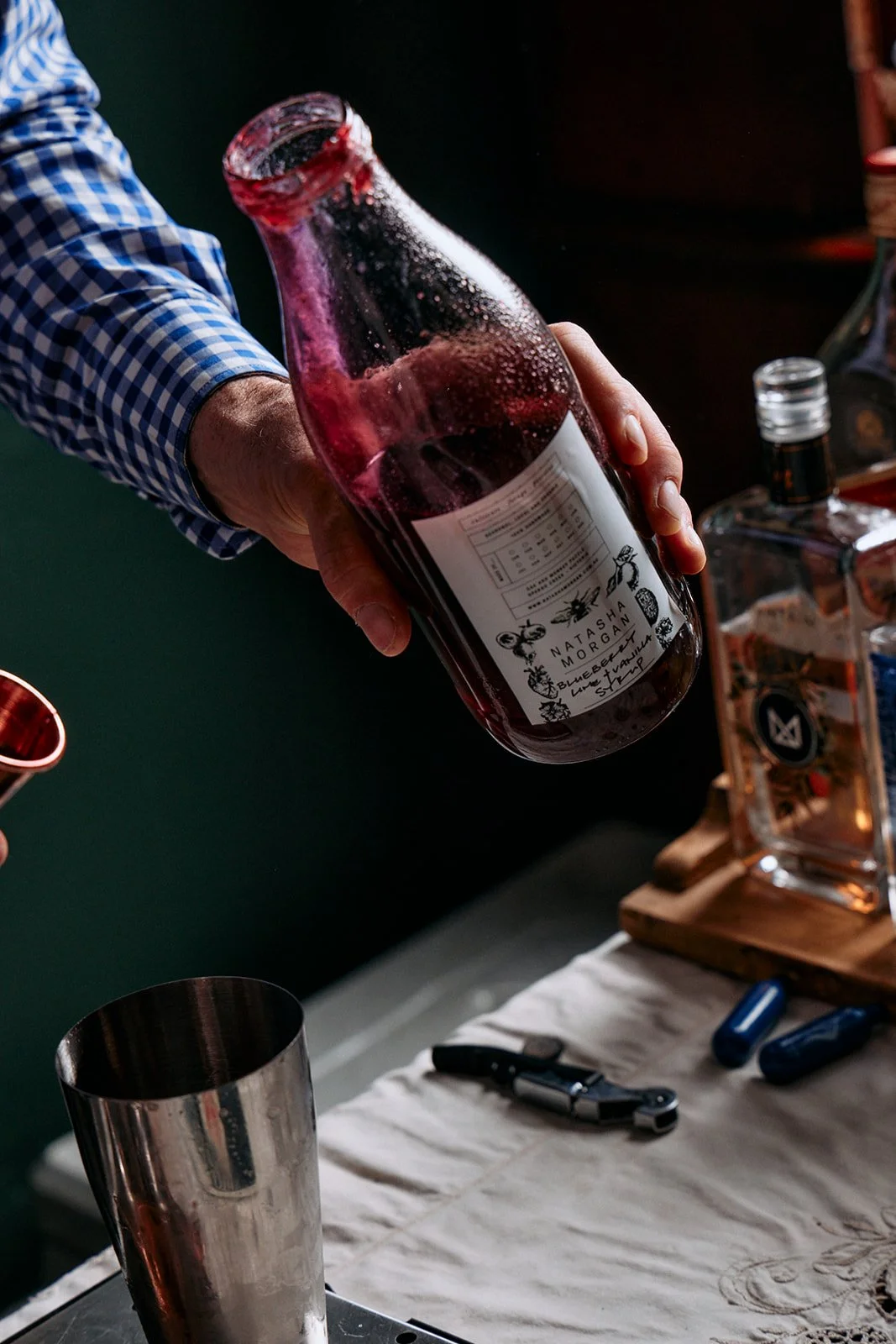
Where it started
My baka (Serbian for grandmother) would never let anyone arrive or leave unfed. “Nataša, jedi, you skinny same as rats!” she'd say (jedi means eat), and then she'd go down to the cellar under the kitchen floor and come back with a bottle of something pickled or preserved. Abundance held in glass. I inherited her Fowlers Vacola jars, and I still use them.
It took me years to put words to what she was teaching me. A good summer can be handed to someone in the middle of winter, and the handing over is the point.
Learning to tune a syrup
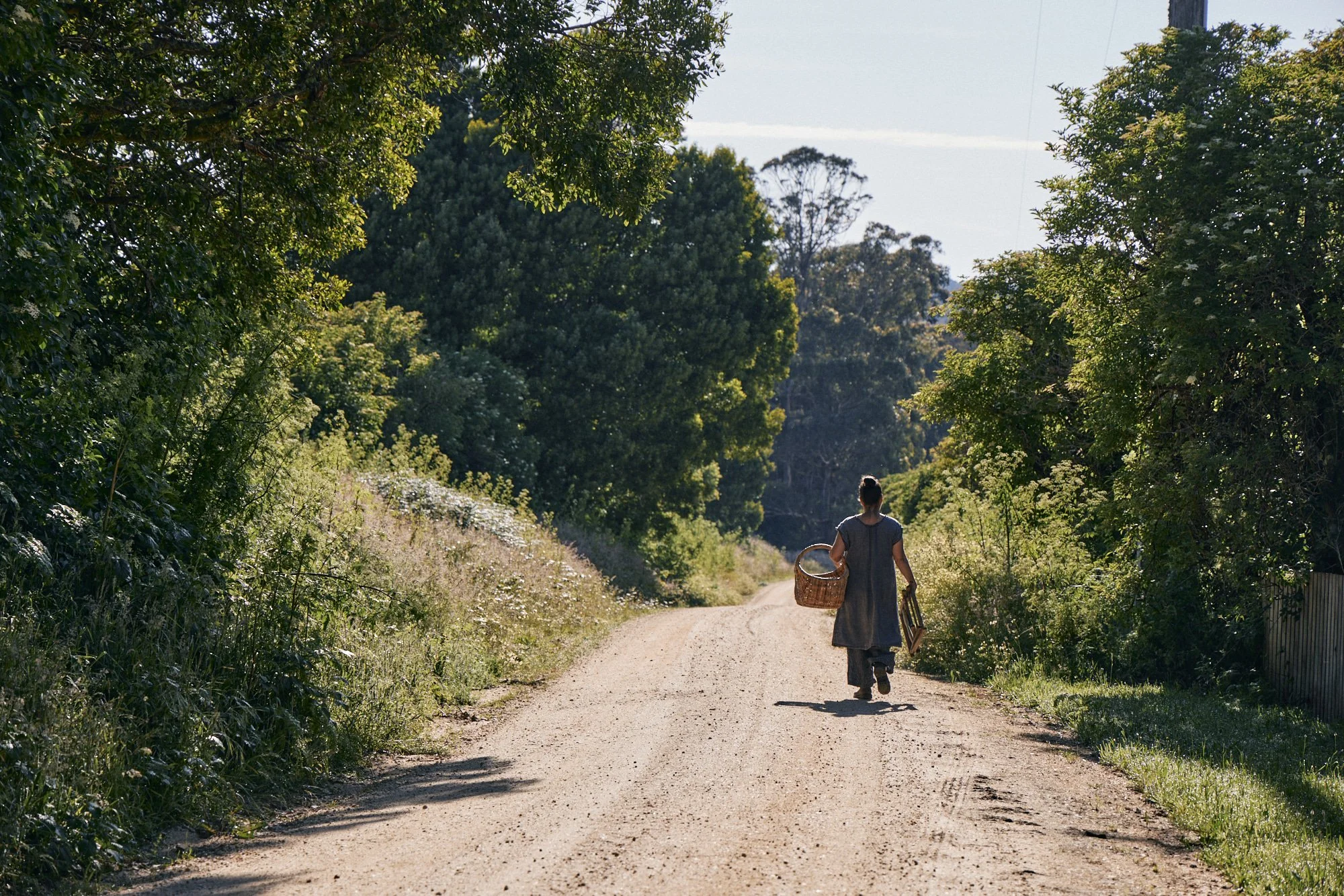
The way I make syrups now was shaped at another bench, in the kitchen at Oak & Monkey Puzzle, our old five acres at Spargo Creek. One late summer my friend Meg Travis and I spent our days down country lanes foraging, hands stained maroon for weeks, and our evenings at the bench with a stack of old recipe books and an apothecary's worth of spices. Elderberry syrup was part of Meg's English way of life. I'd never made it. We tuned a spiced version together, letting the berry lead and adding cinnamon, clove and cardamom with restraint, tasting and retasting in a quiet house of sleeping children. We might even have made hot toddies with it, just to make sure it was exactly right!
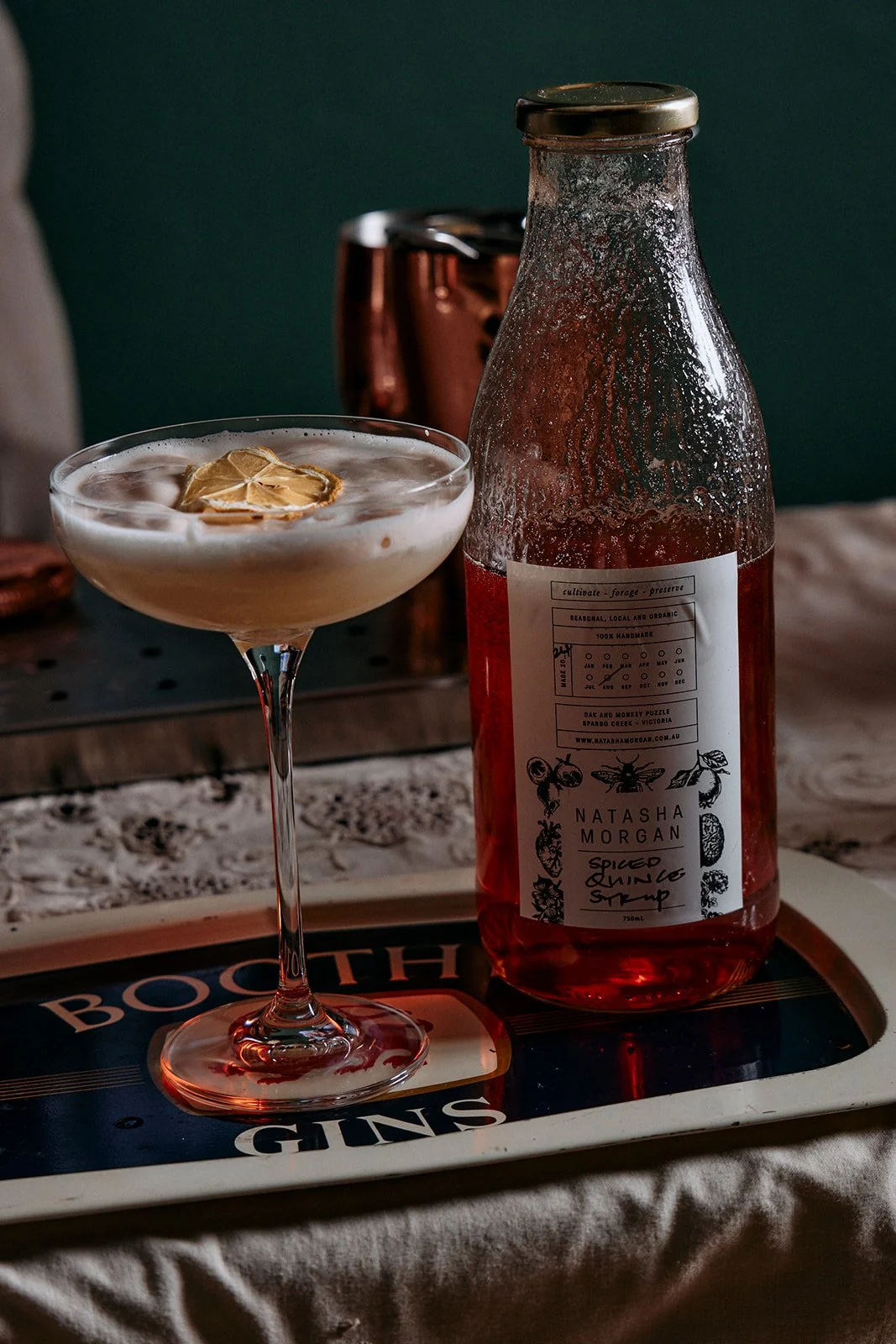
What I took from those nights was the discipline of capturing the flavours so every bottle opened invites you in the door to being right there, with me, at the height of the season it was picked. The fruit has to lead. A bright, sharp finish is what stops my syrups from tipping into cloying sweetness, and it's what lets the same jewel-like syrup work in a gin and soda, a mug of hot water or drizzled over pancakes.
That spiced elderberry recipe is in my book if you'd like to make it yourself. My friend Sharon Flynn of The Fermentary and I have long been fans of what happens when it meets her milk kefir. I can highly recommend.
How they're made now
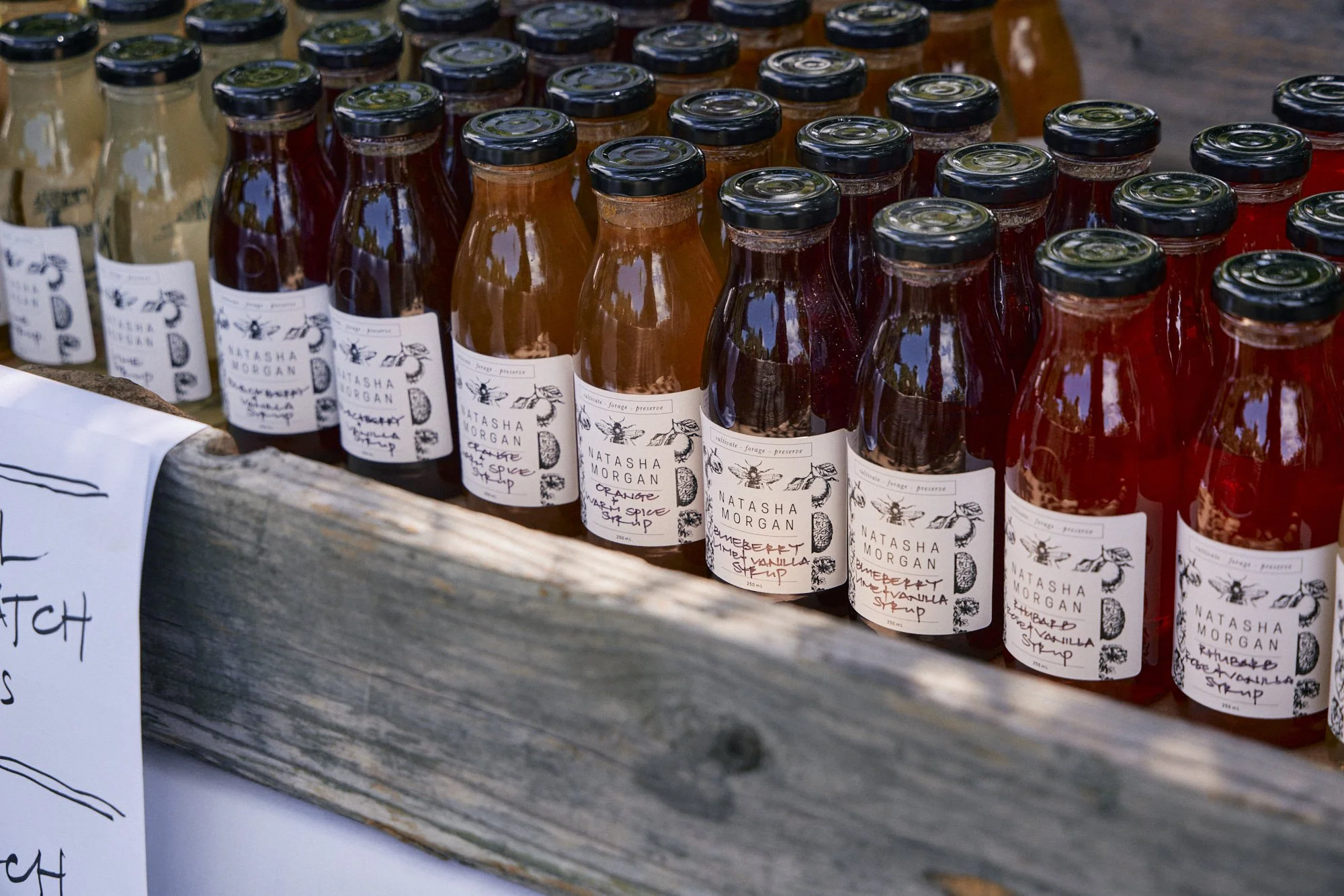
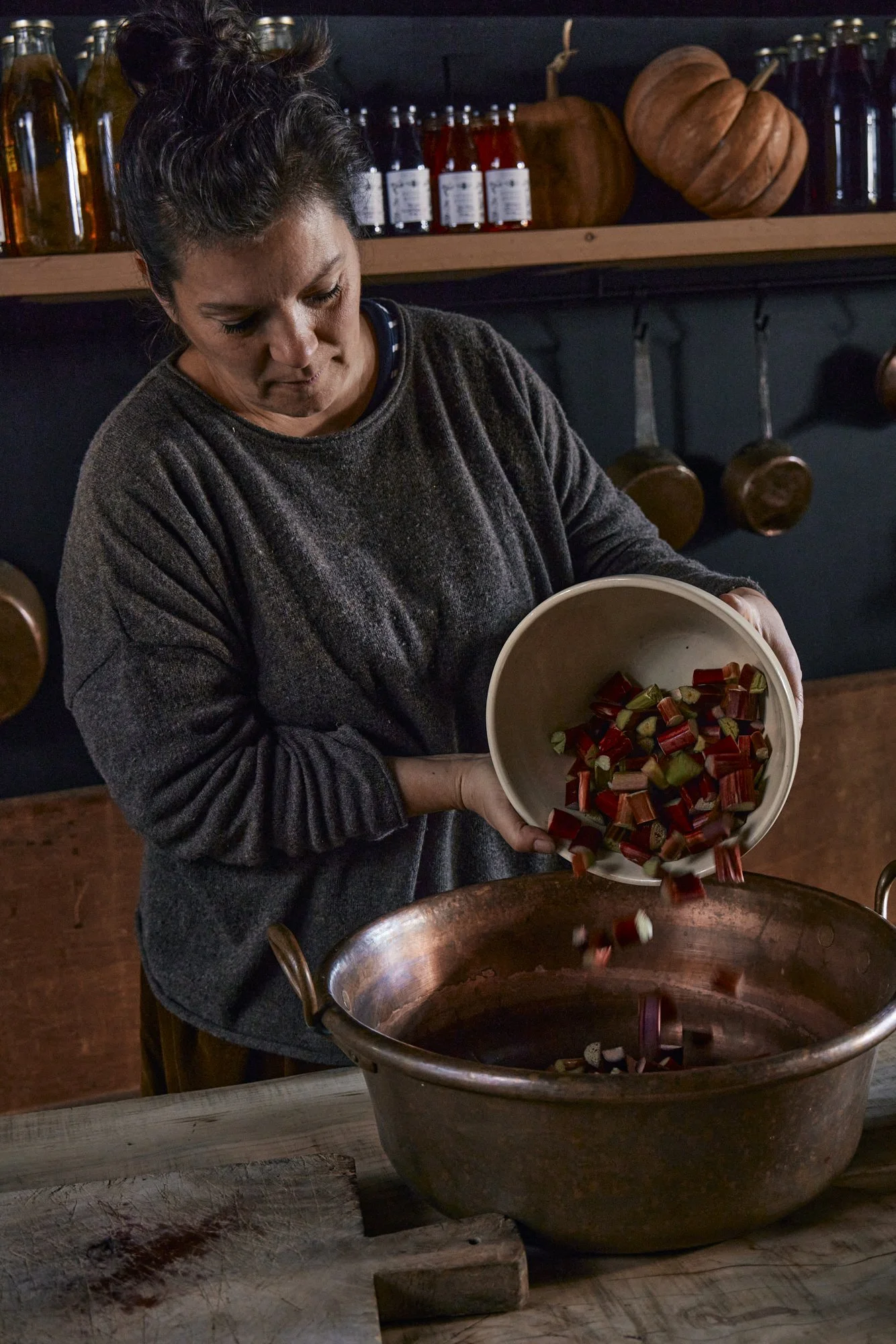
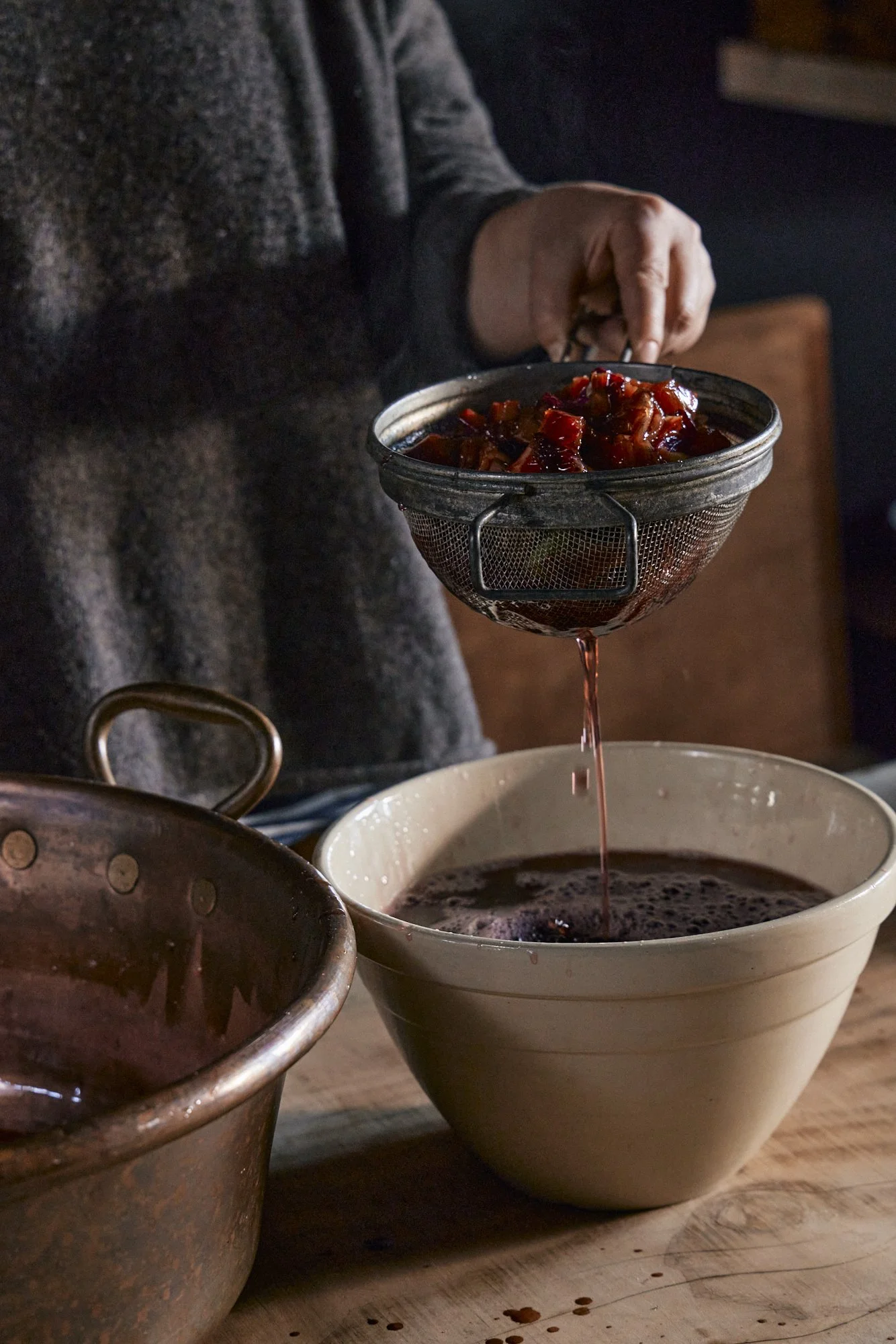
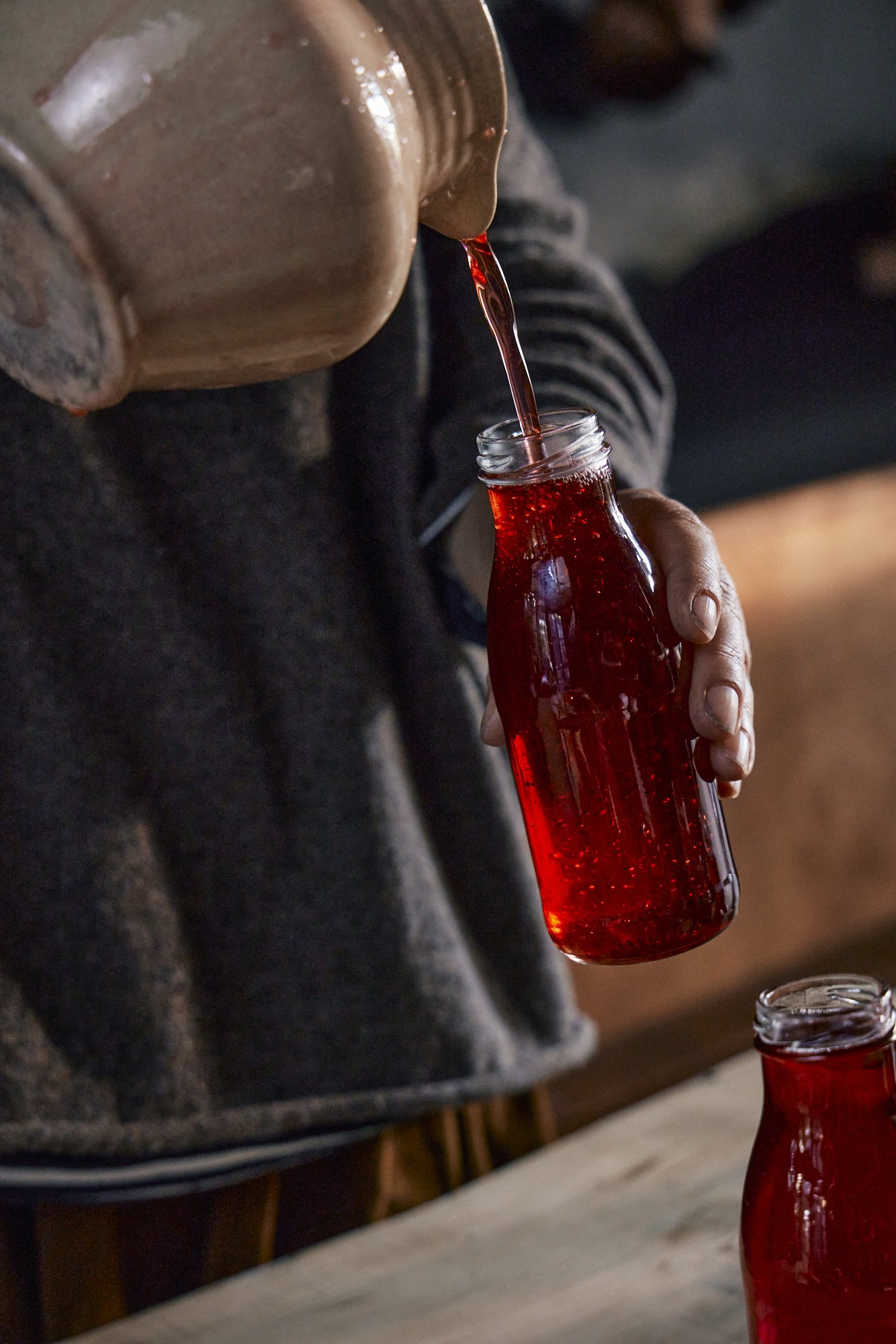
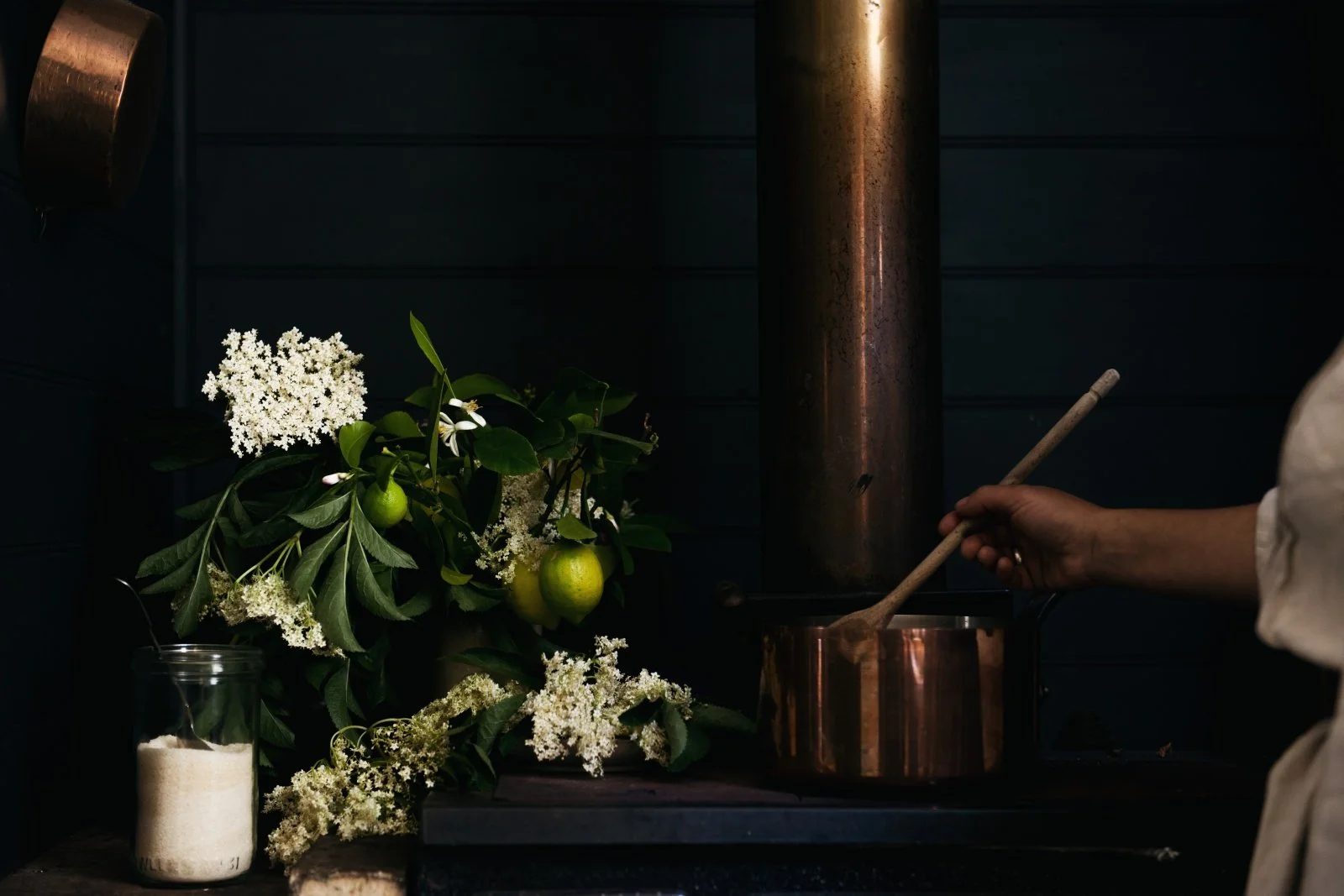
These days I make the syrups by hand, in small batches, in my kitchen at Little Cottage on a Hill. Wherever I can, what goes into them comes from my own garden or from growers nearby, and every bottle is made in Australia from at least 99% Australian ingredients. They follow the seasons, so the shelf changes through the year: elderflower when the elder blooms in early summer, citrus through the winter, and rhubarb whenever the garden is overrun with it, which is often.
What's in the Christmas box
For Christmas I've packed them into boxes. Every box holds six flavours, packed at random from these eight, so you won't know exactly which six you have until you open it:
Berry Medley
Lilac and Lemon
Orange and Warm Spice
Rhubarb, Rose and Vanilla Bean
Old Fashioned Lemon
Strawberry and Vanilla Bean
Zesty Lime
Elderflower
Over ice with mineral water is the simplest way to enjoy them, which on a hot Christmas afternoon is about all anyone wants. On cooler nights, stir one into hot water with a squeeze of lemon or a slice of ginger. They're just as good off the glass: poured over ice cream, porridge, custard or panna cotta, swirled through yoghurt, or drizzled over a butter or semolina cake still warm from the oven.
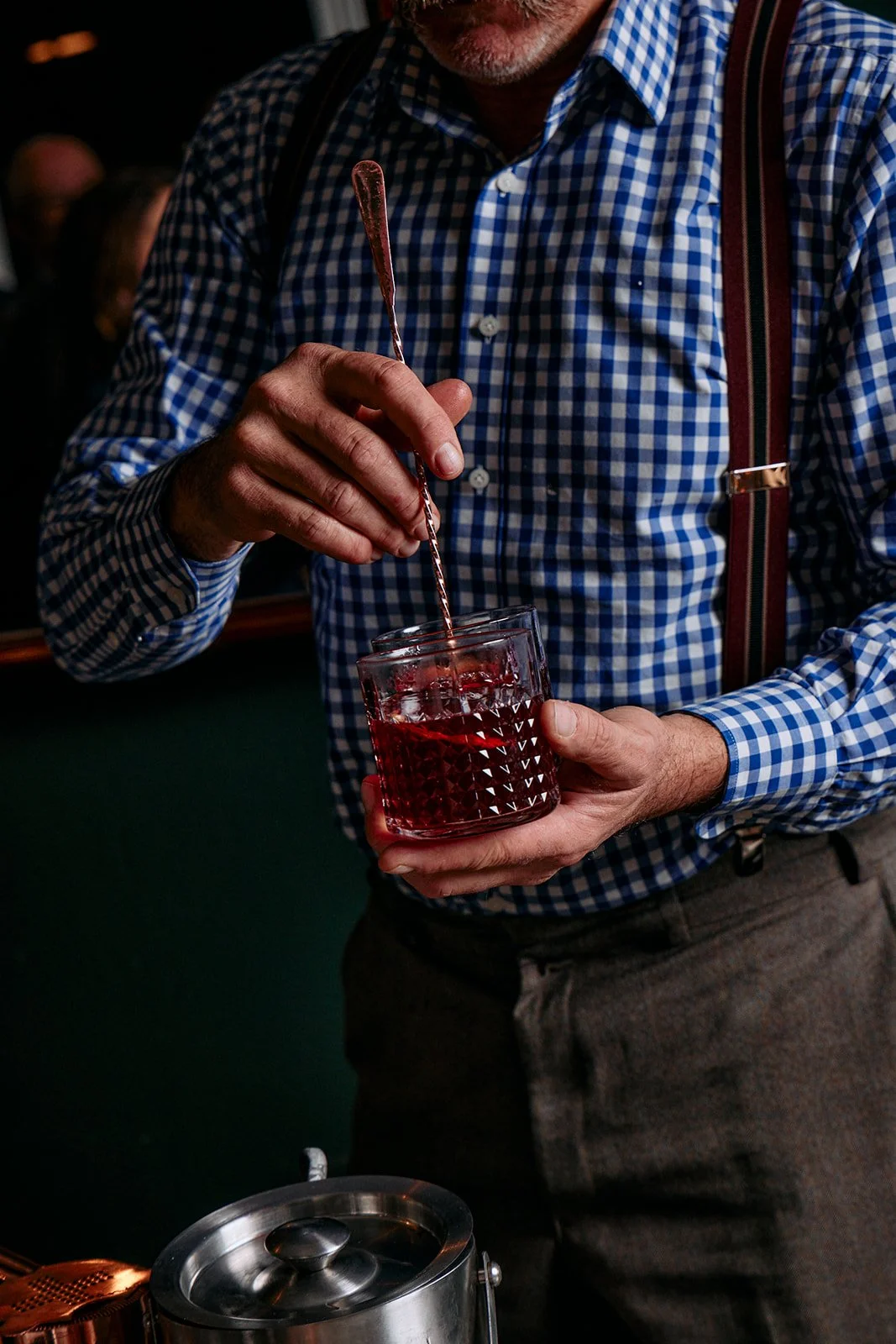
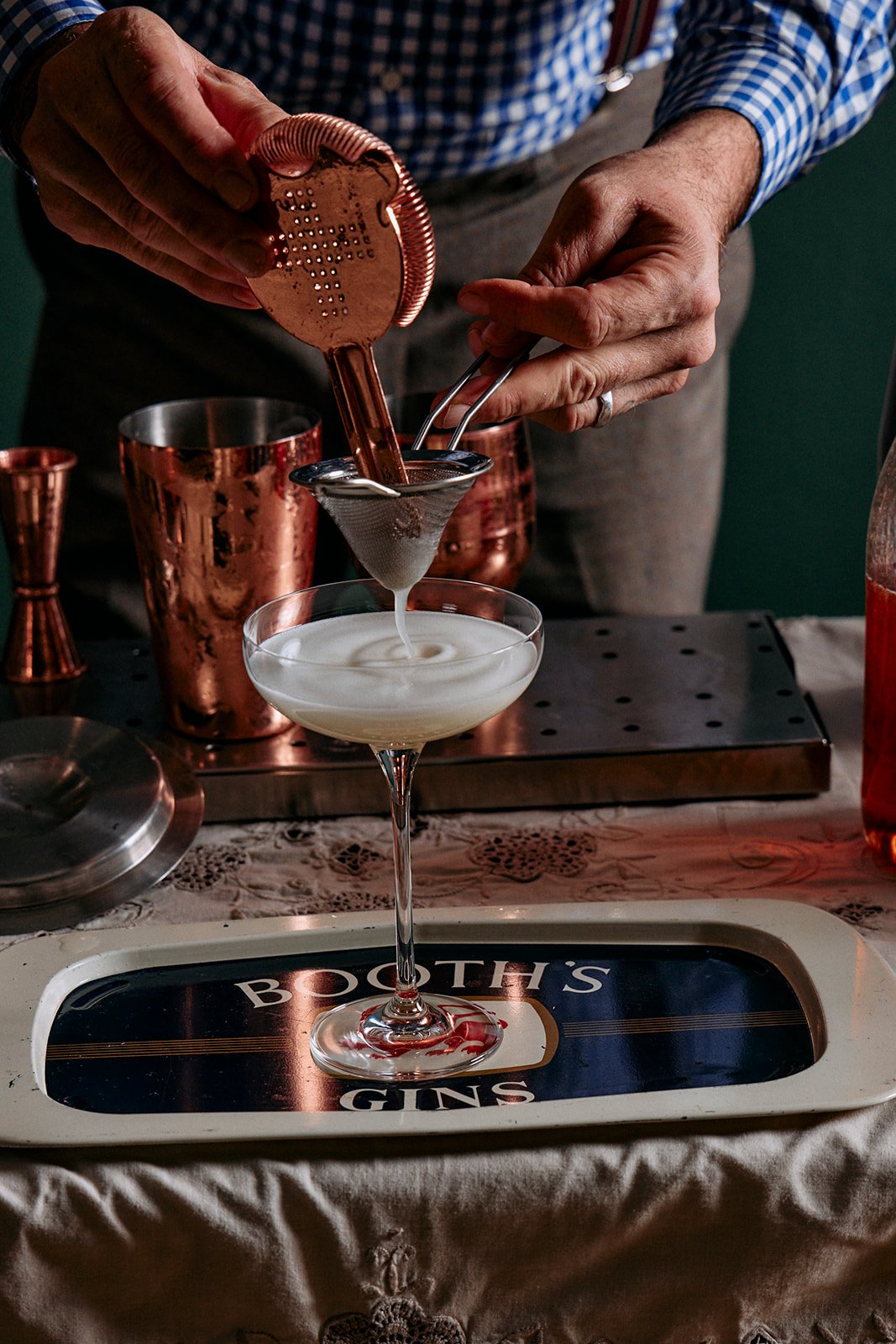
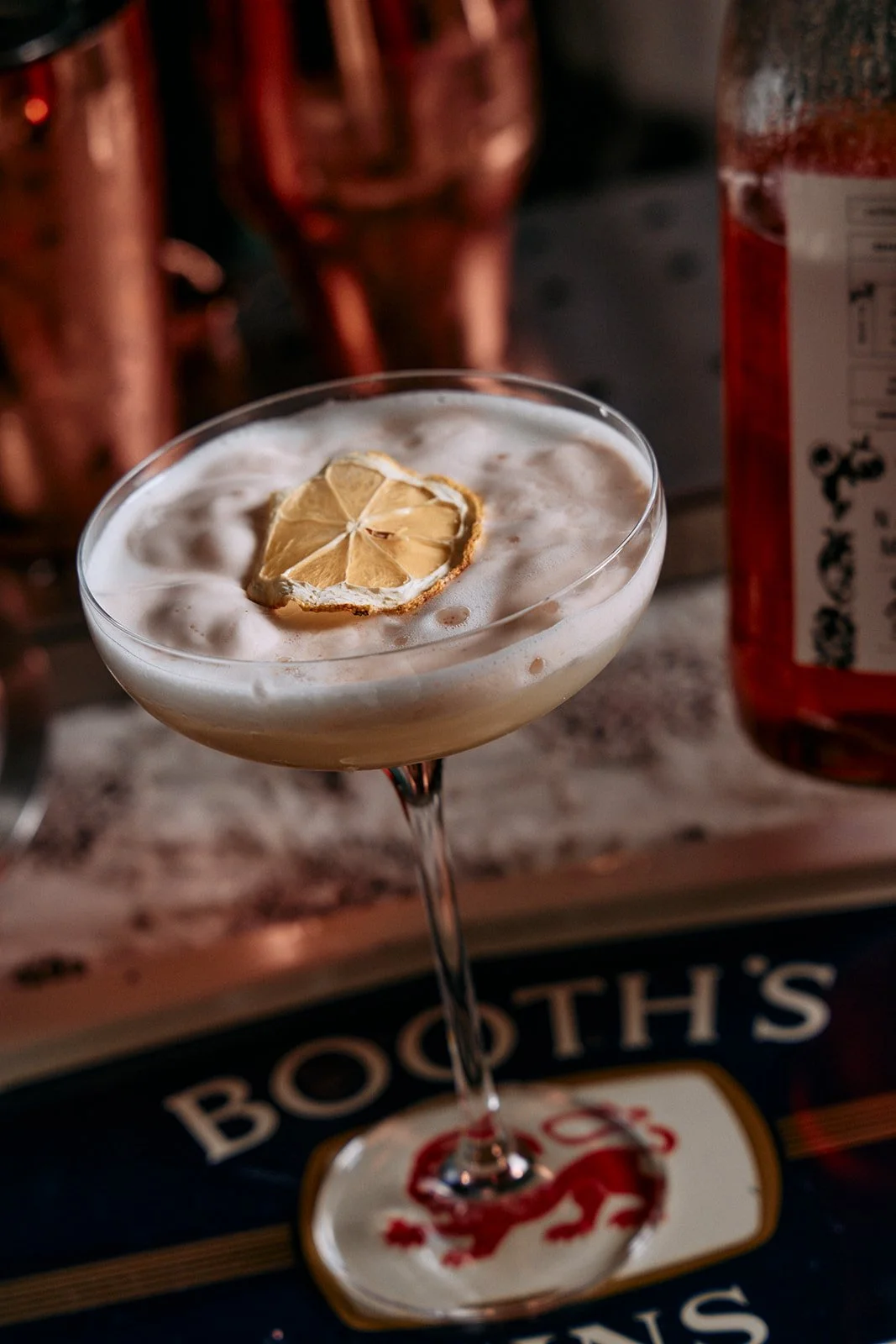
Christmas is when they work hardest. A splash turns a spritz or a gin and soda into the drink people come back to the bar for, and Hepburn Distillery gin, made just down the road from me, is my pairing of choice. For anyone not drinking, the same syrup over ice with mineral water means nobody is toasting with plain water. Try Rhubarb, Rose and Vanilla Bean or Berry Medley poured over the pavlova. And for gifts, tuck a bottle into a hamper or a stocking, or split a 12-pack between teachers, neighbours and the friend who hosts every year.
The boxes
6-Pack — $96.00
Save 11% ($11.70)
Regular price: $107.70
12-Pack — $180.00
Save 16% ($35.40)
Regular price: $215.40
24-Pack — $345.00
Save 20% ($85.80)
Regular price: $430.80
The bigger the box, the more you save, up to 20% on the 24-pack. That brings each bottle down to $14.38, from the usual $17.95.
Collect it from the garden
Boxes are pre-order and pick-up only, and pick-up is the part I'm looking forward to most. I'm opening the garden at Little Cottage on a Hill for two pop-ups: Saturday 7 November and Sunday 29 November, 2pm to 4pm. Choose your day at checkout, come any time in those two hours, and wander the garden while your box is brought out. I'll have signed copies of The Productive Garden Companion there too, and plants from my garden for sale, so you can take a little of the garden home with the syrup.
Make a day of it. Spend the morning in Daylesford's boutiques ticking off your Christmas list, have lunch in town, then come up the hill. Every box is made and packed by hand in a small, women owned business, and every one you buy keeps a little more of Christmas local.