
• About
  • Shop
  • Preserve
  • Blog
  • Contact
  • The Book
  • Cultivate
  • Forage
  • Menu

Natasha Morgan

  • About
  • Shop
  • Preserve
  • Blog
  • Contact
  • The Book
  • Cultivate
  • Forage

Visit Bar Midland: www.barmidland.com

The Hands That Grow and Cook: A Visit to Bar Midland’s Productive Garden

February 05, 2025

Bar Midland: A Testament to Sustainability, Provenance, and the Beauty of Productive Gardens

DSC07350.JPG
DSC07282.jpg

There is something undeniably special about walking through a garden where food is grown with intention—where each leaf, each root, each flower is nurtured not just for sustenance, but as part of a philosophy that honours the land, the seasons, and the act of growing itself. This is precisely what I experienced when I visited Bar Midland’s chef, Alex Marano, and his garden in Chewton, where much of the produce for the restaurant is cultivated.

Nestled in the heart of Castlemaine, Bar Midland is more than just a restaurant—it’s a living, breathing expression of sustainability, provenance, and a deep commitment to the land. Every dish that graces the tables at Bar Midland tells a story of its origins, its growers, and the careful stewardship that ensures its quality. Their approach to food is one that resonates deeply with my own beliefs about productive gardens and living well.

The Chewton Garden: Growing with Purpose
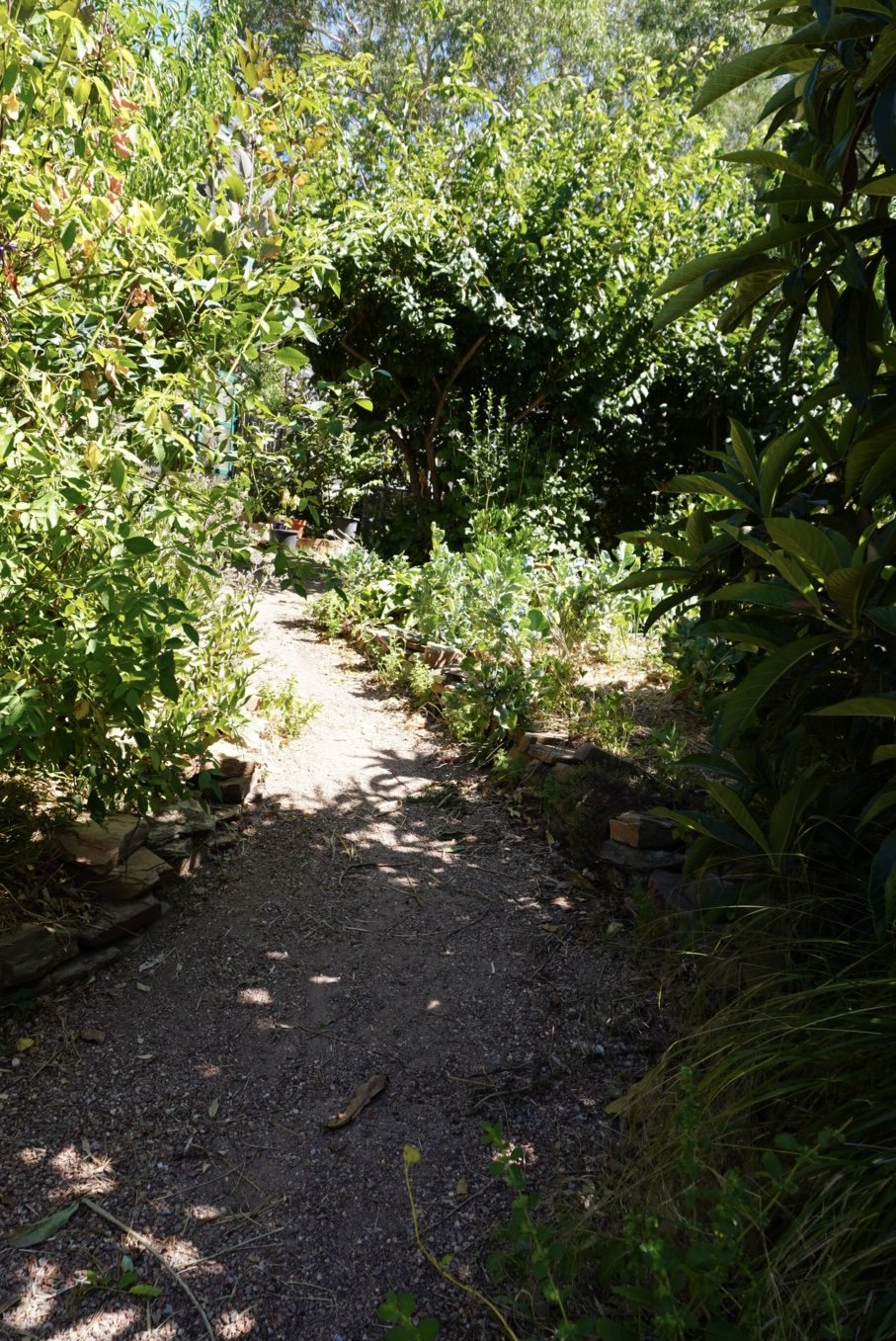
Chef Alex and his wife Dani have created a garden that is more than a source of produce—it is a reflection of their values. Here, the food is grown without chemicals, guided by organic and regenerative practices that enrich the soil and support biodiversity. This thoughtful, hands-on approach ensures that the ingredients used in Bar Midland’s kitchen are fresh, flavourful, and inherently connected to place.

Walking through their garden, I was reminded of why I champion productive gardens—not just as spaces to cultivate food, but as living ecosystems that sustain us, both physically and emotionally. A truly productive garden is not simply about yield; it is about working in symbiosis with nature, creating balance, and fostering abundance in a way that is restorative rather than extractive.

A Menu that Celebrates Provenance

DSC07277 (1).JPG
DSC07255.JPG

Bar Midland’s menu is a reflection of the rich landscape of Victoria. They celebrate ingredients that are indigenous to this land, as well as introduced species that have become part of our culinary fabric. Their ethos extends beyond traditional farm-to-table concepts, embracing regenerative agriculture, foraged ingredients, and wild foods. Even the wine list is carefully curated to showcase the best of Victorian growers and makers, reinforcing their hyper-local approach.

One remarkable example of their commitment to provenance is Alex’s approach to sugar. Given that sugar is not commercially grown in Victoria, he has taken it upon himself to grow sugar beets and produce his own sweetener. This resourcefulness ensures that even the most fundamental ingredients align with Bar Midland’s ethos of sourcing and creating everything as locally as possible.

This philosophy speaks to the power of provenance—of knowing where our food comes from and valuing the hands that grow it. It is an approach that echoes through my own work with productive gardens and preserving, where every decision is guided by an appreciation for the land and the rhythms of the seasons.

Sustainability as a Way of Life

DSC07345.jpg
DSC07338.JPG
DSC07329.jpg
DSC07303 (1).JPG

Sustainability is often discussed in the context of food, but at Bar Midland, it is embedded in every aspect of their operations. From their relationships with local farmers and producers to their commitment to minimising waste, sustainability is not a marketing buzzword—it is a way of life. They honour the traditional custodians of the land, the Jaara Jaara people of Dja Dja Wurrung Country, and work in a way that respects and uplifts the land’s natural cycles.

This is the essence of true sustainability—not just growing food responsibly, but considering how each choice impacts the broader landscape. It is about connection, stewardship, and a genuine respect for the intricate web of life that supports us.

Overcoming Challenges: Managing Kikuyu Grass Organically

DSC07253.JPG
DSC07285 (1).JPG
DSC07286 (1).JPG

One of the greatest challenges Alex has faced in establishing his garden is the relentless spread of kikuyu grass. Given his commitment to organic practices and his refusal to use chemical sprays, he has developed a strategic three-year plan to eradicate this invasive weed. The process begins with laying down plastic sheeting, which is then covered with mulch, effectively smothering the kikuyu over time.

In the meantime, much of his produce is grown in large above-ground garden beds and pots, allowing him to cultivate a diverse range of vegetables and herbs without interference from the encroaching grass. This approach is a testament to the fact that constraints often create opportunities. His efforts demonstrate that if a restaurant can successfully grow its own produce in pots and raised garden beds, then anyone—regardless of space limitations—can cultivate something meaningful, whether on a balcony, in a courtyard, or within a small backyard.

Living Well Through Connection to Land and Food

DSC07332.JPG
DSC07289.jpg
DSC07273.jpg
DSC07267.JPG
DSC07338.JPG
DSC07275.JPG
DSC07264.JPG
DSC07339.JPG

Visiting Alex’s garden and experiencing Bar Midland’s approach to food reaffirmed my belief that living well is deeply tied to our connection with the land. When we grow, harvest, cook, and eat with mindfulness, we nourish more than just our bodies—we cultivate a way of life that is fulfilling, rooted, and sustainable.

Bar Midland is a shining example of what is possible when food is treated as more than a commodity. It is a place where every ingredient has a story, where sustainability and provenance are woven into each dish, and where the act of dining becomes an experience of connection—to the land, to the growers, and to the community.

In many ways, their approach mirrors my own ethos with productive gardens—creating beauty and abundance in a way that is thoughtful, intentional, and always in symbiosis with nature. It is a reminder that good food is not just about taste, but about the journey it takes to reach our plates, and the values that shape its path.

429945187_788219883356427_7232903265289690044_n.jpg
434132290_802781118566970_8442041872246338877_n.jpg

https://www.barmidland.com/

If you’re passionate about sustainable gardening, provenance, and the beauty of growing your own food, explore my workshops and resources. Join me in cultivating a life that is abundant, connected, and in tune with the rhythms of nature.

Explore my workshops:

~ Garden Design with Natasha Morgan – Craft a garden that balances structure, beauty, and functionality.

~  The Productive Garden with Natasha Morgan – Learn how to grow abundantly, no matter your space.

~ The Wicking Bed Garden with Natasha Morgan – Build a self-watering, water-wise garden for effortless growing.

~ Preserving The Seasons with Natasha Morgan – Capture seasonal flavours with time-honoured preserving techniques.

~ Introduction to Backyard Chicken Keeping with Saffron and Natasha  – Learn how to raise happy, healthy chickens at home.

Follow along on Instagram, Facebook, LinkedIn, and YouTube | Subscribe to my newsletter

Thanks so much for following along—I love sharing this journey with you.

Natasha xx
Tags: gardening, productive gardens, garden planning, homegrown food, organic gardening, edible gardening & harvesting, kitchen garden
Prev / Next
Newsletter Block
This newsletter signup form needs a storage option. Edit the block and enter a storage location via the Storage tab.

Subscribe

Sign up with your email address to receive news and updates.

We respect your privacy.

Thank you!
This morning’s lap was a bit of dash, split in half by a meeting, in fact. Phone in one hand, tea in the other, working out what’s in the wicking beds for the kids request of fried rice tonight.

The full garden lap is up on Substack now.
This morning’s lap was a bit of dash, split in half by a meeting, in fact. Phone in one hand, tea in the other, working out what’s in the wicking beds for the kids request of fried rice tonight. The full garden lap is up on Substack now. Eight minutes, unedited, yes cars going past, me getting sidetracked by the first Lily of the Valley. It’s real, but hopefully equally generous. That’s the plan from here. Little snippets of my garden lap in stories here most mornings, and the full lap over on Substack, because Substack lets me share longer videos and share more of my world with you. I’d like to think it becomes the space where you can gather with me as your garden friend. It has become a wonderful place for me to share more of myself and more of what I do, and I’d love you to join me there. The lap is the thing I do every single day before anything else gets a look in. It’s how I’ve learnt this garden. And I’ve realised it’s one of the rare things most gardeners do, whether you’ve got two pots on a balcony or an acre. There is something so immeasurably powerful, yet simple, about a garden lap. So come and wander with me. And if you do your own lap, I’d truly love to know what you found this morning. Link to Substack in bio. Happy Thursday xx #MorningGardenLap #TheProductiveGardenCompanion #NatashaMorgan #ProductiveGarden #GardenersOfInstagram
Bleary-eyed this morning, cup of tea in one hand, phone in the other, and a few things on my mind. The first is the book. The messages landing in my DMs, the emails from people partway through the pages of The Productive Garden Companion. I don’t quite have the words for what they are doing to me. I got a bit teary filming this, which I did not expect at seven in the morning. If you have read even a few pages, you will know this was never just about writing a book. The second is the garden lap. I do it every day, first thing, tea in hand, before anything else. It is probably the thing that has grounded me most. Every single day something has shifted in this glorious Daylesford garden, and that lap is how I have learnt what the seasons actually mean here, on this hill, in this soil. So much of gardening and design is just observation. Being in it. So I’m starting a small ritual. You will be seeing a lot more of this face first thing in the morning (not sure how I feel about that yet) because I’m taking you on my garden lap with me. A little snippet in my stories each morning. The longer version, where I have the room to talk with you properly, lives on Substack. Maybe it gets you wondering whether you have one minute, two minutes, three, on the way to the letterbox or between the front door and the car, to go and see what’s happening in your own patch. I promise you will learn more about your garden, and possibly even more about yourself, than you had imagined. And lastly, workshops. There are a few spots left in this round before Christmas: the Wicking Bed Garden, the Productive Garden and Garden Design. I keep the numbers tiny on purpose, so you can truly get a sense of how I work and glean everything you possibly can from me. I’m an open book in a workshop. Always have been. Join me on Substack for the full garden lap. All the links are in my bio. And if you’re in Australia and would like a signed copy of the book, head to my website. I would happily sign one and personalise it just for you, or for that special person in your life. Much love xx #TheProductiveGardenCompanion #MorningGardenLap #DaylesfordGarden #ProductiveGarden #GardenWorksh
Zucchini will take over a bed if you let them. I grow mine up a stake. This is how, and why your fruit keeps shrivelling.⁠
⁠
This week I planted out some of my frost-tender plants early, on the strength of watching this unusually warm spring closely.
Zucchini will take over a bed if you let them. I grow mine up a stake. This is how, and why your fruit keeps shrivelling.⁠ ⁠ This week I planted out some of my frost-tender plants early, on the strength of watching this unusually warm spring closely. My usual cutoff is Melbourne Cup weekend. Your date will be different. Observe your own garden before you follow mine.⁠ ⁠ Zucchini are heavy feeders. Sunny spot, rich free-draining soil, plenty of compost and aged manure before planting, and the soil has to be warm.⁠ ⁠ Grown flat, one plant wants a metre of space. I grow them as a single stem up a sturdy bamboo or hardwood stake, put in at planting and tied in loosely with soft elastic ties as it climbs. The ribbed Italian types like 'Costata Romanesco' suit this best. The footprint drops, the airflow improves (most of the fight against powdery mildew), and the fruit stops hiding under the leaves.⁠ ⁠ Pick small, fifteen to twenty centimetres, every second day in peak season. Two days is the difference between dinner and a doorstop.⁠ ⁠ Water deeply and less often, at the base, early in the morning, leaves dry. In a wicking bed the reservoir does this for you.⁠ ⁠ The one everyone asks me about. If small fruit are yellowing and shrivelling from the tip, that is an unpollinated fruit, not disease and not your soil. Male flowers sit on a thin straight stem. Females have a tiny zucchini at the base. Early in the season there are often only males for a week or two, and on cold mornings the bees are slow. So hand pollinate. Early morning, pick a male, peel back the petals, brush the pollen onto the centre of a female. One male does two or three females. A minute's work.⁠ ⁠ These are my wicking beds. I'm building one with a small group at Little Cottage on a Hill on Sunday 1 November. Can't make Daylesford? The Wicking Bed Garden e-book is in the shop too. Both at natashamorgan.com.au/shop⁠ ⁠ The full piece, with the story behind why I grow them this way and how to save seed that comes true, is on Substack: natashamorgangardens.substack.com⁠ ⁠ Natasha xx 🌿⁠ ⁠ #TheProductiveGardenCompanion #NatashaMorgan #WickingBeds #GrowingZucchini #ProductiveGarden⁠ ⁠
My wicking beds exist because of a $900 water bill. The first one I'd had to pay in over 10 years.⁠
⁠
Ten years at Oak & Monkey Puzzle on tank and bore water, and I'd never once seen one. Then we moved into town, to Little Cottage on a Hill, and
My wicking beds exist because of a $900 water bill. The first one I'd had to pay in over 10 years.⁠ ⁠ Ten years at Oak & Monkey Puzzle on tank and bore water, and I'd never once seen one. Then we moved into town, to Little Cottage on a Hill, and suddenly I was paying for every drop. I had to ask myself whether what I was doing out there was sustainable at all.⁠ ⁠ So I cut the tops off IBCs (those big 1,000 litre containers you see on farms), clad them in timber, painted them black for winter warmth and lined them up along the house side of the northern fence at hip height. Each one holds around 300 litres in a reservoir at the base, and the soil above drinks it up from below. At the height of summer I can go a week between waterings. And gardening standing up is a true gift, my back will tell you.⁠ ⁠ Then the harvest. From 6 of those 1x1m beds I picked over 160 kg of produce in just 8 weeks (yes I measured and weighed it all for my book ‘The Productive Garden Companion’). I've gardened my whole life, and still I was utterly blown away. Every crop you can imagine has thrived in my wicking beds and still does. Right now there’s cabbage, celery, purple sprouting broccoli, sugar snap peas, salad greens, cauliflowers, onions, carrots, edible flowers and so much more, all from a tiny space. (I don’t even have my summer crops in!) Coming from a property of 5 acres, that's the part that still astonishes me. Wicking beds are one of my greatest life hacks for creating water-wise beauty and abundance, for a truly productive garden. ⁠ ⁠ I'm opening the garden for a hands-on morning sharing everything you need to know. We'll walk through my garden, the wicking beds, talk soil, water, worm tunnels, what to plant and how to make it work in any garden, from a courtyard to acreage. Of course there will also be cake just out of the oven and a pot of tea.⁠ ⁠ 📅 Date: Sunday 1 November 2026⁠ 🕙️ Time: 10am to 12.30pm⁠ 📍 Location: Little Cottage on a Hill, Daylesford⁠ ⁠ Workshops are kept small, so tickets are strictly limited to 8. Book your place via the link in my bio 🌿⁠ ⁠ #NatashaMorgan #LittleCottageOnAHill #WickingBeds #WaterwiseGarden #TheProductiveGardenCompanion⁠
A perfect day for ducks, gumboots and gardeners! 🦆🥾🌱 Show us your love and join us at @bolobekgardenfair this weekend at The Garden Plot Bolobek is full to the brim with garden goodness, deliciousness and some mighty fine folk. What a happy team we make @thecottageherbalist @billypress_ @natasha_morgan_ 💛💛💛 #natashamorgan #Thecottageherbalist #billy #gardenfair #gardenevent
October is the month I stop being in charge of the garden. My job now is keeping up with it rather than starting it.⁠
⁠
The asparagus popped up overnight. The crab apple is in blossom and the last of the tulips are blooming underneath while the alliu
October is the month I stop being in charge of the garden. My job now is keeping up with it rather than starting it.⁠ ⁠ The asparagus popped up overnight. The crab apple is in blossom and the last of the tulips are blooming underneath while the alliums come up to meet them. The peas I sowed in September are climbing without being asked. The grass has gone from something I cut once in August to something that needs doing every ten days, if not more.⁠ ⁠ And the tomatoes are not going in. They are potted on, hardened off, sitting in the sun on the north side of the potting shed, and they will stay there until after Cup weekend. Every year someone asks me why mine are not in yet. Every year in the third week of October the frost reminds me why I wait until after the first week of November.⁠ ⁠ My October Garden Tasks blog is now up on the website, and on Substack. Tasks for all climates, what to sow and plant for each climate, both southern and northern hemisphere.⁠ ⁠ Thank you to everyone who has sent me a photo of The Productive Garden Companion turning up at your place. I look at every single one, and each one makes me smile, makes my day. ⁠ ⁠ If you are near the Macedon Ranges, I am hosting a stall at the @bolobekgardenfair this Saturday 3 and Sunday 4 October, with Phoebe Hartley from @billypress_ and Caroline, @thecottageherbalist. Bolobek opens their garden once a year and it’s spectacular. Come and find us there, please say hi!⁠ ⁠ Link in bio for the blog.⁠ ⁠ #productivegarden #GrowOneThing #TheProductiveGardenCompanion #NatashaMorgan #SpringGarden⁠
I had absolutely no intention of putting my face on video today. In fact, I was out on the verge picking rhubarb to make rhubarb, rose and vanilla bean syrup when the postie arrived. But when the postie brings you a book like this from @mydarlinglemonthyme , well… you sort of have to share it! And the timing couldn’t be more perfect, because this beautiful book is going straight into my bag and coming with me to @booksforcooksau tonight, where I’m heading along to one of Emma’s book launch events. What you might not know is that Emma is also one of the contributors to my book, The Productive Garden Companion. She is one of those truly lovely, down-to-earth, authentic, generous people who moves so naturally between cooking, growing and gardening. I’ve known Emma’s work through her cookbooks and her beautiful blog for years, but this book feels like an invitation to step right into her world — into her garden, her growing and her cooking — and it is extraordinarily beautiful and generous. It also feels like such a lovely synergy with where I am right now with The Productive Garden Companion. Congratulations, Emma. This really is something special. And I’m a pretty tough critic when it comes to books. This one is one of the good ones. xx #cookbooks #growyourown #EmmaGalloway #livingwell
Well. This just arrived in the mail, and to say I’m excited is putting it very, very lightly. Ten pages. I literally counted them like a kid. 1, 2, 3, 4, 5, 6, 7, 8, 9, 10 pages in the November issue of @bhgaus Better Homes and Gardens, and I am so incredibly chuffed. I had the most beautiful chat with Jenny Dillon. She asked whether I think of myself as a landscape architect or a gardener first, and I still don’t have a tidy answer for any of it. She asked whether I control my garden or my garden controls me. I told her about my sometimes unforgiving relationship with the garden (yes I pulled out the magnificent plume poppies when they got too unruly and that’s kind of how I roll!). There’s a suit of incredible photography of my ‘natural habitat’ at Little Cottage on a Hill and Oak & Monkey Puzzle (thank you @weaving and @caitlinmillsphotography ), and an extract from my just released and already best seller book, The Productive Garden Companion, on trace-layer mapping and planning by noticing rather than by calendar. If you’ve been to a workshop with me you’ll recognise all of it. I’m in some pretty fine company in this issue too, alongside @rewildingsuburbia @gardening.with.ingrid which is the icing on the cake, so get your copy, have a read, and I would love to know what you think. It’s a jam packed issue. Oh, and one last thing. My book has gone a little bit nuts over the last week and a half, and that is because of ALL of YOU. Last week in its very first week it hit No. 41 across all book sales in Australia. Every category, every price point. I might have had a little cry over the weekend. And that’s because none of that happens without you. So thank you, literally from the bottom of my heart. xx @murdochbooks #TheProductiveGardenCompanion #BetterHomesAndGardens #MurdochBooks #NatashaMorgan #GardenDesign
Transform Your Garden This Spring: 3 Simple Jobs to Kickstart the Season⁠
⁠
As spring announces its arrival, I’ve been busy back in the garden. Now is the perfect time to refresh your garden and prepare it for the vibrant season ahead. Here&rsq
Transform Your Garden This Spring: 3 Simple Jobs to Kickstart the Season⁠ ⁠ As spring announces its arrival, I’ve been busy back in the garden. Now is the perfect time to refresh your garden and prepare it for the vibrant season ahead. Here’s three essential tasks I’m doing to ensure I’m nurturing a garden that thrives:⁠ ⁠ Winter Garden Cutback: I’ve recently cleared away the old spent winter seedheads, dried umber grasses and any foliage that has died back to welcome the new, allowing my spring plants to flourish. If you haven’t started there is still time!⁠ ⁠ Fertilise: Enriching and nurturing the soil with organic, certified fertilisers or the best locally available manures and composts provides the nutrients your garden needs to thrive. Healthy, vibrant soils mean healthy, vibrant plants. Soil is the foundation of any good garden.⁠ ⁠ Check Irrigation: Take a moment to ensure your irrigation system is ready to support your garden’s growth as the days grow warmer. I’m flushing out drip irrigation from the end caps to remove any debris.⁠ ⁠ By tending to these tasks now, you’ll set the stage for a season filled with growth, beauty, and abundance. New growth is already starting to push through the ground, so it’s definitely time.⁠ ⁠ Join my workshops: If you feel inspired to learn more about how you can set your garden up for success, why not join me at an upcoming workshop where I’ll share the joy of a garden that thrives? ⁠ ⁠ With the onset of spring, I’m shaking things up a bit around here, and I look forward to sharing more tips, tricks, and things happening in my garden at Little Cottage On A Hill. Here’s to a flourishing spring!⁠ ⁠ #TheProductiveGardenCompanion #NatashaMorgan #springgardentasks #springgarden #growonething⁠
The Productive Garden Companion is out in the USA. So I thought I’d celebrate by introducing you to one of the book’s North American contributors @christian_douglas_design. Christian Douglas is a British-born Californian landscape architect and garden designer. His practice, Christian Douglas Design, creates ecologically informed, food-productive landscapes. He has spent more than 30 years making gardens across England, Jordan and the United States. His projects have been covered by Architectural Digest, The Wall Street Journal, The Financial Times and many many more. And his design philosophy lives in his own beautiful book, The Food Forward Garden (definitely worth a read!) Christian, his studio and his backyard-farming crew at @thebackyardfarmco spent twelve years designing and farming side by side, and what they learned is simple: “When you grow food close to the house, people garden more, they learn quicker, they eat healthier.” Follow that idea through our conversation and you arrive here, at his hope for where garden design goes next: “My hope and dreams is that we actually remove the term edible, and they’re just called landscapes.” This clip is just a tiny snippet of the generous conversation Christian shared with me. The full conversation is available via the book’s QR-linked pages, along with conversations with 24 contributors from all over the world. The Productive Garden Companion is out now in Australia, the UK and the USA. Order wherever you are in the world via the link in my bio. If Christian’s words resonate, please share them with a gardening friend on your side of the world. Check out his work and book and let’s keep these conversations and important work going. Thanks so much Christian! It’s such a privilege to have your thoughts and words so generously shared find a way into my book. #Gardening #GardenDesign #KitchenGarden #GrowYourOwn #TheProductiveGardenCompanion @murdochbooks @murdochbooks_uk