


The Garden Design Brief Guide & Template
A digital version of my garden design brief template to help guide your own garden brief.

Introducing the Garden Design Brief Guide & Template
Before I draw a line, choose a plant or start working out where a path might go, I begin with a brief.
A garden design brief isn't a plant list and it isn't a finished plan. It is where you work out what you are actually asking the garden to do. How do you want to live there? What is/are the experience/s you want to have? What should the space offer you? Who else needs to use it and how? Where will you gather, work, move or stop? What needs to be close at hand? What do you want to grow, make, share or feel?
In The Productive Garden Companion, I ask you to begin with a simple question: Why?
Long before the layout is resolved, I want to understand the life the garden needs to support. That is what gives a design clarity of purpose.
In my own practice, part of that process is simply living in the space. I notice where I naturally walk and where I stop. Where the sun reaches and where it doesn't. Which parts stay dry or damp. Where plants seem to thrive without much help and where they struggle. I think about the relationships between the garden and the things around it: the kitchen, the front door, a studio, the street, a shed, the compost, a view, the places where people already gather.
These are not yet solutions. They are clues.
Then I ask the question that changes everything for me:
How do you want to live in this space?
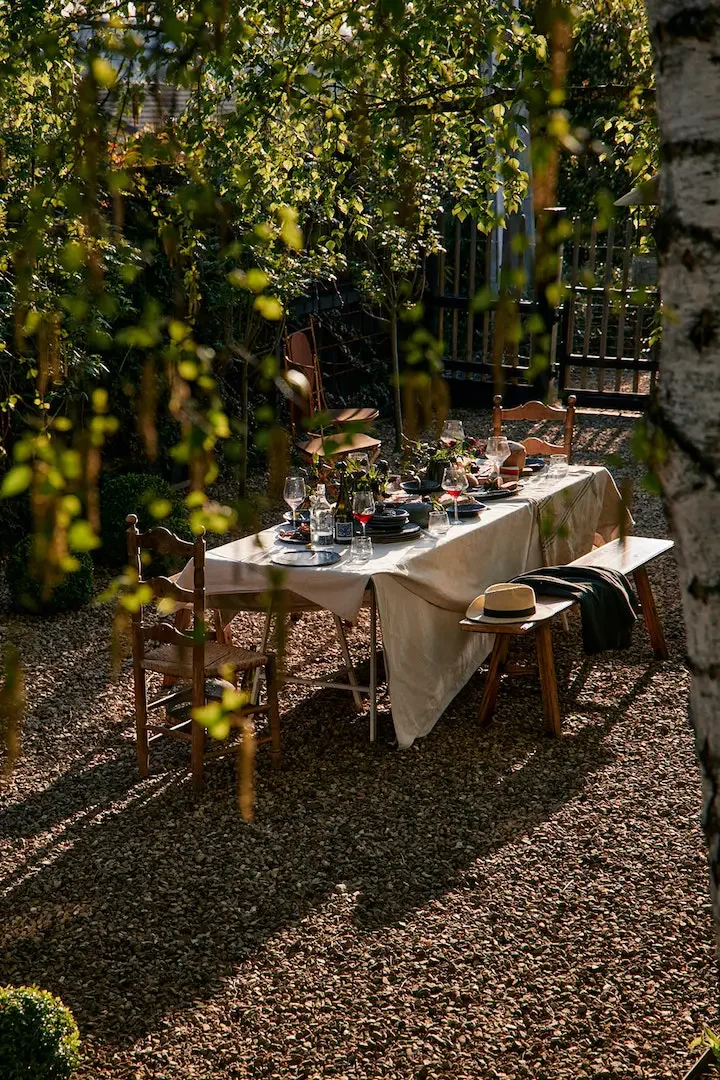
Perhaps you want a generous arrival home at the end of the day. A place to sit in winter sun. A productive garden close enough to the kitchen that you actually harvest from it. Somewhere children can move freely. A table beneath a tree. Space to preserve, propagate or make. Flowers to cut. Habitat for birds and insects. A garden that can hold ten people sometimes and one person quietly at others.
The practical and emotional parts of a brief belong together.
That is why I consider primary purpose, experience, function, adjacencies, aesthetic direction, daily rhythms and non-negotiables before I start resolving the plan. A garden should work, but it should also support the particular way you want to inhabit it. It should support the life you want to live.
At Little Cottage on a Hill, my brief prioritised structure, restraint, access, a sense of expansiveness and generosity to the street. At Oak & Monkey Puzzle, it centred on rhythm, scale and gathering, and the ability of the space/s to expand and contract depending on whether there were 2 people or 200. The gardens are very different in size and expression, but in both cases the brief became something I could return to whenever another possibility presented itself.
This guide takes you through that same process.
You do not need to complete it in one sitting, and you don't need beautifully worded answers. Lists, fragments, observations and half-formed ideas are useful. Live with the questions. Return to them. Cross things out. Add what becomes apparent once you've spent more time in the space.
By the end, you will have distilled those thoughts into a brief of your own: a clear statement of what matters, what the garden needs to support and the principles you want to carry forwards into your design.
Keep it beside you when you begin mapping and sketching.
When the possibilities start multiplying, come back to the brief.
Download your copy here
The Garden Design Brief Template — a digital version of my garden design brief template to help guide your own garden brief.
Related Resources
To continue your garden design journey please also see the Zone-Planning Worksheet, Mapping Guide and Quick Garden Audit from the book live in the resources library too. And The Productive Garden Companion itself is the long version of everything here.
Workshops
My workshops are about fostering the reconnection between the layers of everyday life, the self and the natural world.
Time: 10am to 1pm
Dates:
Saturday 21st November 2026
Location: Stonewalls, Musk.
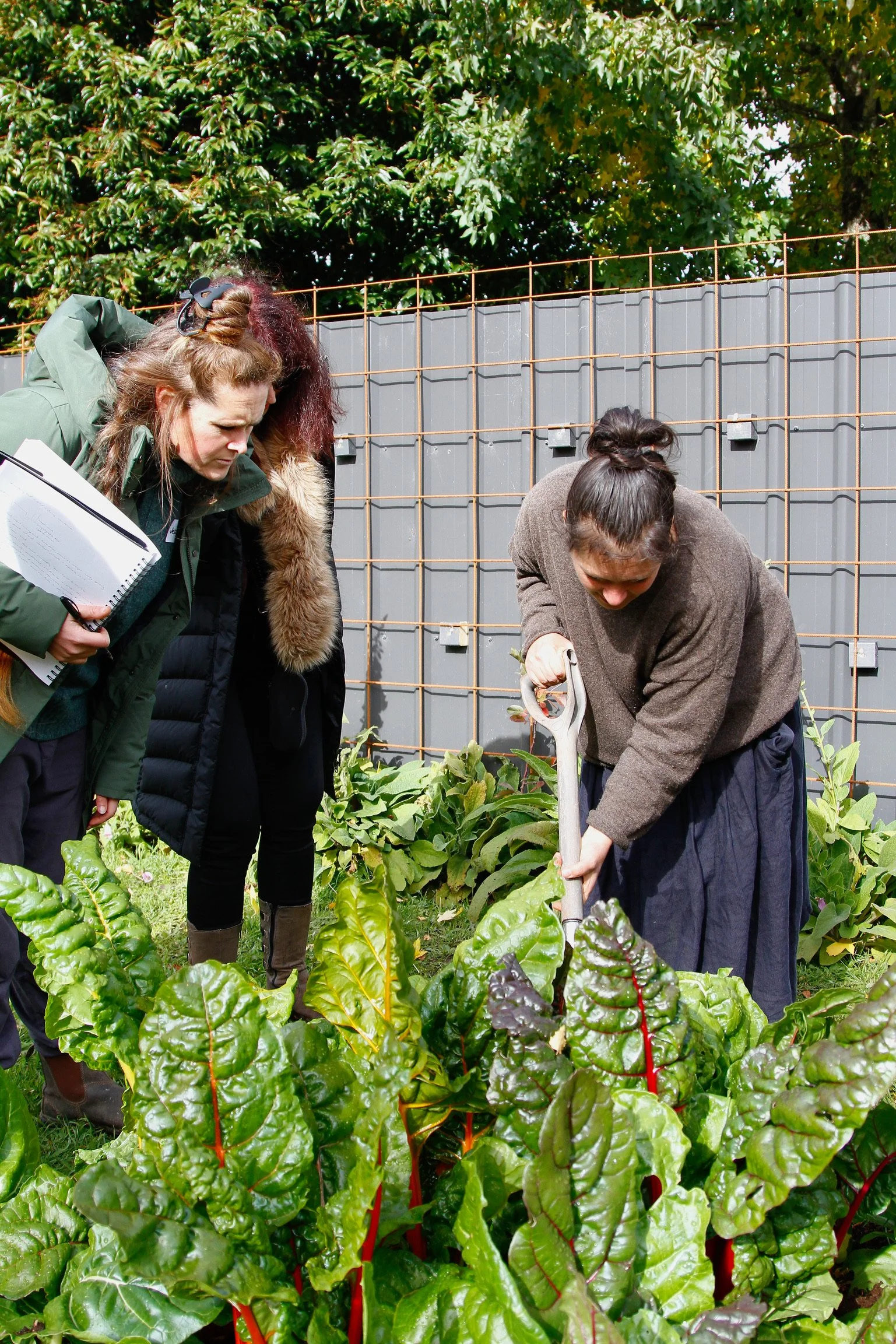
For as long as I can remember, I have tended a productive garden. From childhood veggie patches to the abundant landscapes of Oak and Monkey Puzzle, growing has always grounded me and shaped how I see the world. This workshop draws from that lived experience.
Whether you're working with a courtyard, a veggie patch or a larger garden, this is about creating a productive space that offers both beauty and abundance.
We explore what productive gardening really means. I share how my process has evolved across very different properties—Oak and Monkey Puzzle and Little Cottage on a Hill and for the first time, Stonewalls—blending hands-on learning with thoughtful intent.
We cover soil care, compost systems, green manures, vertical growing, chickens, worms and closed-loop cycles. You’ll see how I use wicking beds as productive, water-wise microclimates, and how I approach different soil types and site conditions.
We talk about heirlooms and hybrids, perennial and medicinal layers, espalier techniques, and the role of beauty in even the most functional plantings.
This is not a technical how-to on growing food. It is a practical and inspiring session on preparing and shaping a garden that is generous, resilient and connected to place. You’ll leave with tools and ideas to help you begin.

Dates: Sunday 1st November 2026
Time: 10 AM – 12.30 PM
Location: Little Cottage on a Hill, Daylesford
For years, I’ve designed gardens that balance beauty, productivity, and sustainability, but when I discovered wicking beds, they transformed the way I grow. These self-watering garden beds have changed everything—from reducing water use to making gardening more accessible, efficient, and abundant.
In this hands-on workshop, I’ll guide you through the practical steps to create your own wicking beds—whether you’re working with a small courtyard, a backyard, or a larger productive space. You’ll gain an in-depth understanding of how wicking beds work, how to build them using IBC containers, and how to create a thriving, water-wise garden with minimal effort.
We’ll explore my own wicking bed garden at Little Cottage on a Hill, where I’ve grown everything from celery and purple sprouting broccoli to sugar snap peas and edible flowers—all with less watering and less maintenance. You’ll leave with the knowledge and confidence to build a garden that is not only sustainable and resilient but also deeply rewarding to tend.
This workshop is designed for anyone looking to garden smarter—not harder. Whether you’re just starting out or a seasoned grower, wicking beds are a game-changer in sustainable and productive gardening.

Time: 10.00am - 1.00pm
Dates:
Saturday 7th November 2026
Location: Daylesford, Victoria
Whether you're starting from scratch or reshaping an existing space, this half-day garden design workshop invites you to see your garden differently. From the structure of the land up, this is not a plant-by-plant session. It is a place to think like a landscape architect and begin shaping your dream garden with clarity and purpose.
Together, we’ll explore the fundamental principles that guide thoughtful garden design. You’ll learn how to observe and respond to the unique conditions of a site, and how to work with what already exists to support the kind of space you want to create. We’ll talk about how to create rhythm, balance and a sense of flow in the garden. Not through formulas, but through a practice of observation, clarity and intention.
Using tracing paper and bold textas, you’ll begin a layered, iterative design process based on Natasha's own garden. A technique that prioritises experience over detail. This isn’t about where your grandma’s rose will go. It is about learning to see the bigger picture, and how to design in a way that brings coherence and life to your space.
You’ll leave with the tools to create your own garden brief, a new approach to site mapping and design thinking grounded in landscape architecture, and a renewed way of seeing and shaping your garden. No matter its size or complexity.
We draw from real projects such as Oak and Monkey Puzzle and Little Cottage on a Hill, and explore how to reimagine constraints as creative opportunities. There is also a guided tour of Little Cottage on a Hill, where we see how theory comes to life in a compact space.
Come along & join our community, whenever you’re ready...
I’m often hosting new workshops, events, get togethers or collaborations with a range of incredible people. If you’d like to stay in the loop sign up to our mailing list for all event and workshop announcements.
We respect your privacy.


Hello!
Welcome. Before you begin drawing the garden, this is your invitation to think about how you really want to live within it.
We respect your privacy. Read our Privacy Policy.

Community & Collaboration
Everything I do is about connection and community. I’m deeply passionate about meeting and working with people, brands and businesses that align with my values. If you think we’d create magic together — I want to hear about it!
Acknowledgment of Country
We acknowledge the first custodians of the land on which we live and work, the Wurrundjeri People of the Kulin Nation. We pay respects to Elders past, present and emerging and to all First Nations People. Sovereignty was never ceeded and treaties were never signed.
Contact
© Copyright Natasha Morgan 2026
Site by Studio Skye