


In conversation with Christian Douglas
Bridging conventional and permaculture design, the food-forward philosophy, and designing gardens that are abundant, ecological and beautiful at any scale.

Introducing Christian Douglas
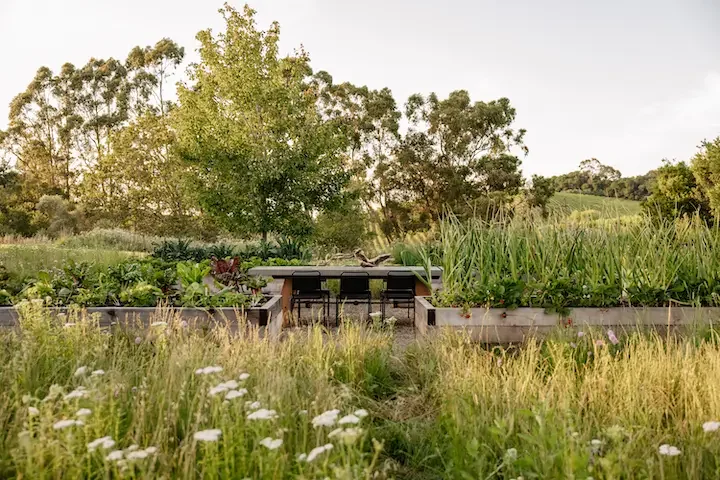
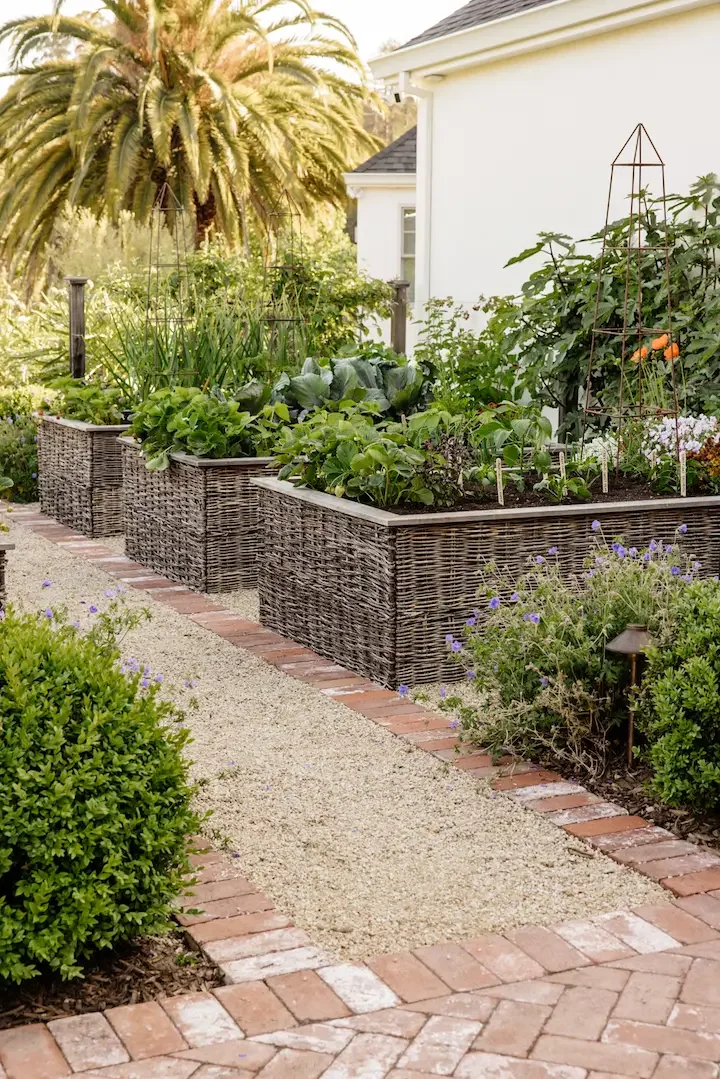
Christian Douglas is a landscape architect and garden designer whose practice, Christian Douglas Design, creates ecologically informed, food‑productive and visually lush landscapes for homes, estates and communities in the San Francisco Bay Area and beyond. Drawing on formal training in classical design and decades of work in regenerative agriculture, he is known for gardens where orchard, kitchen garden and habitat are woven seamlessly into terraces, courtyards and pools so that foraging, wildlife and everyday life occupy the same ground.
English‑born and now based in Marin County, Douglas has spent more than 25 years designing landscapes across England, Jordan, Australia and the United States, alongside time working and teaching on farms and education centres in desert and marginal environments. That experience underpins his conviction that contemporary garden design has a responsibility to repair our relationship with land and food; in his work, clipped structure and crafted stone sit comfortably with espaliered fruit, beehives, chickens and “wild wonderland” plantings that invite both people and pollinators to graze their way through a space.
Through Christian Douglas Design and his earlier venture The Backyard Farm Company, he has helped hundreds of households and hospitality clients establish productive landscapes, from compact urban courtyards to “agrihood” communities and hilltop properties where paths double as tasting routes lined with herbs, berries and fruiting trees. His projects have received multiple awards and wide coverage in titles such as Architectural Digest, the Wall Street Journal, House Beautiful, California Home & Design, Sunset, Gardenista and Marin Magazine, where his edible‑ornamental gardens are profiled for their mix of structure, wildness and constant invitation to harvest.
Douglas’s food‑forward design philosophy is distilled in his book The Food Forward Garden, a richly illustrated guide to integrating vegetables, herbs, fruit and berries into sophisticated landscapes without sacrificing style. Alongside design practice, he writes, teaches and appears in interviews and workshops, encouraging gardeners to make “edible swaps”, see soil and biodiversity as primary design materials, and treat productive gardens not as add‑ons but as the living heart of resilient outdoor spaces.
Website: christian-douglas.com
Instagram: @chrisitian_douglas_design
Book: The Food Forward Garden
The conversation
My conversation with Christian Douglas, where we talk about bridging conventional and permaculture design, the food-forward philosophy, and designing gardens that are abundant, ecological and beautiful at any scale.
Workshops
My workshops are about fostering the reconnection between the layers of everyday life, the self and the natural world.
Time: 10am to 1pm
Dates:
Saturday 21st November 2026
Location: Stonewalls, Musk.
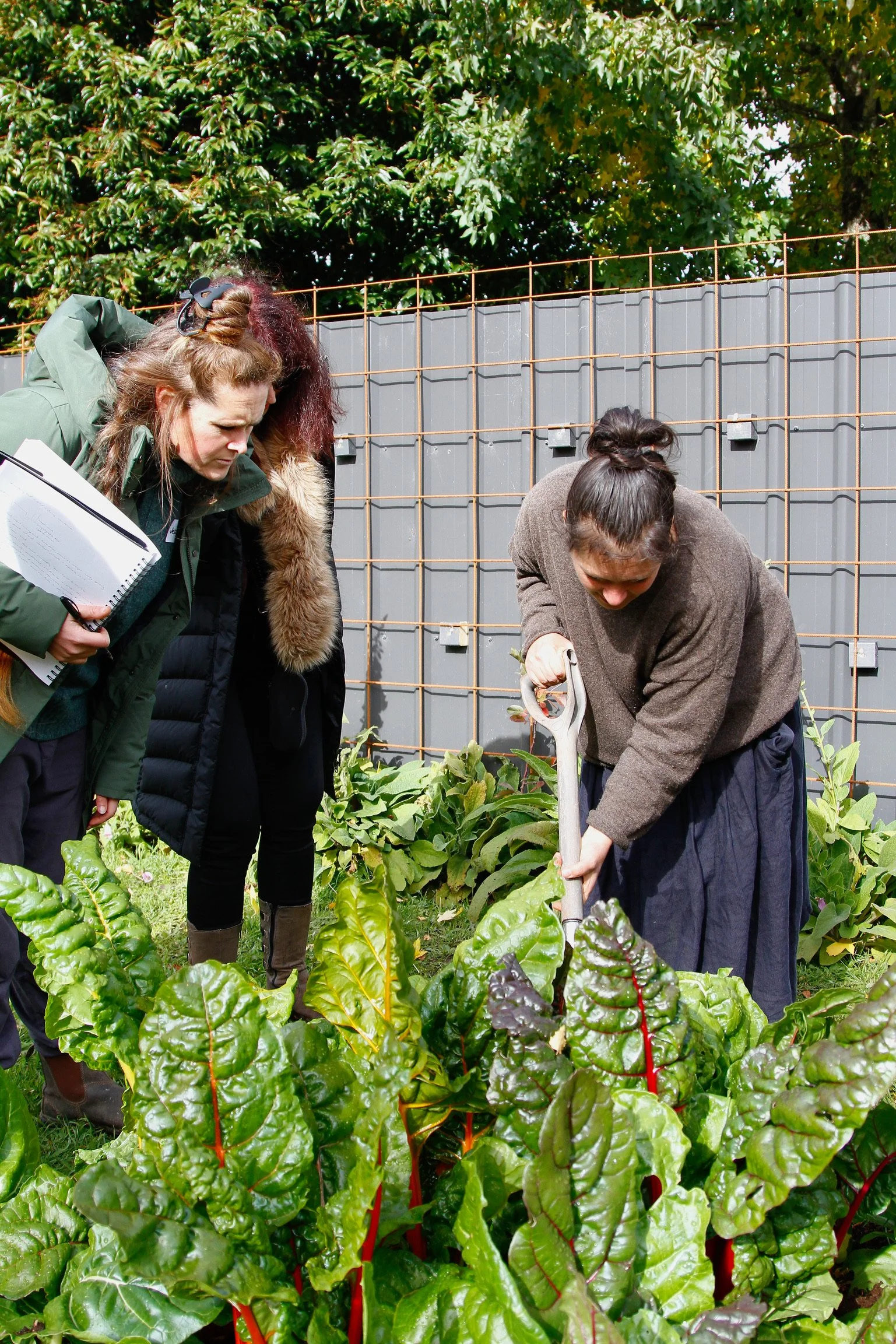
For as long as I can remember, I have tended a productive garden. From childhood veggie patches to the abundant landscapes of Oak and Monkey Puzzle, growing has always grounded me and shaped how I see the world. This workshop draws from that lived experience.
Whether you're working with a courtyard, a veggie patch or a larger garden, this is about creating a productive space that offers both beauty and abundance.
We explore what productive gardening really means. I share how my process has evolved across very different properties—Oak and Monkey Puzzle and Little Cottage on a Hill and for the first time, Stonewalls—blending hands-on learning with thoughtful intent.
We cover soil care, compost systems, green manures, vertical growing, chickens, worms and closed-loop cycles. You’ll see how I use wicking beds as productive, water-wise microclimates, and how I approach different soil types and site conditions.
We talk about heirlooms and hybrids, perennial and medicinal layers, espalier techniques, and the role of beauty in even the most functional plantings.
This is not a technical how-to on growing food. It is a practical and inspiring session on preparing and shaping a garden that is generous, resilient and connected to place. You’ll leave with tools and ideas to help you begin.

Dates: Sunday 1st November 2026
Time: 10 AM – 12.30 PM
Location: Little Cottage on a Hill, Daylesford
For years, I’ve designed gardens that balance beauty, productivity, and sustainability, but when I discovered wicking beds, they transformed the way I grow. These self-watering garden beds have changed everything—from reducing water use to making gardening more accessible, efficient, and abundant.
In this hands-on workshop, I’ll guide you through the practical steps to create your own wicking beds—whether you’re working with a small courtyard, a backyard, or a larger productive space. You’ll gain an in-depth understanding of how wicking beds work, how to build them using IBC containers, and how to create a thriving, water-wise garden with minimal effort.
We’ll explore my own wicking bed garden at Little Cottage on a Hill, where I’ve grown everything from celery and purple sprouting broccoli to sugar snap peas and edible flowers—all with less watering and less maintenance. You’ll leave with the knowledge and confidence to build a garden that is not only sustainable and resilient but also deeply rewarding to tend.
This workshop is designed for anyone looking to garden smarter—not harder. Whether you’re just starting out or a seasoned grower, wicking beds are a game-changer in sustainable and productive gardening.

Time: 10.00am - 1.00pm
Dates:
Saturday 7th November 2026
Location: Daylesford, Victoria
Whether you're starting from scratch or reshaping an existing space, this half-day garden design workshop invites you to see your garden differently. From the structure of the land up, this is not a plant-by-plant session. It is a place to think like a landscape architect and begin shaping your dream garden with clarity and purpose.
Together, we’ll explore the fundamental principles that guide thoughtful garden design. You’ll learn how to observe and respond to the unique conditions of a site, and how to work with what already exists to support the kind of space you want to create. We’ll talk about how to create rhythm, balance and a sense of flow in the garden. Not through formulas, but through a practice of observation, clarity and intention.
Using tracing paper and bold textas, you’ll begin a layered, iterative design process based on Natasha's own garden. A technique that prioritises experience over detail. This isn’t about where your grandma’s rose will go. It is about learning to see the bigger picture, and how to design in a way that brings coherence and life to your space.
You’ll leave with the tools to create your own garden brief, a new approach to site mapping and design thinking grounded in landscape architecture, and a renewed way of seeing and shaping your garden. No matter its size or complexity.
We draw from real projects such as Oak and Monkey Puzzle and Little Cottage on a Hill, and explore how to reimagine constraints as creative opportunities. There is also a guided tour of Little Cottage on a Hill, where we see how theory comes to life in a compact space.
Come along & join our community, whenever you’re ready...
I’m often hosting new workshops, events, get togethers or collaborations with a range of incredible people. If you’d like to stay in the loop sign up to our mailing list for all event and workshop announcements.
We respect your privacy.


Hello!
Welcome. You’ve found your way into one of the conversations that helped shape this book. I hope you enjoy stepping a little further into it with us.
We respect your privacy. Read our Privacy Policy.

Community & Collaboration
Everything I do is about connection and community. I’m deeply passionate about meeting and working with people, brands and businesses that align with my values. If you think we’d create magic together — I want to hear about it!
Acknowledgment of Country
We acknowledge the first custodians of the land on which we live and work, the Wurrundjeri People of the Kulin Nation. We pay respects to Elders past, present and emerging and to all First Nations People. Sovereignty was never ceeded and treaties were never signed.
Contact
© Copyright Natasha Morgan 2026
Site by Studio Skye